Iguazu Adventure Activities: Boat Rides, Jungle Trails, Rappelling, and Helicopter Flights
The Iguazu Falls region offers adventure activities that range from the widely accessible boat excursions into the falls spray zone to more demanding options including jungle trekking, rappelling into the canyon, and helicopter flights over the complete falls system. The combination of the falls themselves and the surrounding Atlantic Forest creates an environment in which nature tourism and adventure activities coexist, and the infrastructure built around the most popular activities is well-developed enough to be accessible to visitors with limited outdoor experience.
- 1
Boat Excursions: The Wet and Unforgettable Falls Experience
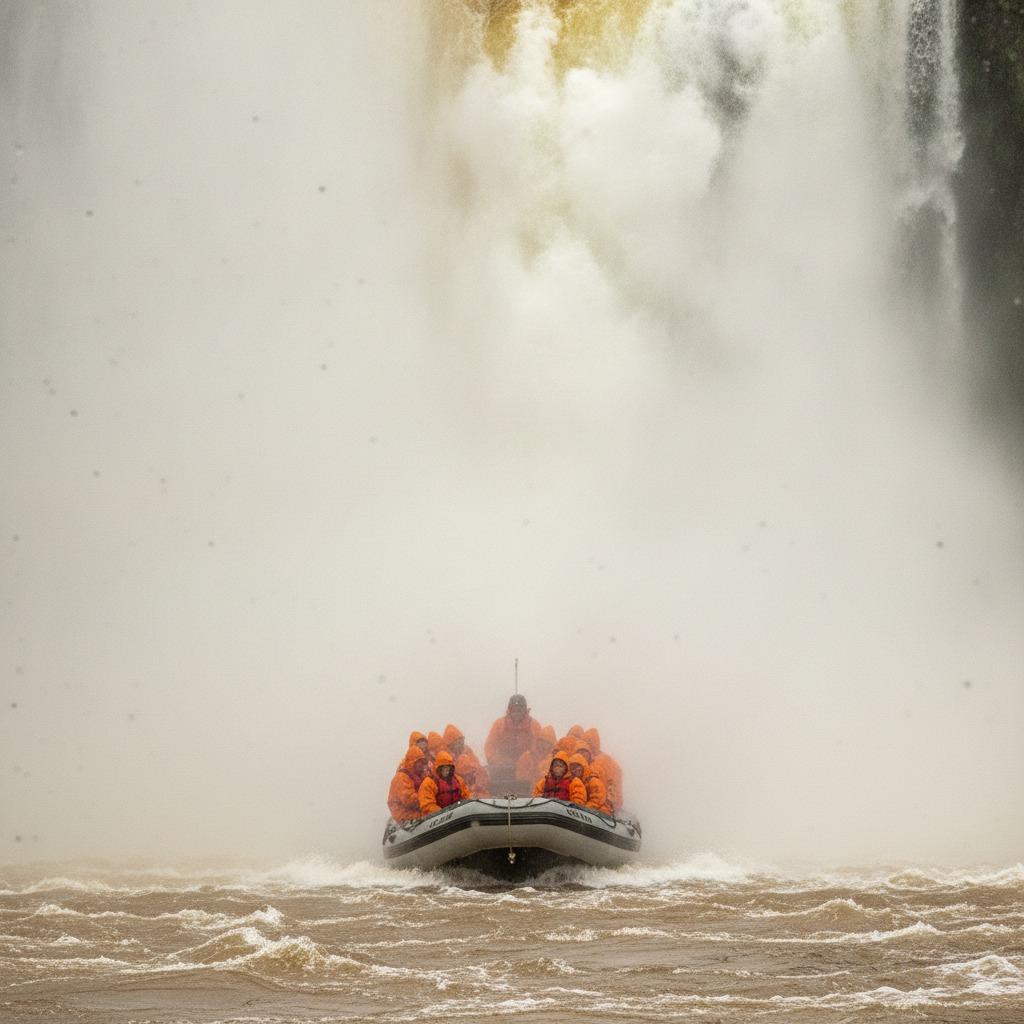
The boat excursions that operate from both the Argentine and Brazilian sides of Iguazu Falls provide the most physically immersive experience available at the falls, navigating inflatable Zodiac-type craft directly into the spray zones beneath the major cataracts and guaranteeing complete soaking of all passengers and their belongings. The Argentine excursion known as Gran Aventura begins with a jungle truck ride through the national park to the upper Iguazu River, where the boats then navigate downstream into the falls zone and approach beneath several major cataracts before returning to the dock; the complete excursion takes approximately 90 minutes including the truck ride. The Brazilian equivalent, Macuco Safari, follows a similar format with a jungle walk or vehicle ride to the river followed by a boat excursion beneath the falls on the Brazilian side; both excursions deliver the same fundamental experience of being directly under enormous volumes of falling water in a boat piloted by guides who position the craft for maximum spray contact. Waterproof bags for cameras and phones are provided or available for purchase at the excursion departure points, and visitors are advised to wear quick-drying clothing or swimwear rather than cotton that becomes heavy when wet. The experience of the boat excursions is viscerally different from any walkway perspective and provides an irreplaceable sense of the physical scale and power of the falls that purely visual observation cannot convey; the overwhelming noise, the physical impact of the spray on the body, and the dramatic view looking up at the falling water from below constitutes a complete sensory experience.
- 2
Jungle Trekking: San Martin Island and the Forest Interior Trails
The Argentine national park maintains a network of interior forest trails that extend beyond the main falls circuits and provide access to sections of Atlantic Forest that are less visited and more rewarding for wildlife observation than the crowded walkways adjacent to the falls. The Sendero Macuco, a 7-kilometer round-trip trail into the forest interior that descends to the Arrechea waterfall on a tributary creek, is the most substantial jungle walking option within the Argentine park and provides several hours of forest experience in habitat that feels remote despite its proximity to the developed tourist infrastructure. San Martin Island, reached by a short boat crossing from the lower circuit, has walking trails around its perimeter that pass through forest and provide 360-degree views of the surrounding cataracts; the island is one of the best locations in the park for birdwatching because the forest is undisturbed and the combination of spray-zone vegetation and drier interior forest creates habitat diversity that supports a wide variety of species. The Sendero Verde, a shorter walking trail between the visitor center and the upper circuit, passes through managed forest and is useful for birding in the early morning before the main visitor crowds arrive. Night walks are offered by the Argentine park on full-moon nights, when the illuminated falls and the moonlit forest create an entirely different atmosphere from daytime; the nocturnal version of the falls experience is reported by participants as profoundly different in character from the daytime visit and is recommended by experienced visitors as the most memorable way to experience the falls.
- 3
Helicopter Flights: The Aerial Perspective Over the Complete Falls System
Helicopter flights over the Iguazu Falls, operated from helipads on the Brazilian side of the falls, provide an aerial perspective on the complete falls system that is impossible to achieve from any ground-level viewpoint and reveals the full horseshoe shape of the Devil's Throat, the extent of the individual cataracts, and the relationship between the falls and the surrounding forest in a single visual field. The standard helicopter flight lasts approximately 10 minutes and covers the full extent of the falls from the upper Iguazu River to the canyon below the Devil's Throat, with the pilot banking the aircraft to provide views from both sides of the cabin. The aerial perspective is particularly valuable for understanding the geography of the triple border region where Argentina, Brazil, and Paraguay meet in the water: from the air, the urban areas of Puerto Iguazu, Foz do Iguazu, and Ciudad del Este are all simultaneously visible alongside the unbroken forest canopy of the national parks, illustrating the contrast between the protected areas and the surrounding agricultural and urban landscape. The helicopter flights are a subject of controversy in the conservation community because the noise of the aircraft disturbs wildlife throughout the park and because the overflight corridor passes directly over sensitive nesting areas; the Brazilian government has periodically discussed restricting or eliminating the flights but the economic interests of the helicopter operators and the popularity of the activity with tourists have prevented significant restriction. From a visitor perspective, the aerial view provides an irreplaceable comprehension of the falls system as a whole that is worth experiencing despite the environmental reservations.
- 4
Rappelling and Canyoning: Descending into the Falls Canyon
Rappelling and canyoning excursions at Iguazu Falls, offered by adventure operators based in Puerto Iguazu and Foz do Iguazu, take participants into the canyon system of the Iguazu River above and below the falls on routes that involve descending cliff faces using ropes, crossing rivers, and swimming through sections of the canyon that are inaccessible from the standard tourist infrastructure. The technical difficulty of these excursions ranges from beginner-level descents suitable for participants with no prior experience to advanced routes that require rappelling skills and physical fitness; operators provide full instruction and equipment for participants without prior experience. The experience of the canyon from inside, descending cliff faces and swimming through pools with the sound of the falls audible but not visible, provides an entirely different relationship with the falls landscape than the walkway and boat experiences and appeals to visitors who prefer active engagement with natural environments over passive observation. The regulation of adventure activities within the national parks varies between the Argentine and Brazilian sides: some canyoning routes operate within the park boundaries under concession arrangements while others access the canyon system through private land adjacent to the parks. Safety standards for adventure operators at Iguazu have improved significantly over the past decade, with increasing professionalization of the guide corps and standardization of equipment requirements; choosing a licensed operator affiliated with recognized adventure tourism associations is advisable for participants.
- 5
Birdwatching at Iguazu: One of the Top Sites in South America
The Iguazu national parks on both sides of the border together protect one of the most biodiverse bird habitats in South America, with more than 400 species recorded in the Argentine park alone and similar diversity documented in the Brazilian park; the combination makes the Iguazu region one of the premier birdwatching destinations in the world and a key target for serious birders visiting South America. The early morning hours before the main tourist crowds arrive are the optimal time for birdwatching in the parks, when the forest is quiet, the birds are most active, and the light on the edge of the forest provides favorable conditions for photography. The Sendero Verde trail and the forest edges adjacent to the main walkways are productive birding areas where toucans, parrots, trogons, and a variety of flycatchers and tanagers are regularly observed; more specialist forest species including antbirds, woodcreepers, and foliage-gleaners require the interior forest trails for reliable observation. The spray zone adjacent to the falls supports specialized species including the swallow-tailed cotinga and the scale-throated hermit hummingbird, which feed in the mist-adapted vegetation and are not found in the drier forest interior. Guided birdwatching tours from Puerto Iguazu are offered by several specialist operators who provide expertise in locating target species and context on the ecology of the Atlantic Forest; the guides are typically accomplished naturalists who can identify species by call and have detailed knowledge of the microhabitats within the parks.
- 6
Beyond the Falls: Misiones Province and the Jesuit Mission Circuit
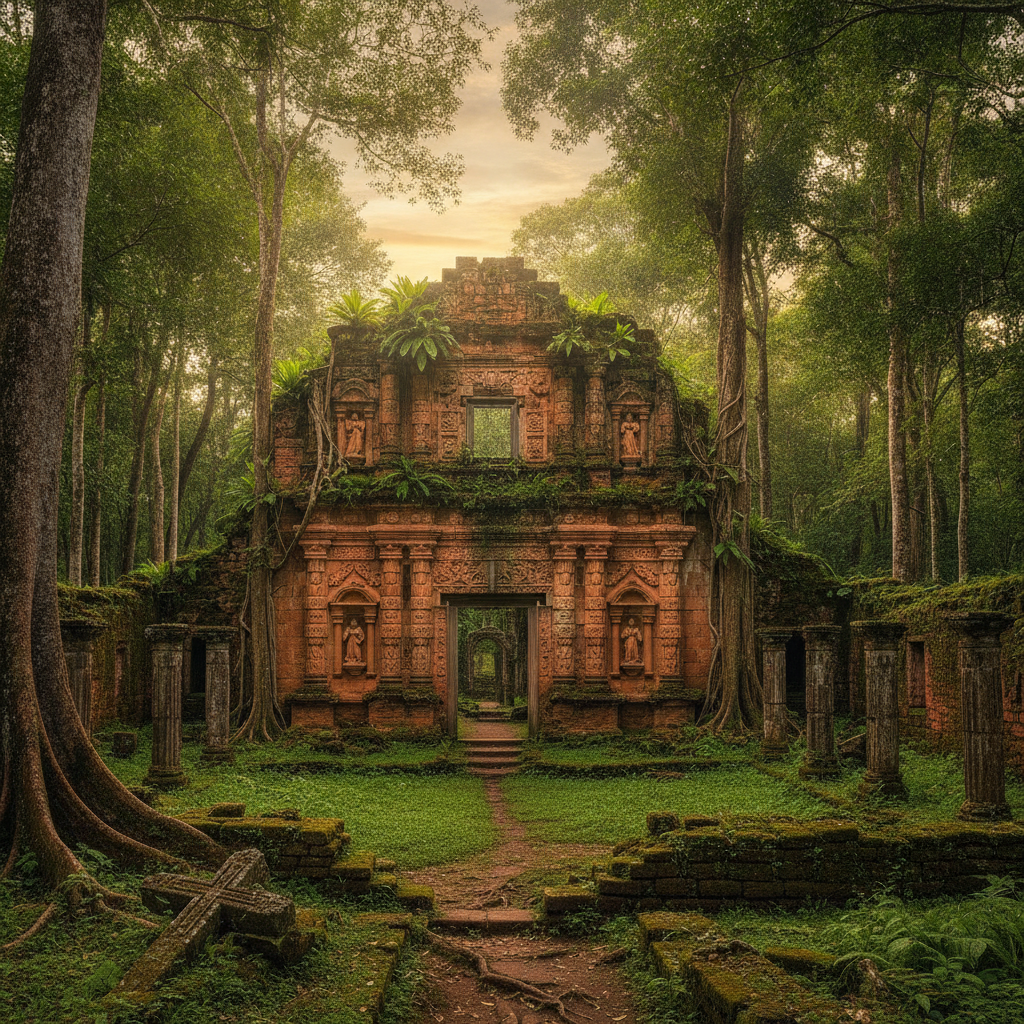
The Misiones province of Argentina, in which the Argentine national park is situated, contains a broader network of nature and cultural attractions that reward visitors who extend their stay beyond the falls themselves. The Jesuit mission ruins at San Ignacio Mini, approximately 250 kilometers southwest of Puerto Iguazu, are the best-preserved Jesuit mission ruins in Argentina and a UNESCO World Heritage Site; the carved red sandstone facades of the main church and the layout of the mission town are comprehensible enough to give a clear picture of the Jesuit mission civilization of the 17th and 18th centuries. The Ibera Wetlands, a vast system of lagoons, floating islands, and grasslands in the center of Corrientes province accessible from the Misiones route, is one of the best wildlife destinations in Argentina with jaguars reintroduced since 2021, giant otters, capybaras, caiman, and hundreds of bird species visible from boats and walking trails. The Wanda mines north of Puerto Iguazu are a working gemstone mine and tourist attraction where visitors can observe and purchase the amethysts, topaz, and other semiprecious stones that are embedded in the basalt of the Parana Plateau throughout the Misiones region. The Salto del Moconá, a longitudinal falls on the Uruguay River at the Argentine-Brazilian border where the river drops over a submerged cliff for several kilometers along its length rather than across it, is an unusual geological spectacle that is visible only during lower water periods and is accessible by guided excursion from the Misiones interior. Combining the falls with two or three days in the broader Misiones region creates a journey that encompasses the geological, ecological, historical, and cultural dimensions of the upper Parana valley.
Walk this route with audio
Stories play automatically as you reach each stop — no tapping needed.
More in Iguazu
Iguazu Falls: Devil's Throat, Upper and Lower Circuits, and the Three-Country Border
Iguazu Practical Guide: Getting There, Accommodation, Costs, and Planning Your Visit
Iguazu Photography Guide: Best Viewpoints, Light, and Technical Tips
Iguazu Food, Culture, and the Guarani Heritage of Misiones Province
Itaipu Dam: Engineering Marvel, Binational Hydropower, and the Drowned Guaira Falls