Itaipu Dam: Engineering Marvel, Binational Hydropower, and the Drowned Guaira Falls
The Itaipu Dam on the Parana River between Brazil and Paraguay is one of the most remarkable engineering achievements of the 20th century and remains one of the largest hydroelectric facilities in the world by installed capacity and historical energy output. The dam represents the largest project ever undertaken by the two countries that built it and has shaped the economies, politics, and landscapes of the entire upper Parana region for five decades. Its construction involved the flooding of the Guaira Falls, formerly the largest waterfall in the world by volume, a loss that remains a subject of controversy and mourning in both countries.
- 1
Engineering Scale: The Dimensions and Construction of Itaipu
The Itaipu Dam, completed in 1984 after ten years of construction that employed at its peak approximately 40,000 workers simultaneously on both the Brazilian and Paraguayan sides of the Parana River, is a hollow gravity dam constructed of concrete and earth-rock with a main structure approximately 7.9 kilometers long, 196 meters high, and a reservoir extending 170 kilometers upstream to the Brazilian city of Guaira. The construction project required the temporary diversion of the entire flow of the Parana River, the second largest river in South America by volume, through a bypass channel excavated through solid basalt rock on the Paraguayan bank; the river diversion was accomplished in October 1978 and stands as one of the most dramatic single engineering events in the history of large dam construction. The volume of concrete used in the main dam structure is approximately 13 times the volume of the Channel Tunnel and represents one of the largest single pours of concrete in history; the iron and steel used in the structure would be sufficient to build 380 Eiffel Towers according to Itaipu publicity materials. The 20 generating units of the dam, 10 on the Brazilian side and 10 on the Paraguayan side, have a combined installed capacity of 14,000 megawatts; the dam produced a record 103.1 terawatt-hours of electricity in 2016, more than any other hydroelectric facility in history. The dam was constructed as a binational project under a treaty signed by the military governments of Brazil and Paraguay in 1973, which specified that the electricity generated would be divided equally between the two countries and that Paraguay could sell its surplus to Brazil at a price set by the treaty.
- 2
The Guaira Falls: The Wonder That Was Drowned
The Sete Quedas or Guaira Falls, located at the point on the Parana River between Brazil and Paraguay where the river narrowed from several kilometers wide to approximately 60 meters before plunging through a series of cataracts, was by some measurements the largest waterfall in the world by volume of water passing through it, exceeding even Iguazu and Victoria Falls in terms of average flow. The falls consisted of seven distinct cataract sections spread over a distance of approximately 6 kilometers, and in periods of high water the combined roar was audible from a distance of 30 kilometers; the falls were a significant tourist destination in southern Brazil with infrastructure including trails, viewing platforms, and accommodation that had been developed over several decades. The decision to build the Itaipu Dam at its chosen location necessarily implied the flooding of the Guaira Falls, a consequence that was discussed in the planning process but was subordinated to the economic and political priority of the dam construction. The falls were flooded as the Itaipu reservoir filled in 1982, two years before the dam began generating electricity; the last groups of visitors were taken to see the falls in the weeks before the rising water covered them permanently, and the event was marked by ceremonies of mourning and farewell on the Brazilian side. The loss of the Guaira Falls is considered one of the most significant involuntary destructions of a natural wonder in modern times and is recalled in discussions of the environmental costs of large dam construction as a cautionary example of irreversible impacts on unique natural heritage.
- 3
Binational Politics: The Brazil-Paraguay Treaty and the Energy Dispute
The political structure of the Itaipu binational enterprise, governed by the 1973 treaty between Brazil and Paraguay, has been the subject of persistent controversy in Paraguay because the treaty terms effectively require Paraguay to sell its surplus electricity to Brazil at prices far below market rates, generating what Paraguayan politicians and civil society groups have characterized as an ongoing subsidy to Brazil that amounts to billions of dollars over the lifetime of the treaty. Paraguay receives half of the electricity generated by the dam but uses only a small fraction of that amount given the modest size of its economy and population; the surplus is sold to Brazil at a price set by the 1973 treaty that critics argue has not kept pace with electricity market prices and represents a continuing disadvantage for Paraguay. The renegotiation of the treaty terms, which was scheduled to occur in 2023 when the original 50-year term of the financial arrangements expired, became a major political issue in both countries in the years preceding the deadline; the outcome of the renegotiation will significantly affect the energy revenues available to the Paraguayan government. The Itaipu enterprise employs approximately 4,000 workers on each side of the border and contributes substantial tax revenue to both the Brazilian state of Parana and to Paraguay; its economic importance to both countries is a constraint on any political dispute about the treaty terms. The governance structure of the binational enterprise, with equal representation from both countries in management positions, has generally functioned without major conflict despite the persistent underlying dispute about the equity of the energy pricing arrangements.
- 4
Environmental Impacts: Biodiversity Losses and the Resettlement of Communities
The construction of the Itaipu Dam and the filling of its reservoir displaced approximately 40,000 people from their homes and agricultural land in both Brazil and Paraguay, including both Brazilian and Paraguayan farming families and indigenous communities whose ancestral territories were within the flood zone. The resettlement process was managed differently on each side of the border: in Brazil, organized movements of displaced farmers eventually negotiated compensation and resettlement land through sustained political pressure; in Paraguay, the process was less organized and many displaced families received inadequate compensation. The ecological impacts of the reservoir on the biodiversity of the upper Parana River have been profound and permanent: the free-flowing river ecosystem, characterized by seasonally flooded forests, rapids, waterfalls, and a diverse community of fish adapted to flowing water conditions, was converted to a reservoir environment that supports a fundamentally different ecological community. Several fish species endemic to the upper Parana River, including the dourado gigante, were significantly reduced in population by the dam and the loss of upstream migration routes; the Itaipu Dam and associated hydroelectric facilities on the Parana system are considered the primary cause of the collapse of commercial fisheries in the middle and lower Parana that had supported substantial fishing communities for centuries. The Itaipu enterprise has invested in environmental mitigation programs including fish hatcheries, reforestation of reservoir margins, and wildlife corridors connecting remaining forest fragments; the effectiveness of these programs in compensating for the original ecological losses is debated among conservation scientists.
- 5
Itaipu Visitor Experience: Tours, Museum, and the Illuminated Dam
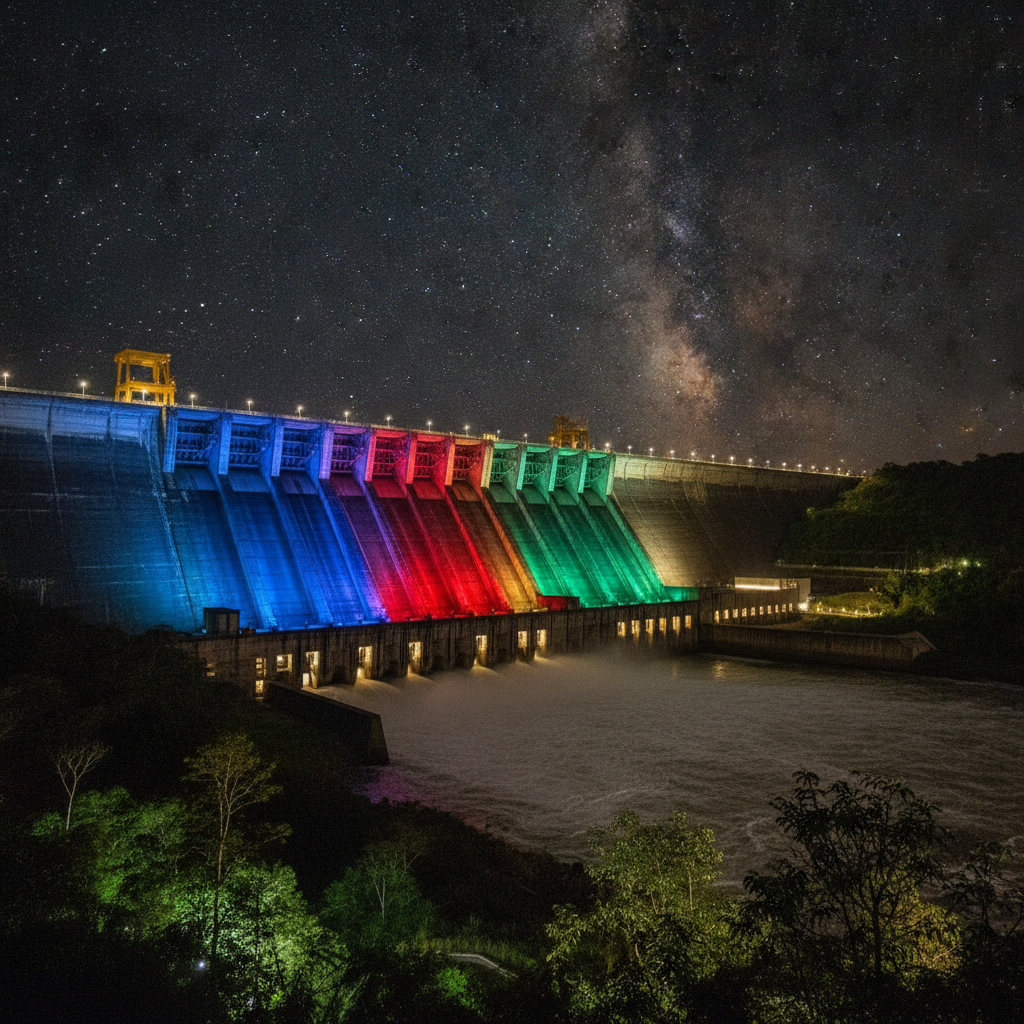
The Itaipu Dam is one of the most visited industrial tourism attractions in South America, receiving more than one million visitors annually from both the Brazilian and Paraguayan sides, and has developed a comprehensive visitor infrastructure including a multimedia museum, multiple tour options, and an illuminated night spectacle that is visible from Foz do Iguazu. The standard panoramic tour from the Brazilian side provides views of the full length of the dam structure from the top of the dam road, explaining the scale of the construction and the operating principles of the generating units through interpretive panels and guide commentary. The more detailed technical tour allows visitors inside the dam structure to the level of the turbine hall, where the scale of the generating equipment is perceptible in a way that external views cannot convey; the turbine hall is among the largest interior spaces in the world and the sound of the operating turbines creates a distinctive sensory environment. The Ecomuseu de Itaipu on the Brazilian side contains exhibits on the natural history of the upper Parana region, the indigenous cultures of the area, the construction history of the dam, and the environmental programs of the enterprise; it is a well-designed museum that provides context for the engineering and environmental dimensions of the dam. The illuminated dam spectacle, which projects colored lights onto the dam face on certain evenings, is visible from the Brazilian side and from boat tours on the Parana River; it has become a signature image of the Foz do Iguazu tourism experience and provides a striking contrast between the industrial scale of the dam and the natural darkness of the river valley.
- 6
Ciudad del Este: The Triple Frontier Commercial Capital
Ciudad del Este, on the Paraguayan bank of the Parana River opposite Foz do Iguazu and connected by the Friendship Bridge, is one of the largest free-trade zones in the world and the commercial capital of eastern Paraguay, with a street market economy dealing in electronics, perfumes, clothing, and a vast range of imported goods that attract shoppers from throughout Brazil and Argentina seeking prices below those available in their home countries. The city has a reputation for informality and occasional lawlessness that reflects both the reality of a large informal commercial economy and the historical association of the triple frontier region with contraband, piracy of intellectual property, and the activities of diaspora criminal networks operating in the commercial district. Contemporary Ciudad del Este has been significantly reformed through crackdowns on the most egregious forms of commercial crime and the formalization of portions of the economy, but it retains its character as a frontier city where the normal rules of commercial life in the neighboring countries do not fully apply. The commercial activity of Ciudad del Este is closely linked to the Itaipu Dam economy: the dam workers and their families represent a significant local consumer market, and the city functions as a regional commercial hub for the agricultural hinterland of eastern Paraguay. For visitors based in Foz do Iguazu, a half-day visit to Ciudad del Este across the Friendship Bridge provides a visceral experience of the economic disparities between the three countries at the triple frontier and an insight into the informal commercial economy of South America that is not accessible through any more conventional tourist attraction.
Walk this route with audio
Stories play automatically as you reach each stop — no tapping needed.
More in Iguazu
Iguazu Falls: Devil's Throat, Upper and Lower Circuits, and the Three-Country Border
Iguazu Practical Guide: Getting There, Accommodation, Costs, and Planning Your Visit
Iguazu Photography Guide: Best Viewpoints, Light, and Technical Tips

Iguazu Food, Culture, and the Guarani Heritage of Misiones Province
Iguazu Adventure Activities: Boat Rides, Jungle Trails, Rappelling, and Helicopter Flights