Iguazu Photography Guide: Best Viewpoints, Light, and Technical Tips
Iguazu Falls presents photographers with one of the most spectacular natural subjects on Earth and simultaneously one of the most technically demanding, combining extreme contrasts of light and shadow, the challenge of photographing moving water, the constant presence of spray that threatens equipment, and the difficulty of capturing an object so large that no single viewpoint encompasses the complete scene. Understanding the light conditions, the best viewpoints on each side of the falls, and the technical approaches to spray, motion, and scale will significantly improve the images visitors take home from Iguazu.
- 1
Morning Light on the Argentine Side: The Golden Hour Advantage
The most favorable light for photography on the Argentine side of Iguazu Falls occurs in the morning hours from approximately 7:00 AM to 10:00 AM, when the sun rises from behind the Argentine bank and illuminates the falls from the front, creating warm directional light that gives texture and dimension to the falling water and mist. The Devil's Throat platform at the end of the upper circuit walkway receives direct morning light that illuminates the mist rising from the canyon and creates the conditions for rainbow formation within the spray; the combination of warm light, white mist, and rainbow colors provides the most photogenic conditions available at the falls. The Argentine national park opens early, and arriving at the park entrance immediately at opening time and walking directly to the Devil's Throat platform before the main crowds arrive allows for an hour of photography in good light with fewer other visitors in the frame. The upper circuit walkways on the Argentine side are well positioned for morning photography because they face generally west toward the falls, which are illuminated from behind the camera; the lower circuit faces more variably and some sections are better photographed in afternoon light. The trails immediately adjacent to the falls entrances are productive for nature photography in the early morning hours before the visitor traffic intensifies: toucans, parrots, and coatis are most active in the cooler morning hours and are more approachable when the walkways are quiet.
- 2
Afternoon Light on the Brazilian Side: The Classic Panoramic Shot
The Brazilian panoramic walkway, which faces east toward the Argentine falls, receives its best light in the late afternoon hours from approximately 3:00 PM to 5:30 PM, when the low western sun illuminates the falls from behind the camera position and creates the warm, front-lit conditions that allow the white water of the cataracts to stand out against the dark basalt and green forest background. The standard postcard image of Iguazu Falls, showing the full sweep of the falls from the Brazilian perspective with the Devil's Throat at the far end, is best captured in this afternoon light period; the midday Brazilian perspective is harsh and produces flat images due to the overhead sun position creating deep shadows in the canyon. The helicopter overflights from the Brazilian side also benefit from afternoon light, which illuminates the full falls system from a direction that gives three-dimensional modeling to the water and the canyon walls; morning helicopter flights see the falls with the sun behind the subject creating silhouette conditions that are less favorable for revealing the falls structure. The lowest platform on the Brazilian walkway, directly opposite the Devil's Throat, receives spray regularly and creates challenging conditions for camera equipment; a UV or clear filter on the lens and a microfiber cloth for continuous cleaning of the front element are minimum requirements for photography from this position. The yellow-and-black butterfly concentrations along the Brazilian walkway in the late afternoon provide additional photographic subjects that contrast with the dramatic falls background.
- 3
Technical Approach: Shutter Speed, Tripods, and Spray Protection
The primary technical decision in photographing waterfalls is the choice of shutter speed: slow shutter speeds from 0.5 to 4 seconds create the silky smooth water effect that emphasizes the volume and flow of the falls, while fast shutter speeds from 1/500 to 1/2000 second freeze individual water droplets and reveal the turbulent structure of the falling water. Both approaches are valid at Iguazu depending on the artistic intent and the specific cataract being photographed; the Devil's Throat is so overwhelmingly massive that both slow and fast shutter treatments convey the scale, while smaller cataracts often benefit from the slow-shutter approach that emphasizes their flow. Using a tripod for slow shutter photography at Iguazu is complicated by the spray that wets the ground and the limited space on the walkway platforms; a small travel tripod with quick-release allows rapid positioning and repositioning as the crowds move. The spray threat to camera equipment at Iguazu is serious and has resulted in the permanent damage of many cameras and lenses over the years; professional photographers use rain covers for their cameras, sealed or weather-resistant bodies and lenses where possible, and carry multiple microfiber cloths for continuous maintenance of the lens front element. Waterproof bags or backpacks with camera compartments provide reasonable protection during transit between viewpoints but should not be relied upon during extended shooting sessions close to the falls where the spray is constant and heavy.
- 4
Rainbow Photography: Timing the Mist and the Arc
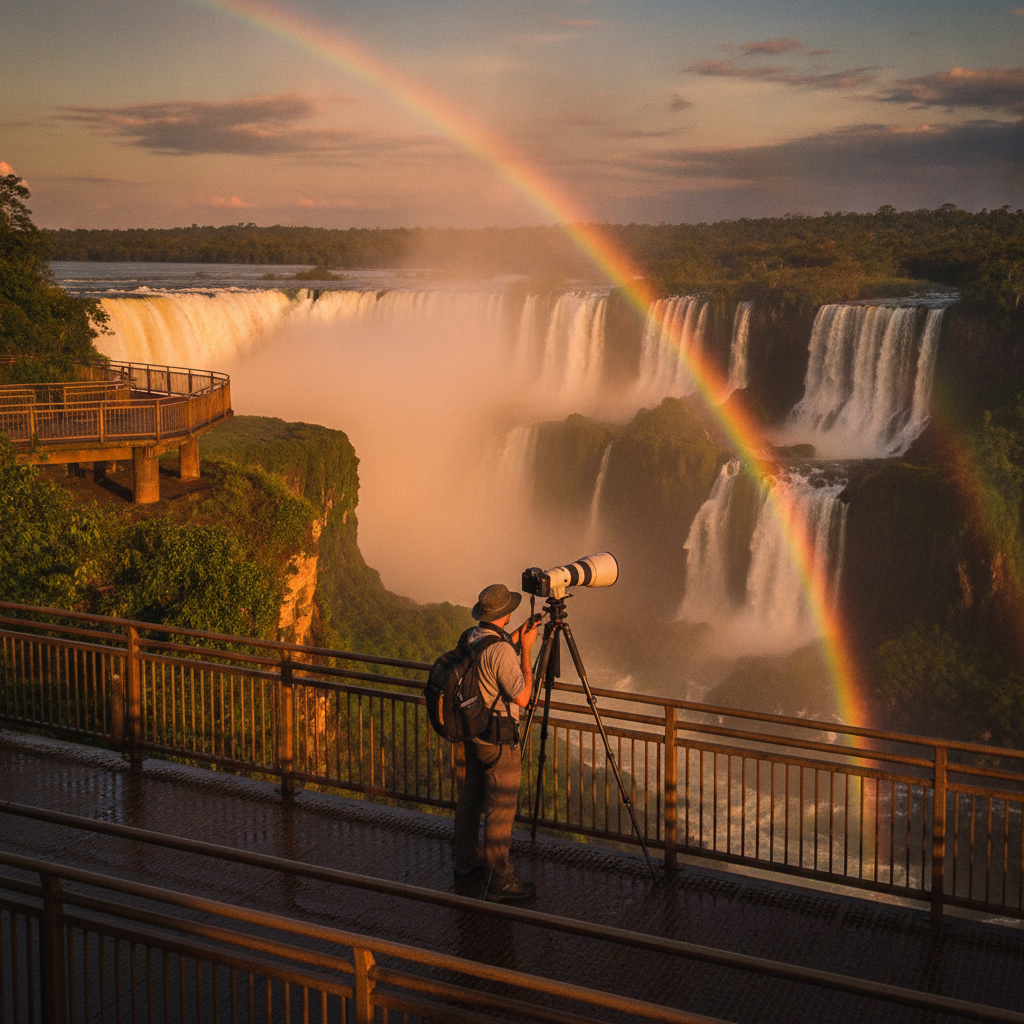
The rainbows at Iguazu Falls, generated by sunlight refracting through the mist particles of the spray zones, are one of the most sought-after photographic subjects at the falls and are present reliably in the morning hours at the Devil's Throat and at various cataracts throughout the day depending on the sun angle and the spray direction. The optimal rainbow conditions at the Devil's Throat occur between 8:00 AM and 10:00 AM on clear mornings when the sun angle is low enough to create a rainbow at the bottom of the canyon visible from the viewing platform above; as the sun rises the rainbow arc moves and eventually disappears from the platform viewpoint. The full-arc double rainbow, showing both the primary and secondary bow with the distinctive color reversal between them, is occasionally visible from the lower circuit walkways on the Argentine side when the spray from multiple cataracts creates a sufficient mist density over a wide area. Including a rainbow in a falls photograph requires the sun to be behind the camera position and the spray to be in front; this geometric requirement limits rainbow photography to specific viewpoints at specific times of day and creates a predictable shooting schedule for photographers who prioritize this subject. The spray mist itself, regardless of rainbow formation, creates interesting photographic effects when backlit: the individual droplets are visible as a golden haze in evening light, and the columns of rising mist are photographically compelling even without a rainbow arc.
- 5
Wildlife Photography: Coatis, Toucans, and the Forest Edge
The wildlife of the Iguazu national parks provides photographic opportunities that are unusually accessible for wild subjects because the animals have become accustomed to human presence over decades of tourism and can be approached more closely than would be possible in less-visited natural areas. Coatis, the ringtailed mammals that patrol the walkways and picnic areas of the Argentine park, approach within arm's length and can be photographed at close range with standard zoom lenses; the ethical concern is that their proximity to humans reflects habituation caused by illegal feeding rather than natural tameness, and contributing to this habituation by feeding them or encouraging approach creates animal welfare problems. Toucans of multiple species are regularly photographed from the walkways by visitors with telephoto lenses in the 300-400mm range; the large colorful bills of the toco and keel-billed toucans make them among the most photographically rewarding birds in the park. The great dusky swifts that nest behind the falls are difficult to photograph in flight because of their speed and erratic movement patterns, but their entry and exit flights through the water curtains can be captured with burst shooting and fast shutter speeds from the lower circuit platforms. The forest edge along the main walkways in the early morning light is productive for small bird photography: tanagers, motmots, woodpeckers, and various flycatchers are active at this time and can be photographed with lenses in the 200-400mm range. A dedicated wildlife photography morning in the park before the falls walkways open, spent at the forest edge near the park entrance, will yield more wildlife images than the same time spent on the crowded walkways.
- 6
Drone Photography and Practical Logistics for the Serious Photographer
Drone photography of Iguazu Falls is prohibited within both the Argentine and Brazilian national parks; the prohibition reflects both the conservation concern about noise disturbance to wildlife and the safety concern about drone operations above crowded walkways. Some photographers have documented the falls illegally with drones and published the resulting images, but doing so risks equipment confiscation and fines from park authorities. The helicopter overflights that are permitted from the Brazilian side provide a legal alternative aerial perspective, though the vibration and movement of the aircraft and the limited time in each position over the falls make aerial photography from helicopters technically challenging. For the serious photographer planning a dedicated photography visit to Iguazu, a minimum of three days allows for morning and afternoon sessions on both the Argentine and Brazilian sides in different light conditions, increasing the probability of capturing optimal rainbow and wildlife conditions. Accommodation within the Argentine national park at the Hotel Cataratas allows for access to the falls at dawn before the day-visitor gates open, providing the earliest and least crowded light conditions of any accommodation option. Camera sensor cleaning materials are essential given the mist environment, and a stock of cleaning cloths, sensor swabs, and a blower for removing water droplets from the lens surface will be used more frequently at Iguazu than at almost any other photography destination in the world.
Walk this route with audio
Stories play automatically as you reach each stop — no tapping needed.
More in Iguazu
Iguazu Falls: Devil's Throat, Upper and Lower Circuits, and the Three-Country Border
Iguazu Practical Guide: Getting There, Accommodation, Costs, and Planning Your Visit
Iguazu Food, Culture, and the Guarani Heritage of Misiones Province
Iguazu Adventure Activities: Boat Rides, Jungle Trails, Rappelling, and Helicopter Flights
Itaipu Dam: Engineering Marvel, Binational Hydropower, and the Drowned Guaira Falls