Innsbruck Day Trips — the Brenner Pass, South Tyrol, Bolzano & the Karwendel
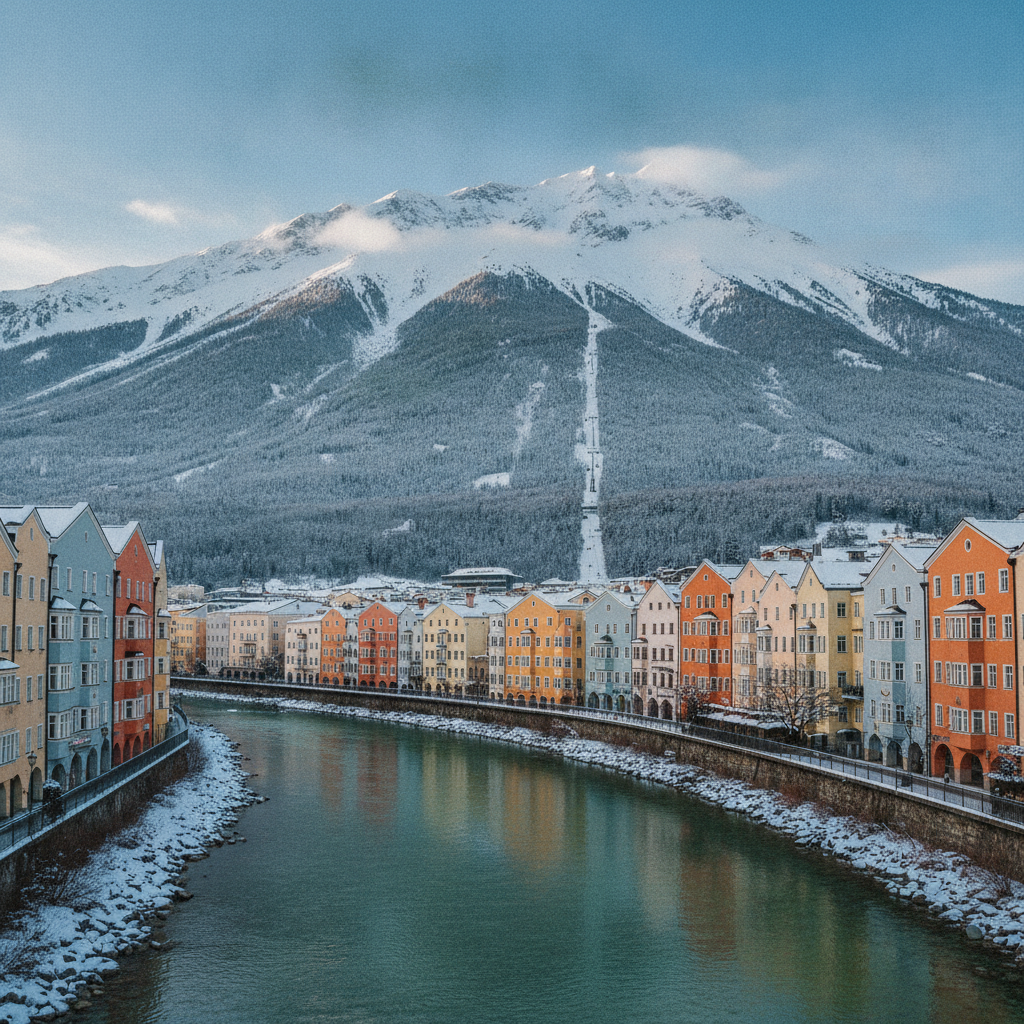
Innsbruck's position at the crossroads of the Alpine passes makes it the ideal base for day trips into the most dramatic mountain landscapes in central Europe — the Brenner Pass to Italy, the Ötztal valley, and the Karwendel Nature Reserve all within 60 minutes.
- 1
Bolzano — South Tyrol's German-Speaking Italian Capital
Bolzano/Bozen (the capital of the South Tyrol autonomous province of Italy, 90km south of Innsbruck via the Brenner Pass, accessible by train in 90 minutes at €15-25 return — the most culturally complex city in the Alps, the city German-speaking Italian-administered Austrian-heritage, the street signs in German and Italian simultaneously, the architecture Central European, the food Mediterranean, the political identity distinctly South Tyrolean): the South Tyrol Museum of Archaeology (Via Museo 43, the museum built around the permanent display of Ötzi the Iceman — the 5,300-year-old Chalcolithic mummy discovered in 1991 in the glacier at the Ötztal-South Tyrol boundary, the mummy displayed in the temperature-controlled case at -6 degrees in the specially designed room, the adjacent displays of the objects found with the mummy — the copper axe, the flint arrowheads, the leather clothing, the birch bark containers — the most significant Alpine archaeological exhibit in the world, €13 adults, daily 10am-6pm, the museum the primary reason for the Bolzano day trip from Innsbruck), the Bolzano Walther Square (the Piazza Walther/Waltherplatz, the central square of Bolzano with the 1889 statue of the medieval minnesinger Walther von der Vogelweide — the most famous Tyrolean medieval poet — the square the gathering point of the German-Italian bilingual urban life of Bolzano, the outdoor cafés from April to October serving both the Italian espresso and the Austrian Melange at the same tables), the Bolzano arcades (the Lauben — the covered arcades of the Bolzano Old Town, the medieval commercial street system identical to the Innsbruck Lauben and the Salzburg Old Town system, the most complete surviving medieval arcade commercial district in the South Tyrol, the local cheese shops selling the DOP Südtiroler Speck and the Graukäse grey cheese at €4-12 per 100g) and the Castel Roncolo (the Runkelstein Castle on the cliff above Bolzano 3km north, the 14th-century castle with the most complete secular Gothic fresco programme in the world — 120 fresco scenes of the courtly life, the tournaments, and the legends of Tristan and the Arthurian cycle — accessible by bus 12 in 15 minutes, free, Tuesday-Sunday 10am-6pm).
- 2
Merano — the Habsburg Spa Town in the South Tyrol
Merano/Meran (the spa town 30km northwest of Bolzano and 120km south of Innsbruck, accessible from Innsbruck by train via Bolzano in 2 hours at €20-35 return, the most atmospheric small city in the South Tyrol): the Kurhaus (the spa pavilion on the Passer River embankment, the Jugendstil building of 1914 by Friedrich Ohmann — the primary social institution of the Merano spa culture, the building with the concert hall used for the year-round classical music series and the Merano Music Weeks in October, the most complete surviving Central European spa architecture outside Karlovy Vary and Baden-Baden), the Empress Elisabeth connection (the Empress Elisabeth — Sisi — choosing Merano as her cure destination in 1870 following the advice of her personal physician, the choice transforming Merano from a provincial market town to the most fashionable spa destination of the Austro-Hungarian Empire, the Hotel Kaiserhof and the promenade buildings constructed for the aristocratic visitors who followed the Empress, the Elisabeth Promenade along the right bank of the Passer River named for the Empress, the most historically embedded riverside walk in the South Tyrol at 2km), the Trauttmansdorff Castle (Schloss Trauttmansdorff, the castle where Elisabeth stayed in 1870, now the Gardens of Trauttmansdorff — 12 hectares of terraced botanical gardens on the hillside above Merano with the Tyrolean landscapes garden, the Mediterranean garden, the water garden, and the panoramic terraces with the view of the Merano basin, €16 adults, April-November, one of the 10 most visited gardens in Italy) and the Merano Wine Road (the Strada del Vino/Weinstraße, the 25km circular wine route through the Merano basin vineyards, the most scenic wine route in the South Tyrol, the Lagrein and the Gewürztraminer the primary varietals grown on the warm south-facing slopes — the Gewürztraminer grape originated in the South Tyrolean village of Tramin 30km south of Bolzano, the most internationally significant grape variety native to the Austrian cultural sphere).
- 3
The Ötztal — Valley of the Iceman and Extreme Altitude
Ötztal (the 65km glacial valley cutting south from the Inn Valley 60km west of Innsbruck into the highest part of the Austrian Alps, the most dramatic single valley accessible from Innsbruck by public transport — the bus 4134 from the Innsbruck central station to Sölden at the upper valley in 90 minutes at €12 return): Sölden (the ski resort at 1,377m at the upper Ötztal, the largest ski area in Austria after St. Anton — 146km of ski runs, 33 lifts, the vertical descent 1,850m from the Gaislachkoglbahn summit at 3,058m to the Sölden valley, the ski pass €67 adults per day — the most expensive single-day ski pass in Austria, the resort famous as the filming location of the James Bond film 'Spectre' 2015 — the opening pre-credits sequence and the ICE Q restaurant at the Gaislachkoglbahn summit at 3,048m, the restaurant designed as the villain's mountain base in the film, now the most visited restaurant in the Austrian Alps at €40-80 per person for lunch with the view), the Ötzi connection (the Ötztal the valley directly adjacent to the Hauslabjoch glacier where Ötzi the Iceman was found in 1991 — the discovery site visible from the Tisenjoch summit at 3,210m accessible from the South Tyrol side, the Ötzi Dorf at Umhausen the Tyrolean cultural centre for the Iceman — the open-air archaeological recreation of a 5,300-year-old Bronze Age settlement, €10 adults, May-October) and the Timmelsjoch Pass (the high mountain pass at 2,509m connecting the Ötztal to Merano in South Tyrol, the highest paved road crossing in Austria open July-September, the motorcycling and cycling classic of the central Alps — the Giro d'Italia has crossed the Timmelsjoch 4 times — the pass road the most dramatic driveable Alpine experience accessible from Innsbruck as a full day trip by car).
- 4
The Karwendel Nature Reserve — Innsbruck's Wild Backyard
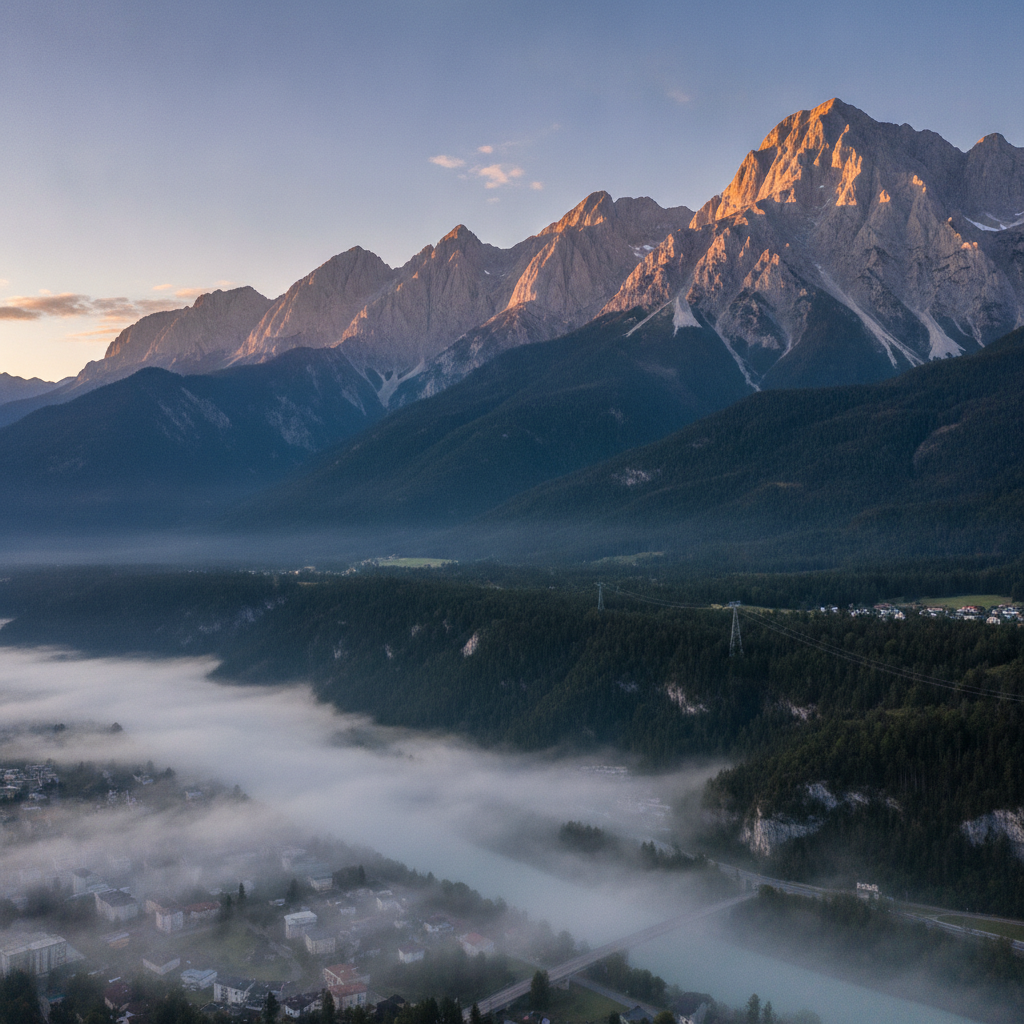
Naturpark Karwendel (the 727 square km nature reserve north of Innsbruck, the largest protected area in Austria, the most accessible wilderness from any Alpine city — the Karwendel the mountain range that forms the immediate northern backdrop of Innsbruck, the nature park boundary beginning 3km from the city centre): the Scharnitz gateway (the village of Scharnitz at 964m, 20km north of Innsbruck via the B177 road, accessible by train in 30 minutes at €6 return — the most convenient entry point to the Karwendel Nature Park, the Scharnitz Information Centre at the village the complete map and trail resources for the park, the 180km+ of marked hiking trails beginning within 200m of the train station), the Isar source (the Isar River — the river that flows through Munich 150km to the north — sourced in the Karwendel at the Isarursprung, the mountain stream emerging from the limestone rock at 1,100m accessible by a 4km forest walk from Scharnitz, the source the most celebrated geographic landmark of the Karwendel, the walk the most popular Karwendel approach for families with children), the Ahornboden (the Großer Ahornboden — the large-leaved maple valley — the most famous single landscape in the Karwendel, accessible by the bus from Schwaz east of Innsbruck to Hinterriss, the valley containing the largest single stand of large-leaved maple trees in Europe — 2,000+ trees, some 500-600 years old, the valley in October when the maple turns the most brilliant orange-gold colour — the most photographed Alpine autumn landscape in Austria, the access road closed to private vehicles in autumn weekends, the shuttle bus from Hinterriss the correct approach in the October peak) and the Karwendelmarsch (the 52km race and hiking trail from Scharnitz to Innsbruck through the heart of the Karwendel, the most demanding single-day mountain trail accessible from an Austrian city — the route crossing 4 mountain passes above 2,000m, the annual race in August completed by 3,000 participants in 5-14 hours, the trail accessible as a 2-day backpacking route for non-race participants with the overnight in the Karwendelhaus mountain hut at 1,765m).
- 5
Innsbruck's Old Town at Night — the Evening Architecture Walk
Innsbruck evening walk (the Old Town after 7pm the most atmospheric period of any day — the tourist day-trippers have departed, the Zaha Hadid funicular stations illuminated, the Nordkette still lit by the summer evening sun until 9pm, the Old Town resident restaurants and bars at their most active): the illuminated Old Town (the Goldenes Dachl illuminated by the facade spotlights from dusk, the Stadtturm — the City Tower — with its clock face lit, the Herzog-Friedrich-Straße without the daytime pedestrian crowd the most peaceful version of the best Baroque street in Innsbruck, the evening walk from the Stadtturm north through the arcades to the Inn River bridge the most civilized urban walk in the Alps, the sound of the evening bells from the Hofburg chapel at 7pm the most characteristic Innsbruck sound), the dinner options (the Innsbruck restaurant landscape at dinner time: the Goldener Adler at Herzog-Friedrich-Straße 6 — the oldest inn in Innsbruck since 1390, the historic Habsburg guests including Goethe and Mozart on tour, the Tyrolean menu at €25-45 per main — the Weisses Rössl at Kiebachgasse 8 — the Old Town restaurant with the most correct Tyrolean menu at the mid-price level — and the Marktgrill at Innrain 3, the modern Austrian grill adjacent to the Inn River, the outdoor terrace the most animated Innsbruck dinner venue in summer), the Innsbruck bridges by night (the 4 Inn River bridges connecting the Old Town to the Mariahilf district — the Innbrücke, the Universitätsbrücke, the Alte Innbrücke, and the Annasäule bridge — each offering the river view of the opposite bank at night, the Mariahilf church on the north bank illuminated by the street lamps, the most romantic riverside walk in the Tyrol the complete circuit of all 4 bridges in 90 minutes at dusk) and the cinema and concert options (the Landestheater Innsbruck at Rennweg 2 the primary opera and theatre venue — the annual season October to June with 3-4 opera productions and 4-6 theatre productions, the tickets at landestheater.at, €20-70 per performance, the most affordable opera production in the Austrian Alps at the Tyrolean state opera budget level).
- 6
The Inn Valley History — Roman Veldidena to Austrian Tyrol
Inn Valley historical survey (the Inn Valley — the German Inntal — the primary east-west Alpine corridor used by human populations since the Palaeolithic, the valley the main route through the central Alps used by the Romans, the medieval merchants, and the modern railway): Roman Veldidena (the Roman settlement at the site of Innsbruck — the Roman military fort Veldidena established 15 BCE at the Wilten district 2km south of the current Old Town, the fort the primary Roman Alpine garrison post on the Via Claudia Augusta — the Roman road from the Po Valley in Italy north through the Brenner Pass to the Danube — the Wilten Basilica built on the foundations of the Roman temple the most direct physical connection to the Roman period in Innsbruck, the Wilten district still identifiable as the Roman military zone by the grid street plan), the medieval Innsbruck (the market town founded 1180 by the Counts of Andechs on the Inn crossing — the Innsbruck name 'bridge over the Inn' identifying the primary function of the medieval settlement, the Habsburg acquisition of the Tyrol in 1363 through the inheritance of Countess Margarethe Maultasch transforming Innsbruck into the primary western Habsburg residence, the 15th-century Old Town the foundation of the current pedestrian district), the Tyrolean freedom fighters (the most celebrated figure in Tyrolean history: Andreas Hofer — the Tyrolean innkeeper and cattle dealer who led the successful Tyrolean peasant uprising against the French and Bavarian forces in 1809 during the Napoleonic Wars, the three successive Tyrolean victories at the Battle of Berg Isel — the hill immediately south of Innsbruck — in April, May, and August 1809 the most remarkable peasant military victories against a Napoleonic-era professional army, the Bergisel now the site of the Zaha Hadid ski jump and the Andreas Hofer memorial, the Hofer monument on the Bergisel the primary patriotic pilgrimage site in the Tyrol) and the 1809 legacy (the Tyrolean Landesmuseum Ferdinandeum the primary repository of the 1809 uprising documentation, the Hofer trial records, the French military correspondence, and the Tyrolean proclamations — the most historically specific collection relating to the Napoleon period outside the Viennese Heeresgeschichtliches Museum).
Walk this route with audio
Stories play automatically as you reach each stop — no tapping needed.
More in innsbruck
Innsbruck Cultural Circuit — the Hofkirche, the Ferdinandeum & the Tyrolean Folk Museum
Innsbruck Food & Drink — Tyrolean Cuisine, Alpine Markets & the South Tyrol Wine Connection
Innsbruck Alpine Adventures — Skiing, Hiking & the Stubai Glacier Year-Round
Innsbruck — the Golden Roof, the Nordkette Alps & the Tyrol's Imperial and Alpine Capital