Jaipur Essentials: Amber Fort's Mirror Palace, the Palace of Winds & the World's Largest Stone Sundial
Enter Rajasthan's Pink City—Amber Fort's Sheesh Mahal where a single candle becomes a thousand stars in floor-to-ceiling mirrors, the Hawa Mahal's 953 screened windows built so purdah-bound royal women could watch street festivals unseen, the City Palace's 340-kg silver vessels commissioned to transport sacred Ganges water to an English coronation, the Jantar Mantar's 27-metre sundial accurate to two seconds, and the old walled city painted uniformly pink by royal decree to welcome a British prince in 1876.
1. Amber Fort – The Palace Complex Above the Lake
- 1
Amber Fort – The Palace Complex Above the Lake
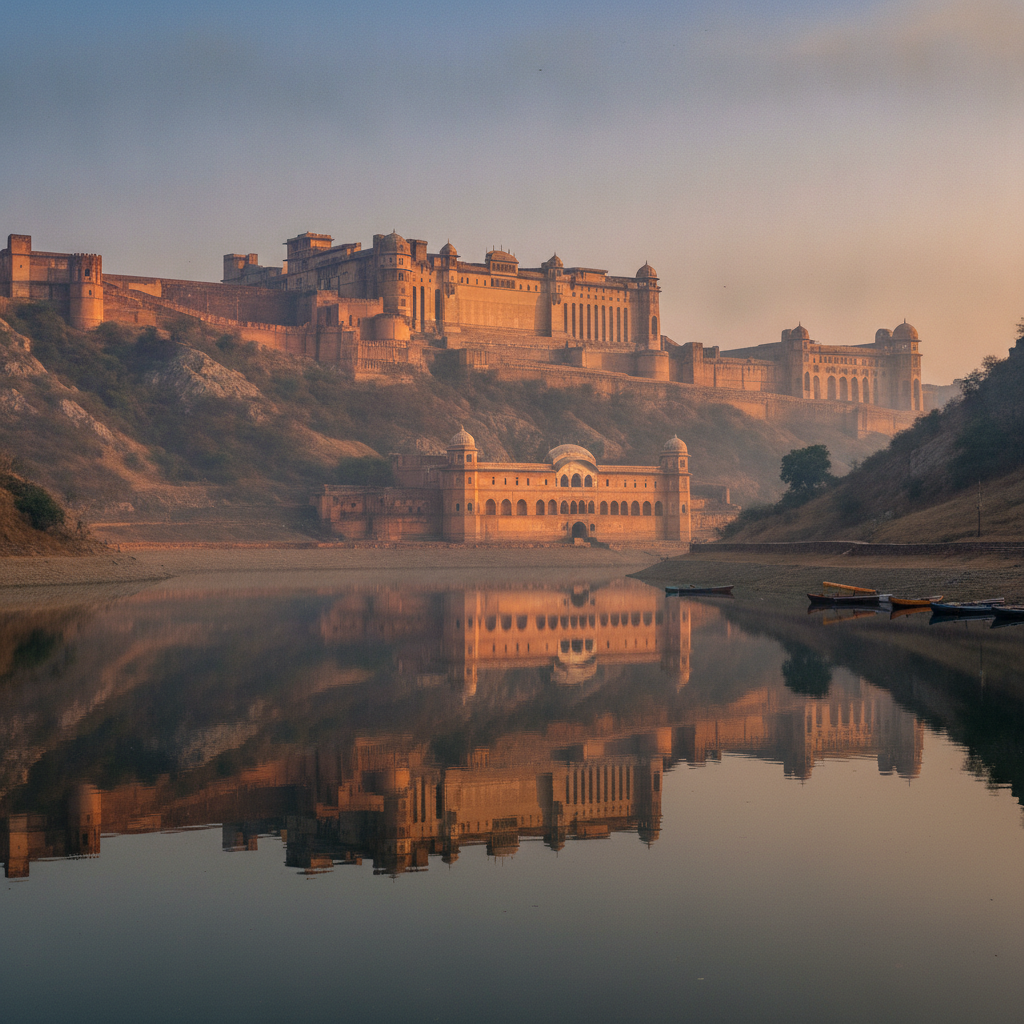
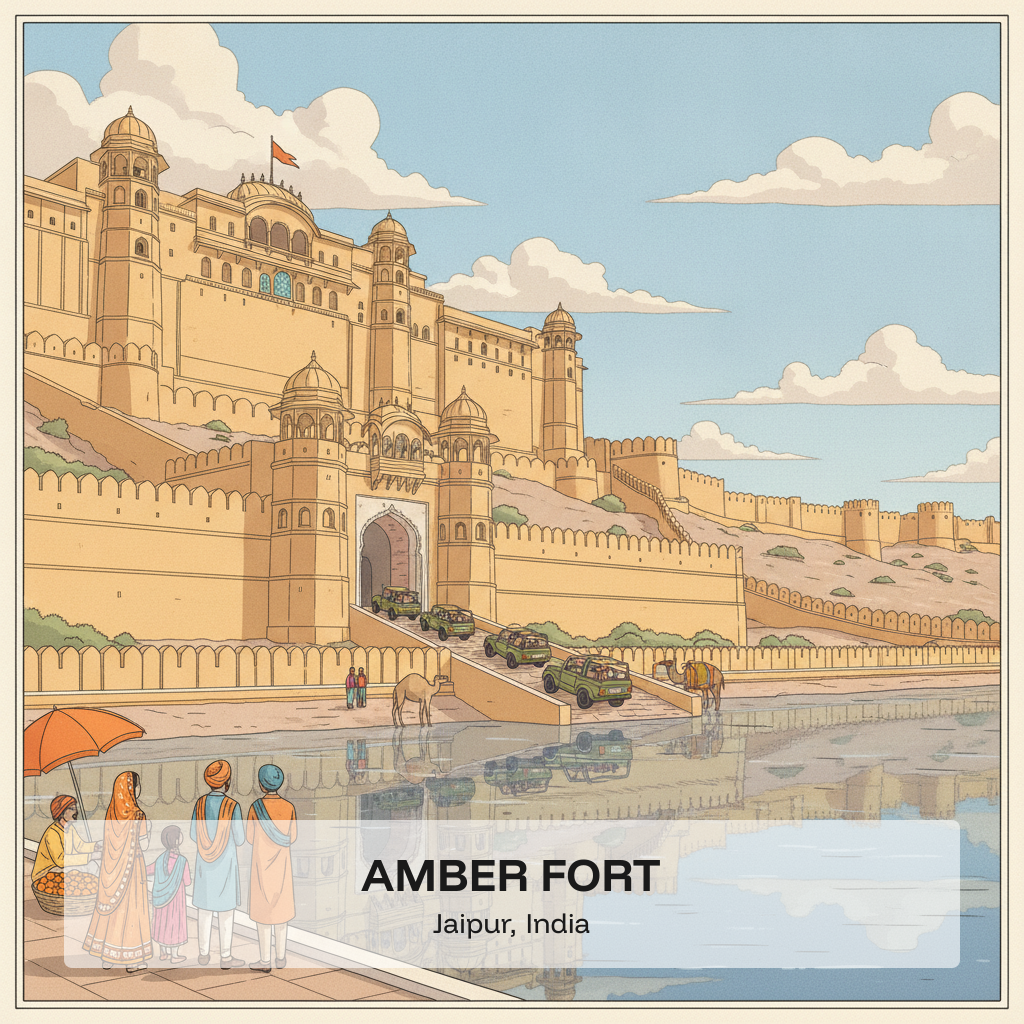
Amber Fort (Amer Fort)—11 km north of Jaipur, perched above Maota Lake on a hilltop overlooking the Aravalli range—is the finest example of Rajput-Mughal fusion architecture in India and a UNESCO World Heritage Site (2013, part of the Hill Forts of Rajasthan). Built by Raja Man Singh I in 1592 and expanded through the 17th century, the fort complex is a series of successive courtyards (chowks), palaces, and halls. The Sheesh Mahal (Mirror Palace)—a chamber whose walls and ceiling are entirely covered in tiny mirrors that reflect a single candle flame into thousands of stars—is the fort's most spectacular interior. The approach by elephant-back was banned in 2022 on animal welfare grounds; the jeep convoy remains.
- 2
Hawa Mahal – The Palace of Winds
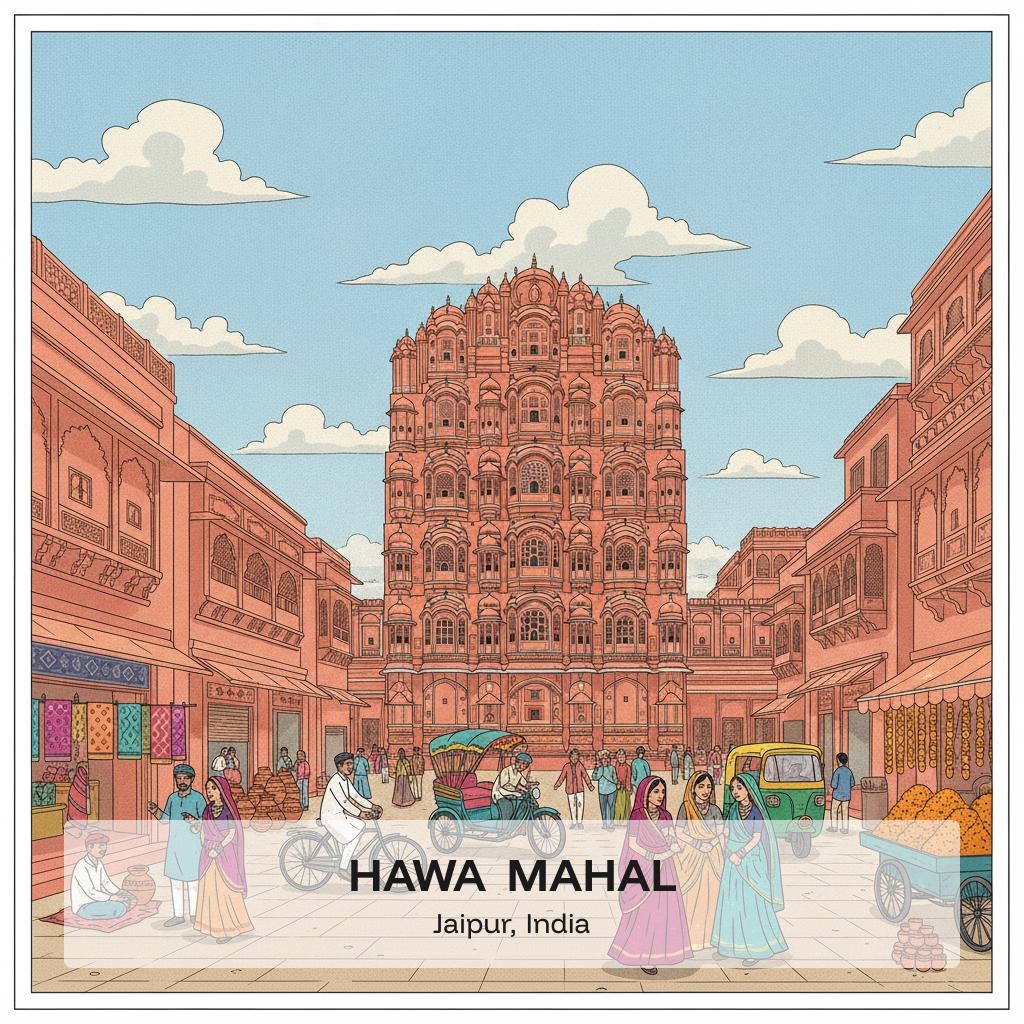
The Hawa Mahal ('Palace of Winds')—Jaipur's most iconic building, a five-storey pink sandstone screen façade on the main bazaar street—was built in 1799 by Maharaja Sawai Pratap Singh to allow royal women (who lived in purdah and could not appear in public) to observe street festivals through its 953 small screened windows while remaining unseen. It is not a palace in the conventional sense—the building has no front entrance, only a small back door, and the 'palace' is mostly the ornate façade with small rooms behind. The structure is only one room deep; its unique shape (resembling a honeycomb or the crown of Krishna) creates a natural airflow that cools the interior.
- 3
City Palace – The Maharaja's Living Palace
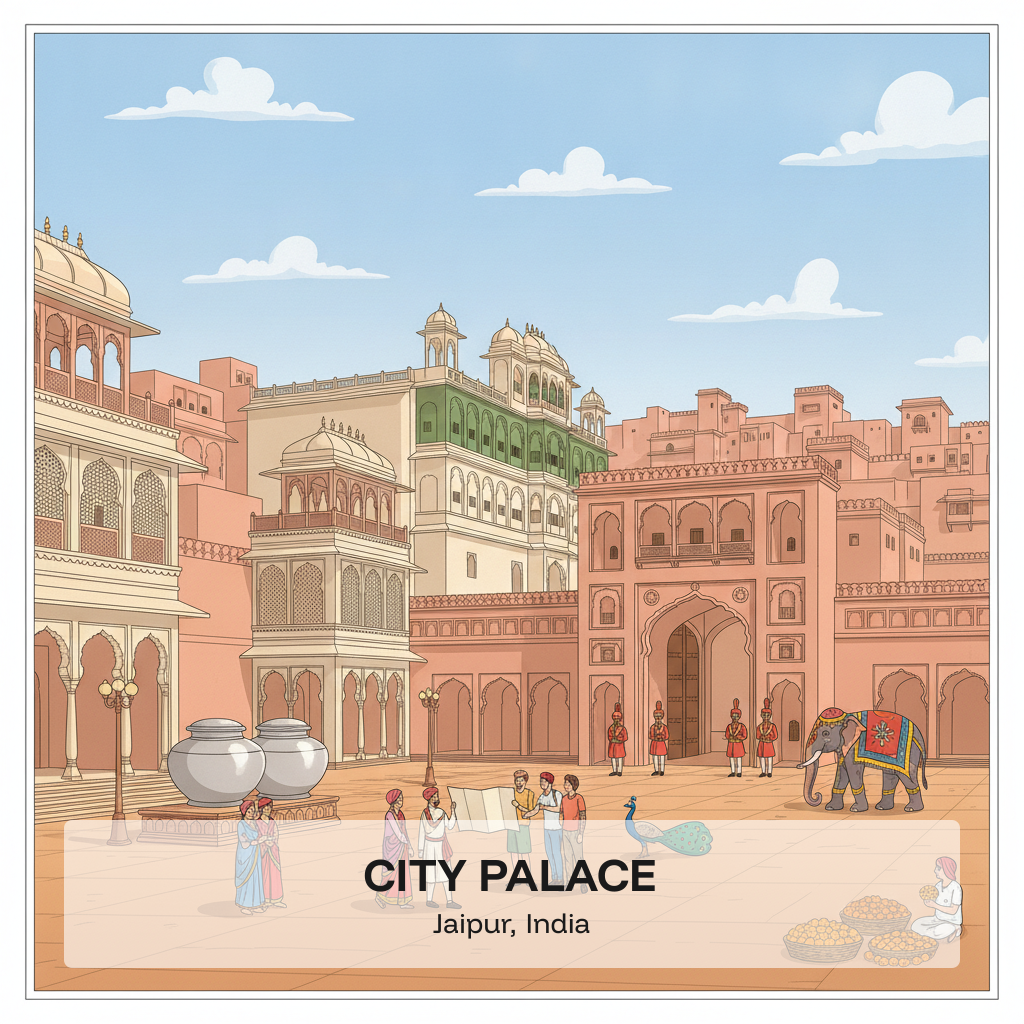
The City Palace—in the centre of old Jaipur's walled city—is a complex of palaces, courtyards, and museums that is still partly the residence of the Jaipur royal family (the Kachwaha Rajput dynasty). The Maharaja of Jaipur today is Padmanabh Singh, who was born in 2000 and became Maharaja at age 13. The City Palace museum contains two enormous silver vessels (1.4 metres tall, 340 litres capacity each, weighing 340 kg each)—the world's largest silver objects—made to transport Ganges water to England for Maharaja Sawai Madho Singh II, who refused to drink non-sacred water during his 1902 visit to King Edward VII's coronation. The Chandra Mahal (still the royal residence) can be seen from the outer courtyard.
- 4
Jantar Mantar – The World's Largest Stone Sundial
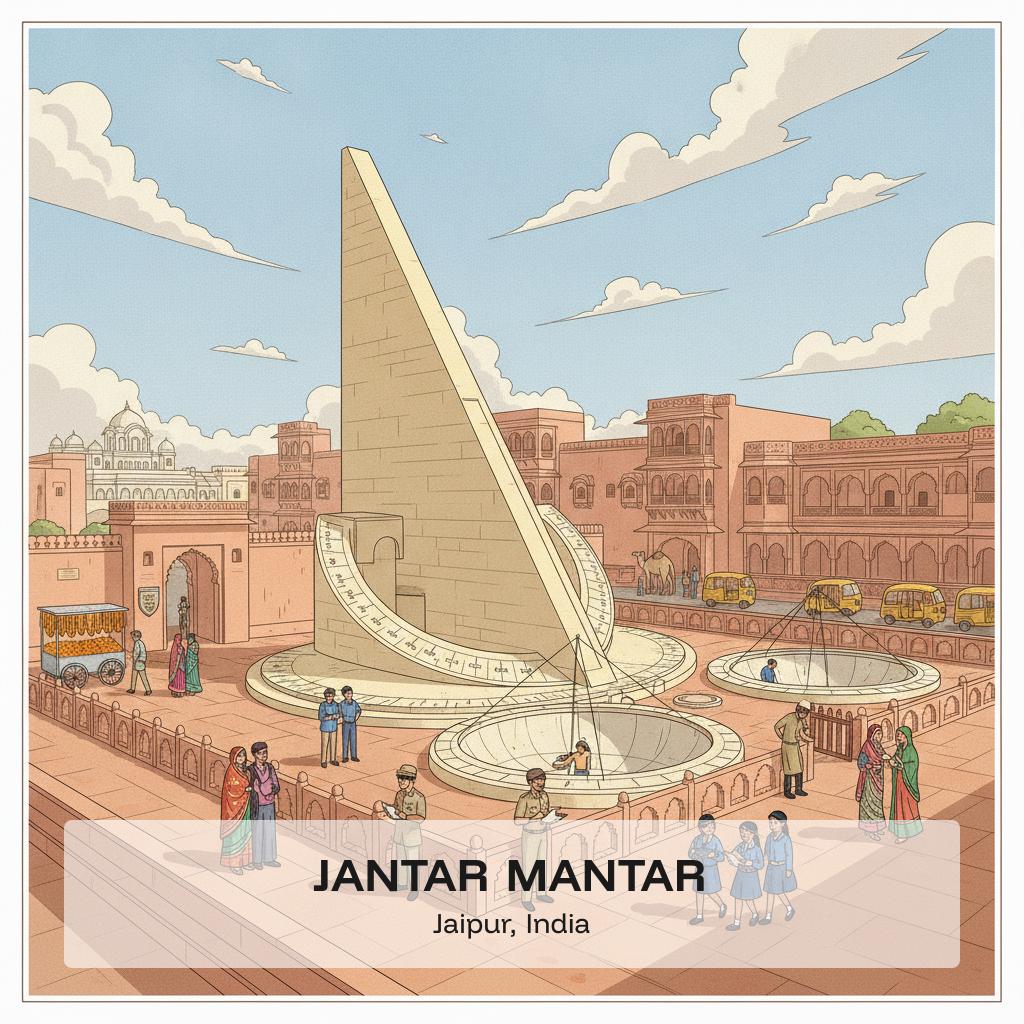
Jantar Mantar—Jaipur's UNESCO-listed astronomical observatory (2010), built by Maharaja Sawai Jai Singh II between 1727 and 1734—contains 19 astronomical instruments built of local stone and marble, the largest collection in the world. The Samrat Yantra (largest sundial in the world, 27 metres high) can measure time to an accuracy of 2 seconds; the Jai Prakash Yantra (two hemispherical sundials embedded in the ground, allowing one to walk inside them to read celestial positions) demonstrates sophisticated understanding of equatorial coordinate astronomy. Jai Singh II also built observatories at Delhi, Agra, Varanasi, and Ujjain—all still standing.
- 5
Jaipur's Pink City – The Colour-Coded Old Town
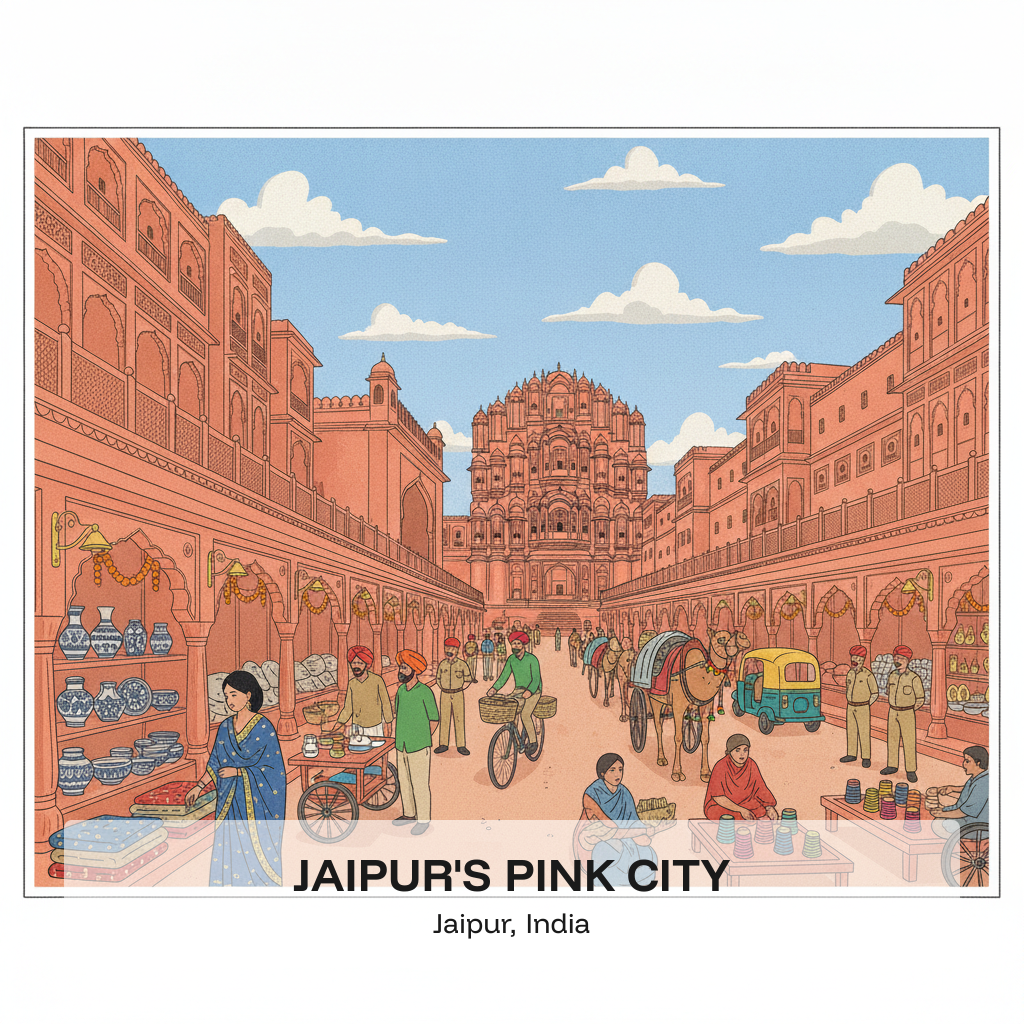
Jaipur's old walled city is known as the Pink City because its buildings are painted in a terracotta pink—the colour of hospitality in Rajput tradition, applied uniformly throughout the walled city in 1876 to welcome the visit of Prince Albert (future King Edward VII). The uniform colour coding is maintained by municipal law today. The walled city was planned in 1727 by Maharaja Sawai Jai Singh II on an ancient Hindu town-planning manual (the Shilpa Shastra) with a grid street pattern—one of the few planned cities in pre-colonial India. The main bazaars (Johari Bazaar for jewellery, Bapu Bazaar for textiles, Chandpol Bazaar for blue pottery) are the finest traditional markets in Rajasthan.
- 6
Jaipur's Gems & Blue Pottery – The Artisan Economy
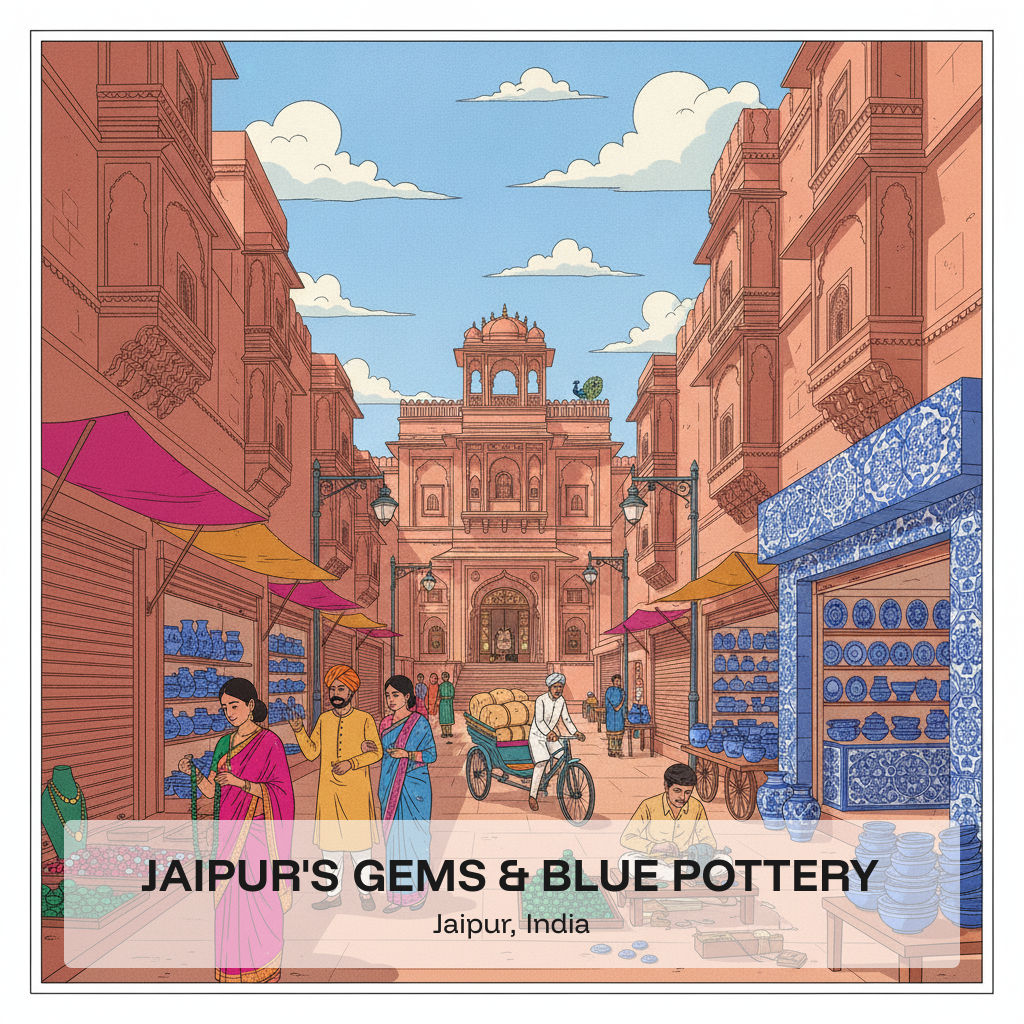
Jaipur is India's gemstone capital: the city handles an estimated 90% of India's coloured gemstone trade and 80% of the world's emerald cutting. The Johari Bazaar and surrounding lanes contain hundreds of family-run gem dealers and cutters; the Gem Palace (since 1852) is the most prestigious address, supplier to European royalty and Hollywood stars. Blue Pottery—a distinctive Jaipur craft using a Persian technique (quartz, not clay, fired at low temperature, decorated in cobalt blue on a white ground)—was revived from near-extinction by Rajasthan royal patronage in the 1950s. The craft produces tiles, bowls, vases and decorative objects now exported worldwide.
Walk this route with audio
Stories play automatically as you reach each stop — no tapping needed.
More in Jaipur
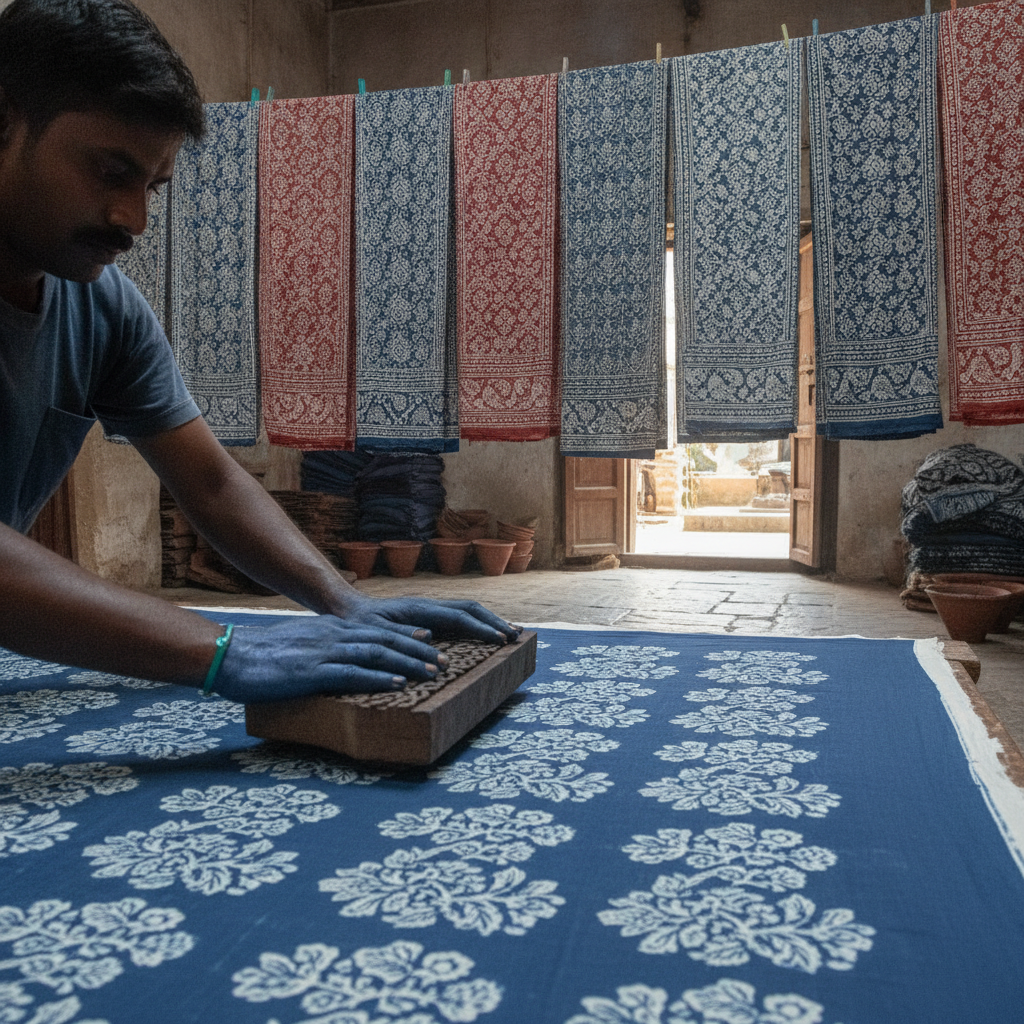
Jaipur Living: Dal Baati Churma, Hand-Block Textiles, the World's Largest Free Literary Festival & Elephant Ethics
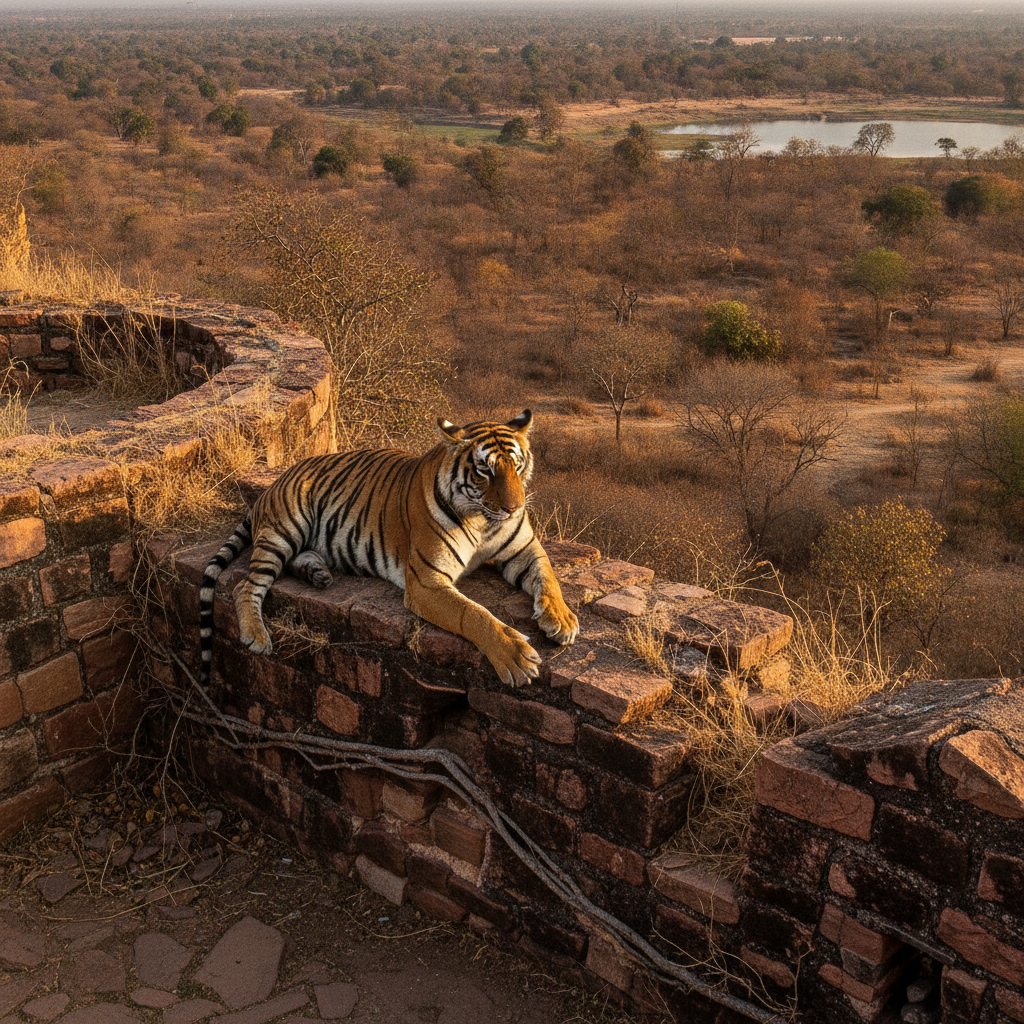
Jaipur's Hinterland: Tiger Spotting in Ruins, the World's Largest Camel Fair & Sufi Pilgrimage at Ajmer
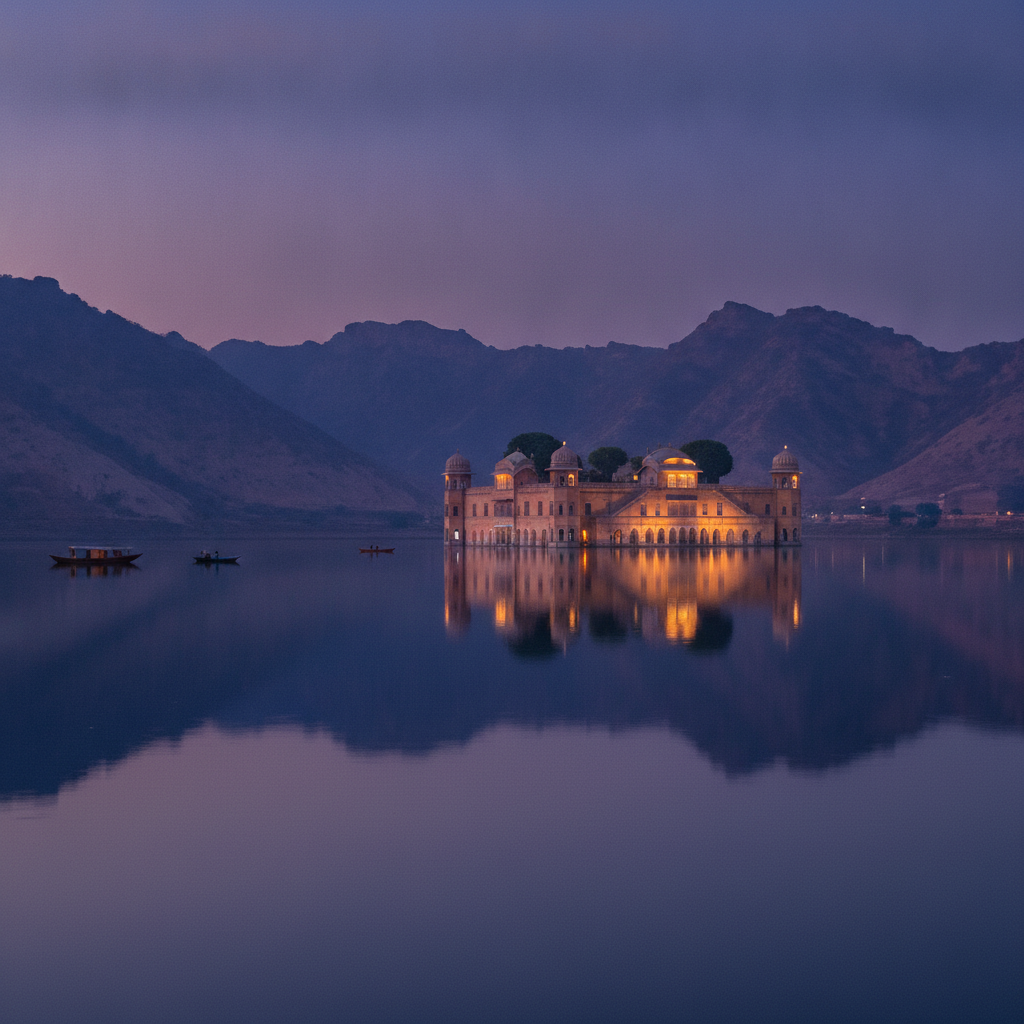
Jaipur's Dynasties: Astronomer Kings, the Most Beautiful Woman in the World & the Floating Water Palace
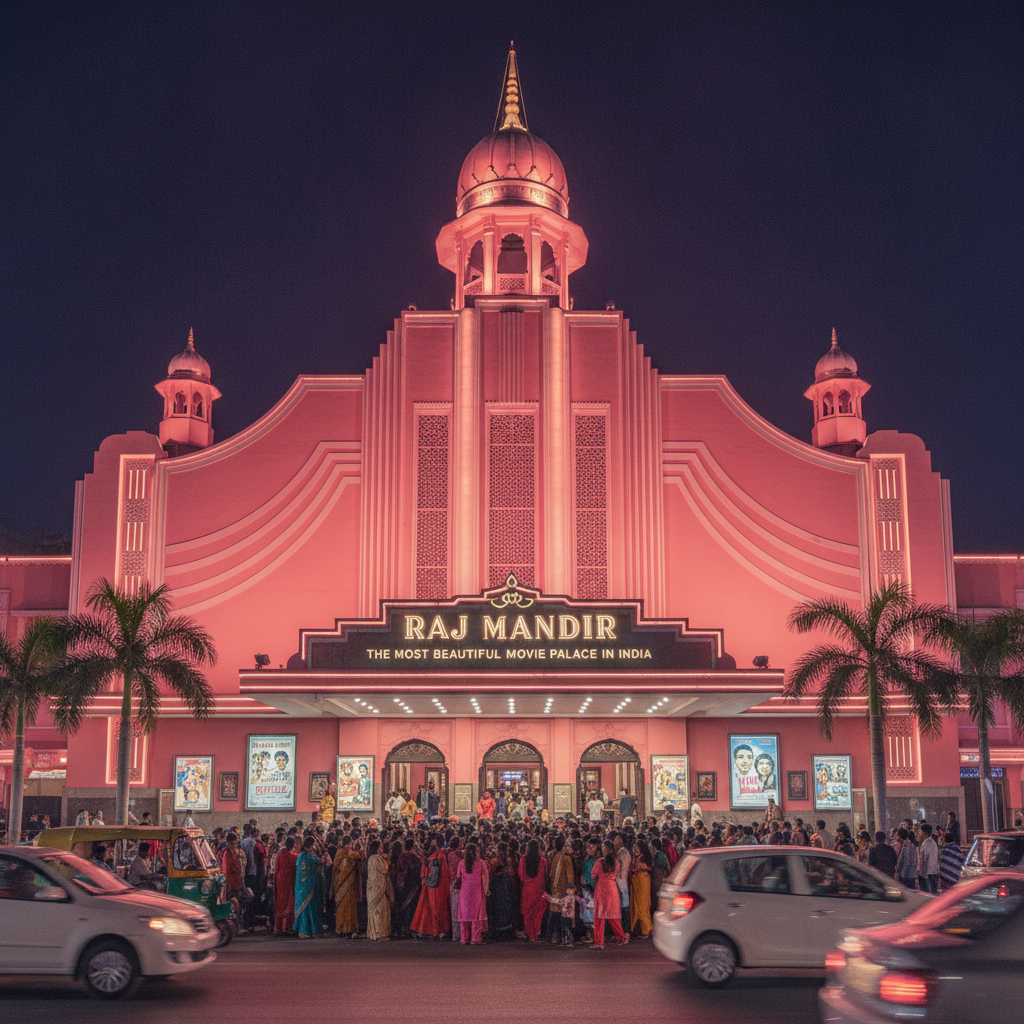
Jaipur Unfiltered: Palace-Hotels, Water Crisis, the Most Beautiful Cinema in India & Women's Safety