Jaipur Living: Dal Baati Churma, Hand-Block Textiles, the World's Largest Free Literary Festival & Elephant Ethics
Experience Jaipur's living culture—dal baati churma with ghee in a 19th-century maharaja's ballroom, hand-block printing workshops in Bagru where every family participates in centuries-old dyeing techniques, the Jaipur Literature Festival drawing 250,000 visitors free of charge to hear Nobel laureates and Booker winners over 5 January days, how Jaipur banned elephant rides after welfare investigations and replaced a festival with an ethical alternative, and getting between Delhi, Jaipur, and Agra on the Golden Triangle on $30 a day.
- 1
Rajasthani Cuisine – Dal Baati Churma & Royal Banquets
Rajasthani cuisine developed under conditions of scarcity (limited water and vegetables in the Thar Desert) and royal excess (the lavish hunting banquets of the maharajas). Dal baati churma—the iconic Rajasthani dish—combines baked wheat dough balls (baati, cooked in a wood fire), spiced lentils (dal), and crushed sweetened wheat flakes (churma), served with ghee. Laal maas (fiery mutton curry with mathania red chillies and yoghurt) is the Rajput hunter's dish. Ker sangri (dried desert berries and beans, a desert vegetable staple) survived months without refrigeration. In Jaipur, the Suvarna Mahal restaurant in the Taj Rambagh Palace (the former maharaja's palace, now the world's most voted hotel multiple times) offers royal Rajasthani cuisine in a 19th-century ballroom.
- 2
Block Printing & Textile Markets of Jaipur
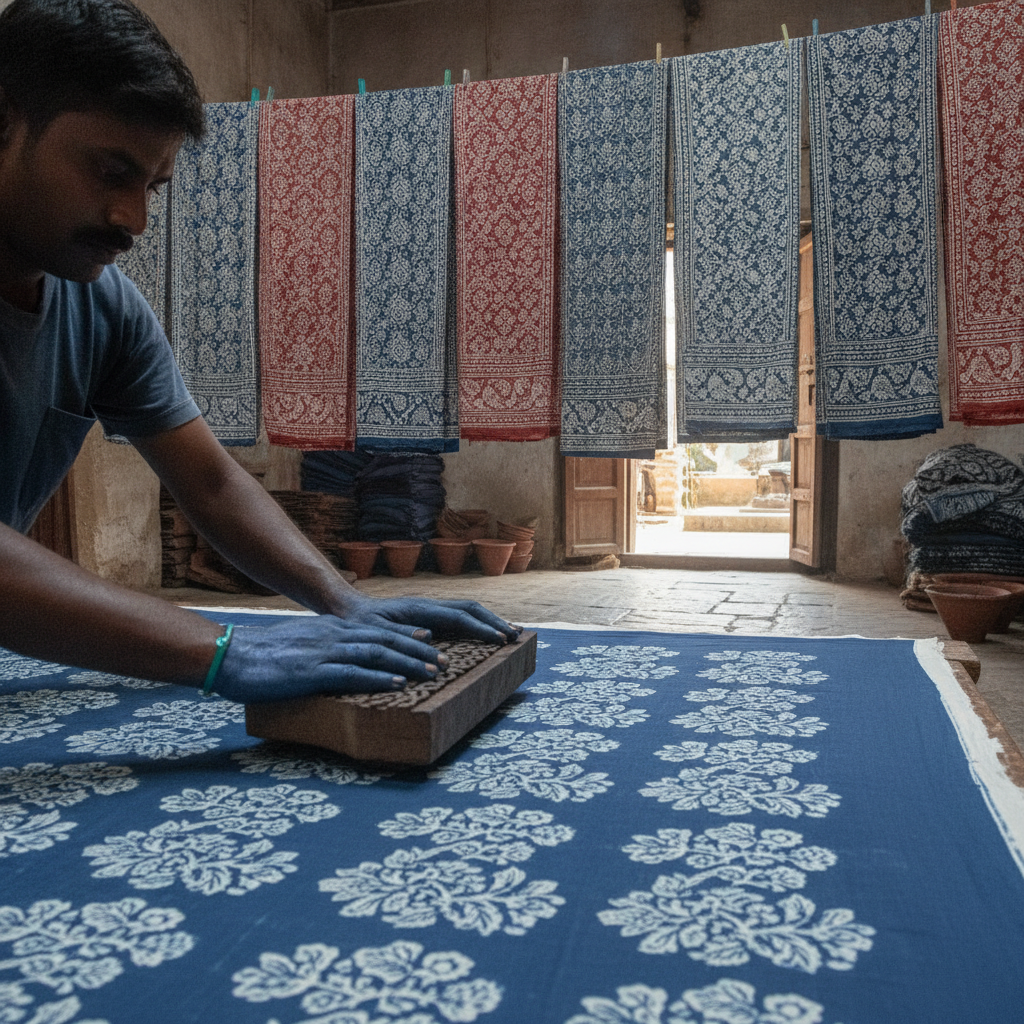
Jaipur is Rajasthan's textile capital: hand-block printing (using carved wooden blocks to apply natural dye patterns to cotton and silk), bandhani (tie-dye), and leheriya (wave-pattern) textiles are produced in workshops throughout the city. The Bagru village (32 km southwest)—a traditional block-printing community where every family is involved in some stage of the dyeing or printing process—is the most authentic production centre. The Bapu Bazaar in the old city and the boutiques of the Johari Bazaar area sell finished textiles. Fixed-price shops (Anokhi, Fabindia) are reliable for quality; the wholesale Nehru Bazaar is where dealers buy. India's most famous block-printing school is located at the Anokhi Museum of Hand Printing in Amber.
- 3
Jaipur Literature Festival – The World's Largest Free Literary Event
The Jaipur Literature Festival (JLF)—held annually in late January at the Diggi Palace, Jaipur—is the world's largest free literary festival, attracting 250,000+ visitors over 5 days and over 300 speakers from 25 countries. Since its founding in 2006 by author Namita Gokhale and director William Dalrymple, JLF has featured Nobel laureates, Booker Prize winners, and controversial figures—the Salman Rushdie affair (2012, when Rushdie's appearance was cancelled under death threat pressure) became a watershed moment for free speech debate in India. The festival is notable for simultaneous translation into Hindi, Rajasthani, and Urdu; for its street-food stalls and music performances; and for being genuinely accessible (completely free).
- 4
Jaipur's Elephant Festival & Animal Ethics
Jaipur was long associated with elephant tourism: the Amber Fort elephant rides and the Holi Elephant Festival were major tourist draws. Animal welfare concerns grew through the 2010s—investigations documented elephants used for tourism suffering from inadequate rest, inappropriate feeding, and physical abuse. Elephant rides at Amber Fort were finally banned in 2022 after sustained international campaign. The Holi Elephant Festival was discontinued in 2022, replaced by a performance celebrating elephants without riding. Elephant sanctuaries (Elefantastic, Elephant Village) that allow close interaction without riding now operate near Jaipur—a model praised by welfare organisations as a more ethical alternative to the tourism industry.
- 5
Pratap Nagar & Jaipur's Modern Face
Beyond the Pink City, Jaipur has grown into a major Indian metropolis (population 4.1 million, 2024). The new districts of Malviya Nagar, C-Scheme, and the Vaishali Nagar corridor contain modern shopping malls (World Trade Park), IT campuses (Mahindra SEZ, Sitapura industrial area), and upscale restaurants. Jaipur's metro (Phase 1 opened 2015, Phase 2 under construction) connects the old city to the new districts. The Jaipur Rugs social enterprise—founded in 1978 by Nand Kishore Chaudhary, now a $100 million company—trains rural weavers (90% women) in traditional hand-knotted carpet techniques and sells internationally, a model studied in business schools worldwide.
- 6
Practical Jaipur – Getting There & Getting Around
Jaipur is 268 km from Delhi (5 hours by road or 4.5 hours by Shatabdi express train) and 240 km from Agra (4 hours by road)—the three cities form India's 'Golden Triangle' tourist circuit. Jaipur International Airport (JAI) has direct flights to most Indian cities and some international destinations. Auto-rickshaws (₹50–150/€0.55–1.65 for short trips) and app-based taxis (Ola, Uber, ₹200–400/€2.20–4.40 for city crossings) are the main transport. The best season is October–March (temperatures 15–30°C); summer (April–June) temperatures reach 45°C. Hotels range from ₹500 guesthouses to ₹35,000+/night at the Rambagh Palace. Bargaining in fixed-price shops is not appropriate; in bazaars, expect to start at 60–70% of the asking price.
Walk this route with audio
Stories play automatically as you reach each stop — no tapping needed.
More in Jaipur
Jaipur's Hinterland: Tiger Spotting in Ruins, the World's Largest Camel Fair & Sufi Pilgrimage at Ajmer
Jaipur Essentials: Amber Fort's Mirror Palace, the Palace of Winds & the World's Largest Stone Sundial
Jaipur's Dynasties: Astronomer Kings, the Most Beautiful Woman in the World & the Floating Water Palace
Jaipur Unfiltered: Palace-Hotels, Water Crisis, the Most Beautiful Cinema in India & Women's Safety