Jakarta's Transitions: Wayang Orang at the Bharata Theatre, Suharto's 1998 Fall & Prabowo's 2024 Presidency
The cultural and political Jakarta—batik's UNESCO Intangible Cultural Heritage status administered from a city where the best tulis hand-drawn pieces come from Yogyakarta, the Bharata Theatre's Friday wayang orang in full Javanese court costume for audiences of older Jakartans (5–8 hours, arriving at half-time is normal), South Jakarta's Gayo and Mandheling single-origin coffee culture in the independent roasters of Cipete, Indonesia's 300 ethnic groups and 700 languages meeting in a city where Bahasa Indonesia is often the first language of young Jakartans before their heritage tongue, the May 1998 student occupations and anti-Chinese violence that ended Suharto's 32-year New Order (and the military instigation investigations that were never fully concluded), and Prabowo's 2024 presidency watched internationally given his Kopassus special forces command history.
- 1
Batik & Wayang – Jakarta's Javanese Cultural Heritage
Jakarta is the centre of distribution (if not always production) for Indonesia's two most internationally recognised art forms: batik (the wax-resist fabric dyeing technique that UNESCO inscribed as an Intangible Cultural Heritage in 2009) and wayang kulit (shadow puppetry—the oldest continuing theatrical tradition in the world, with roots in Hindu-Buddhist Java from the 9th century). Batik: the highest quality batik is produced in Yogyakarta and Solo (tulis—hand-drawn with a canting wax pen on silk or cotton), while the most affordable (cap—stamp-printed) batik is mass-produced across Java; the Batik Museum in Kota Tua (in the Wayang Museum building) and the Batik Keris store chain offer the full range from batik T-shirts to collector pieces worth millions of rupiah. Wayang kulit: Jakarta's Wayang Museum (Kota Tua) houses one of the world's finest collections of shadow puppets from across the Indonesian archipelago; the national museum's ethnography section has additional examples. Wayang performances (3–8 hours in traditional format) are rare in Jakarta compared to Yogyakarta; the Cultural Park (Taman Ismail Marzuki—the city's primary performing arts complex) occasionally programmes wayang performances.
- 2
South Jakarta's Creative Districts – Kemang to Cipete
South Jakarta—the leafy residential area developed primarily in the 1970s–1990s for Jakarta's upper-middle class and expatriate community—has evolved into the city's most cosmopolitan and creatively active neighbourhood cluster. Kemang: the primary international district (heavily expat-populated, with European restaurants, international schools, embassy residences), anchored by Kemang Village mall and the street-level café and restaurant scene on Kemang Raya. Cipete: immediately south, more local and less expensive, the centre of Jakarta's artisanal food scene (independent coffee roasters, bread bakeries, local designers). Blok M: the transit hub of South Jakarta (the MRT station and the shopping area around it—Blok M Plaza, a Japanese-favoured shopping centre, the legacy of the Japanese business community's concentration in this area): a different demographic from Kemang, younger and more Indonesian than international. The food and café culture: South Jakarta's independent coffee shop scene is one of the most active in Southeast Asia—the Speciality Coffee Association of Indonesia (SCAI) has developed a significant Indonesian specialty coffee culture drawing on the distinctive beans of Sumatra (Gayo, Mandheling), Flores, Toraja, and Bali (Kintamani).
- 3
Jakarta's Population Diversity – 300 Ethnic Groups in One City
Jakarta's position as national capital has made it the most ethnically diverse city in the world's most ethnically diverse large nation: Indonesia's 270 million people belong to over 300 officially recognised ethnic groups speaking 700+ languages (the largest: Javanese—40% of the population; Sundanese—15%; Malay; Madurese; Batak; and dozens more). Jakarta's diversity: the Javanese majority (migration from Central and East Java—historically the most populous area of Indonesia) is concentrated in the outer suburban areas and in the formal employment sector; the Sundanese (indigenous to West Java, of which Jakarta is historically a part) maintain a presence in the western districts; Betawi (the indigenous Jakartans, now a minority in their own city) are concentrated in the kampung; migrants from Sumatra (Batak, Minangkabau), Kalimantan, Sulawesi (Bugis, Makassar), and Maluku have their own community concentrations. The common language: Bahasa Indonesia (a standardised form of Malay, adopted as the national language at independence in 1945)—most urban Jakartans are functionally bilingual in their ethnic language and Bahasa Indonesia; many young Jakartans speak Bahasa Indonesia as their primary language, with their ethnic language a secondary or tertiary competence.
- 4
Jakarta's Reformasi Era – From Suharto's Fall to Democracy
The fall of Suharto on May 21, 1998—following street protests, student occupation of the parliament building, and the withdrawal of military support after 32 years in power—is the defining political event in modern Indonesian history and one of Asia's most significant democratic transitions. The 1998 crisis: triggered by the Asian Financial Crisis (the rupiah lost 80% of its value against the dollar in 1997–1998), student demonstrations began at universities; May 13–15 saw the most violent episode (the May 1998 riots—anti-Chinese violence in which over 1,000 died, concentrated in Glodok and the malls of the Chinese business districts; the violence was later investigated for possible military instigation). Suharto's resignation on May 21 was followed by the 'Reformasi' period: three successive presidents in three years (Habibie, Wahid, Megawati), East Timor's independence referendum (1999), the decentralisation of government to regional and local authorities (replacing the New Order's centralised control), and the gradual consolidation of democratic norms. Indonesia's democracy has faced significant challenges since—military interference, corruption, Islamic political movements—but the 1998 transition has been broadly maintained through four competitive presidential elections (2004, 2009, 2014, 2019, 2024).
- 5
Jakarta's Wayang Orang & Performing Arts Scene
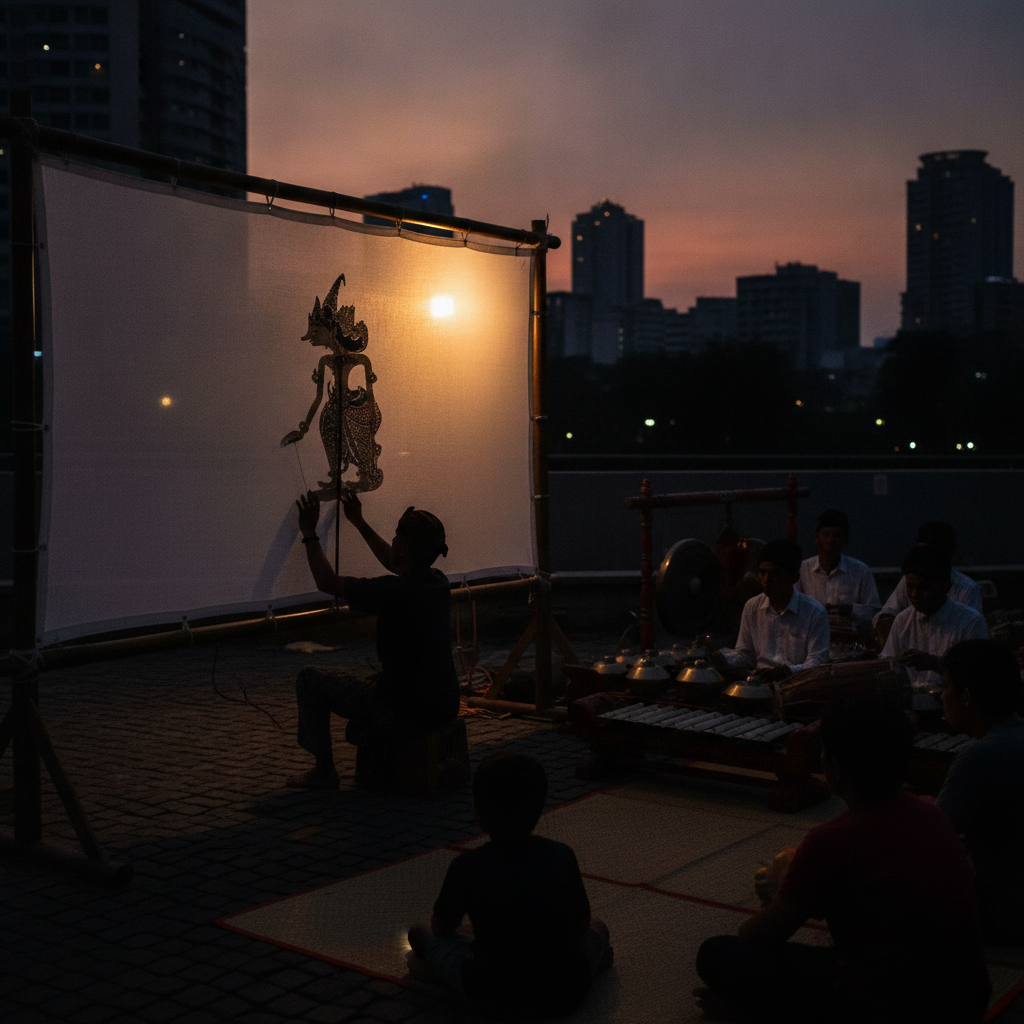
Wayang orang ('human shadow play'—the theatrical form in which human actors perform the roles normally played by shadow puppets, in full Javanese court costume, with the same gamelan music accompaniment)—is one of the most demanding of the traditional Javanese performing arts and is maintained in Jakarta primarily by the Bharata Theatre (Senen district, Central Jakarta—the last commercial wayang orang venue in Indonesia, operating since 1972, offering performances Friday and Saturday nights). The Bharata: a genuine working traditional theatre, not a cultural museum or tourist show—the audience is primarily older Javanese Jakartans who grew up with the tradition; the performances last 5–8 hours (arriving for the second half is common practice); the stories are drawn from the Mahabharata and Ramayana. The gamelan: the bronze percussion ensemble (gong ageng, saron, bonang, gender, kendhang drum) whose music is the sonic foundation of all wayang forms; the Jakarta gamelan tradition draws from both Javanese (Central and East Java) and Sundanese (West Java) musical styles, the two major gamelan traditions differing in timbre, tuning, and repertoire. Taman Ismail Marzuki (TIM—the national performing arts centre in Menteng): the premier venue for contemporary dance, theatre, and music in Jakarta.
- 6
Jakarta in Transition – Prabowo's Indonesia & the City's Future
Jakarta in 2026 is a city in multiple simultaneous transitions: the capital relocation to Nusantara (ongoing, with the first government offices operational and the full transfer expected in the early 2030s); the governorship's evolving role as Jakarta transforms from national capital to 'global city' (the post-capital status is being planned as an opportunity to redesign Jakarta for livability rather than administrative function); and the political context of President Prabowo Subianto's government (inaugurated October 2024). Prabowo's administration: the former military commander and son-in-law of Suharto, who ran unsuccessfully for president in 2014 and 2019, won the 2024 election in the first round with 58.6% of votes. His presidency has been watched with particular attention given his military career record (he commanded the Kopassus special forces during the period of alleged human rights abuses in 1997–1998 East Timor and the alleged kidnapping and torture of political activists). Jakarta's future: the city will remain Indonesia's largest economic centre regardless of capital relocation; the question is whether the departure of the national government creates an opportunity for genuinely reforming the city's infrastructure, livability, and environmental condition—or whether political attention and investment simply follows the government to Nusantara.
Walk this route with audio
Stories play automatically as you reach each stop — no tapping needed.
More in Jakarta
Jakarta's Layers: 1740 VOC Massacre of 10,000 Chinese, Dangdut's Tabla Beat & 40% of the City Below Sea Level
Jakarta Living: Bakso Carts at 2am, Ruang Rupa's 2022 documenta Win & the Thousand Islands' Polluted Reefs
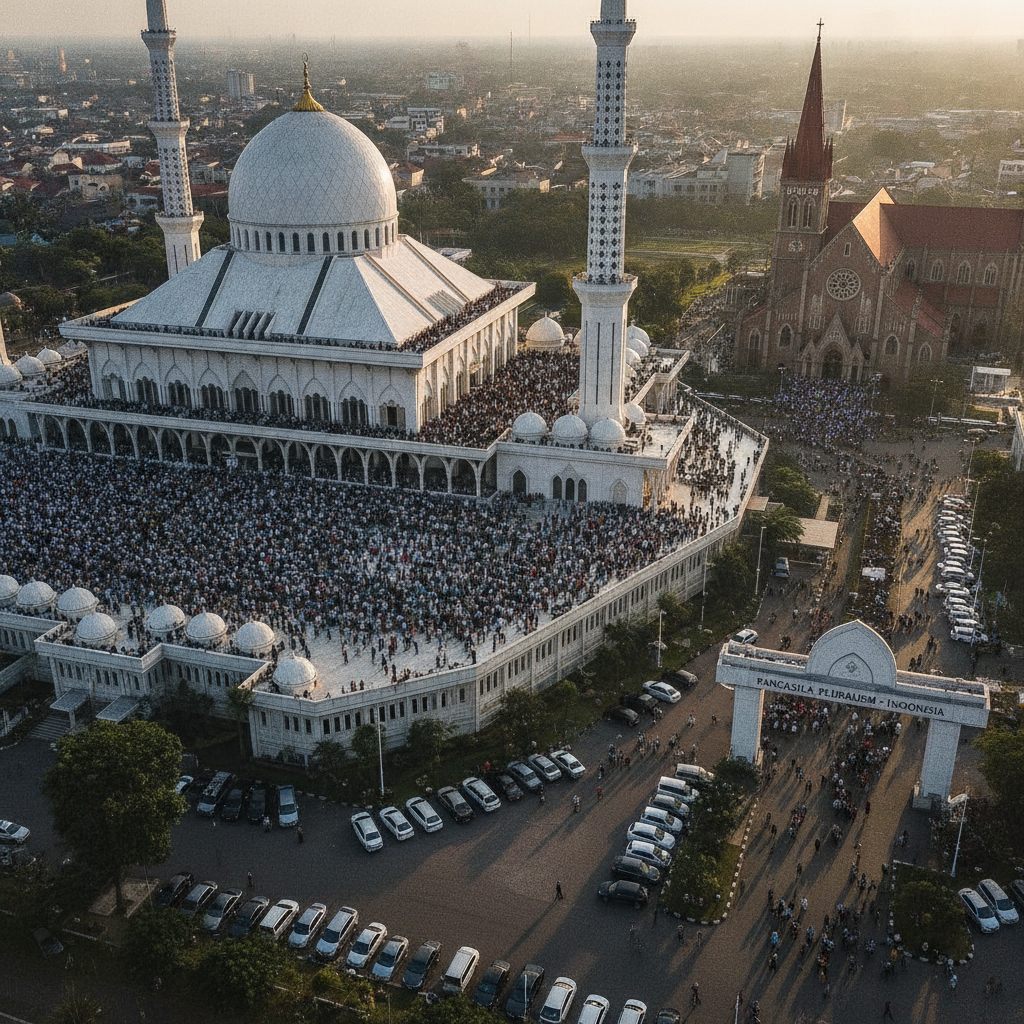
Jakarta's Permanence: Istiqlal Mosque Facing the Cathedral, Bogor's 15,000-Plant Botanic Garden & the City Worth Staying
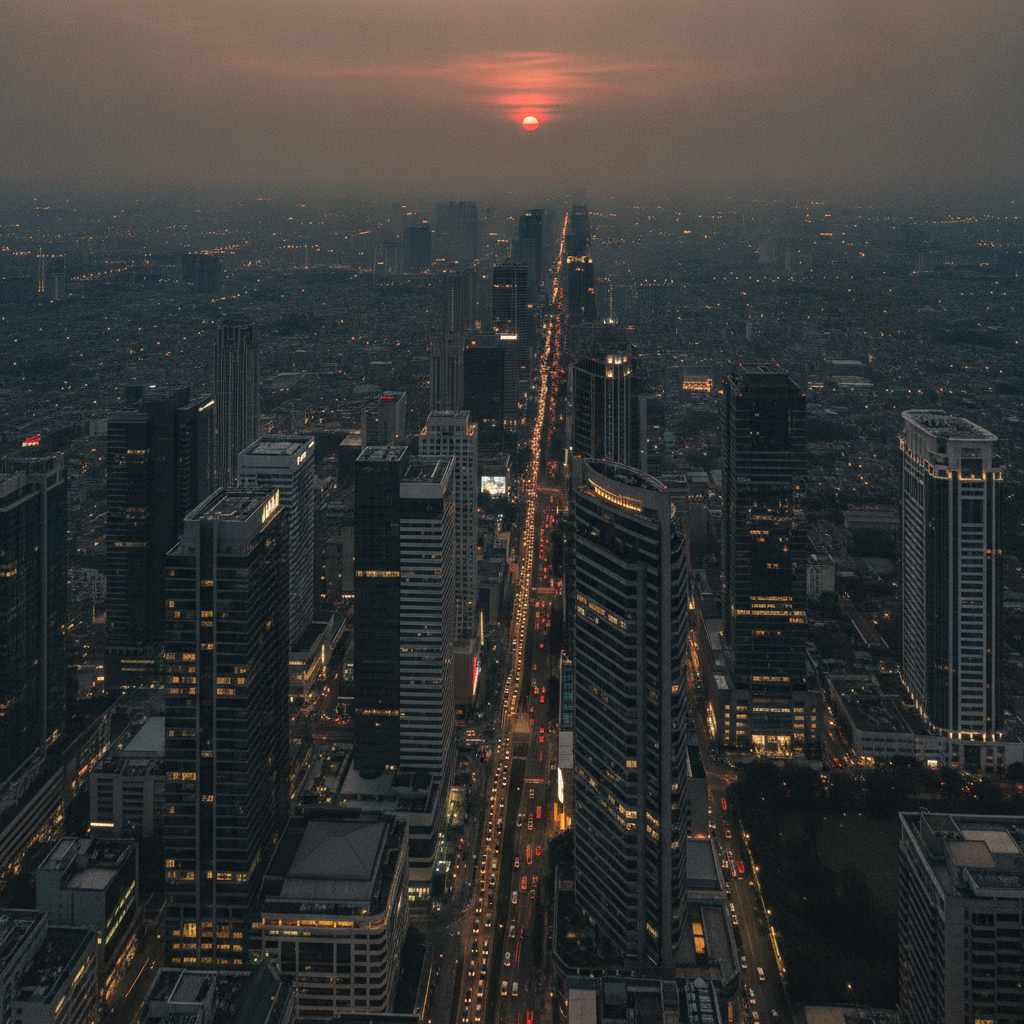
Jakarta's Legacy: Sukarno's 1962 Asian Games Rejection of Western Governance, Ciliwung's 100 Tonnes of Daily Plastic & What Comes After