Jakarta: Dutch VOC Town Hall in Kota Tua, World's Worst Traffic & Nusantara Rising in Borneo's Forest
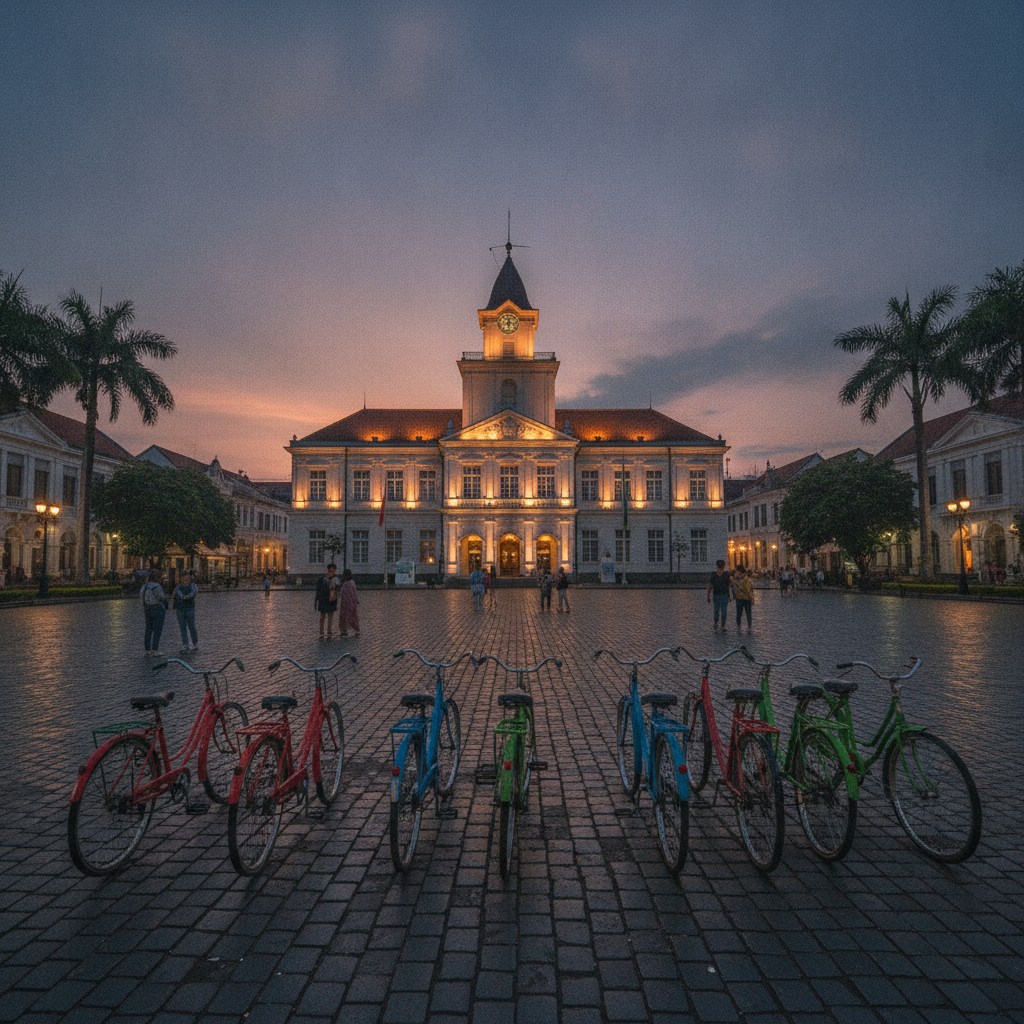
Southeast Asia's largest city in full scale—Kota Tua's Fatahillah Square where the 1710 Dutch Town Hall now holds Jakarta's history museum and coloured bicycles are the only sane transport, the INRIX-ranked world's worst traffic solved (partially) by TransJakarta's 251 km BRT network and a metro that opened in 2019, soto Betawi's coconut milk beef soup and kerak telor omelette from the indigenous Betawi people whose city was transformed by the VOC, Monas' 50 kg gold flame above a diorama of 80 scenes from Indonesian history in the underground museum, the 170+ shopping malls that replaced public space in a city too hot and too congested for streets, and the $35 billion Nusantara new capital being carved from East Kalimantan forest because 40% of Jakarta is already below sea level.
- 1
Kota Tua – Old Batavia's Dutch Heritage
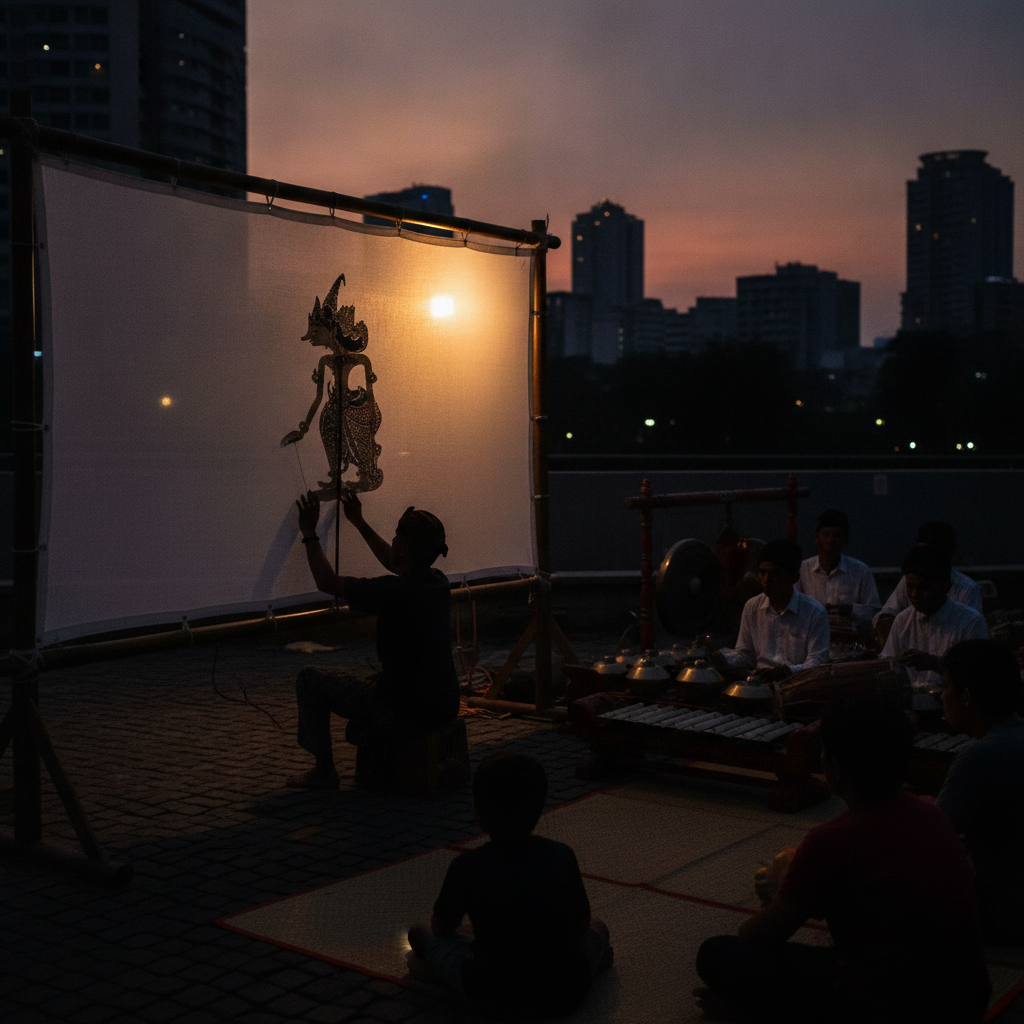
Kota Tua ('Old City'—the former Batavia, the capital of the Dutch East Indies from 1619 to 1942)—the 1.3 km² heritage district in north Jakarta centred on Fatahillah Square—is the best-preserved remnant of the Dutch colonial city that was, in the 17th–18th centuries, one of the wealthiest and most architecturally ambitious European colonial constructions in Asia. Fatahillah Square (formerly the Stadthuisplein—Town Hall Square): surrounded by 17th–18th century Dutch administrative buildings including the Jakarta History Museum (the restored VOC [Dutch East India Company] Town Hall of 1710, containing a collection of colonial-era artefacts), the Wayang Museum (puppets and masks from across the Indonesian archipelago), and the Ceramic Museum. The 17th Street waterfront (the old Batavia harbour area)—where Dutch merchant ships loaded spices from the Banda Islands—is partially restored with pedestrian zones and canal views. The bicycle hire culture: Kota Tua is the one area of Jakarta where cycling makes sense—the flat, partially pedestrianised heritage area can be explored on the brightly coloured bicycles rented by the hour near Fatahillah Square.
- 2
Jakarta's Traffic Crisis & Commuter Culture
Jakarta's traffic—consistently ranked among the worst in the world (INRIX Global Traffic Scorecard has ranked Jakarta as the most congested city in the world in multiple years)—is the defining daily experience of the city for its 10.5 million residents (metro area 32 million), and a subject of political attention, engineering investment, and social comedy that permeates Indonesian popular culture. The causes: a decades-long subsidy for private car and motorcycle ownership (fuel subsidies kept petrol cheap until 2014 reforms), inadequate investment in public transport infrastructure relative to population growth, and a road network designed for a city of 2 million that now serves 10 million. The solutions deployed: TransJakarta (bus rapid transit—the world's longest BRT network at 251 km, with 13 corridors, operating since 2004), the MRT Jakarta (Mass Rapid Transit—the first metro line opened March 2019, the second line under construction), the KRL Commuterline (suburban rail network connecting Jakarta to satellite cities Bogor, Bekasi, Tangerang). The solution that didn't work: odd-even number plate restrictions for private cars were tried and abandoned; the 3-in-1 car-pool rule generated a 'joki' industry of people paid to be the required extra passengers.
- 3
Jakarta's Food Scene – Nasi Goreng to Betawi Cuisine
Jakarta's food culture is the most diverse in Indonesia—a product of its position as the national capital (drawing migrants from all 17,000 islands) and its Dutch, Chinese, and Malay colonial layers. The Betawi cuisine (the indigenous food tradition of the Betawi people—the original inhabitants of the Batavia area, descendants of the mixed population created by VOC-era forced migration from across the archipelago): soto Betawi (a rich coconut milk beef soup with potato and tomato—one of Indonesia's finest soups), kerak telor (a spiced omelette of glutinous rice and egg cooked on a charcoal grill, sold at traditional markets), asinan Betawi (a pickled vegetable and peanut sauce salad). The national institutions served in Jakarta: nasi goreng (the ubiquitous fried rice, cooked with sweet soy sauce, shrimp paste, and egg), sate (satay—grilled meat on bamboo skewers with peanut sauce), gado-gado (vegetables in peanut sauce), and the full range of Indonesian regional cuisines in the city's restaurant scene. The food court culture: Jakarta's enormous shopping mall complexes (each mall has multiple food courts) are the primary casual dining infrastructure for the middle class—air-conditioned, accessible, and offering the full range of Indonesian and Asian cuisines at moderate prices.
- 4
The National Monument (Monas) & Indonesia's Independence
The National Monument (Monas—Monumen Nasional)—a 132-metre obelisk topped by a 14.5-tonne bronze flame covered in 50 kg of gold, rising from the centre of Merdeka Square in central Jakarta—is the most prominent symbol of Indonesian independence and the focal point of the country's national identity. Built between 1961 and 1975 (construction was interrupted by the 1965 coup and Suharto's transition to power)—Monas was conceived by President Sukarno as a monument to Indonesian independence from the Dutch (achieved August 17, 1945). The underground museum: the base of Monas contains a diorama museum (80 dioramas depicting Indonesian history from pre-colonial kingdoms through independence) and a freedom hall containing a bronze replica of the independence declaration. The summit: a lift inside the obelisk reaches the observation platform (115 metres)—the 360-degree view of Jakarta from this platform shows the full sprawl of the metropolitan area, the haze above it (Jakarta has some of the worst air quality in Asia), and on clear days (rare) the mountains of West Java to the south. Merdeka Square: the 1 km² green square around Monas is Jakarta's primary public open space—used for Independence Day ceremonies (August 17—the largest annual event in Indonesia, attended by the President).
- 5
Jakarta's Shopping Mall Culture – The AC Palace
Jakarta's relationship with its shopping malls is one of the most intense human-built environment symbioses in the world: the city has over 170 shopping malls (the highest density of mall floor space per capita of any major city in the world), and for much of Jakarta's middle and upper-middle class, the mall is the primary public social space, entertainment venue, restaurant destination, and community hub. The origins: Jakarta's extreme heat and humidity (year-round temperature 28–35°C, humidity 70–90%), combined with the traffic conditions that make street-level public space unpleasant and sometimes dangerous, pushed social life indoors; the air-conditioned mall became the substitute for the public square, the park, and the high street. The scale of the largest malls: Grand Indonesia (GI—350,000 m², the largest mall in Southeast Asia at opening in 2007), Pacific Place, Plaza Indonesia, Senayan City—each a multi-floor complex of international and local brands, food courts, cinemas, children's play areas, and often a hotel attached. The critique: Jakarta's mall culture has been analysed by urban planners as a symptom of the city's failure to create liveable public space; the parks that exist (Monas, the Ragunan Zoo) are inadequate for 10 million people.
- 6
The Capital Relocation – Nusantara & Jakarta's Future
Indonesia's decision to relocate the national capital from Jakarta to Nusantara—a new city being constructed in the Penajam Paser Utara regency of East Kalimantan (Borneo), 2,000 km from Jakarta—is one of the most ambitious and controversial urban planning decisions of the 21st century. The reasons: Jakarta is sinking (parts of North Jakarta have subsided 2–5 metres in the past 30 years due to excessive groundwater extraction, and 40% of the city is now below sea level); the flooding is worsening (Jakarta floods regularly, with 2007, 2020, and 2022 floods causing massive disruption); the air quality is persistently poor; the traffic is unmanageable; and the economic concentration of Jakarta (which generates approximately 17% of Indonesia's GDP despite housing 4% of the population) has created severe regional inequality. Construction of Nusantara began in 2022; the government office complex is expected to be operational by 2028; full relocation of government functions is planned for the early 2030s. The counterarguments: the cost ($35 billion estimated), the environmental impact on the Borneo forests being cleared, and the question of whether a new capital serves Indonesia's development priorities better than fixing Jakarta.
Walk this route with audio
Stories play automatically as you reach each stop — no tapping needed.
More in Jakarta
Jakarta's Layers: 1740 VOC Massacre of 10,000 Chinese, Dangdut's Tabla Beat & 40% of the City Below Sea Level
Jakarta Living: Bakso Carts at 2am, Ruang Rupa's 2022 documenta Win & the Thousand Islands' Polluted Reefs
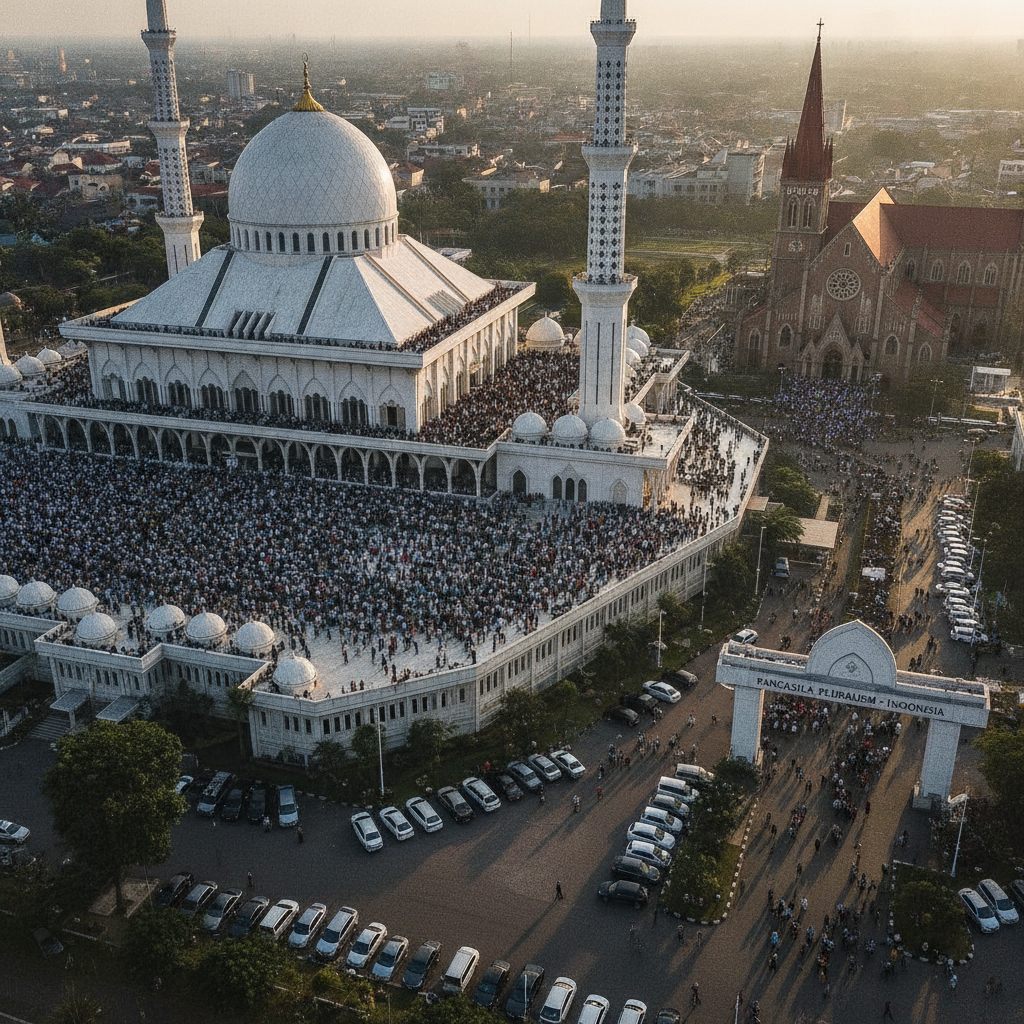
Jakarta's Permanence: Istiqlal Mosque Facing the Cathedral, Bogor's 15,000-Plant Botanic Garden & the City Worth Staying
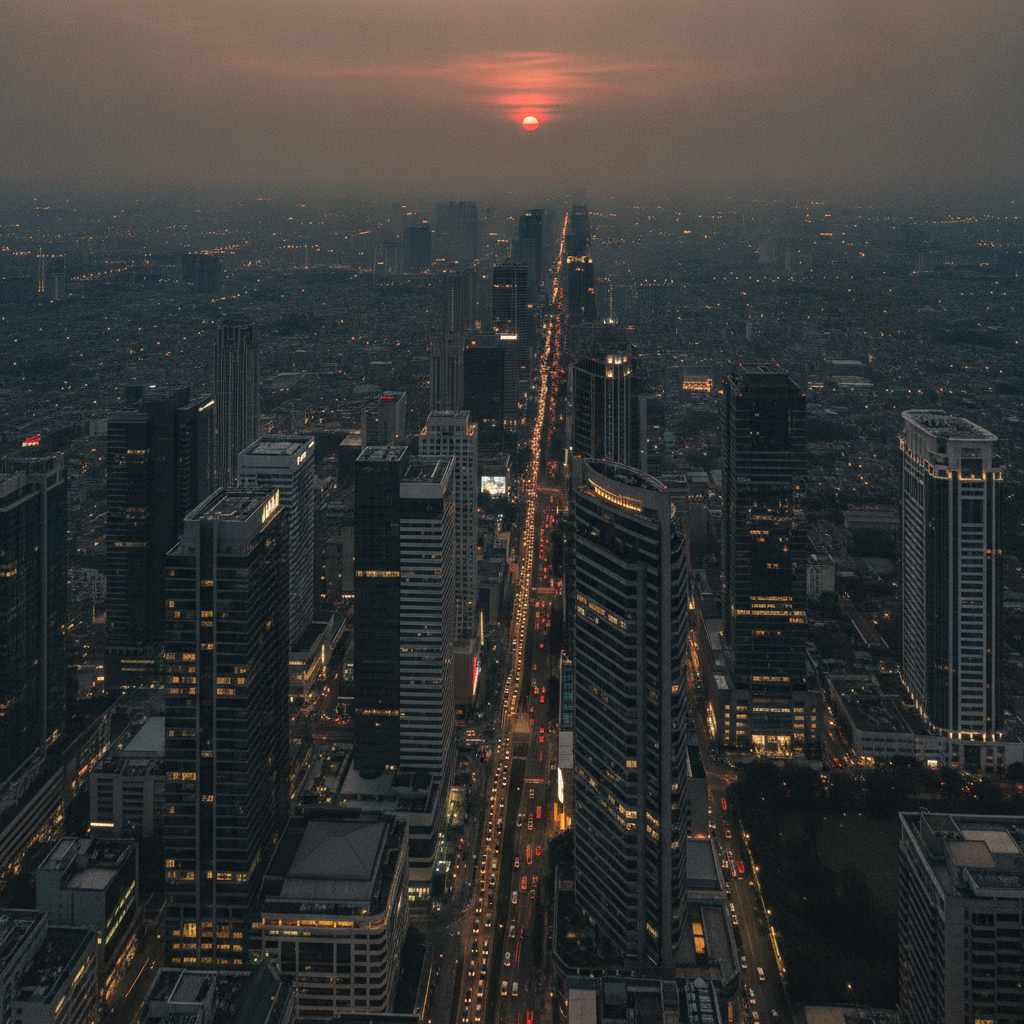
Jakarta's Legacy: Sukarno's 1962 Asian Games Rejection of Western Governance, Ciliwung's 100 Tonnes of Daily Plastic & What Comes After