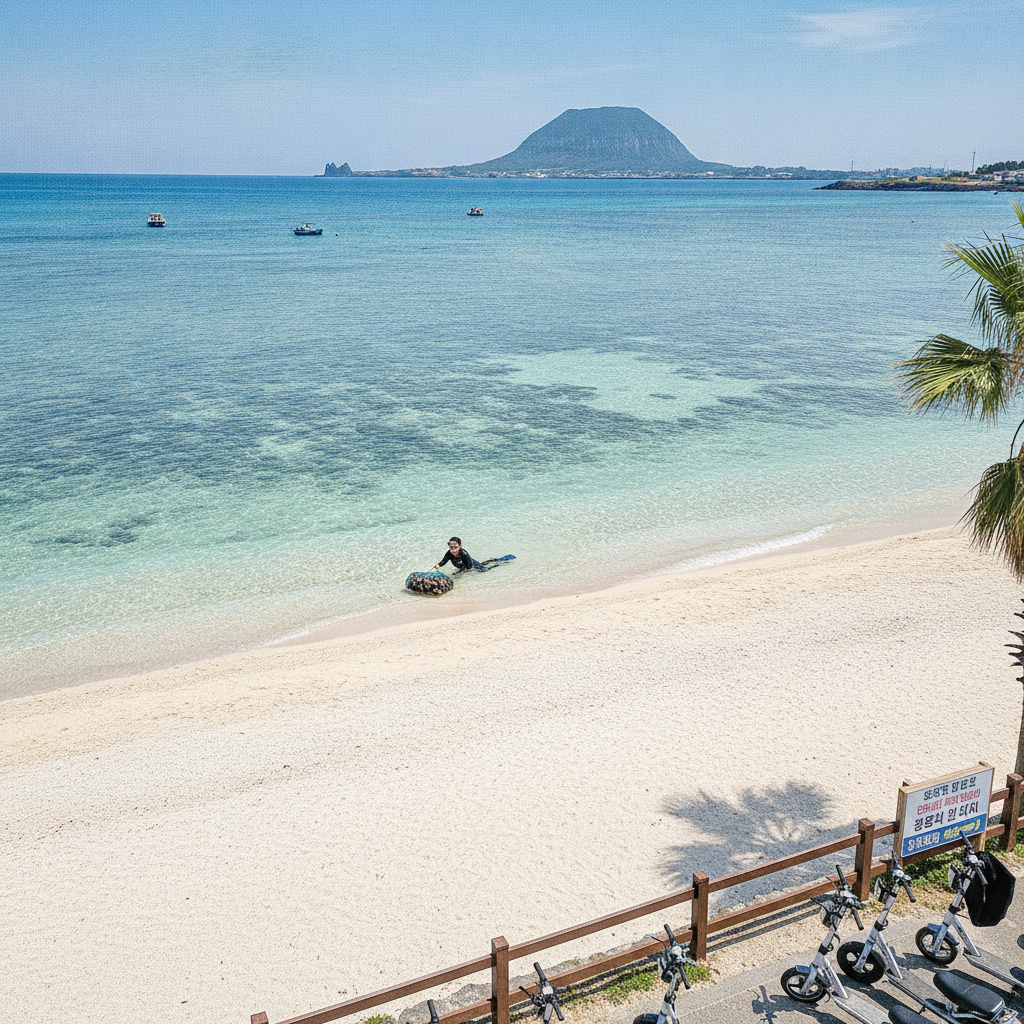
The Only Region in South Korea Where You Can Enter Without a Korean Visa, the Best-Selling Water in Korea Bottled from a Hallasan Volcano Spring & the 1.8-Million-Year Geological Timeline Underfoot
The Jeju Special Self-Governing Province's visa-free entry as the only such policy in South Korea; the Samdasoo volcanic spring as the source of South Korea's best-selling bottled water at 800 million annual bottles; the Gotjawal forest's phytoncide-rich environment on undrained lava impossible to farm; the 1.8-million-year Jeju geological formation timeline from seafloor eruption to current shape; the Saebyeol Oreum fire festival as the most technically challenging night photography subject in Jeju; and the Jeju second airport debate as the active development-vs-community controversy.
- 1
Jeju's Gastronomy – Fine Dining & Chef Culture
The Jeju fine dining scene (the emergence of a serious restaurant culture on Jeju Island driven by the post-2010 influx of Seoul and international visitors, the island's exceptional local ingredients, and the arrival of trained chefs who established destination restaurants in the Jeju landscape): the most sophisticated food dimension of a visit that was previously dominated by market stalls and grilled pork. The Jeju local ingredient advantage (the ingredients that make Jeju fine dining distinct from Seoul restaurants using the same Korean culinary techniques): the haenyeo-caught abalone (the wild abalone (전복, jeonbok) caught by the haenyeo at 10–20m depth—the most expensive and flavourful shellfish in Korea; available fresh year-round in Jeju but at a premium (₩30,000–80,000 per piece depending on size)); the Jeju black pork (the heritage breed pork with the characteristic marbled fat structure); the Jeju tangerine (used in contemporary Korean cuisine at Jeju restaurants as a citrus element in sauces, desserts, and seasonal cocktails); the Jeju volcanic mineral water (the natural spring water emerging through the Hallasan basalt—marketed as 'Samdasoo' (삼다수), the best-selling bottled water in South Korea). The Nha restaurant (the most critically acclaimed restaurant in Jeju—the tasting menu restaurant in Aewol serving contemporary Korean cuisine using exclusively Jeju-sourced ingredients with a dining room facing the sea): the representative of the Jeju fine dining movement. The Jeju food week (the annual Jeju Gastronomy Week in October—the chef collaboration event that brings Seoul and international chefs to Jeju for pop-up dinners using Jeju ingredients).
- 2
Jeju's Healing & Wellness Tourism
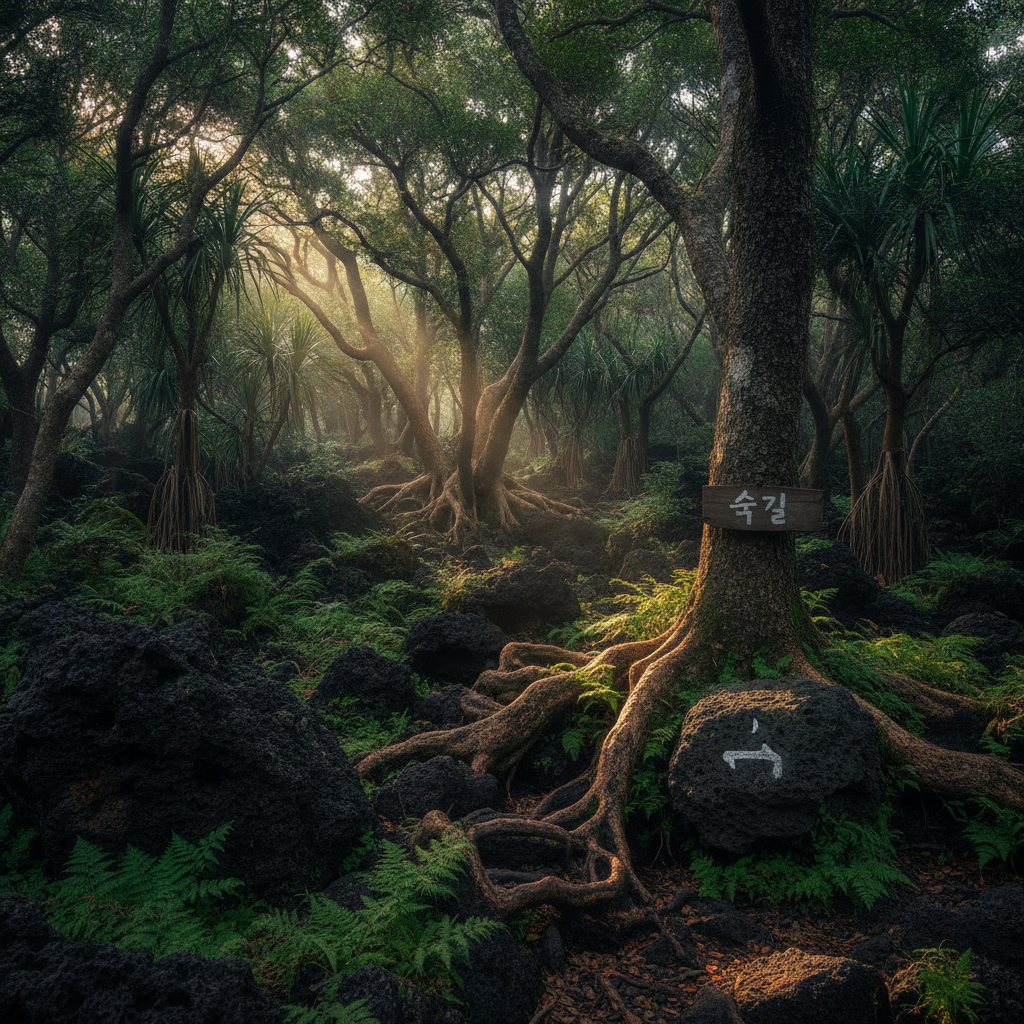
The Jeju wellness tourism (the health and healing dimension of a Jeju visit—the island that has developed a significant wellness tourism sector built on the volcanic mineral water, the forest bathing environment, and the traditional Korean health practices): the guide to the restorative Jeju experience. The Gotjawal forest (곶자왈—the Jeju-specific term for the dense subtropical forest that grows on the undrained basalt lava fields of the island's interior): the Gotjawal topography (the rough, undrained aa lava surface that cannot be farmed, creating the conditions for natural forest growth untouched by agricultural development—the largest remaining stands of Gotjawal are the Hallim Gotjawal (western Jeju) and the Bijarim Cypress Forest (eastern Jeju)): the Gotjawal forest bathing (the shinrin-yoku (森林浴) experience in the Jeju Gotjawal—the dense subtropical forest with its high phytoncide emission (the volatile compounds emitted by trees that are associated in research with immune system enhancement)). The Jeju forest therapy programme (the Jeju Special Self-Governing Province's certified forest therapy trails—the guided forest therapy walks in the Saryeon area and the Bijarim Cypress Forest): the most structured wellness nature experience in Jeju. The volcanic mineral water (the Samdasoo spring—the natural volcanic spring water source at Gyorae-ri in the Hallasan foothills—the spring that supplies the Samdasoo bottled water brand (the best-selling water in South Korea, with annual sales of approximately 800 million bottles)): the source spring visitor center (the Samdasoo factory tour and tasting).
- 3
Jeju's Independence & Political Identity
The Jeju political identity (the island's relationship with the South Korean central government—a relationship shaped by geographic isolation, the traumatic April 3rd Incident, and the persistent cultural distinctiveness that has made Jeju the only Special Self-Governing Province in South Korea): the political dimension that gives the island a specific identity in the Korean constitutional landscape. The Jeju Special Self-Governing Province (제주특별자치도—the administrative status granted in 2006 that gives Jeju greater autonomy than any other Korean administrative region—the authority to set its own visa policy for foreign visitors (Jeju operates a visa-free policy for most foreign nationalities, allowing entry without a Korean visa for up to 30 days—the only part of South Korea with this policy)): the Jeju visa-free entry (the most practically significant aspect of Jeju's special status for international visitors). The Jeju language policy (the Jeju-eo language—the UNESCO-classified critically endangered language that the Jeju Provincial Government has been attempting to preserve since 2011 through school programmes and public signage): the tension between preservation efforts and the practical dominance of standard Korean. The Jeju devlopment controversy (the Jeju second airport debate—the proposed construction of a second international airport in the Seongsan area of eastern Jeju to handle the 30+ million annual passengers (a project that would require demolishing the Onpyeong village and is opposed by the village residents and environmental groups): the most politically contentious development project on the island and the one that most directly pits the tourism industry against the resident community.
- 4
Jeju's Annual Events & Festivals
The Jeju festival calendar (the events that most directly reward a visit timed to coincide with them—the annual events that transform the Jeju landscape into something more vivid than its everyday character): the complete annual festival guide. January–February (Winter): the Jeju Fire Festival (제주들불축제—the Jeongwol Daeboreum fire festival at Saebyeol Oreum in February—the 100,000-person gathering to watch the controlled burn of the western oreum grassland): the most visually dramatic annual event in Jeju. March–May (Spring): the Jeju Camellia Festival (the camelia bloom celebration in the Jeju Camellia Arboretum and Hallasan foothills—February–March); the Jeju Cherry Blossom (late March–early April—the Jeju city cherry blossom streets); the Tamna Cultural Festival (the annual spring festival celebrating Jeju's Tamna Kingdom historical identity). June–August (Summer): the Jungmun Beach Sea Festival (the beach festival season at the Seogwipo coast—July–August); the Haenyeo Festival (the summer celebration of the haenyeo diving culture in Gujwa-eup—the demonstration dives and haenyeo cultural programme). September–November (Autumn): the Jeju World Heritage Festival (the UNESCO site celebration in October); the Jeju International Wind Ensemble Music Festival (the wind instrument music festival that exploits the Jeju 'wind abundance' as its thematic starting point); the tangerine harvest season (October–December—the farm visit programmes where visitors pick tangerines directly from the tree).
- 5
Jeju From Above – Drone Photography & Scenic Viewpoints
The Jeju visual landscape (the island that provides the most photographically varied landscape of any Korean destination—the combination of volcanic geology, subtropical flora, marine environment, and agricultural patchwork creates a visual density that rewards both ground-level exploration and elevated viewpoints): the photography guide. The key elevated viewpoints: the Seongsan Ilchulbong crater rim (the 360-degree view from the 182-metre crater rim at sunrise—the most photographed single viewpoint in Jeju); the Saebyeol Oreum summit (the five-peaked oreum with the western flatland and the distant sea views—the most photogenic Jeju oreum for the sunset silhouette photograph); the Songaksan crater rim (the tuff ring crater on the southwestern peninsula with views of the Marado Island, the Gapado Island, and the open ocean to the south): the best place to photograph Jeju's agricultural patchwork (the tangerine orchards, the volcanic soil fields, and the stone wall network from above). The photography seasons: the January–February fire festival (the night-fire photography at Saebyeol Oreum—the orange fire against the dark sky is the most technically challenging and most dramatic Jeju night photograph); the May azalea bloom at Hallasan's 1,700m Gureum Garden (the pink azalea field below the summit cone); the December tangerine harvest (the orange-loaded tangerine trees against the dark green leaves and the dark basalt rock wall—the most colourful Jeju agricultural photograph).
- 6
Jeju's Geology Explained – Volcanic Island Science
The Jeju geological science (the complete explanation of how the island was formed, what the volcanic features mean, and why Jeju's geology is considered globally significant): the science layer that transforms a landscape walk into an understanding of Earth processes. The Jeju formation timeline: 1.8 million years ago (the first submarine volcanic eruptions on the seafloor of the East China Sea, building the volcanic base); 1.2 million years ago (the eruptions break the sea surface and the island begins to emerge); 700,000–400,000 years ago (the most voluminous lava flows building the island's flat basalt shield); 100,000 years ago (the seawater interaction tuff cone eruptions forming Seongsan Ilchulbong and the Songaksan crater ring); 25,000 years ago (the last significant eruption—the Hallasan summit cone reaches its current shape). The 3 types of Jeju volcano: the shield volcano (Hallasan—the broad gently sloping mountain built by fluid basalt lava flows); the scoria cone (the 360+ oreum parasitic cones—the steep cinder cones from small eruptions on the flanks of the island); the tuff cone (Seongsan Ilchulbong and Songaksan—the rough grey craters formed by seawater-magma contact explosions). The lava tube formation (the underground tubes formed when the surface of a lava flow cools and hardens while the still-molten interior drains out): the Jeju lava tubes are globally significant because the diversity of secondary mineral formations within the caves (produced by the specific combination of basalt chemistry and the overlying limestone and soil layers) is greater than in any other known lava tube system.
Walk this route with audio
Stories play automatically as you reach each stop — no tapping needed.
More in Jeju
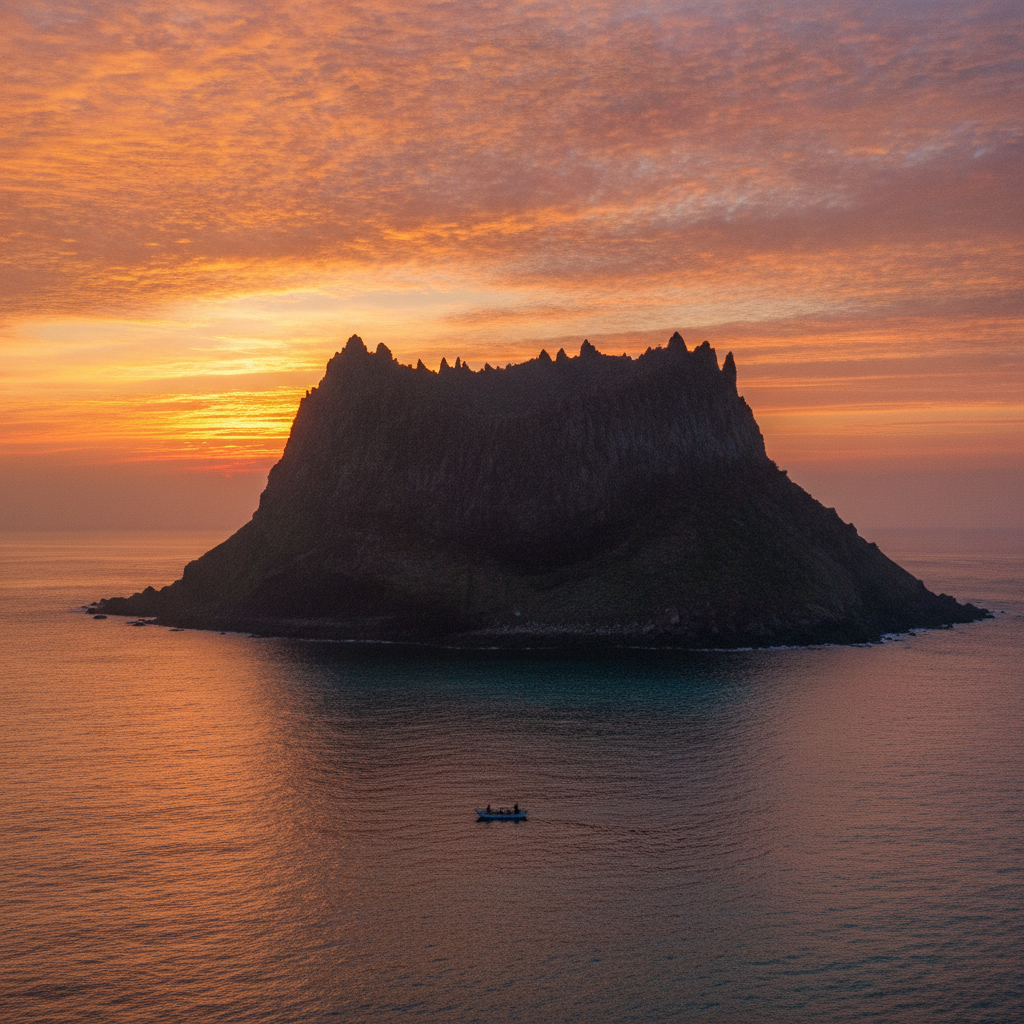
The Free-Diving Women With a 90% Population Decline Since the 1960s, the World's Largest Lava Column in an Accessible Cave & the Waterfall That Falls Directly Into the Sea
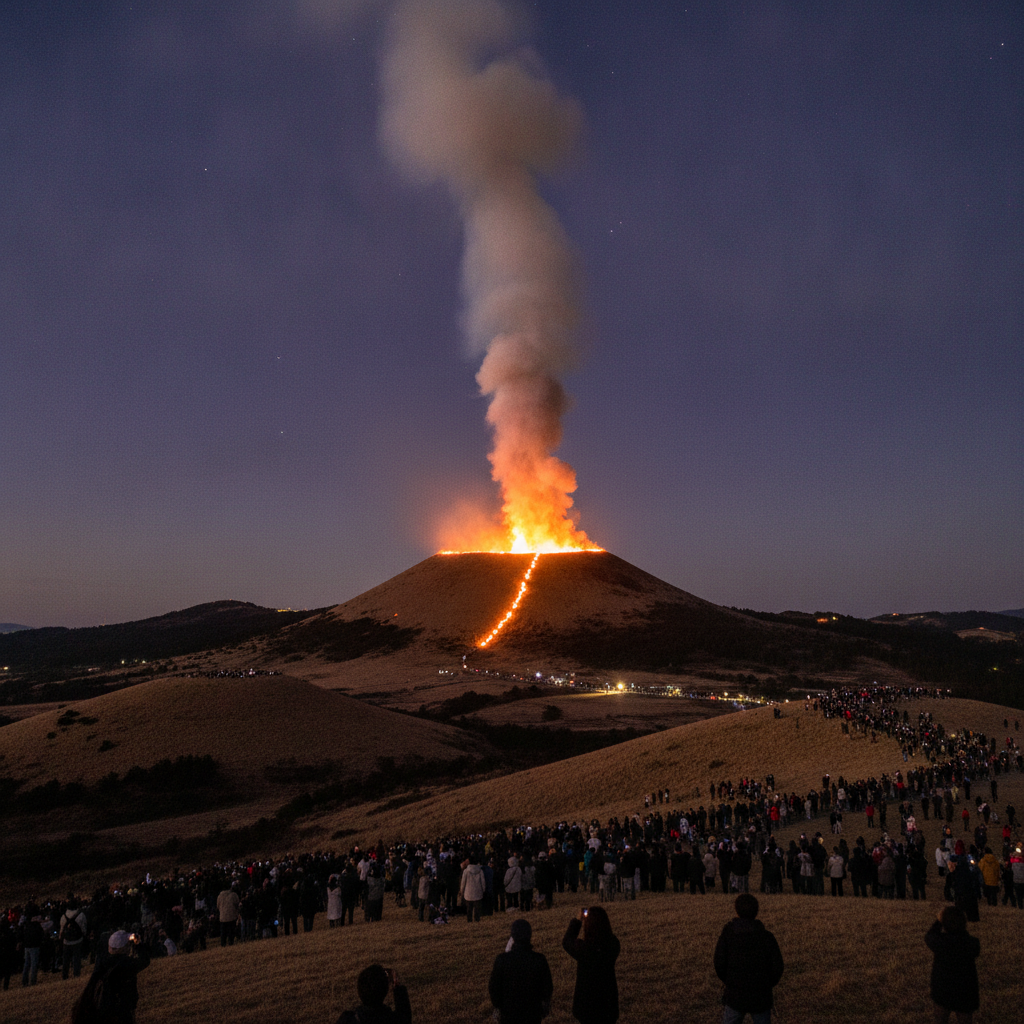
The Island with 18,000 Gods, the Adults-Only Sculpture Park on a Family Honeymoon Destination & the Volcanic Fire That Burns 100,000 People's Winter Away
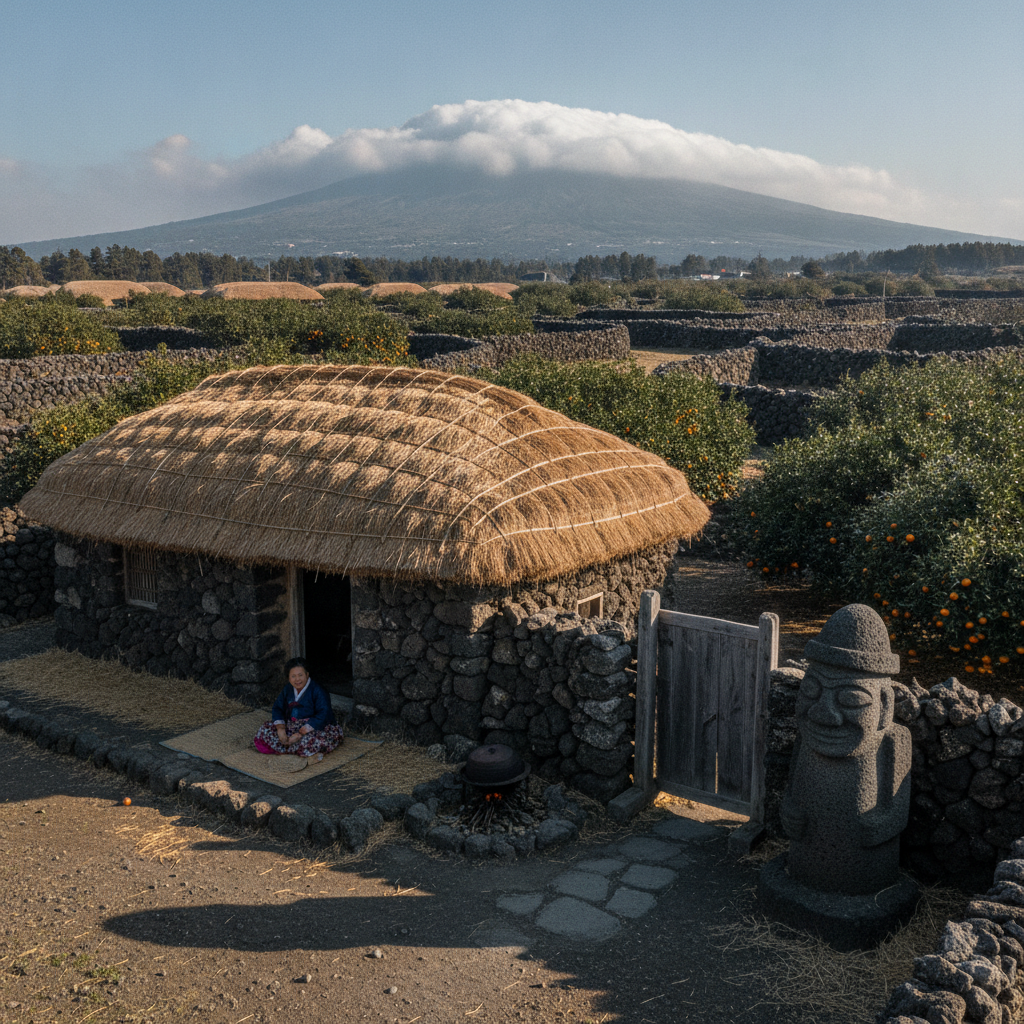
The Island With 22,000 km of Stone Walls (Half the Earth's Circumference), the First Korean Region to Commit to 100% Renewable Energy & the Mountain Under Cloud 200 Days a Year
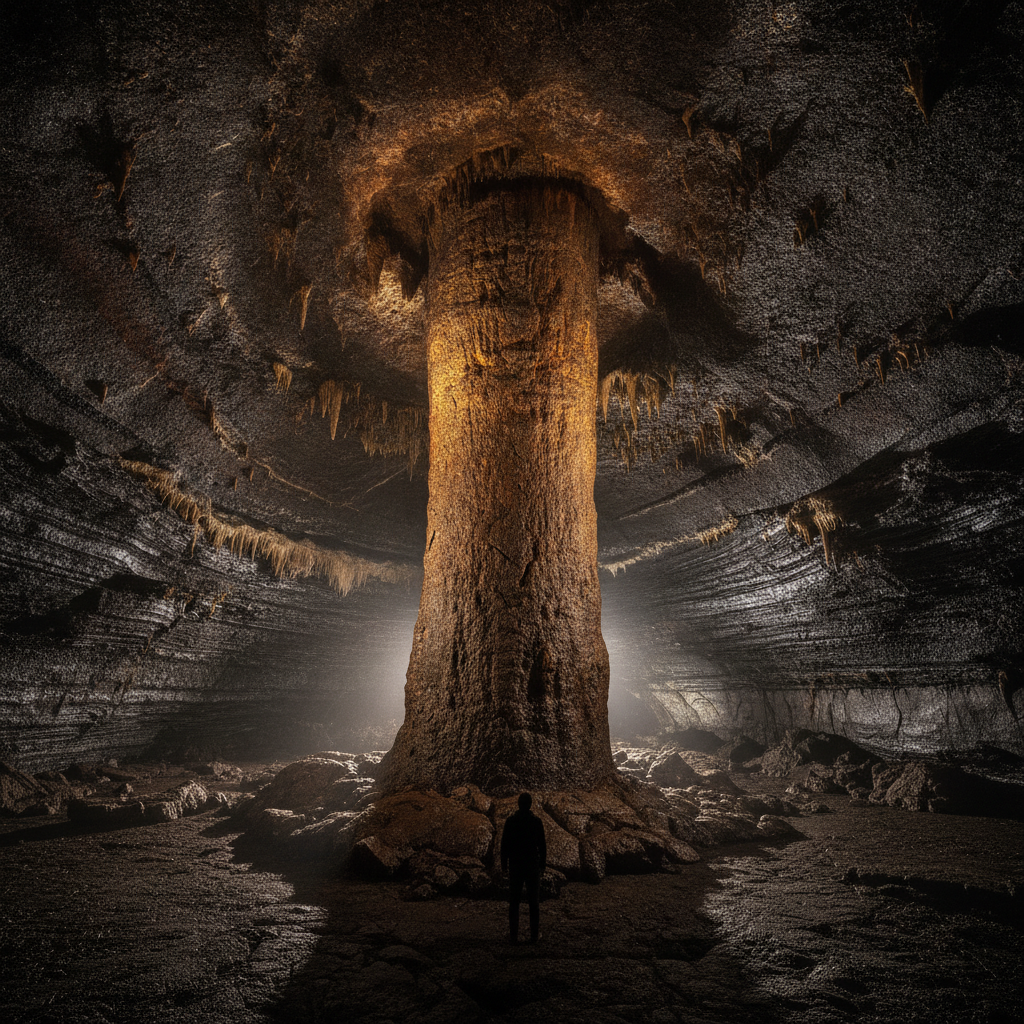
The 250,000-Year-Old Cave That Drained Itself Empty, the 1948 Massacre That Killed 10% of the Island's Population & the Only Road in Korea That Crosses 1,950 Metres