The Only Coral Sand Beach in Korea, the Sea Turtle That Breeds on the Southern Shore & the Island That Receives 15 Million Domestic Visitors Because It's Korea's Hawaii
The Udo Ha Beach as the only naturally occurring coral rubble white sand beach in Korea; the loggerhead sea turtle breeding population on the Jeju southern beaches; the Udo peanut's higher oil content from black volcanic soil; the Dongmun Market 2nd-floor food hall as the most concentrated traditional Jeju food venue; the Gureum Garden royal azalea bloom at 1,700m in late April; and the 10-day Seoul+KTX+Busan+flight+Jeju itinerary structure as the optimal Korean travel framework.
- 1
Jeju's Marine Life & Snorkeling
The Jeju marine environment (the subtropical sea surrounding Jeju Island—the waters of the East China Sea and the Korea Strait at the intersection of the warm Tsushima Current (a branch of the Kuroshio) and the cold Yellow Sea water): the marine biodiversity that supports the haenyeo's free-diving harvest and the recreational diving and snorkeling industry. The coral at Jeju (the Jeju coral reef—the northernmost coral reef ecosystem in the East China Sea; the primary coral species at Jeju is the soft coral Dendrophyllia (the orange tree coral) and the hard coral Acropora—not a tropical reef but a temperate-subtropical mixed coral community at 18–22°C summer water temperature): the diving and snorkeling conditions (April–October for snorkeling; year-round for drysuits). The Seogwipo diving (the Seogwipo coast is the primary dive area of Jeju—the offshore reef at 10–25 metres depth with the characteristic Jeju orange tree coral and the school of yellowtail amberjack (방어, bangeojeorim)): the sea turtle (the loggerhead sea turtle (Caretta caretta) population that breeds on the Jeju southern beaches—the most accessible sea turtle encounter in South Korea). The Udo Island snorkeling (우도—the small island 3.5 km off the Seongsan coast: accessible by ferry from Seongsan Port (15 min); the Udo island's Gosan Lighthouse beach (the Ha Beach—the clearest snorkeling water accessible from the main island circuit): the Udo peanut ice cream (the signature local product of Udo Island—the peanuts grown in the island's volcanic soil, pressed into ice cream and sold at the harbor ferry terminal): the most specific island food souvenir in the Jeju area.
- 2
Jeju's Subtropical Flora – The Living Landscape
The Jeju subtropical flora (the plant life of the island that is the most diverse in South Korea due to the subtropical climate, the volcanic soil, and the altitude gradient from sea level to 1,950 metres): the botanical dimension of the Jeju landscape that reveals the island as a living scientific laboratory. The wild camelia (Camellia japonica—the tree that more than any other defines the Jeju winter and spring landscape: the wild camelia blooms from December to April on the island (earlier than anywhere else in Korea), producing red flowers against the dark evergreen leaves in the most colourful Korean winter botanical display): the camelia forest (the Saryeon Reservoir Camelia Forest near Jeju City and the Jeju Camellia Arboretum in Seogwipo—the 2 most complete camelia collections on the island). The Hallasan altitude flora (the most complete altitude vegetation gradient in South Korea—the 5 zones from subtropical coastal to alpine grassland): the Gureum Garden (the alpine meadow at 1,700m on the Yeongsil Trail—the plateau where the royal azalea (철쭉, cheoljjuk) blooms in late April to May creating the most photographed Hallasan spring scene). The endemic species (the Jeju-endemic plants—the species found only on Jeju: the Hallasan endemic saxifrage (한라솜다리, Leontopodium coreanum var. hallaisanense—the Jeju edelweiss), the Jeju violet (한라제비꽃), and the Hallasan groundsel (한라솜방망이)): the most biodiverse 1,950-metre mountain in the East Asian temperate zone.
- 3
Jeju's Luxury Hotels & Resort Districts
The Jeju accommodation landscape (the island's hotel and resort infrastructure—the most developed resort accommodation of any Korean island destination, shaped by 50 years of domestic tourism investment and the recent international tourism influx): the guide to where to stay for different travel styles. The Jungmun Resort Complex (the planned resort district on the Seogwipo southern coast—the Lotte Hotel Jeju (the iconic 'Lotte Castle' hotel building), the Hyatt Regency Jeju, and the ICC Jeju (the International Convention Center): the most complete luxury resort infrastructure in Jeju, positioned above the Jungmun Beach and with views of the southern sea). The Aewol coastal road accommodation (the boutique hotel corridor along the Jeju northwestern coast—the stretch from Aewol to Hallim where the 'pension' (펜션—the Korean cottage/guesthouse format) and the small design hotels have concentrated since the mid-2010s, many with private sea-view terraces): the most design-conscious accommodation district in Jeju. The Hamdeok Beach guesthouses (the northeastern coast village of Hamdeok—the most accessible budget accommodation option near the eastern UNESCO sites, with a range of pension-style guesthouses on the beachfront at ₩80,000–150,000 per night (2-person room)). The Jeju City hotels (the business hotel concentration in Jeju City's Nohyeong-dong and the city center near the Dongmun Market—the most convenient accommodation for the airport (5–10 minutes by taxi) and for the western Jeju circuit)).
- 4
Jeju's Food Markets & Late-Night Eating
The Jeju market food culture (the traditional market eating that provides the most concentrated and affordable food experience on the island—the Jeju markets that operate as combined food halls and produce markets): the guide to eating well in Jeju's markets. The Dongmun Traditional Market (동문재래시장—the largest traditional market in Jeju City, operating since 1945 in the center of Jeju City): the market that is the primary food destination for the Jeju City eating experience: the ground floor produce section (the tangerine stalls with every grade of Jeju gamgyul mandarin; the Jeju black pork butchers; the seafood stalls with the haenyeo-caught abalone, sea cucumber, and turban shells); the 2nd floor food hall (the prepared food stalls—the best concentration of Jeju traditional foods under one roof): the jeju-style fried chicken (몸국, momguk—the Jeju seaweed and pork soup), the black pork skewers, and the grilled abalone (전복구이). The Seogwipo Maeil Olle Market (서귀포 매일올레시장—the daily market in Seogwipo City—the smaller, less tourist-oriented market compared to Dongmun): the market most favored by Jeju food writers for its preservation of traditional Jeju market food culture. The black pork restaurant street (the Dongmun Market area restaurant strip—the concentration of black pork (흑돼지) grilled pork belly restaurants where the outdoor charcoal grills produce the most aromatic Jeju street food environment at dinnertime).
- 5
Udo Island Day Trip
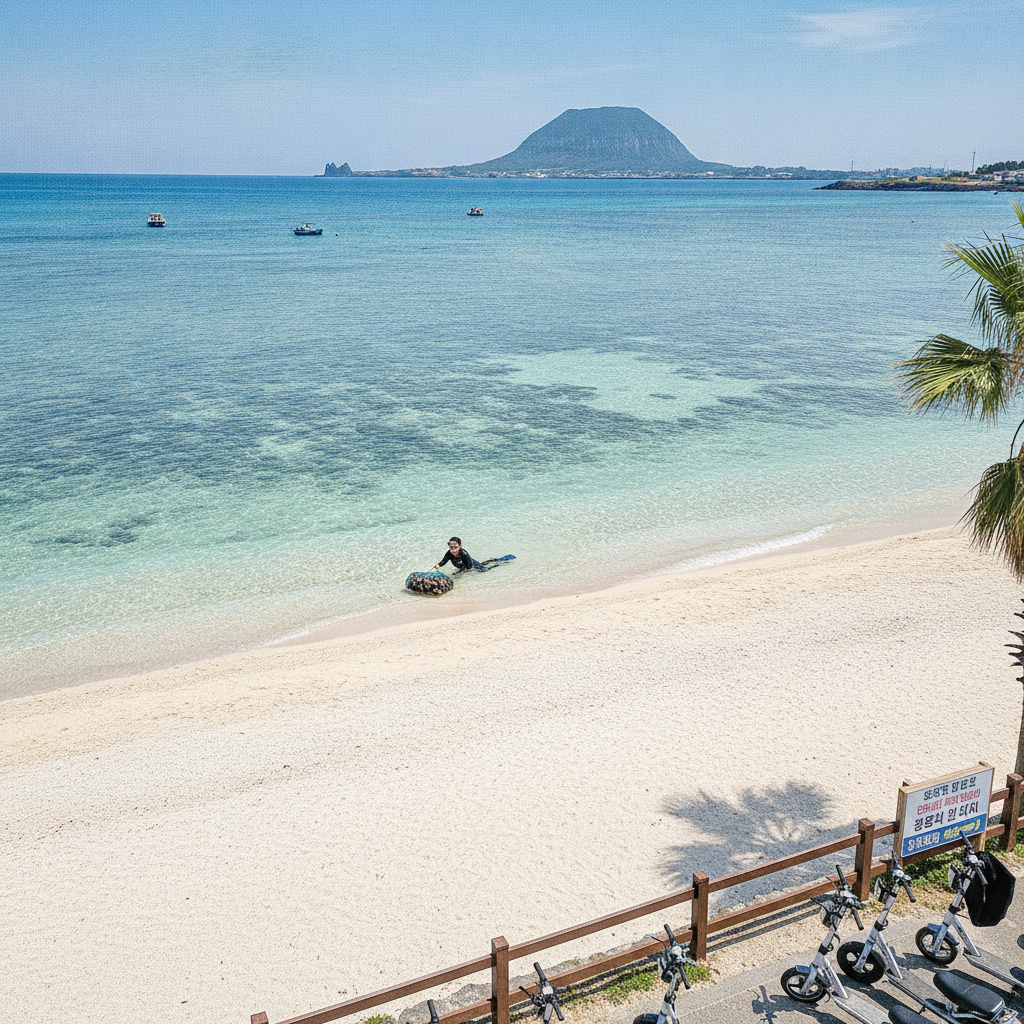
Udo Island (우도—the small island (6.18 km²) 3.5 km offshore from the Seongsan area of eastern Jeju, connected by ferry from Seongsan Port (15 minutes, departing every 30 minutes from 07:30–18:00; ₩6,200 round trip for pedestrians)): the most rewarding single-day island excursion from Jeju and the second most visited island in South Korea after Jeju itself. The Udo landscape (the flat agricultural island with one small oreum hill (Udobong, 132m) at the eastern end—the island whose name means 'Cow Island' due to the shape of the island lying flat in the sea like a reclining cow): the Udo circumnavigation (the 17-km circuit of the island coastline by electric scooter (the rental e-scooters available at the ferry terminal for ₩15,000/2 hours) is the standard visitor activity—the circuit takes 2 hours at touring pace and passes through 4 distinct coastal environments: the coral sand beach (Ha Beach), the black sand beach (Geommeo-reul Beach), the sea cave (Dongan Beach), and the lighthouse headland (the Udo Lighthouse Park at the eastern point)). The Ha Beach (하고수동 해수욕장—the coral sand beach on the western side of Udo—the only naturally occurring coral rubble white sand beach in Korea): the clearest snorkeling water in the Jeju region (the Ha Beach underwater reef is the best snorkeling site accessible by a short swim from a Korean beach). The Udo peanut specialties (the black volcanic soil of Udo produces peanuts with higher oil content than mainland Korean peanuts—the peanut ice cream, peanut noodles (nuts ground into a sauce over noodles), and raw peanuts roasted on the harbor are the island's signature foods).
- 6
Jeju vs. Other Korean Destinations – Where to Go
The Jeju vs. other Korean destinations decision framework (the guide for a visitor choosing between Jeju and the other major Korean destinations—Seoul, Busan, and Gyeongju—or planning how to combine Jeju with mainland Korea): the most useful positioning of Jeju in the Korean travel landscape. Jeju vs. Busan (the two Korean destinations that most compete for a limited-time visitor's Korea allocation): Jeju wins on natural landscape (the volcanic geology, haenyeo, UNESCO sites, subtropical flora—a landscape with no equivalent anywhere else in Korea); Busan wins on urban culture (the food markets, film festival, mountain fortress, and port character—a city experience that Jeju cannot provide). Jeju vs. Gyeongju (the nature island vs. the history capital): Gyeongju is accessible as a day trip from Busan but requires a separate trip from Seoul; Jeju is a separate flight from any Korean mainland point. The combined Korea itinerary (the most logical Korea trip structure for 10+ days): Seoul (3–4 days for the capital's cultural depth) + KTX to Busan (2 days for the port city) + flight to Jeju (3–4 days for the natural UNESCO sites): the 10-day structure covers the full range of Korean experience from the capital to the port city to the volcanic island. The Jeju domestic tourism context (the 15 million annual Korean domestic visitors to Jeju—the island that functions as Hawaii does for Americans, as the primary accessible island escape for the Korean mainland population): the infrastructure investment (the 170 daily Seoul–Jeju flights, the resort hotel concentration, and the themed park industry) reflects the domestic market that drives Jeju's tourism economy.
Walk this route with audio
Stories play automatically as you reach each stop — no tapping needed.
More in Jeju
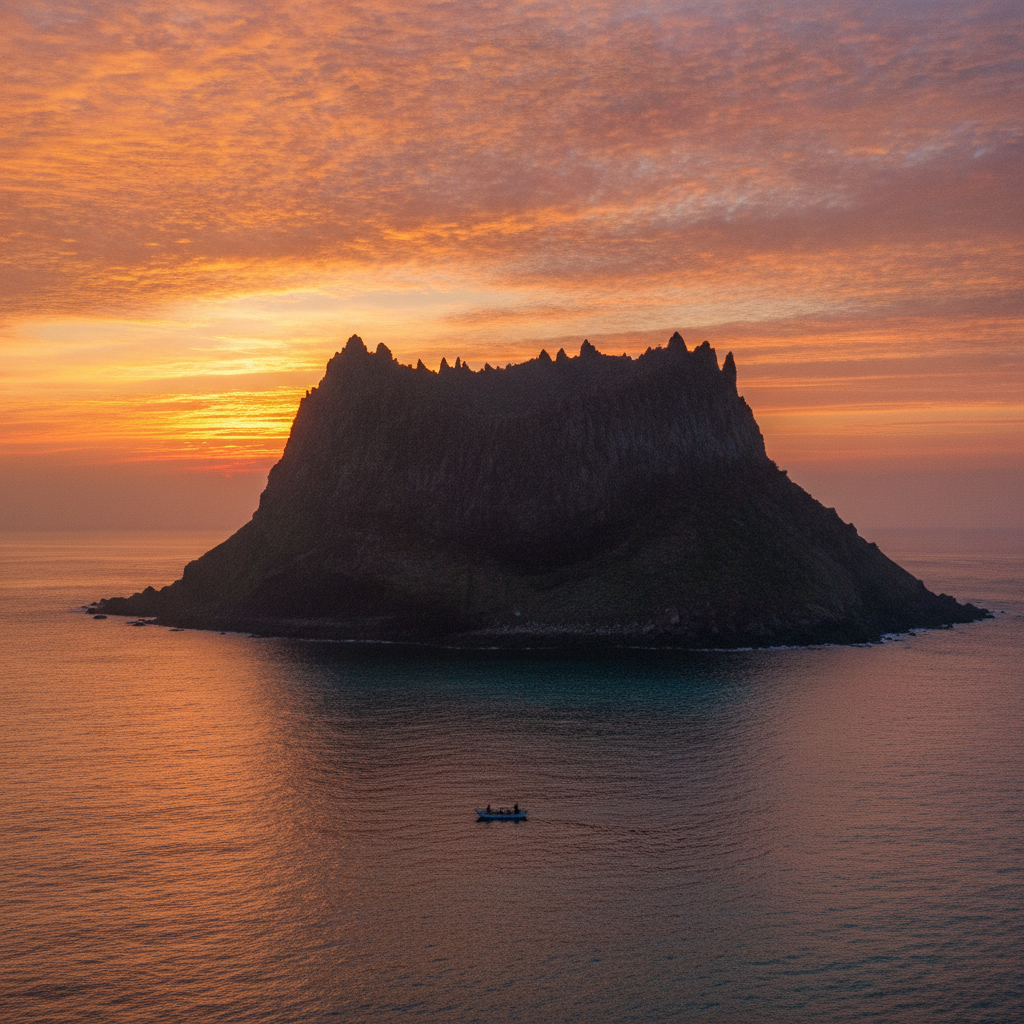
The Only Region in South Korea Where You Can Enter Without a Korean Visa, the Best-Selling Water in Korea Bottled from a Hallasan Volcano Spring & the 1.8-Million-Year Geological Timeline Underfoot
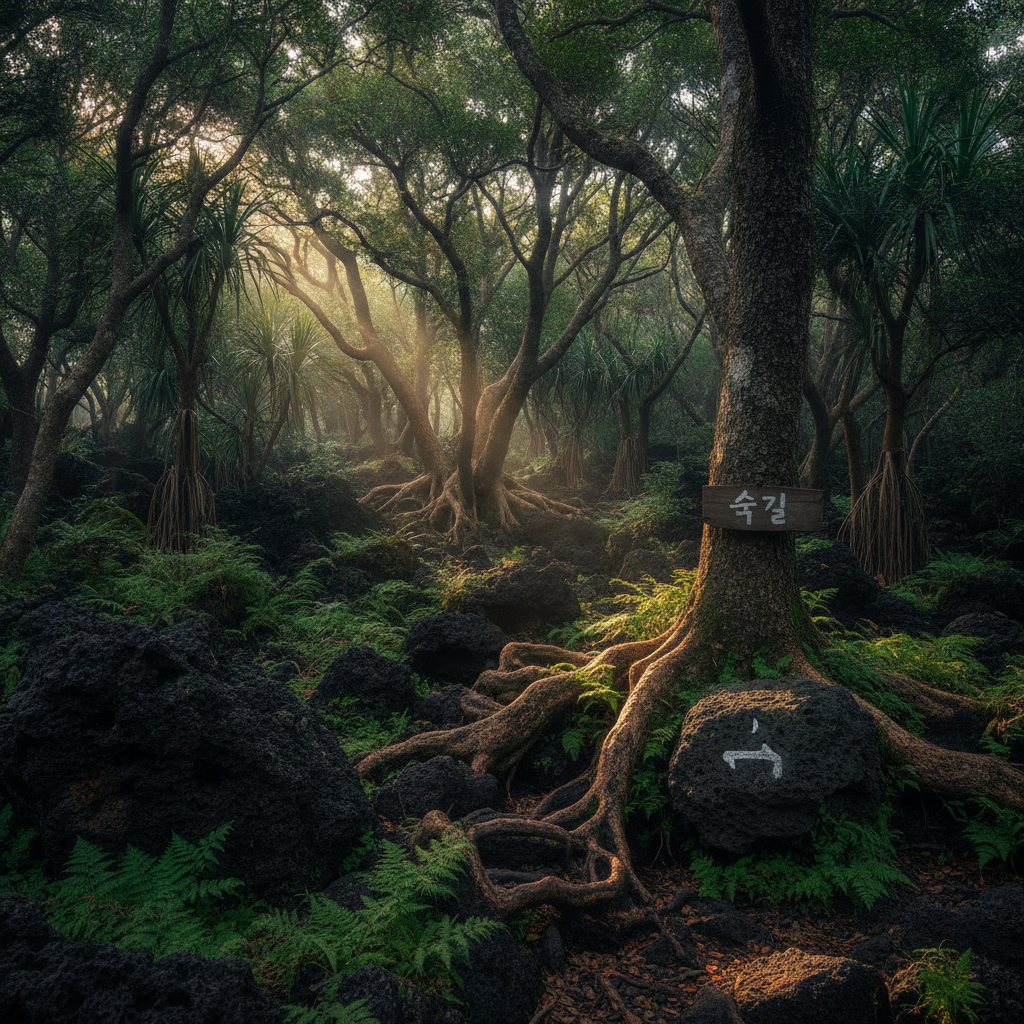
The Free-Diving Women With a 90% Population Decline Since the 1960s, the World's Largest Lava Column in an Accessible Cave & the Waterfall That Falls Directly Into the Sea
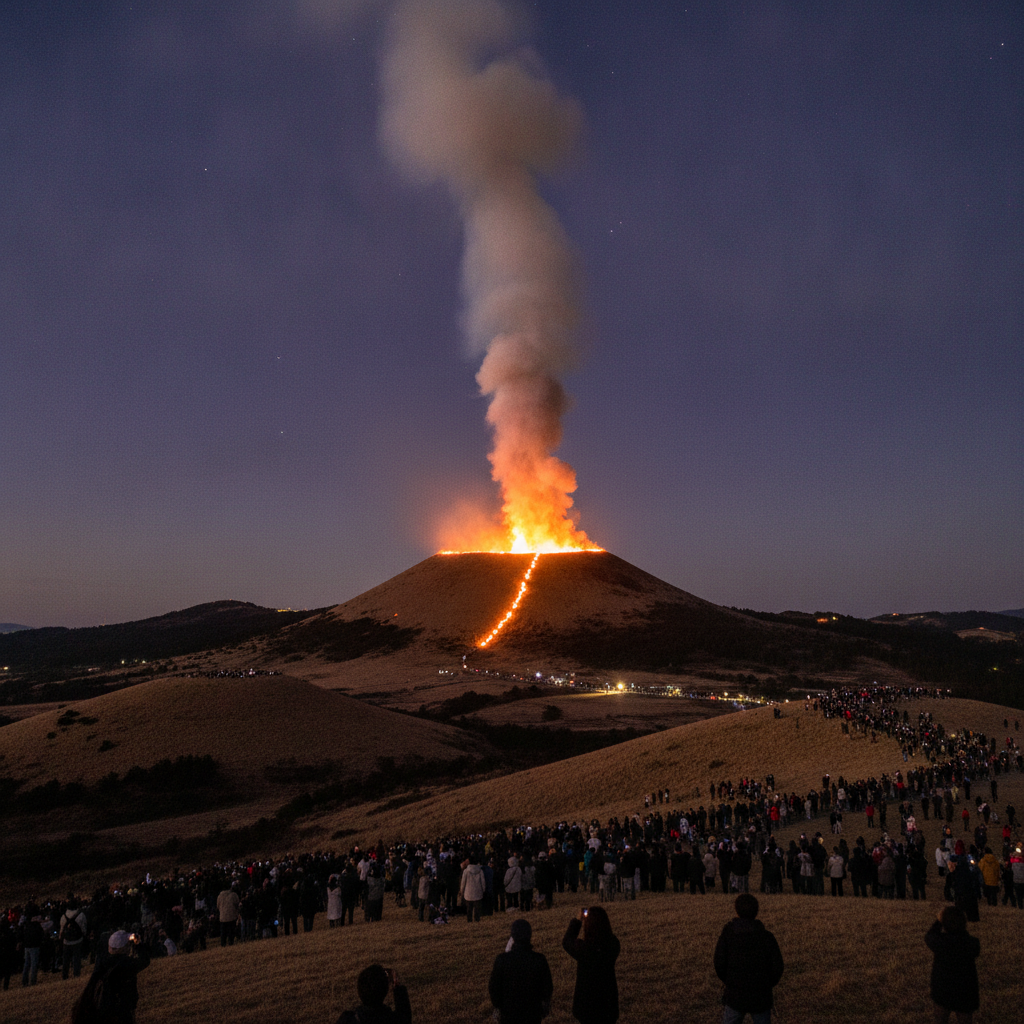
The Island with 18,000 Gods, the Adults-Only Sculpture Park on a Family Honeymoon Destination & the Volcanic Fire That Burns 100,000 People's Winter Away
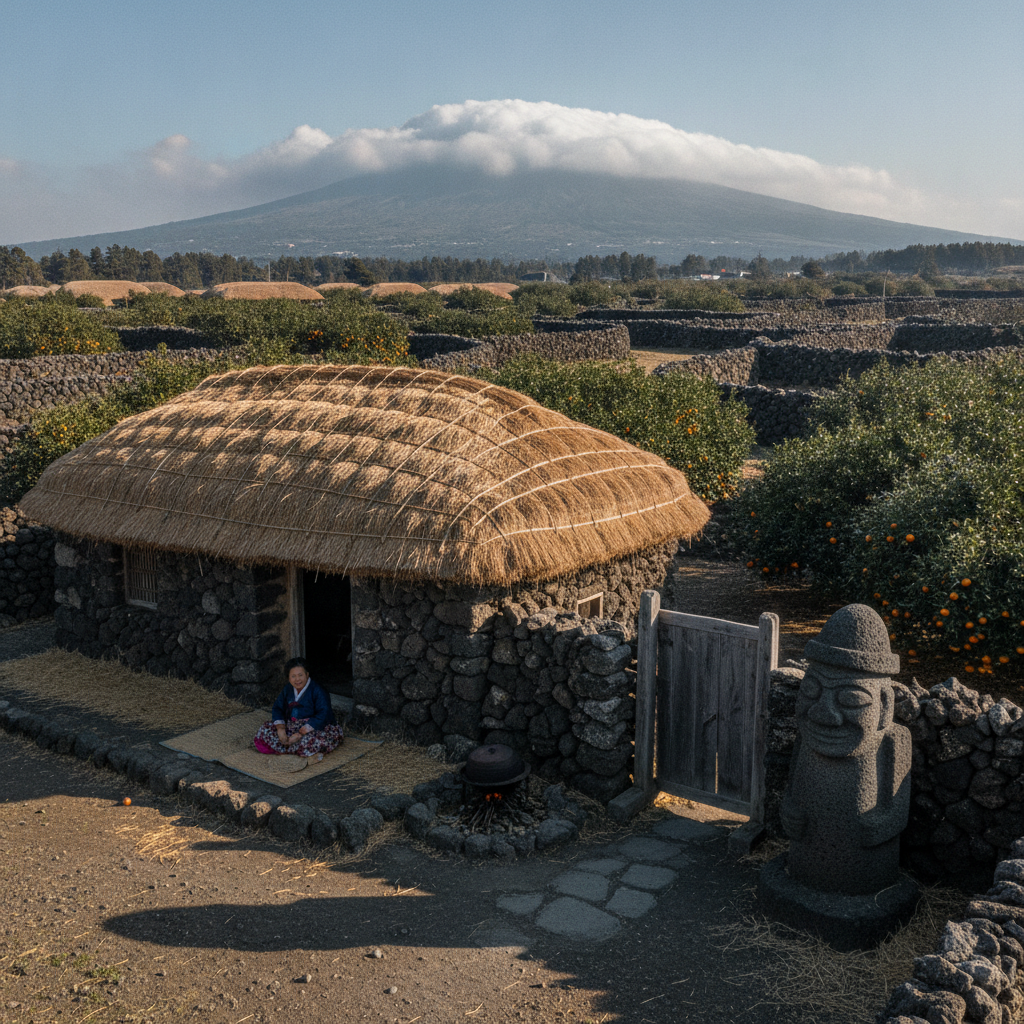
The Island With 22,000 km of Stone Walls (Half the Earth's Circumference), the First Korean Region to Commit to 100% Renewable Energy & the Mountain Under Cloud 200 Days a Year