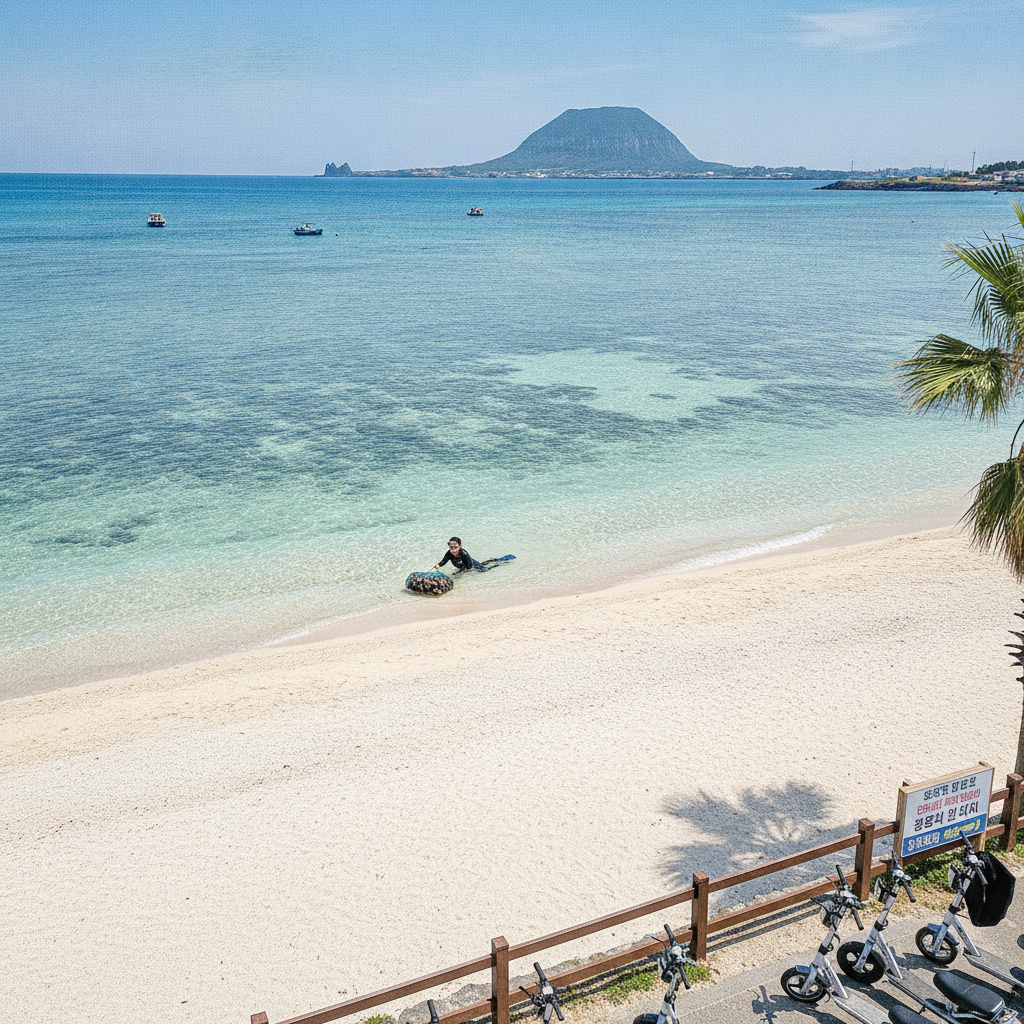
The Island With 22,000 km of Stone Walls (Half the Earth's Circumference), the First Korean Region to Commit to 100% Renewable Energy & the Mountain Under Cloud 200 Days a Year
The Jeju dol damul stone wall network's 22,000 km total length; the Seongeup Folk Village's 60+ traditional chogajip thatched stone houses with residents; the Jeju CFI programme as the first Korean region targeting 100% renewable energy by 2030; the Jeju gamgyul tangerine's 99% share of Korean domestic production; the Hallasan cloud cap's 200-days-per-year closure risk for the summit trails; and the K-drama filming of 120+ productions using Jeju's oreum and coastal road landscape as romantic-isolation metaphor.
- 1
Jeju's Hidden Villages & Rural Life
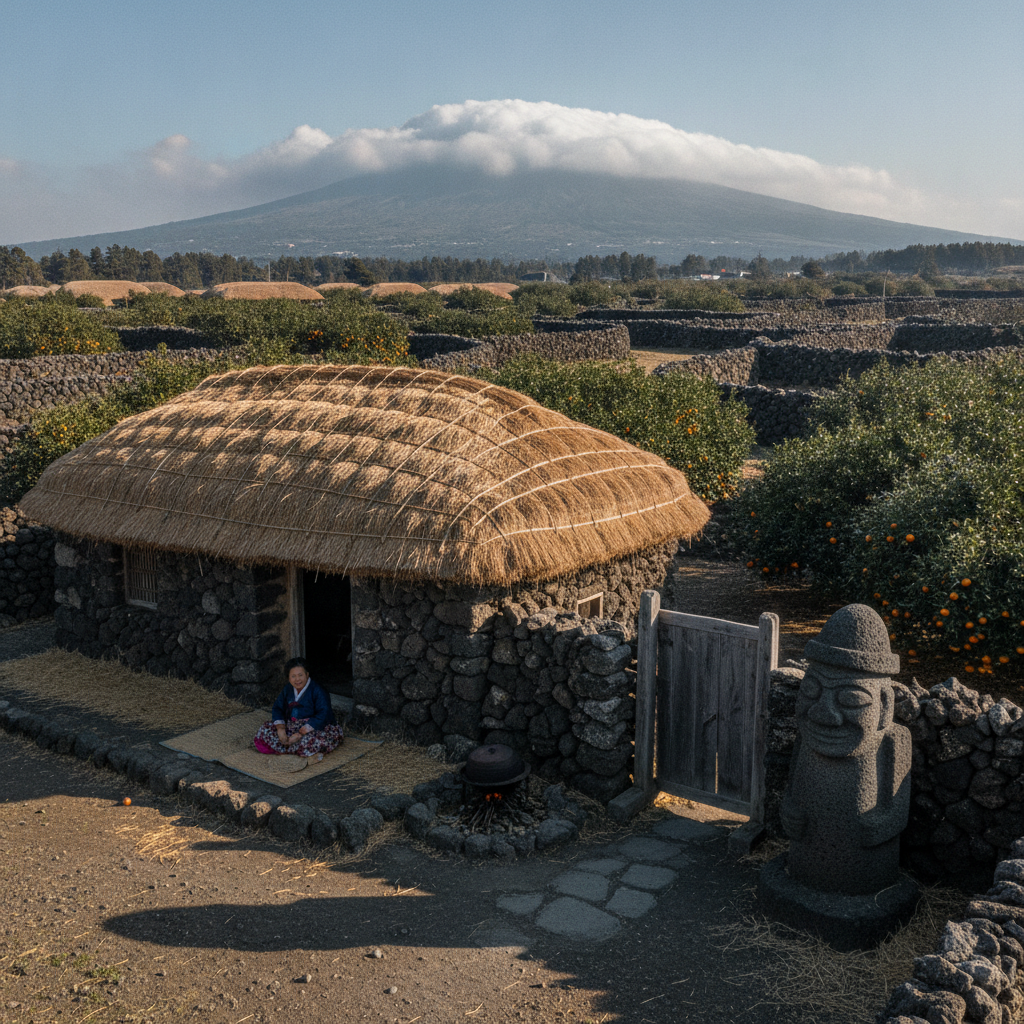
The rural Jeju (the island's inland and coastal villages that have maintained traditional lifestyles alongside the resort development): the side of Jeju most invisible to visitors who follow the standard tourist circuit and most rewarding for visitors who drive off the main roads. The Jeju dol damul (돌담울—the traditional Jeju stone wall network that divides the island's fields, lanes, and properties into a mosaic of basalt rock walls): the total length of the Jeju dry-stone walls (the estimated 22,000 km of basalt stone walls across Jeju Island—the length of the stone wall network is greater than the circumference of the Earth at 40,075 km per 22,000 km estimate (approximately half the Earth's circumference)): the most distinctive man-made landscape element on the island. The Jeju Village (Seongeup Folk Village—성읍 민속마을—the government-designated folk village in the central-eastern part of Jeju, the best-preserved traditional Jeju stone-thatched house (초가집, chogajip) settlement): the village maintains 60+ traditional thatched houses in the original settlement pattern from the Joseon Dynasty period, with residents living in the traditional houses. The Jeju horse culture (the Hallasan slopes as the traditional Jeju horse breeding ground—the Jeju horse (한라마, Hallama—the small, hardy native Korean horse breed adapted to the volcanic terrain): the Jeju horse breeding programme has maintained approximately 6,000 registered Hallama horses on the island; horseback riding on the oreum slopes is the most unusual active recreation on Jeju).
- 2
Jeju's Wind & Weather – The Island That Never Stops Blowing
The Jeju climate (the meteorological environment of the island—the subtropical island in the East China Sea at the intersection of 3 major atmospheric and oceanic systems): the weather that shapes every Jeju activity. The three defining characteristics of Jeju's weather (the traditional Jeju saying: 'Jeju has 3 abundances (삼다, samda)—wind, stones, and women'): the wind (Jeju is the windiest inhabited island in South Korea—the mean annual wind speed at Jeju Airport is 4.3 m/s; the Songaksan headland on the southern coast records the highest average wind speeds of any Korean weather station). The typhoon exposure (Jeju receives a direct typhoon hit or near-miss approximately 3 times per year—the island is in the primary typhoon path from the Pacific): the typhoon season (July–October, peak August–September—the period when the island is most subject to weather disruption): the typhoon preparation (flights cancelled up to 24 hours ahead of a typhoon approach; the most important Jeju booking flexibility note is to have a return flight with a 1-day weather buffer in August–September). The Hallasan cloud cap (the Hallasan summit is covered in cloud approximately 200 days per year due to the mountain-induced precipitation effect (the orographic lift of the maritime air over the mountain creates persistent summit cloud)): the summit trail closure system (the trails to the Baengnokdam crater lake are closed when visibility at the summit falls below 200m—the most common reason for summit trail closure outside of snow season).
- 3
Jeju in Korean Culture – Literature & Mythology
The Jeju cultural representation (the way Jeju appears in Korean literature, mythology, film, and national consciousness—the island that occupies a specific imaginary space in Korean culture as the place of exile, the place of elemental nature, and the place of female power): the cultural dimension that enriches every physical encounter with the island. The Jeju mythology (the Jeju creation myth—the Baekjudohalmeong myth (the creation goddess who created the Jeju landscape by scattering soil from her skirt): the creation myth encoded in the oreum landscape; the 18,000 Jeju gods (the most densely populated divine landscape in Korea) as the mythological framework for the shamanic religious practice): the most mythologically rich island in Korea. The Jeju exile literature (the Joseon Dynasty practice of exiling political prisoners and scholars to Jeju (the island was used as a place of exile for the entire Joseon period (1392–1897))—the most famous exiled scholar on Jeju is Kim Jeong-hui (the Chusa, 1786–1856), who developed the Chusache calligraphic style during his 9-year Jeju exile): the exile literature as the most productive period of Jeju literary culture. The contemporary Jeju in Korean film and drama (the K-drama filming locations on Jeju—the Jeju 'romantic drama' genre: Jeju has hosted the filming of approximately 120 Korean dramas since 2000, with the Jeju landscape (Hallasan, the coastal roads, and the oreum fields) serving as the signature backdrop for romantic storylines that exploit the island's distance and beauty as metaphors for emotional isolation and resolution).
- 4
Jeju's Local Economy – Tangerines, Wind & Tourism
The Jeju economy (the island's economic structure—the transition from a subsistence fishing and farming economy to a tourism-dominated service economy over the 20th century): the economic story that explains the island's physical transformation. The tangerine economy (the Jeju gamgyul mandarin—the most economically important agricultural product in Jeju, grown on approximately 21,000 hectares (60% of all Jeju farmland): Jeju produces approximately 600,000 tonnes of tangerines per year, representing 99% of South Korea's total domestic tangerine production): the tangerine's economic importance (the Jeju tangerine generates approximately ₩600 billion KRW (approximately USD 450 million) in annual farm revenue—the primary source of agricultural income for the island's 30,000+ farming households). The Jeju wind energy (the island's wind resource—the consistently high wind speeds of Jeju make it South Korea's leading wind energy producer; the Jeju Energy Corporation operates the Jeju offshore wind farm (the first offshore wind farm in Korea, commissioned 2012)—a 30 MW facility (15 × 2 MW turbines) on the Hangwon coast of northeastern Jeju): the 2030 target (the Jeju Special Self-Governing Province has committed to 100% renewable energy by 2030 through the CFI (Carbon Free Island Jeju) programme—the first Korean administrative region to commit to full renewable energy). The tourism economy (the 15+ million annual visitors to Jeju generating approximately ₩3 trillion KRW in tourism revenue): the tension between conservation and development.
- 5
Jeju's Design Hotels & Unique Stays
The Jeju unique accommodation landscape (the island's boutique hotel and distinctive stay sector—the accommodation offers that most directly exploit Jeju's volcanic landscape and subtropical setting): the properties that have become architectural and Instagram landmarks in their own right. The Bonte Museum Pension (the stone house accommodation adjacent to the Bonte Museum in Hallim—the accommodation with the most direct connection to Jeju's dol hareubang cultural heritage). The Aewol coastal road design hotels (the concentration of architect-designed small hotels on the Jeju northwestern coast—the properties including the UNIHI JEJU (the minimal glass-and-concrete hotel on the coastal cliff at Aewol designed for sea-view bedrooms) and the Sanlitun (the basalt stone and concrete boutique hotel in the Aewol citrus orchards)): the most photographed small hotels in Jeju. The traditional Jeju stone house pension (the converted traditional Jeju stone-and-thatch farmhouse (초가집, chogajip) pensions—the stone-walled properties in the Jeju inland villages rented as holiday cottages): the most authentic accommodation format on the island and the property type most associated with the Jeju-eo cultural heritage. The glamping sites (the Hallasan forest glamping—the bell tent and dome camping sites in the forest above Jeju City that provide the most immersive forest experience without camping equipment).
- 6
Jeju's Complete Natural Wonders Circuit
The Jeju natural wonders circuit (the comprehensive single-island natural heritage tour designed to visit every major geological, biological, and oceanographic wonder of Jeju in a logical 4-day sequence): the route for the visitor who wants to understand Jeju as a complete natural system. Day 1 (Volcanic geology): Hallasan Gwaneumsa Trail summit (the most complete volcanic geology section from sea-level basalt to summit crater lake): the Baengnokdam crater lake (the glacier lake in the volcanic crater at 1,850m elevation—the only natural crater lake on a volcanic peak in Korea); the Tamna Valley (the eroded canyon valley below the summit's north face showing the volcanic stratigraphy). Day 2 (Lava tubes & tuff cone): Geomunoreum Oreum (the UNESCO source vent of the lava tube system—walking the oreum reveals the relationship between the surface cone and the underground tube): Manjanggul Cave (the illuminated 1 km lava tube section and the 7.6m lava column); Seongsan Ilchulbong at sunrise (the tuff cone at its most dramatic morning light). Day 3 (Coastal geology): the Daepo Jusangjeolli columnar basalt cliffs (the hexagonal column formation at the Jungmun coastline): Jeongbang Waterfall (the direct-sea waterfall); Oedolgae sea stack; Songaksan crater (the coastal tuff ring on the southwestern tip of Jeju—accessible by a 40-minute ridge walk along the crater rim with views of the volcanic Marado Island (the southernmost point of South Korea) 11 km offshore). Day 4 (Marine geology): Udo Island (the offshore island with the only coral sand beach in Korea and the underwater reef snorkeling).
Walk this route with audio
Stories play automatically as you reach each stop — no tapping needed.
More in Jeju
The Only Region in South Korea Where You Can Enter Without a Korean Visa, the Best-Selling Water in Korea Bottled from a Hallasan Volcano Spring & the 1.8-Million-Year Geological Timeline Underfoot
The Free-Diving Women With a 90% Population Decline Since the 1960s, the World's Largest Lava Column in an Accessible Cave & the Waterfall That Falls Directly Into the Sea
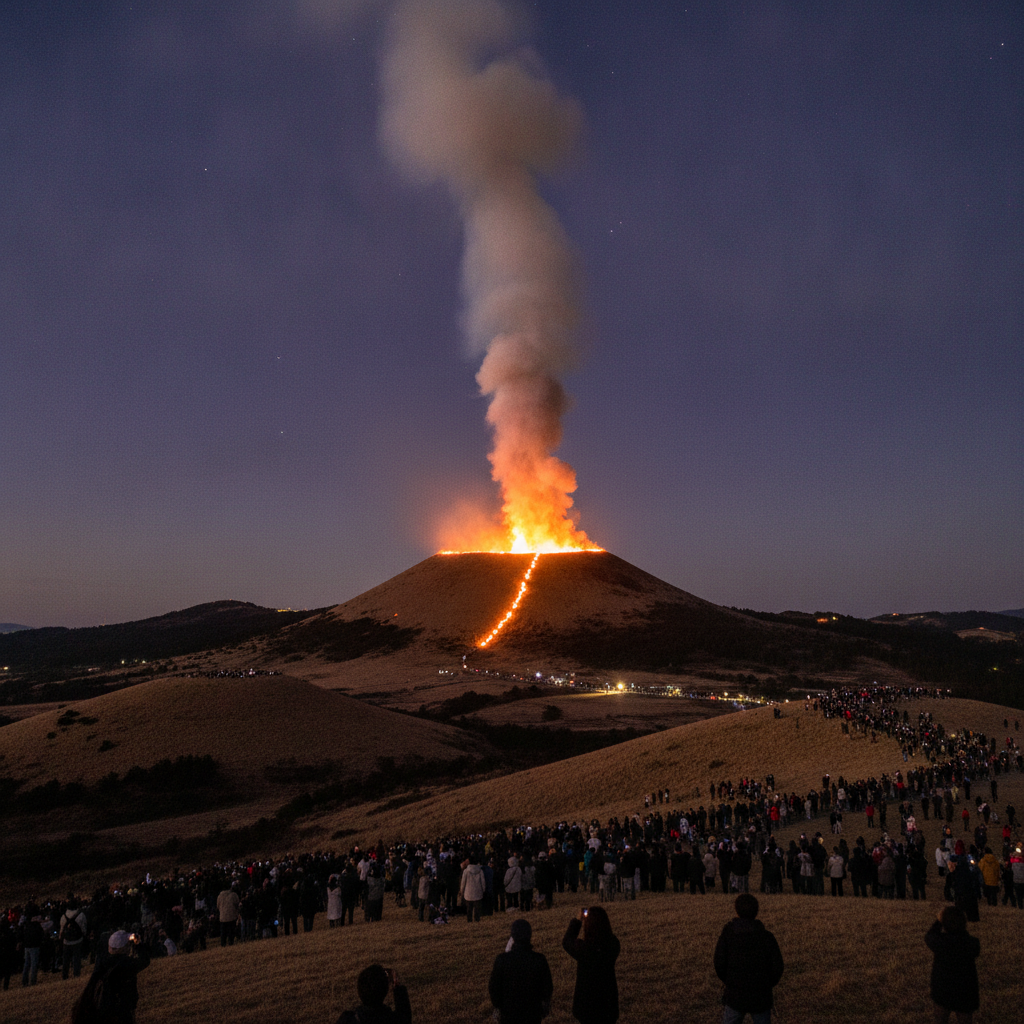
The Island with 18,000 Gods, the Adults-Only Sculpture Park on a Family Honeymoon Destination & the Volcanic Fire That Burns 100,000 People's Winter Away
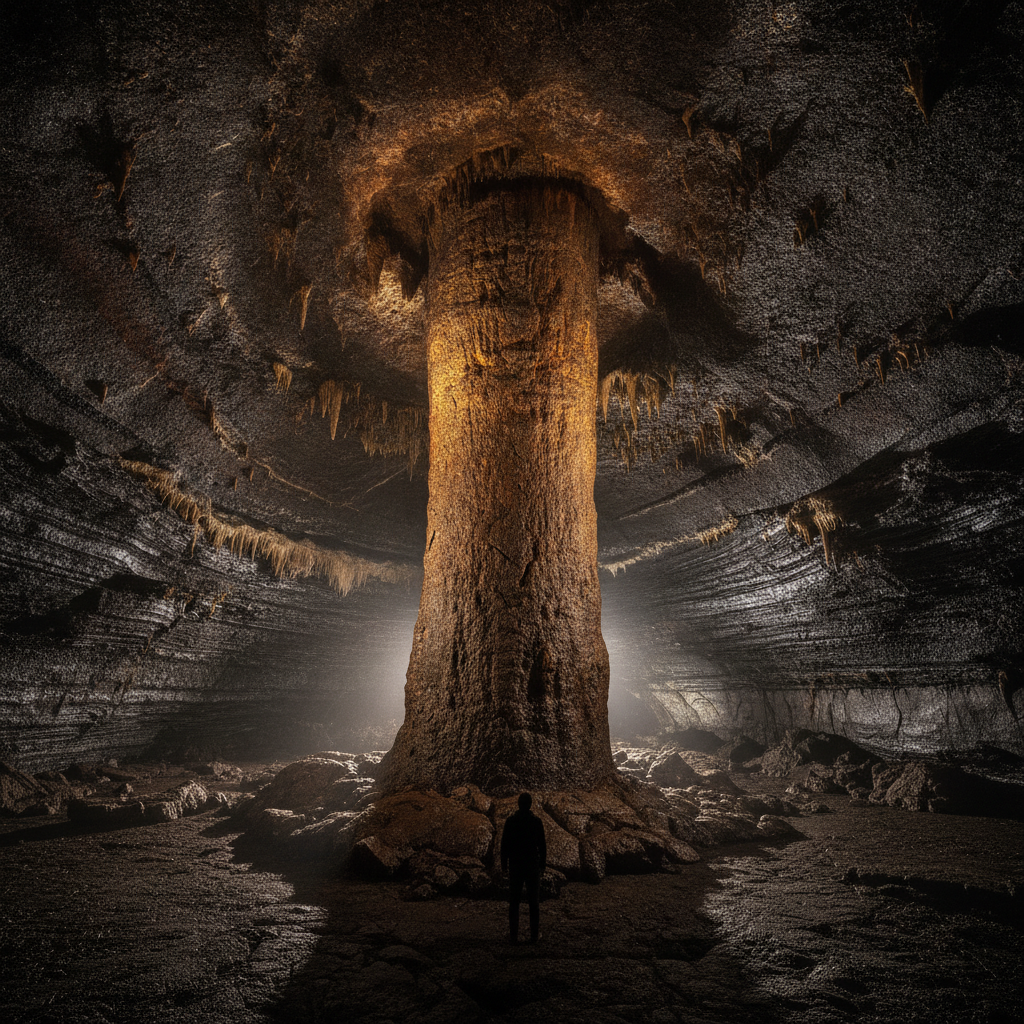
The 250,000-Year-Old Cave That Drained Itself Empty, the 1948 Massacre That Killed 10% of the Island's Population & the Only Road in Korea That Crosses 1,950 Metres