Johannesburg: The 1886 Gold Rush, the Witwatersrand Mines, and the Cradle of Humankind
Johannesburg history: the 1886 gold discovery and the city founding, the Witwatersrand gold reef (the world largest gold deposit), the mine tours, the Cradle of Humankind UNESCO fossil site (Mrs Ples, Little Foot), Pretoria and the Union Buildings, and the migrant labor system.
- 1
The 1886 Gold Rush - How Gold Founded Johannesburg
The discovery of gold on the Witwatersrand farm of Langlaagte in 1886 by George Harrison (an Australian prospector) is the most significant mineral discovery in South African history. Within a decade Johannesburg grew from an empty farm to a city of 100,000 people. The Witwatersrand (Afrikaans for ridge of white waters): the gold-bearing conglomerate reef stretching approximately 50 km east-west beneath the Highveld, the world largest gold deposit. South Africa produced approximately 40% of all gold ever mined on earth from this reef. The Randlords (mining magnates including Cecil Rhodes, Barney Barnato, and Alfred Beit) built their fortunes here and the grand Victorian mansions of Parktown and Westcliff. The characteristic flat-topped yellow mine dump mountains of Johannesburg are tailings from gold processing operations, containing traces of cyanide and heavy metals.
- 2
The Gold Mines Today - Mine Tours and the Mining Heritage of Joburg
Gold Reef City (the casino and theme park built on the Crown Mines site): the mine tour descends approximately 200 meters into an authentic abandoned gold mine shaft, the most accessible mine heritage experience in Johannesburg. The South Deep Mine (approximately 45 km southwest of Joburg in Westonaria) is the world largest gold mine by reserves, operated by Gold Fields. South African gold production has declined from approximately 1,000 metric tons annually (the 1970s peak) to approximately 100-130 metric tons (2024). The Witwatersrand mines are now very deep (3,000-4,000 meters), making them expensive to operate; many original Joburg mines are closed. The zama-zamas (illegal artisanal miners who work abandoned shafts at significant personal risk) are a significant ongoing safety and social issue in the Joburg mining heritage areas.
- 3
The Cradle of Humankind - UNESCO World Heritage Fossil Site Near Joburg
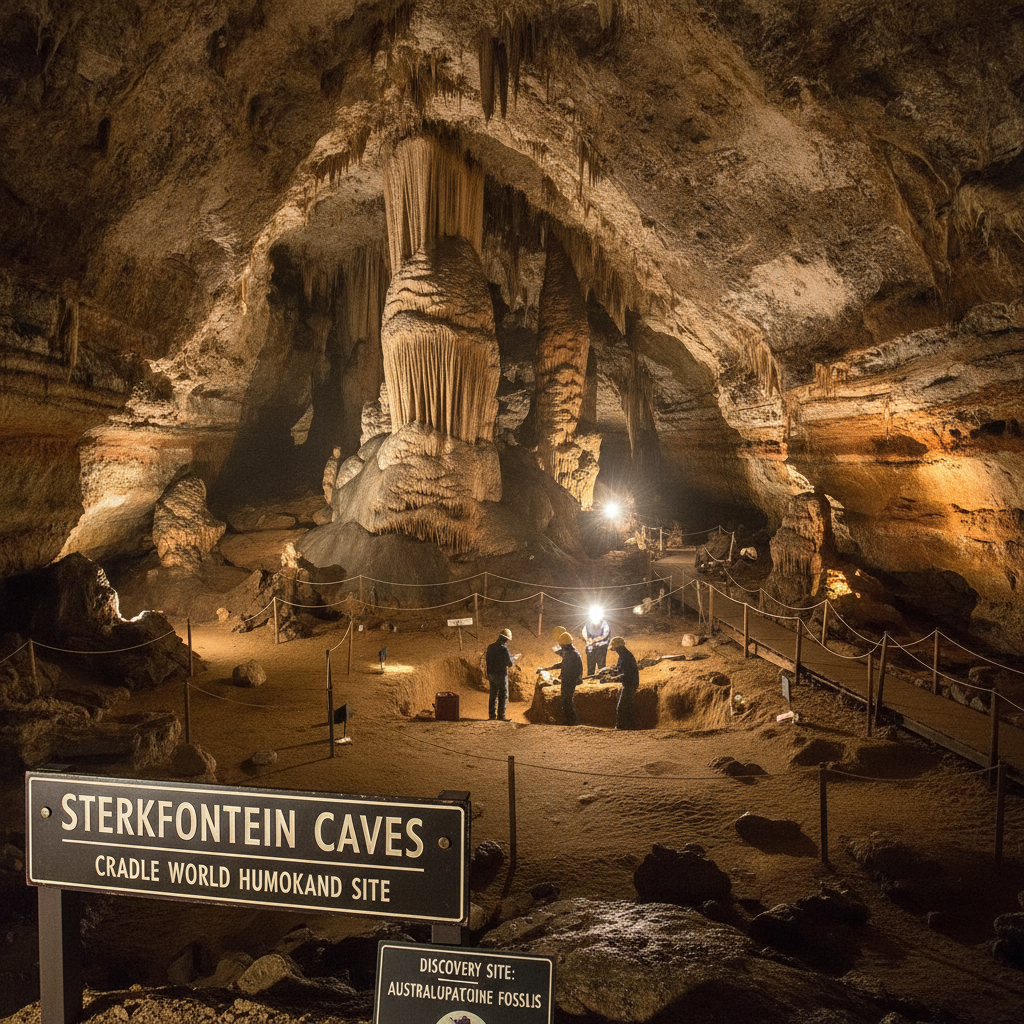
The Cradle of Humankind: the UNESCO World Heritage Site approximately 50 km northwest of Johannesburg, one of the most important paleoanthropological sites in the world. Approximately 40% of all known hominid fossils have been found in the caves of this limestone region. Sterkfontein Caves: the primary excavation site, where Mrs Ples (Australopithecus africanus, approximately 2.5-2.8 million years old) was discovered in 1947 by Robert Broom. Little Foot: the nearly complete australopithecine skeleton discovered in Sterkfontein in 1997, approximately 3.67 million years old. Swartkrans: site of Homo ergaster fossils. The Maropeng Visitor Centre is the primary visitor facility, with a museum tracing human evolution from the first hominids to Homo sapiens.
- 4
Pretoria - The Administrative Capital and the Union Buildings
Pretoria: the administrative capital of South Africa, approximately 50 km north of Johannesburg. The Union Buildings (designed by Herbert Baker, completed 1913): the seat of the South African government and the most architecturally significant building in Pretoria. The statue of Nelson Mandela stands in the amphitheater at the spot where he was inaugurated as President on 10 May 1994. Pretoria is known as the Jacaranda City: approximately 70,000 jacaranda trees line its streets and parks; in October-November the city turns purple with blossoms, one of the most beautiful urban spectacles in South Africa. The Voortrekker Monument (a massive granite monument on a hill south of Pretoria, one of the most significant monuments of Afrikaner culture, commemorating the Dutch-speaking settlers who trekked into the South African interior in the 1830s-1840s).
- 5
The Witwatersrand Migrant Labor System - The Human Cost of the Gold Economy
The migrant labor system that built Johannesburg on the backs of Black workers. The apartheid-era single-sex migrant labor hostels required Black miners to live near the mines, separated from their families who remained in the rural homelands (Bantustans). The compound system (dating from the 1880s Kimberley diamond rush) was designed to control labor and prevent theft. The mines provided the economic foundation for apartheid: cheap Black labor made the deep-level gold mines economically viable and the mining houses were among the most powerful supporters of the apartheid economic system. The social disruption of the Black family caused by forced separation of workers from families over generations is considered one of the most damaging long-term legacies of the apartheid-era mining economy.
- 6
Johannesburg Gold and Origins Legacy - Mining History and Hominid Fossils
The complete Johannesburg history of gold and human origins. The 1886 gold discovery made Johannesburg the economic capital of Africa in less than a decade. The Witwatersrand gold reef produced 40% of all gold ever mined on earth. The Cradle of Humankind (50 km northwest) holds 40% of all known hominid fossils, making the Joburg region the most important area on earth for understanding human origins. Pretoria (50 km north) holds the seat of South African government. The paradox: the world most significant human origins fossil site and the economic capital of Africa are separated by less than 100 km. The half-day Cradle of Humankind trip from Joburg (Maropeng Visitor Centre and Sterkfontein Caves: approximately 1.5-2 hours drive each way plus 3-4 hours on site) is one of the most rewarding day trips in Africa for a visitor interested in human history.
Walk this route with audio
Stories play automatically as you reach each stop — no tapping needed.
More in johannesburg
Johannesburg Lifestyle: Sandton, the South African Braai, Parkhurst, Pilanesberg Safari, and Joburg vs Cape Town
Johannesburg Legacy: Wits University, Museum Africa, Rosebank, Kruger National Park, Drakensberg, and the Complete Reference
Johannesburg Democracy and Culture: Constitution Hill, Amapiano, South African Jazz, Cape Malay Food, and Inequality
Johannesburg: City of Gold, the Apartheid Museum, Soweto, Nelson Mandela, and the Art Scene