Kalaw Pa-O Village & Ethnic Culture Walk
Meet the Pa-O people near Kalaw — the Pa-O ethnic community whose black-turbaned women are the most immediately recognisable ethnic group in the Shan Plateau area live in the villages surrounding Kalaw, and the day walk to the nearby Pa-O settlements is the most accessible single encounter with this distinctive culture.
- 1
Pa-O Village Path
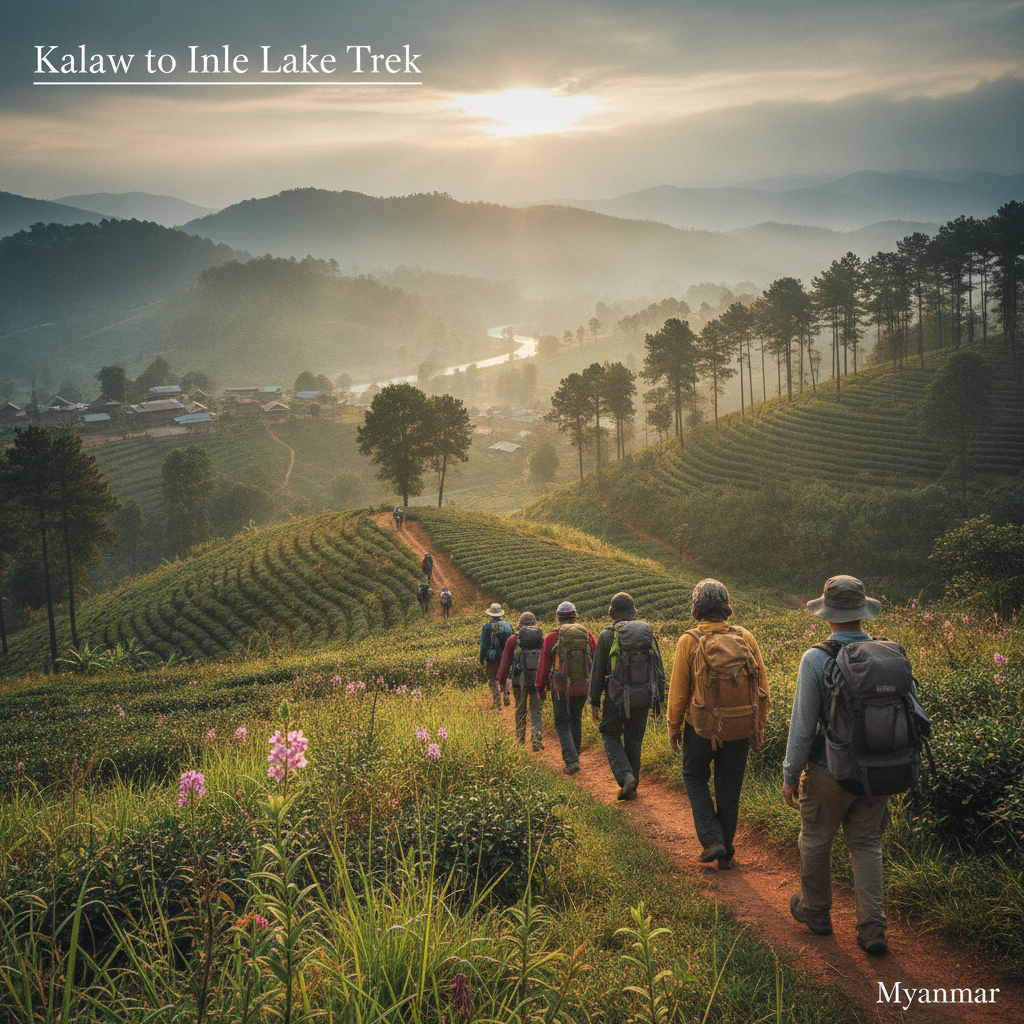
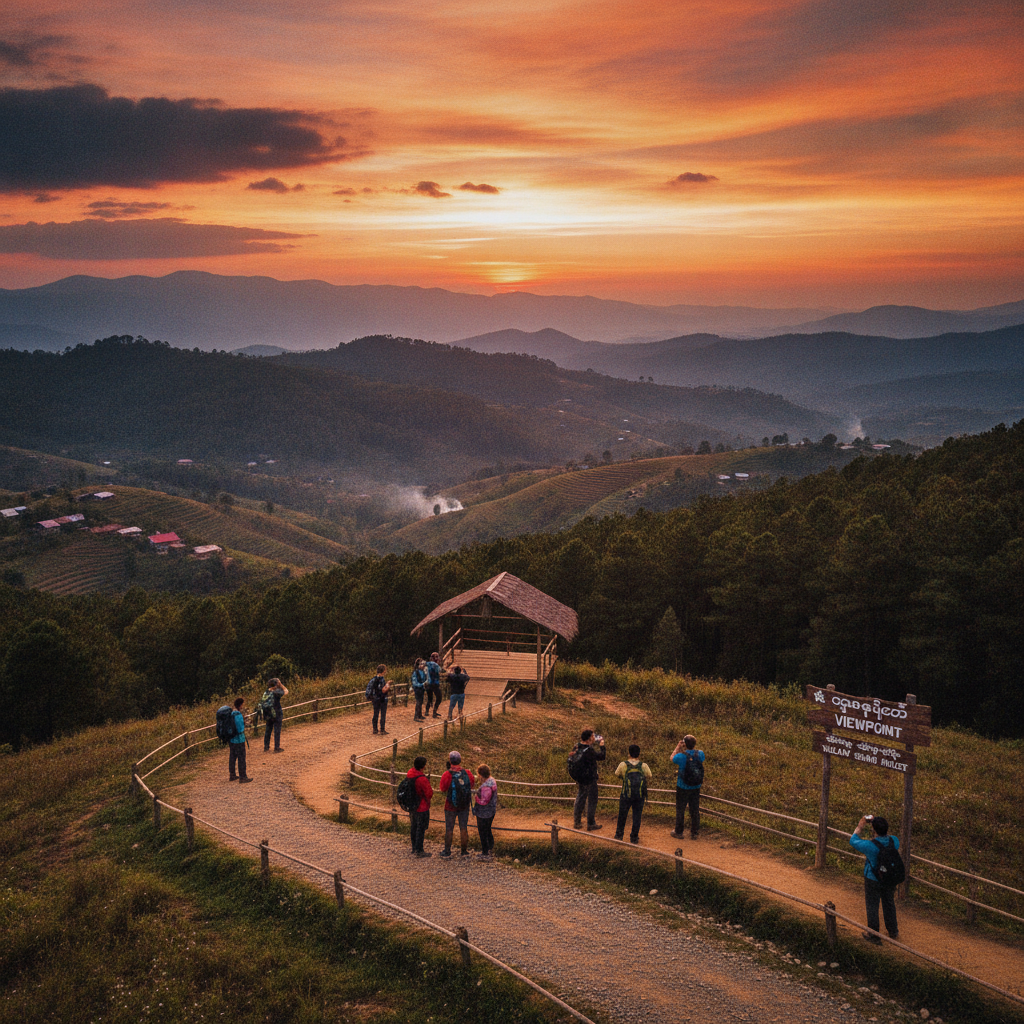
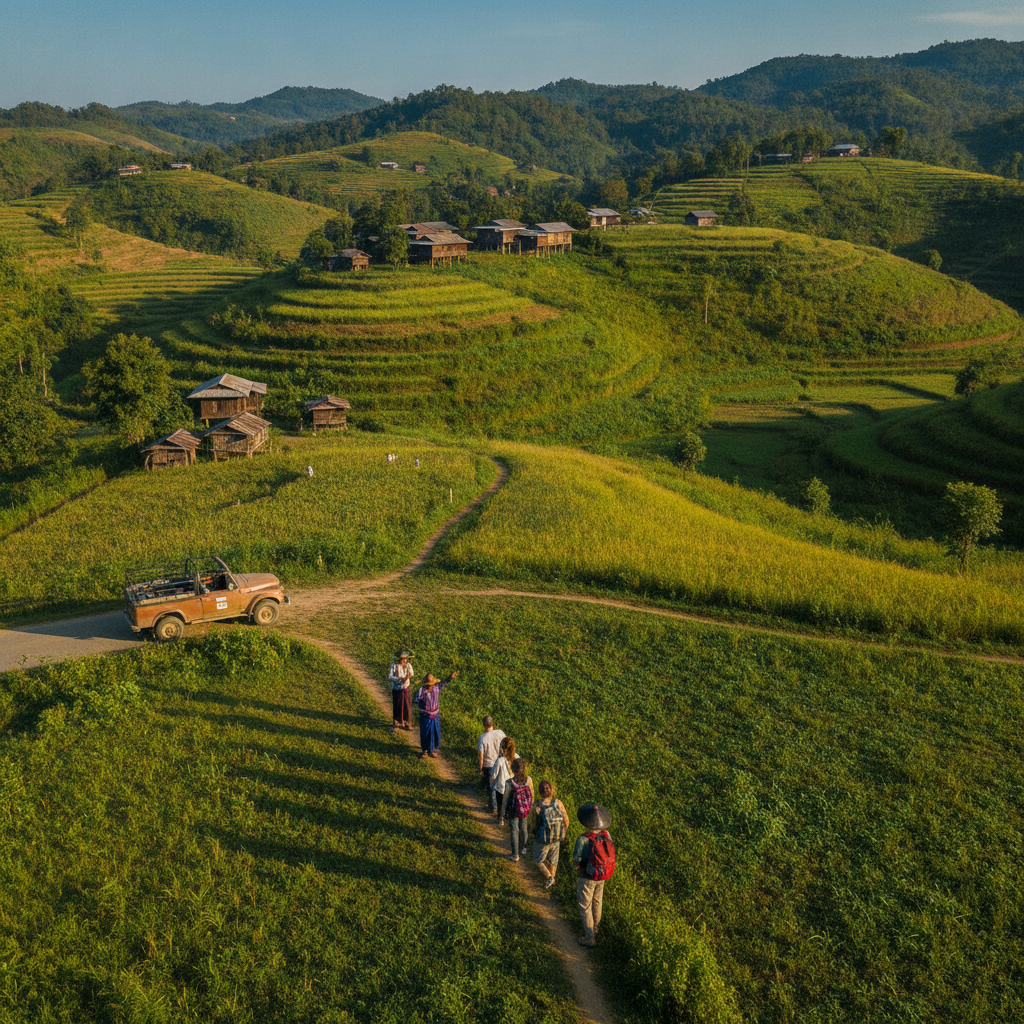
The path from Kalaw to the nearest Pa-O villages (the walking route descending from the hill station plateau into the first valley, passing through the tea plantation and the pine forest edges to reach the Pa-O farming community 2-3 hours from the town) is the most directly accessible single cultural trekking day available from the Kalaw base — the path's character (the descending trail from the plateau, the highland landscape visible as the path moves through the agricultural land between the town and the first village, and the increasing evidence of the Pa-O farming activity as the village approaches) creates the most gradually revealing single cultural approach accessible at the Shan Plateau destination. The path's views (the Kalaw plateau visible behind as the path descends, the Pa-O farmland visible ahead in the valley below, and the pine forest and the agricultural terraces creating the most visually layered single highland landscape accessible near the town) make the approach walk as rewarding as the village encounter itself.
- 2
Pa-O Women Turban Culture
The Pa-O women's traditional black turban (the distinctive head covering that is the single most immediately recognisable visual marker of the Pa-O ethnic identity, the black cotton turban wound in the characteristic Pa-O style and worn daily by the women of the community, visible in the fields, at the market, and at the religious ceremonies throughout the year) is the most immediately culturally distinctive single element accessible in the Pa-O village encounter — the turban's significance (the cultural marker that identifies the wearer as Pa-O and that is maintained even as other aspects of the traditional dress have been modified by the availability of manufactured clothing) and the community's continuation of the practice (the girls learning to wind the turban from their mothers, the practice maintained across the generations as the most directly visible single expression of Pa-O cultural identity) create the most directly ethnographic single cultural observation accessible at the Kalaw trekking destination. The Pa-O women's community role (the farming, the market trading, and the household management that are the most visibly productive activities of the Pa-O village economy) is the most directly observable single gender-specific cultural practice accessible in the highland ethnic community.
- 3
Pa-O Farm Activity
The Pa-O farming activities visible in the village and the surrounding agricultural land (the garlic cultivation that is the most economically significant single cash crop of the Pa-O farming community, the highland vegetables grown in the terraced fields around the village, and the traditional farming methods that are the most immediately observable single expression of the Pa-O agricultural knowledge) are the most directly productive single encounter accessible during the Pa-O village visit — the garlic's centrality to the Pa-O economy (the braided garlic bulbs visible drying in the village yards throughout the post-harvest season, the garlic available at the Kalaw market brought by the Pa-O women traders, and the garlic export from the Shan Plateau to the national Myanmar market) makes the Pa-O garlic the most economically significant single agricultural product accessible in the Kalaw trekking area. The farming calendar's visibility (the different activities visible depending on the season of the visit — the preparation of the fields before the rains, the planting in the early monsoon, the maintenance through the growing season, and the harvest in the dry season) creates the most directly seasonal agricultural encounter accessible at the Kalaw highland destination.
- 4
Pa-O Buddhist Monastery
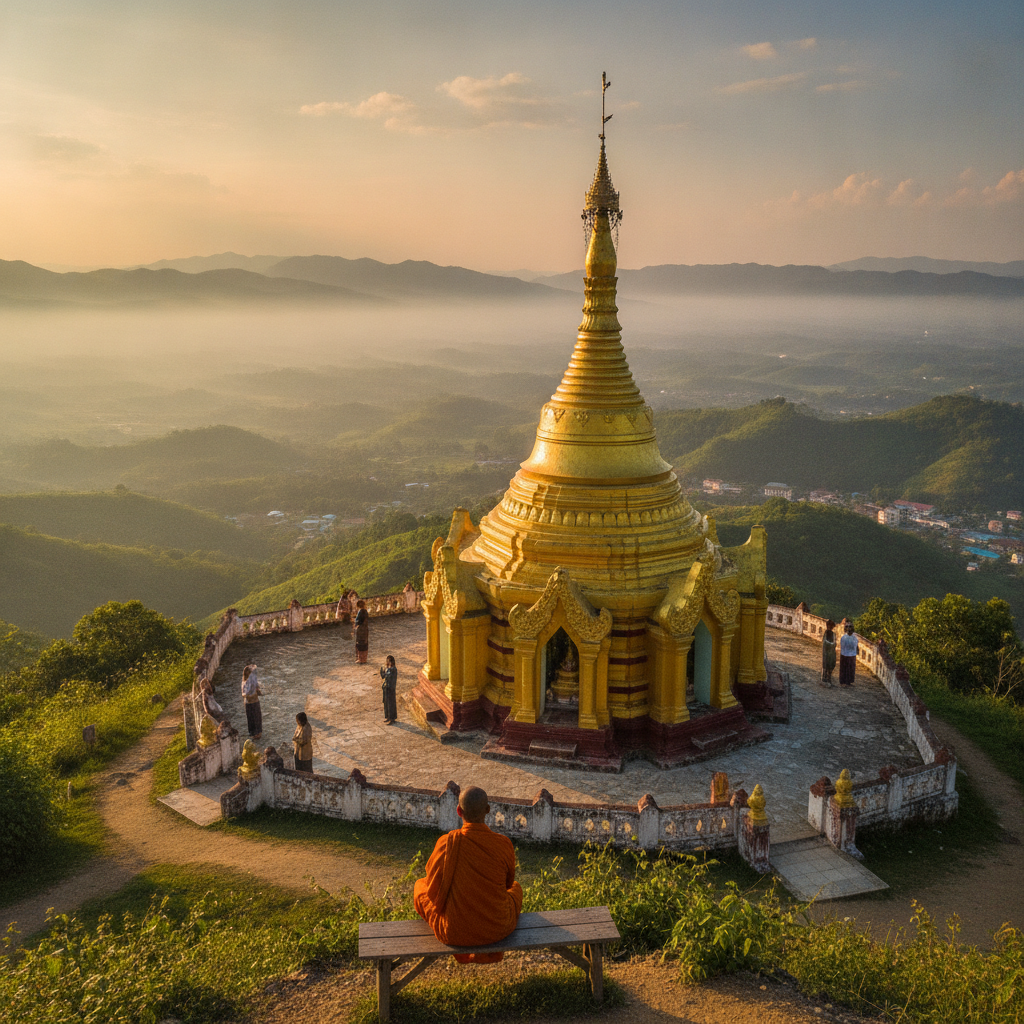
The Pa-O village monastery (the Buddhist religious centre of the village community, the monks in residence providing the religious education and the ceremonial services that the Pa-O Buddhist community requires throughout the year) is the most directly community-institutionally significant single building accessible at the Pa-O village visit — the monastery's physical character (the traditional Mon-Burmese influenced architecture in the highland construction materials of the Shan Plateau, the monastery compound with the monks' quarters, the main prayer hall, and the school building providing the complete institutional complex of the highland Buddhist community) and the community's relationship with the monastery (the daily food offerings, the festival donations, and the educational role of the monastery in the village's social life) create the most completely socially embedded religious encounter accessible at the Pa-O village near Kalaw. The Pa-O Buddhist festival calendar (the pagoda festivals at the key dates in the Burmese lunar calendar, the alms offerings at the significant merit-making occasions, and the monastery's role in the agricultural ceremonies that connect the Buddhist and the pre-Buddhist animist traditions in the Pa-O community) is the most completely religious-culturally integrated single community practice accessible at the highland village.
- 5
Village Lunch Local Food
The village lunch at the Pa-O community (the shared meal at the village homestay or at the monastery's guest hall during the trekking stop, the Pa-O cooking using the highland ingredients produced in the village's own gardens) is the most directly food-culturally informative single meal accessible at the Kalaw trekking destination — the Pa-O cooking's character (the simpler preparation style that prioritises the fresh flavour of the highland vegetables over the complexity of the lowland curry preparation, the use of the local garlic, the highland greens, and the dried mushrooms from the surrounding forest in the dishes prepared for the trekking visitors) creates the most regionally authentic single food encounter accessible on the Kalaw highland trek. The communal eating format (the meal shared at the long table with the guide and the other trekkers, the Pa-O host visible in the kitchen preparation area, and the village children curious about the visiting group) creates the most socially complete single cultural food encounter accessible at the highland village.
- 6
Return Highland Path
The return walk from the Pa-O village to Kalaw (the uphill return through the same landscape as the morning's descent, but in the afternoon light that transforms the familiar path with the changed direction and the changed illumination) provides the most physically consolidating single walk conclusion accessible at the Kalaw day trek — the return's physical character (the uphill climb that is the most demanding single section of the day walk, but the most directly rewarding in the sense of returning to the hill station with the day's cultural encounters still vivid) and the afternoon light on the highland landscape (the different quality of the descending sun on the tea plantation and the pine forest from the morning's ascending light) create the most completely different visual experience of the same path available at the Kalaw day trek. The arrival back at Kalaw (the return to the hill station in the late afternoon, the town visible above as the path ascends to the plateau level, and the first guesthouse offering the most welcome single hot shower accessible after the day's walking) completes the most satisfying single Kalaw day trek available without the overnight commitment of the full three-day Inle route.
Walk this route with audio
Stories play automatically as you reach each stop — no tapping needed.