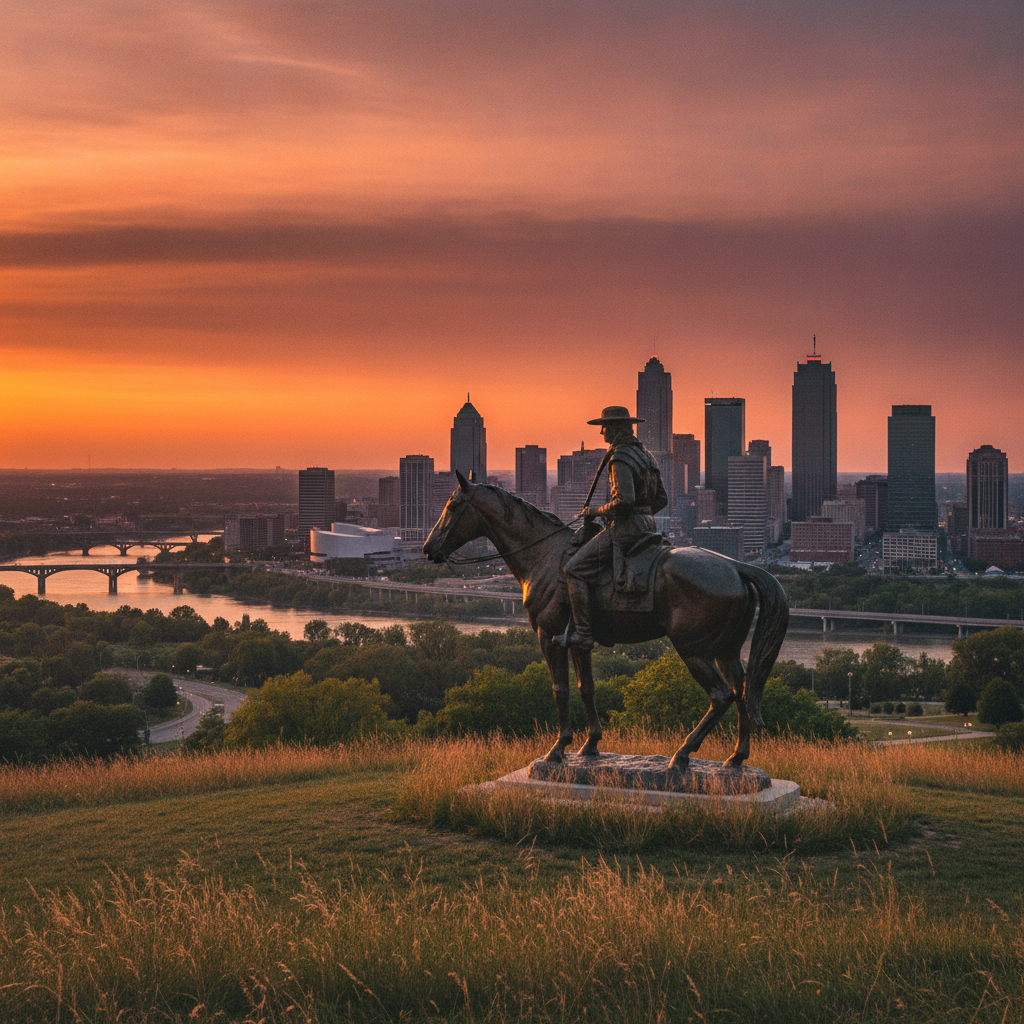
Kansas City: World-Class Art, Jazz Heritage and Legendary Smoke
Visit the Nelson-Atkins art museum and its glowing Bloch addition, shop the first US automobile shopping plaza, learn Kansas City jazz roots at 18th and Vine, taste Arthur Bryant barbecue legacy, hear the symphony at the Kauffman Center, and walk the Civil War battlefield in Loose Park.
- 1
Nelson-Atkins Museum of Art
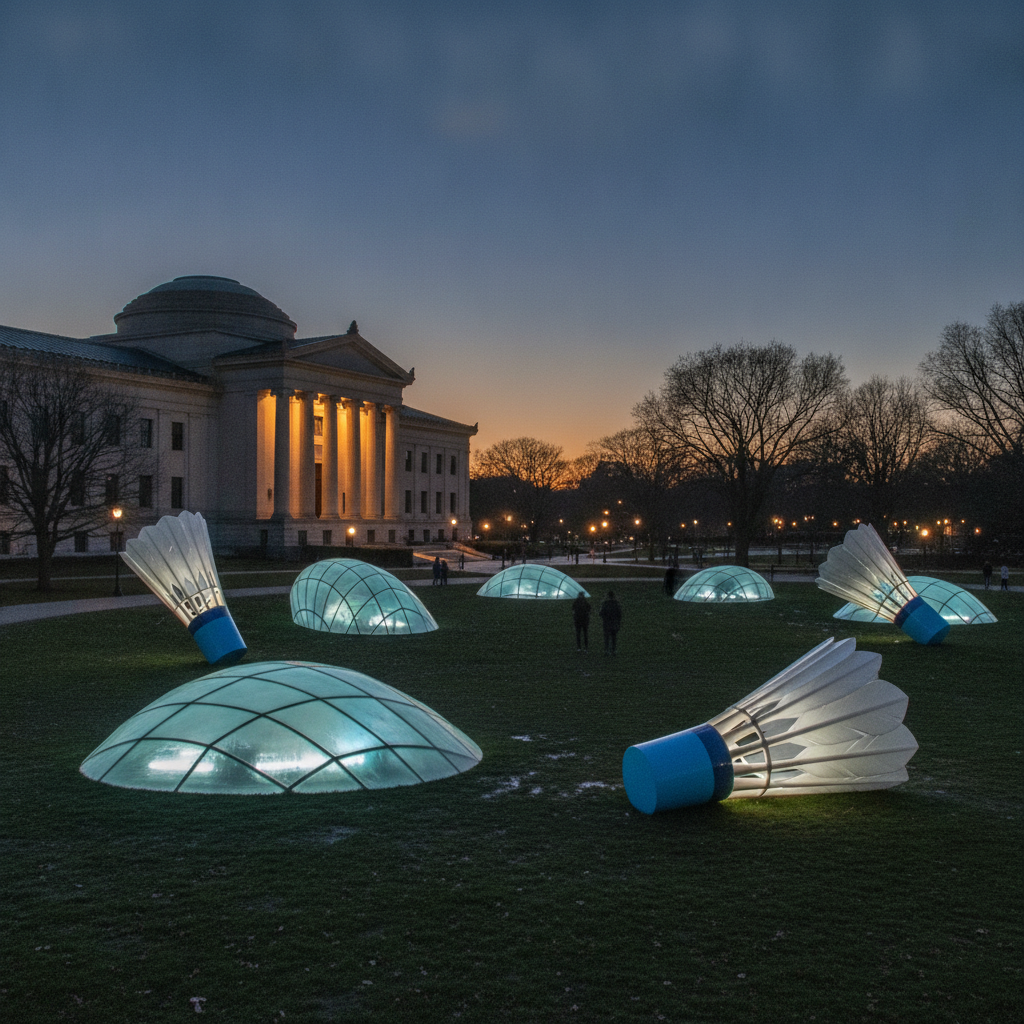
The Nelson-Atkins Museum of Art, opened in 1933 and funded through the combined bequests of William Rockhill Nelson and Mary McAfee Atkins, holds over 42,000 objects and is considered one of the finest general art museums in the United States. The Asian art collection, particularly Chinese painting and sculpture, is among the most important in the country. The Bloch Building addition designed by Steven Holl and completed in 2007 at a cost of 200 million dollars uses light-diffusing glass lenses embedded in the landscape, creating a building that changes character throughout the day. The installation of Shuttlecocks, four oversized badminton shuttlecocks by Claes Oldenburg and Coosje van Bruggen placed on the museum lawn in 1994, is among the most reproduced public art images associated with any American museum.
- 2
Country Club Plaza and Plaza Architecture
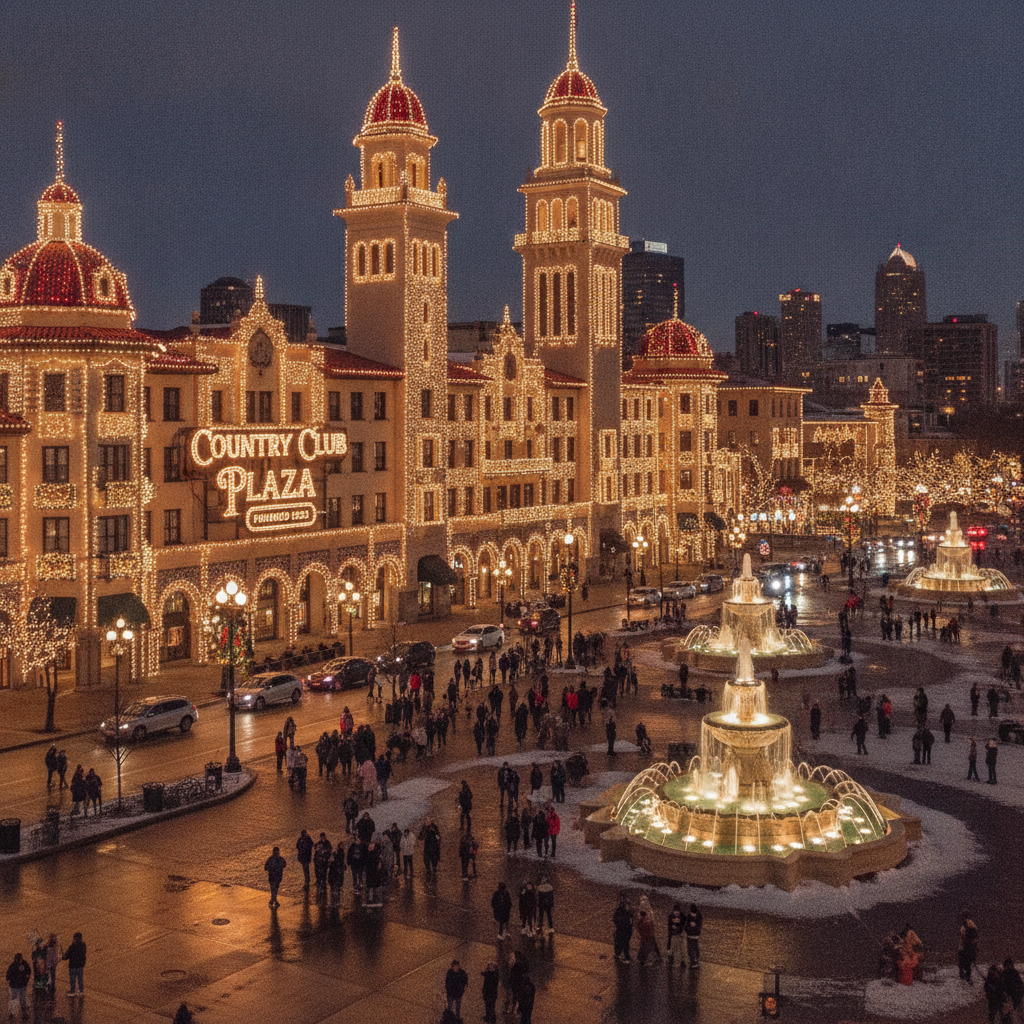
The Country Club Plaza, developed by J.C. Nichols Company beginning in 1922, was the first automobile-oriented shopping center in the United States and the first designed with parking in mind from the start. The Spanish Colonial Revival architecture, with towers, fountains, and tilework modeled on Seville, was deliberately chosen by Nichols to evoke permanence and European character. The development covers 55 acres and contains 180 shops and restaurants. The Plaza Art Fair each September is one of the largest outdoor art fairs in the United States, drawing over 270 artists. The annual Thanksgiving lighting ceremony, begun in 1925, illuminates 200,000 LED lights along building rooflines, a tradition that draws crowds of over 200,000 for the switch-on event.
- 3
Kansas City Jazz Heritage and 18th and Vine
The 18th and Vine Historic District was the center of Kansas City jazz from the 1920s through the 1940s. Kansas City jazz, developed under the political protection of Tom Pendergast political machine that kept clubs open through Prohibition and the Depression, emphasized a looser swing feel and extended improvisation over chord changes. Count Basie formed his orchestra in Kansas City in 1935. Charlie Parker was born in Kansas City, Kansas in 1920 and developed his bebop innovations partly through the Kansas City cutting sessions. The American Jazz Museum at 1616 East 18th Street, opened in 1997, is the only museum in the United States exclusively dedicated to jazz. The adjacent Negro Leagues Baseball Museum shares the building and interprets the parallel professional baseball world that existed during segregation.
- 4
Kansas City Barbecue Traditions
Kansas City barbecue is defined by its embrace of all meats, the use of a thick tomato-based sauce applied during cooking, and a slow-smoke tradition stretching back to Henry Perry, a Memphis transplant who began selling barbecued meat from a streetcar barn in 1908. Arthur Bryant, who took over Perry operation after his brother Charlie died, became internationally famous after journalist Calvin Trillin called Bryant a mere 17 blocks from downtown Kansas City the single best restaurant in the world in 1974. Joe s Kansas City Bar-B-Que, previously called Oklahoma Joe s, has been called the best barbecue in America by Bon Appetit. The Kansas City Barbeque Society, founded in 1986, oversees competitive barbecue rules and sanctions over 500 contests annually worldwide.
- 5
Kauffman Center for the Performing Arts
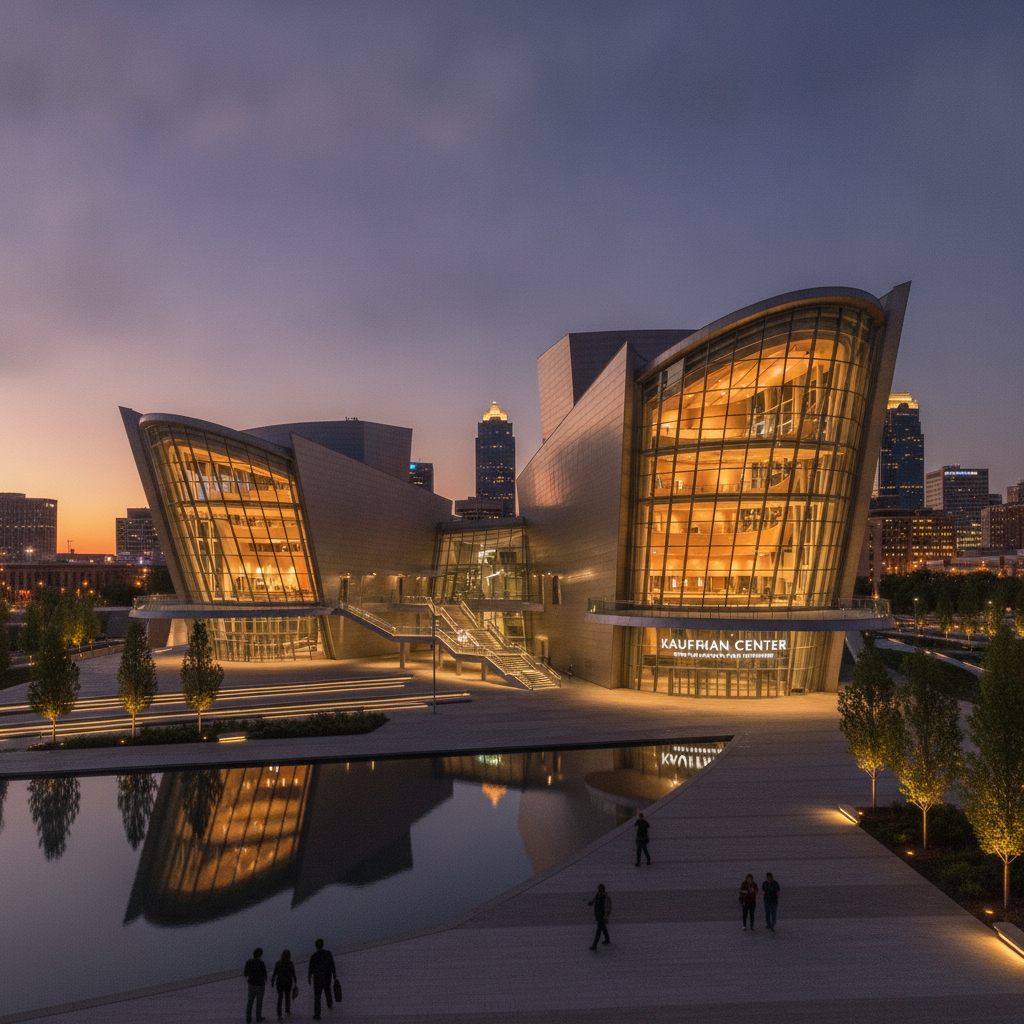
The Kauffman Center for the Performing Arts, designed by Moshe Safdie and opened in 2011 at a cost of 413 million dollars, contains two distinct concert halls: Helzberg Hall, home of the Kansas City Symphony, seating 1,800, and Muriel Kauffman Theatre, home of the Lyric Opera of Kansas City and Kansas City Ballet, seating 1,600. The building exterior of glass and steel curves over the two halls like a protective shell. The Kansas City Symphony, founded in 1982 under conductor Russell Patterson, has grown to 85 full-time musicians and is considered one of the strongest regional orchestras in the United States. The building is named for Ewing and Muriel Kauffman, whose philanthropy also funded the Ewing Marion Kauffman Foundation, the nation largest foundation focused on entrepreneurship education.
- 6
Loose Park and Kansas City Civil War Battle
Loose Park, a 75-acre park in the Waldo neighborhood given to the city by Ella C. Loose in 1927, was the site of the Battle of Westport on October 23, 1864, the largest Civil War battle west of the Mississippi River, involving 29,000 Union and 8,500 Confederate troops. Confederate General Sterling Price was attempting to retake Missouri for the Confederacy during his Missouri Raid but was decisively defeated at Westport, ending Confederate hopes for the state. The park contains a small monument marking the battlefield. Today Loose Park is known for its rose garden with over 5,000 plants representing 150 varieties, its tennis courts, and a duck pond. The park connects through the linear Indian Creek Trail to the broader Kansas City trail network of over 200 miles.
Walk this route with audio
Stories play automatically as you reach each stop — no tapping needed.
More in Kansas City
Kansas City: BBQ, jazz, architecture, Negro Leagues, Chiefs, and practical guide
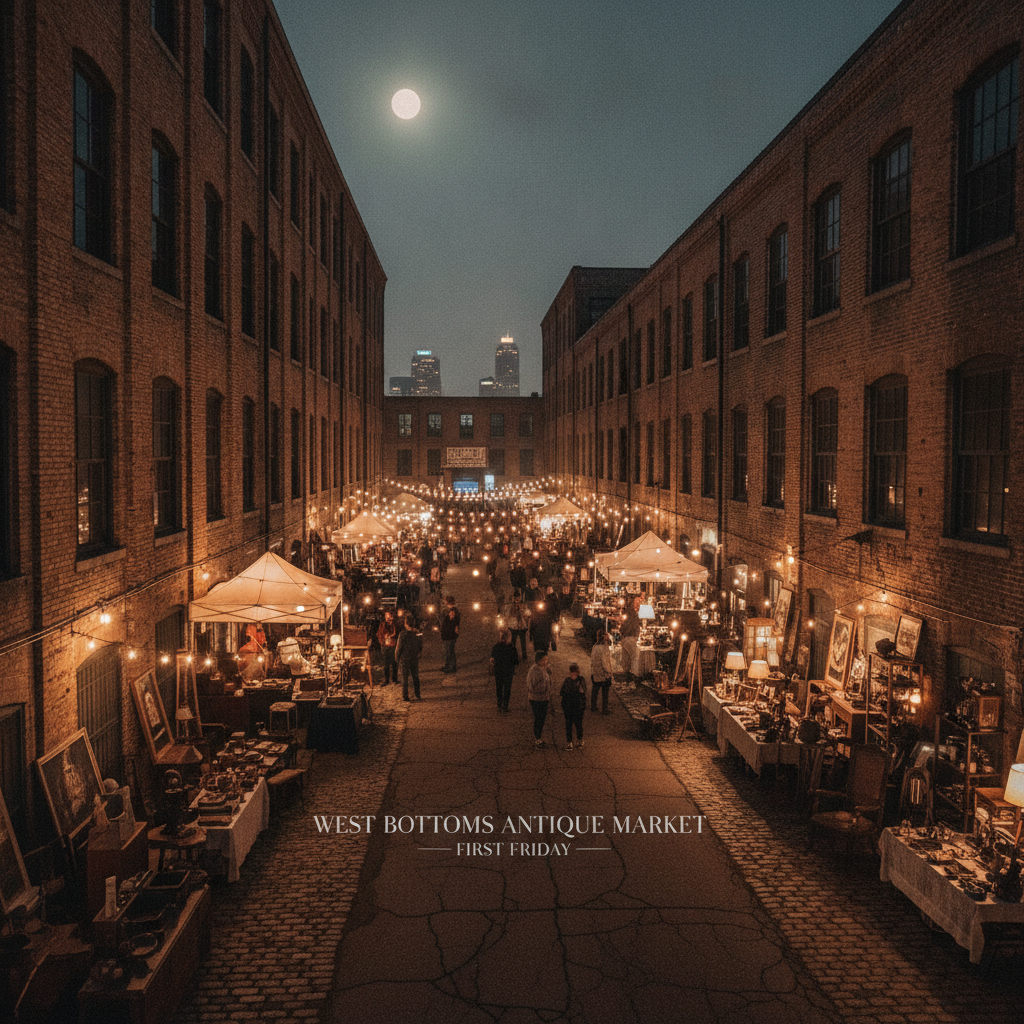
Kansas City R4-R6: West Bottoms (stockyards 400 acres 1917 hotel bank post office, First Weekend antique market largest Midwest monthly, American Royal Livestock largest combined livestock horse show rodeo world, 1993 flood 4m underwater, West Bottoms beef culture direct legacy), Kauffman (Marion Labs USD 5,000 basement 1950 to USD 6.5B 1989, Royals USD 5.25M 1968 now USD 1.8B, Kauffman Foundation USD 3.5B largest entrepreneurship focus US, Sprint founded Abilene 1899 T-Mobile 2020, Cerner 1979 Oracle USD 28.3B 2022), Civil rights (Troost Wall most persistent racial boundary US history, Jenkins v Missouri 1977-2011 longest desegregation case USD 2B 12 years considered failed, Bruce Watkins Cultural Heritage Center, 1968 uprising 6 killed after King assassination), Parks (Swope Park 1769 acres zoo 1700 animals, Loose Park Battle of Westport October 23 1864 29,000 vs 8500 largest Civil War battle west Mississippi, tallgrass prairie less than 4% original remains), tech (Google Fiber 2012 first gigabit residential US USD 300M economic impact, 500+ tech companies AgTech health IT, Hallmark since 1910 largest greeting cards world, H&R Block 1955 brothers Bloch), Identity (KCK vs KCMO separate states governments, 39th Street 3am vs 2am bar migration, Sporting KC Children's Mercy Park 2011, Taylor Swift Travis Kelce 2023 USD 100-200M economic impact).
Kansas City R3: Pendergast Machine (ghost voters ballot stuffing police control USD 40M 12-year plan City Hall courthouse, Ready Mixed Concrete Company conflict of interest, Truman Jackson County judge 1922 presiding 1926 attended Pendergast funeral 1945), Truman (Boys if you ever pray pray for me now April 12 1945, Hiroshima August 6 1945 70,000 immediate 120,000 total, Nagasaki August 9 40,000 immediate 80,000 total, desegregated military EO 9981 July 26 1948, recognized Israel May 14 1948 11 minutes first nation, Marshall Plan USD 13B 1948-1952, Korea June 27 1950, Truman Library Independence 1957), Santa Fe Trail (1821 1400km Independence Missouri to Santa Fe, Kearny Army of the West conquered New Mexico August 1846, National Frontier Trails Museum ruts still visible, Westport Landing outfitting point 1830s-1860s Fremont Pathfinder), music (Knuckleheads Saloon country blues Americana, Kauffman Center 2011 Moshe Safdie Helzberg Hall violin shell, Charlie Parker Jazz Festival August Penn Valley, Boulevard Brewing 1989 700,000 barrels Midwest largest specialty), streetcar (3.5km free USD 1.7B development since 2016, extension to Plaza UMKC under construction), food beyond BBQ (West Side Mexican 60% Hispanic authentic, Cafe Sebastienne Kemper Museum Jennifer Maloney, Boulevard Brewing Tank 7 Saison-Brett).
Kansas City: Creative Arts, Champion Chiefs and Pioneer Outfitting Ground
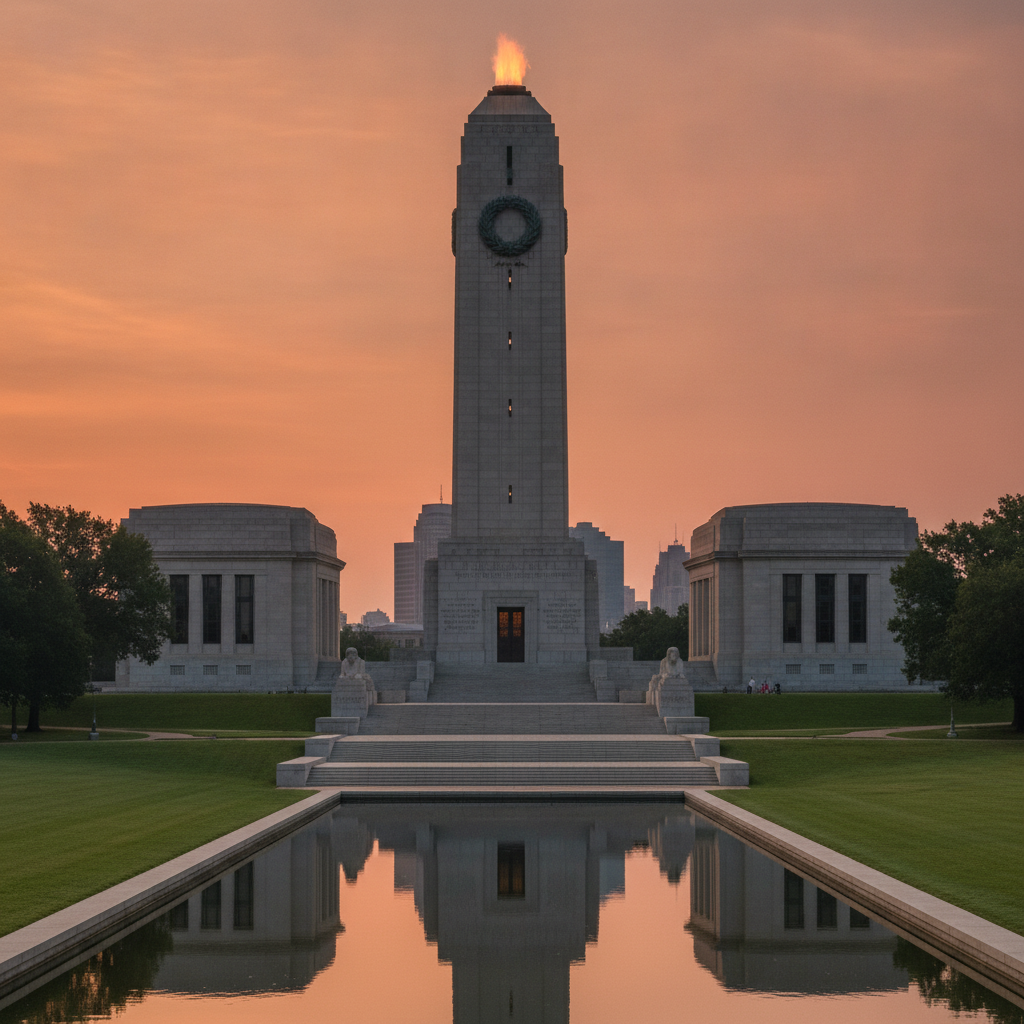
Kansas City R5-R6: Crown Center (85 acres Hallmark Cards HQ 1971 mixed-use precursor, J.C. Hall 1891-1982 arrived 18 two shoeboxes USD 183 savings built USD 4B revenue Hallmark Channel, H&R Block Henry Bloch 1922-2019 20M clients 60 countries donated USD 25M Nelson-Atkins), WWI Memorial (Liberty Memorial 1921-1926 five Allied commanders only time together Pershing Foch Wilson Diaz Jacques, USD 2.5M raised 10 days 83,000 donors fastest civic fundraising 1921, National WWI Museum 2006 75,000 artifacts most comprehensive world, glass floor 9000 poppy seed heads Allied dead Western Front), Royals (1969 expansion, 1985 WS comeback 3-1 Denkinger missed call, George Brett three-decade batting titles .390 1980 closest to .400 since Williams 1941, Pine Tar Incident July 24 1983, Dan Quisenberry poet sidearm), African American culture (Paseo main street Black KC, Thomas Dorsey Father Gospel Music Take My Hand Precious Lord 1932 tragedy-written, Charlie Parker Center music education, Black Archives Mid-America 2033 Vine), Immigrants (Garozzo Italian since 1989, Guadalupe Centers 1919 oldest largest Latino Midwest West Side, Vietnamese pho Independence Ave, Cambodian largest Midwest northeast KC), Practical (hot humid summers 30-35C ice storms winters, Plaza Lighting Ceremony 280,000 lights Thanksgiving 1925 100,000 spectators, KC Renaissance Festival 200,000 Bonner Springs September-October, Hotel Phillips 1931 Art Deco, Crossroads Hotel 2019 Pabst warehouse, free streetcar Main Street).