Nepal's Himalayan Adventures: Everest Base Camp, Annapurna Circuit & the Forbidden Kingdom of Mustang
Plan Nepal's great adventures from Kathmandu—the 18-day Everest Base Camp trek through Sherpa villages to the foot of the world's highest mountain, the Annapurna Circuit crossing a 5,416-metre pass through 12 ethnic communities (the world's finest multi-day trek), Chitwan's 700 one-horned rhinos by dugout canoe, the Buddha's exact birth spot at Lumbini marked by Ashoka's 249 BC pillar, and the 600-year-old walled city of Lo Manthang in the restricted Forbidden Kingdom of Upper Mustang.
- 1
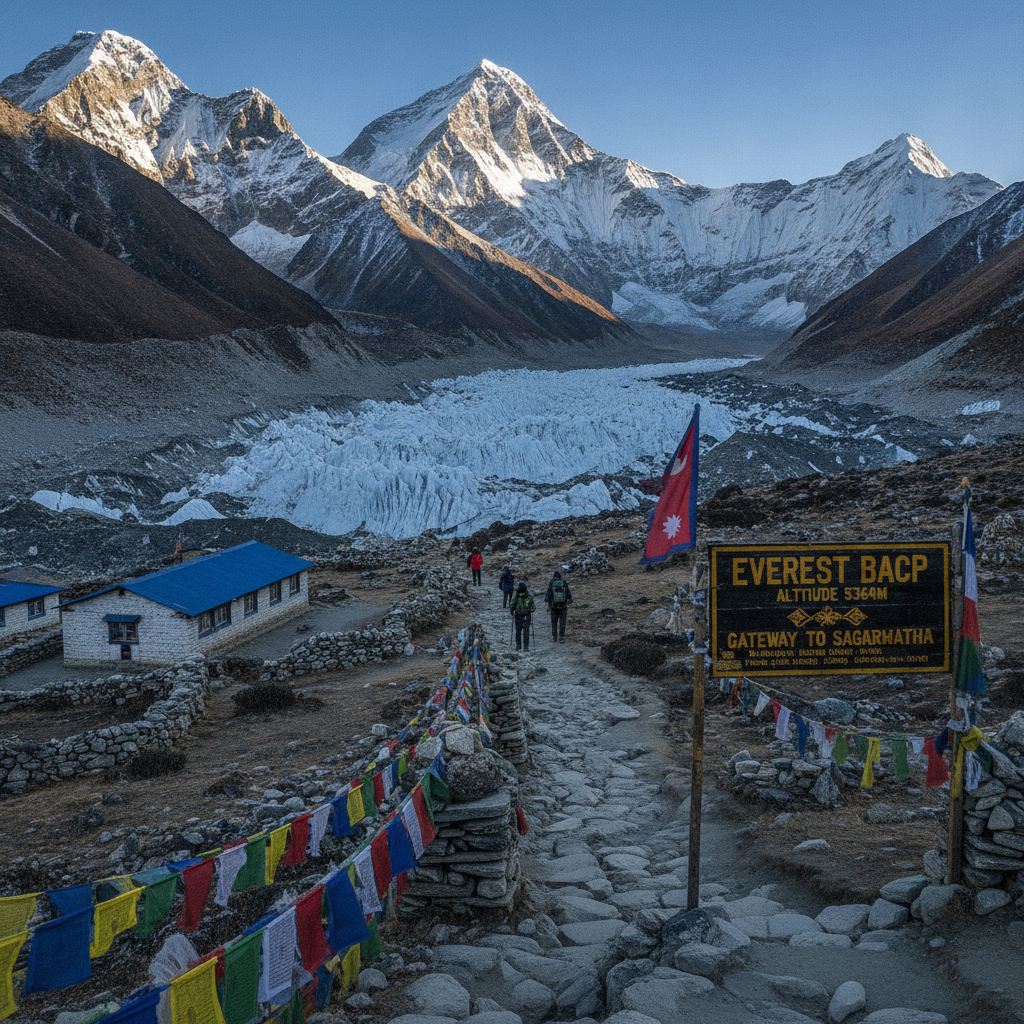
Everest Base Camp Trek – The Classic Route
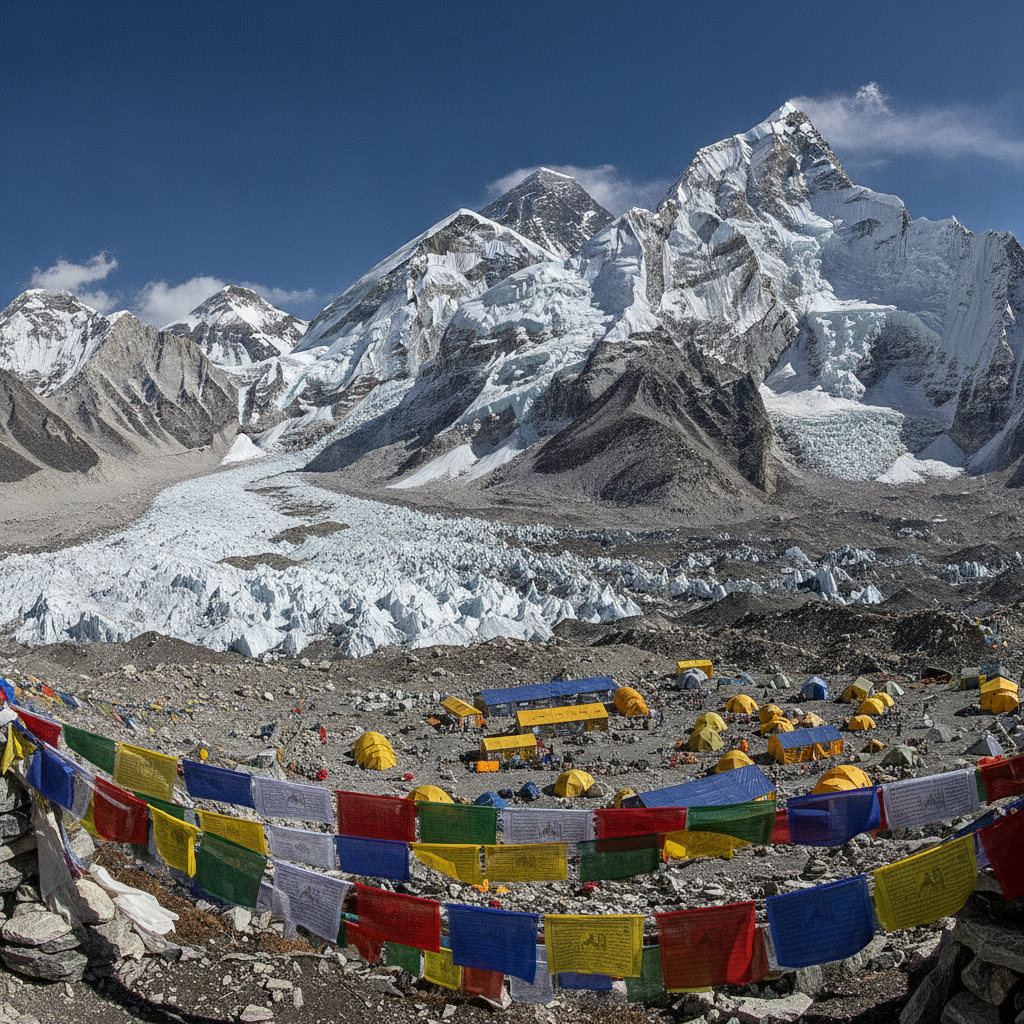
The Everest Base Camp trek (EBC)—14–18 days return from Lukla, reaching 5,364 metres—is the world's most famous high-altitude trek. The route passes through Sherpa villages (Namche Bazaar, Tengboche, Dingboche), the Tengboche Monastery (the most beautiful monastery in the Khumbu), and the Khumbu Icefall before reaching the base camp at the foot of Everest's southern face. Acclimatisation days are essential; acute mountain sickness (AMS) affects approximately 50% of trekkers above 3,500 m. Permits: Sagarmatha National Park fee (NPR3,000/€20) plus a Khumbu Pasang Lhamu Rural Municipality fee.
- 2
Annapurna Circuit – Nepal's Finest Trek
The Annapurna Circuit—completing a full circuit around the Annapurna Massif, crossing the Thorong La pass (5,416 m)—is widely considered the finest multi-day trek in the world. The 2-3 week route passes through sub-tropical jungle, terraced rice fields, Tibetan plateau landscape, and high-altitude desert, encountering 12 distinct ethnic communities. The Poon Hill viewpoint (3,210 m, 3-4 day trek from Pokhara) gives the most accessible panorama of Dhaulagiri and Annapurna South for those without time for the full circuit.
- 3
Pokhara – Gateway to the Annapurnas
Pokhara (200 km west of Kathmandu, 45 minutes by flight or 6–7 hours by bus)—Nepal's second city, on the shores of Phewa Lake with the Annapurna massif directly behind—is the most beautiful city setting in Nepal. The Lakeside district is the tourist hub; paragliding above the lake with Annapurna views is the most popular activity (NPR4,000/€27, 30 minutes). The International Mountain Museum documents Himalayan exploration history. Sarangkot Hill (30 minutes from Lakeside) gives the classic dawn Annapurna panorama.
- 4
Chitwan National Park – Rhinos & Bengal Tigers
Chitwan National Park (360 km southwest of Kathmandu, 5 hours by bus)—Nepal's first national park (1973) and UNESCO World Heritage Site (1984)—is the best place in Asia to see the one-horned Indian rhinoceros (700+ in the park) in the wild. Bengal tigers (120+ individuals) are present but rarely seen. The park's elephant-grass and sal forest habitat is explored by dugout canoe, jeep safari, elephant-back (ethically controversial), and walking. The gharial crocodile (critically endangered, 200 remaining worldwide) nests on Chitwan's Rapti river banks.
- 5
Lumbini – The Birthplace of the Buddha
Lumbini—in Nepal's Terai lowlands, 310 km southwest of Kathmandu—is the birthplace of Siddhartha Gautama (the historical Buddha, born c. 563 BC). The UNESCO World Heritage Site (1997) contains the Mayadevi Temple (marking the exact birth spot, with a stone footprint of the infant Buddha), the Ashoka Pillar (249 BC—the oldest stone monument in Nepal, erected by Emperor Ashoka to mark his pilgrimage to the site), and a 3 km Sacred Garden containing monasteries built by Buddhist countries from Japan to Germany to Sri Lanka.
- 6
Upper Mustang – The Forbidden Kingdom
Upper Mustang—the former Kingdom of Lo, a restricted area of Nepal requiring a special permit (NPR50,000/€330 for 10 days), 330 km north of Pokhara—is one of the world's last Tibetan Buddhist cultures accessible to outsiders. The walled city of Lo Manthang (altitude 3,840 m), unchanged in appearance for 600 years, contains four gompas with 15th-century Thangka paintings and ancient clay sculptures. The landscape—red and white canyon country resembling the American Southwest, but Himalayan—is utterly unlike any other trekking terrain in Nepal.
Walk this route with audio
Stories play automatically as you reach each stop — no tapping needed.
More in Kathmandu
Kathmandu Resilience: The 2015 Gorkha Earthquake, the Heritage Reconstruction, the Nepal Recovery, and the Most Practically Inspiring Single Disaster-Recovery Heritage Story
Kathmandu's Craft & Contemplation: Thangka Painting, Singing Bowls, Newari Pagodas & Ten Days of Meditation at Kopan
Kathmandu Trekking Hub: Everest Base Camp, the Annapurna Circuit, the Langtang Valley, and the Most Comprehensively Himalayan Single Trekking Gateway
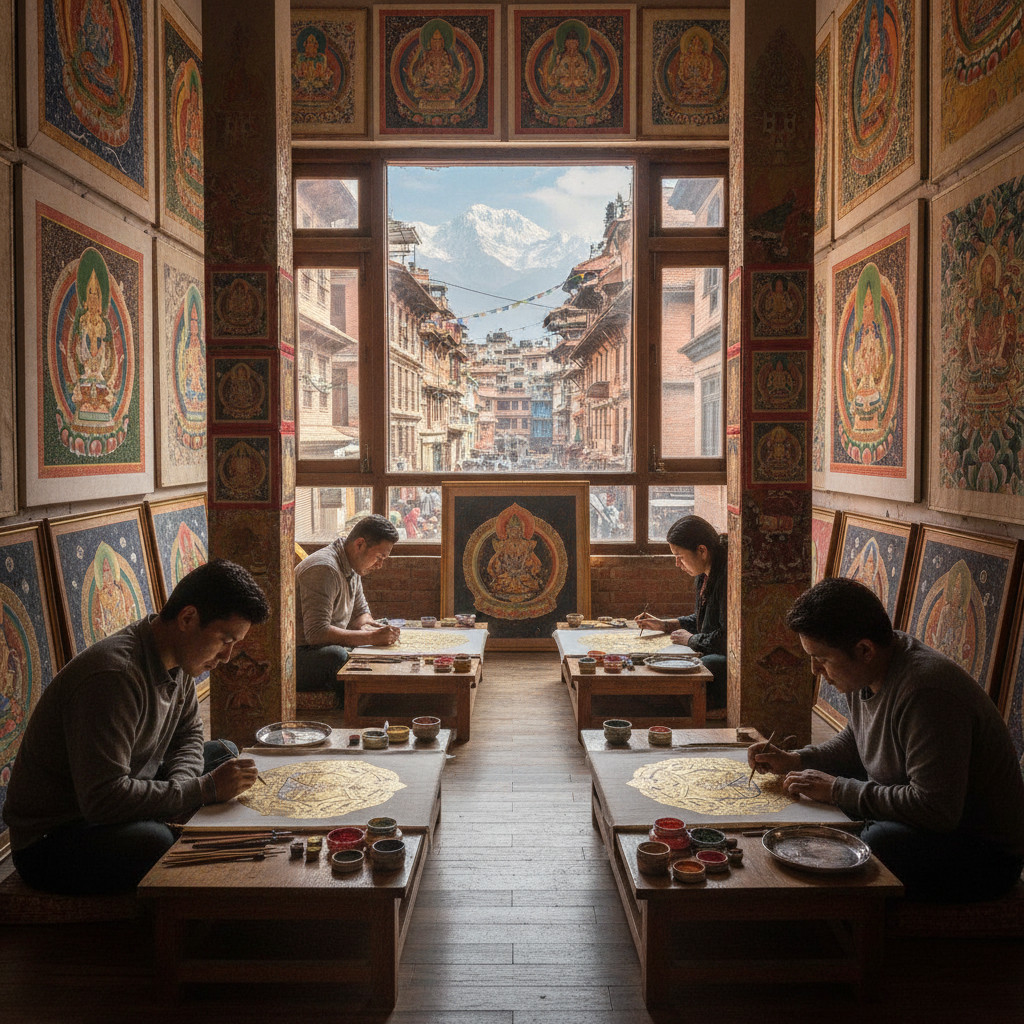
Kathmandu Arts: The Contemporary Nepali Art Scene, Music, Thanka Painting, the Craft Tradition, and the Most Creatively Vibrant Single Himalayan Capital
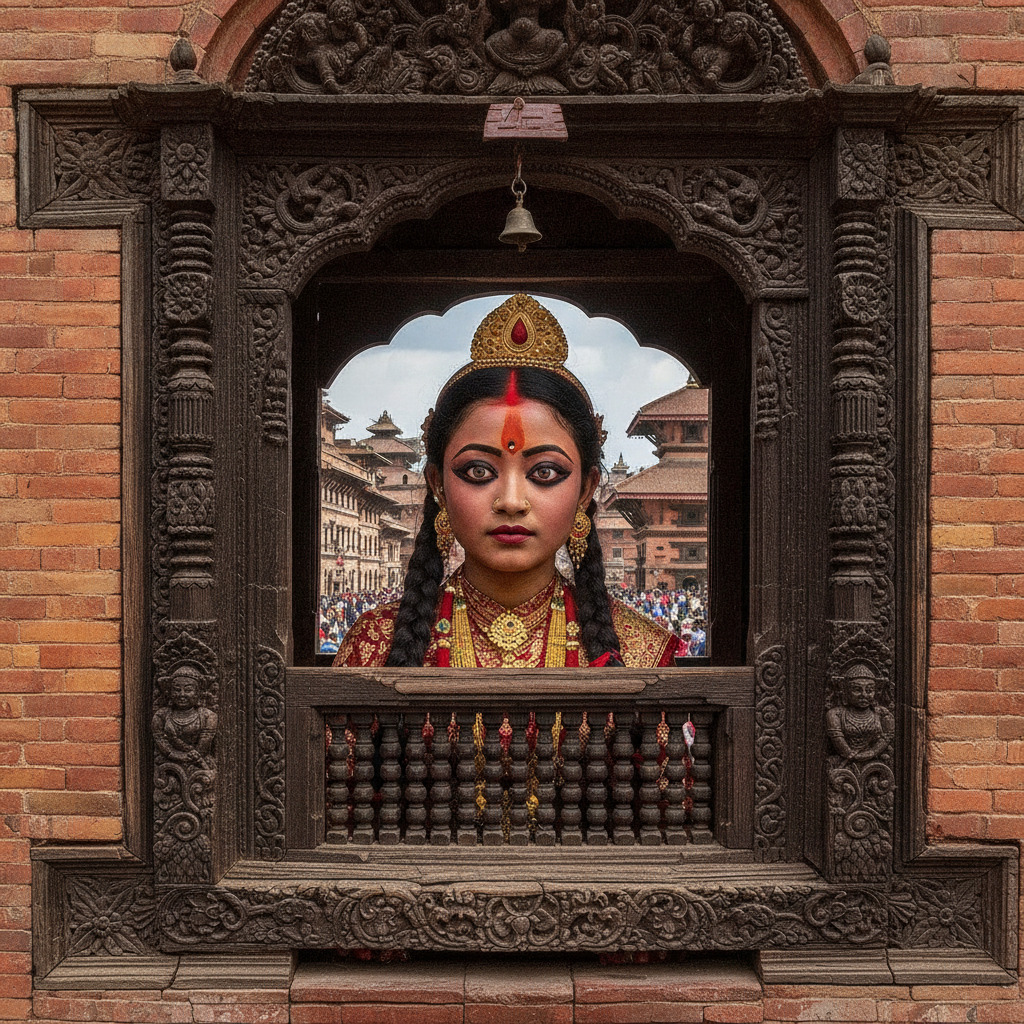
Kathmandu Depth: Everest's Death Zone, the Living Goddess Kumari & Nepal's Journey from Kingdom to Republic