Kathmandu Depth: Everest's Death Zone, the Living Goddess Kumari & Nepal's Journey from Kingdom to Republic
Go deeper into Kathmandu's layers—the 310 dead who remain on Everest's slopes beside 800 annual summit attempts, Sherpa Kami Rita's 29-summit world record, Nepal's turbulent 2008 abolition of its 240-year monarchy after a Maoist insurgency killed 17,000, a pre-pubescent girl selected as living goddess through fearlessness tests in a dark room full of animal heads, the world's most widespread animal sacrifice festival during Dashain, and the Himalayan climate crisis threatening glacial water supplies for 1.3 billion people.
- 1
Sagarmatha (Everest) – The World's Highest Peak
Mount Everest—known in Nepali as Sagarmatha ('Goddess of the Sky') and in Tibetan as Chomolungma ('Mother Goddess of the World')—stands at 8,849 metres (as remeasured in 2020), the highest point on Earth. Approximately 800 climbers attempt the summit each year via the South Col Route from Nepal; about 500 reach the summit. Tenzing Norgay (a Sherpa from the Khumbu valley) and Edmund Hillary (New Zealand) made the first confirmed ascent on 29 May 1953. At least 310 climbers have died on Everest; many bodies remain on the mountain—including 'Green Boots', the Indian climber who died in 1996 and became an unintentional landmark for subsequent climbers.
- 2
The Sherpa People – Himalayan Mountaineering Culture
The Sherpa are an ethnic group native to the high-altitude regions of eastern Nepal, particularly the Khumbu valley below Everest. The word 'sherpa' (lowercase) has entered English to mean a high-altitude porter or guide, but the Sherpa people are a distinct ethnic and cultural group. Historically pastoral nomads from Tibet (arriving in Nepal c. 1530), the Sherpa were first employed as high-altitude porters by the 1921 British Everest reconnaissance expedition—a role that transformed their economy. Today, Sherpa climbers hold records for most Everest summits (Kami Rita Sherpa has reached the summit 29 times, the world record). Average Everest guiding income: $3,000–10,000 per season.
- 3
Nepal's Political Transformation – From Kingdom to Republic
Nepal was a Hindu monarchy until 2008, when a decade-long Maoist insurgency (1996–2006, ~17,000 deaths) led to peace negotiations, the abolition of the 240-year-old Shah dynasty, and the declaration of the Federal Democratic Republic of Nepal. King Gyanendra—who had controversially assumed executive power in 2005—became a private citizen overnight. The subsequent political period has been turbulent: Nepal has had 27 governments in 33 years; a constitution was adopted in 2015 but has required repeated amendments to address demands from the Madhesi and Janajati minorities for proportional representation.
- 4
Kumari – The Living Goddess Tradition
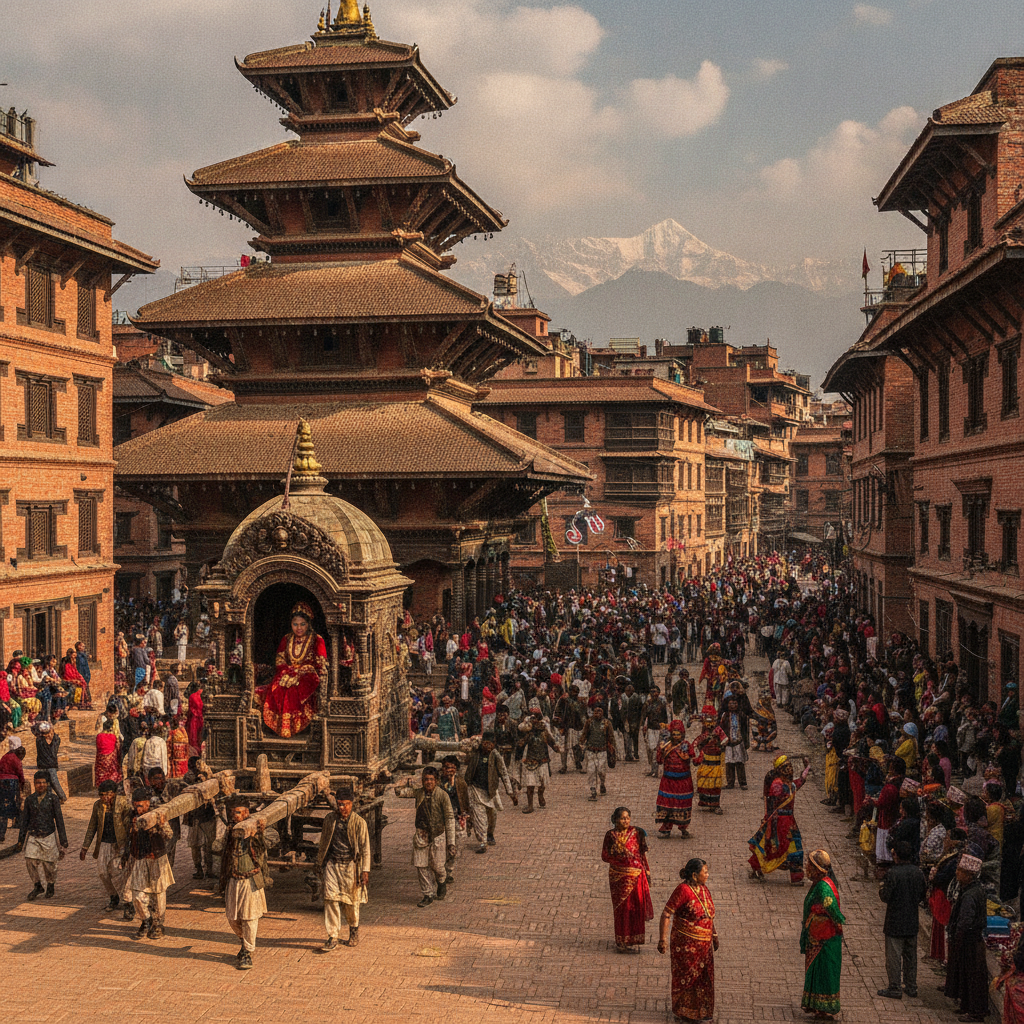
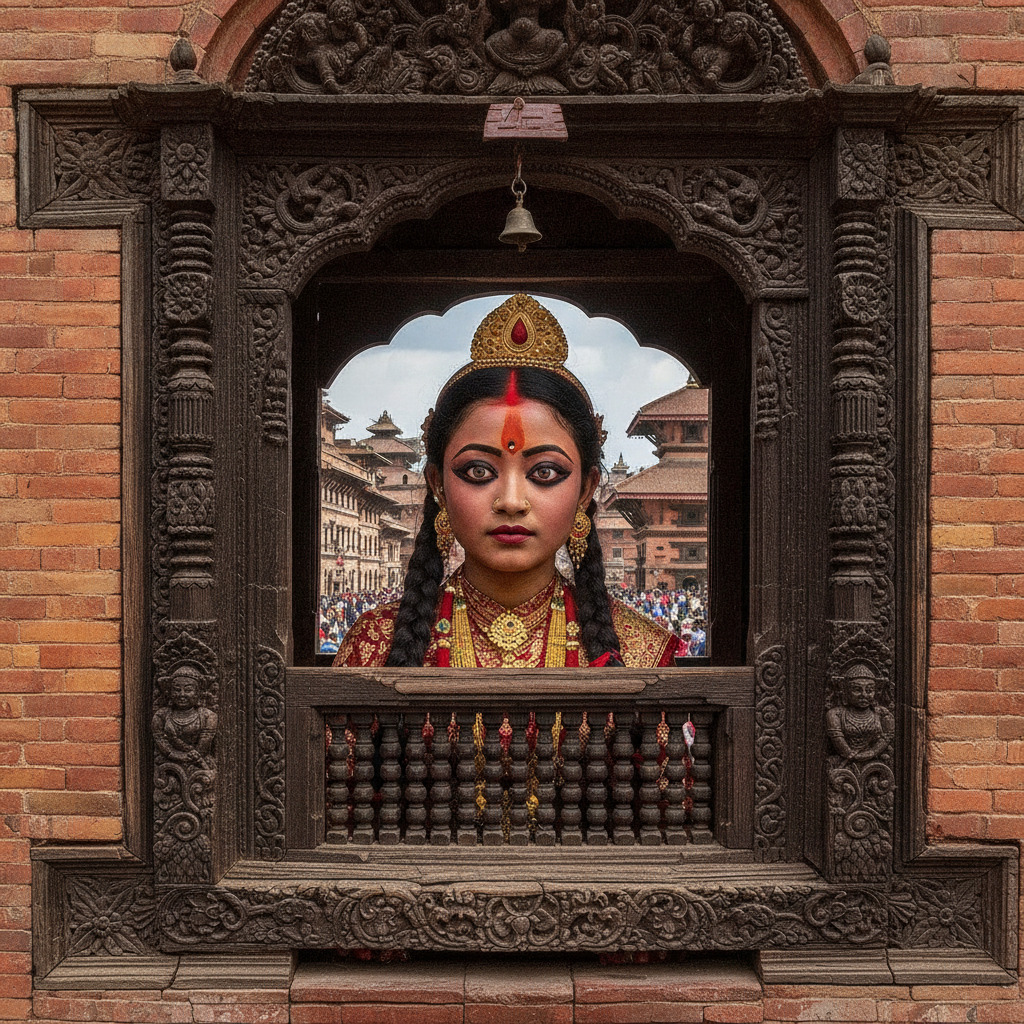
The Kumari is a pre-pubescent girl selected through an elaborate process to serve as the living manifestation of the goddess Taleju (an aspect of Durga). Kumari selection involves examining 32 physical perfections, a night alone in a darkened room with animal masks (testing fearlessness), and the selection of objects belonging to the previous Kumari. The current Royal Kumari resides in the Kumari Ghar in Kathmandu Durbar Square; she appears at her window occasionally and makes public appearances during festivals. Upon puberty (the first menstruation), the Kumari is retired with a pension—the belief is that her divine power departs. The tradition is Newari Buddhist in origin but the Kumari is venerated by Hindus as well.
- 5
Dashain & Tihar – Nepal's Greatest Festivals
Dashain—Nepal's most important festival (15 days in September/October)—celebrates the goddess Durga's victory over the demon Mahishasura. The festival involves animal sacrifice on Maha Astami (the eighth day)—the most widespread animal sacrifice festival in the world; hundreds of thousands of buffalo, goats, and chickens are sacrificed. Tika (a red mark of blessing) is applied by elders to younger family members on the tenth day (Vijaya Dashami); families reunite across Nepal. Tihar (Diwali equivalent, 5 days in October/November) involves lighting every building with oil lamps and electric lights; the third day honours the dog (Kukur Tihar) with garlands and special food.
- 6
Kathmandu's Air Pollution & Environmental Challenges
Kathmandu Valley's geography—surrounded by hills on three sides—traps vehicle emissions, brick kiln smoke, and dust in a pollution bowl. In winter (November–February) and dry season, Kathmandu's air quality regularly reaches 'hazardous' on the AQI scale (PM2.5 readings above 200 μg/m³; the WHO safe threshold is 15 μg/m³). Nepal faces severe deforestation (though reforestation campaigns have increased forest cover from 26% to 45% since 1988), glacier retreat from climate change threatening the Himalayan rivers that supply water to 1.3 billion people, and the GLOF (glacial lake outburst flood) risk from over 3,000 glacial lakes above Nepali valleys.
Walk this route with audio
Stories play automatically as you reach each stop — no tapping needed.
More in Kathmandu
Kathmandu Resilience: The 2015 Gorkha Earthquake, the Heritage Reconstruction, the Nepal Recovery, and the Most Practically Inspiring Single Disaster-Recovery Heritage Story
Kathmandu's Craft & Contemplation: Thangka Painting, Singing Bowls, Newari Pagodas & Ten Days of Meditation at Kopan
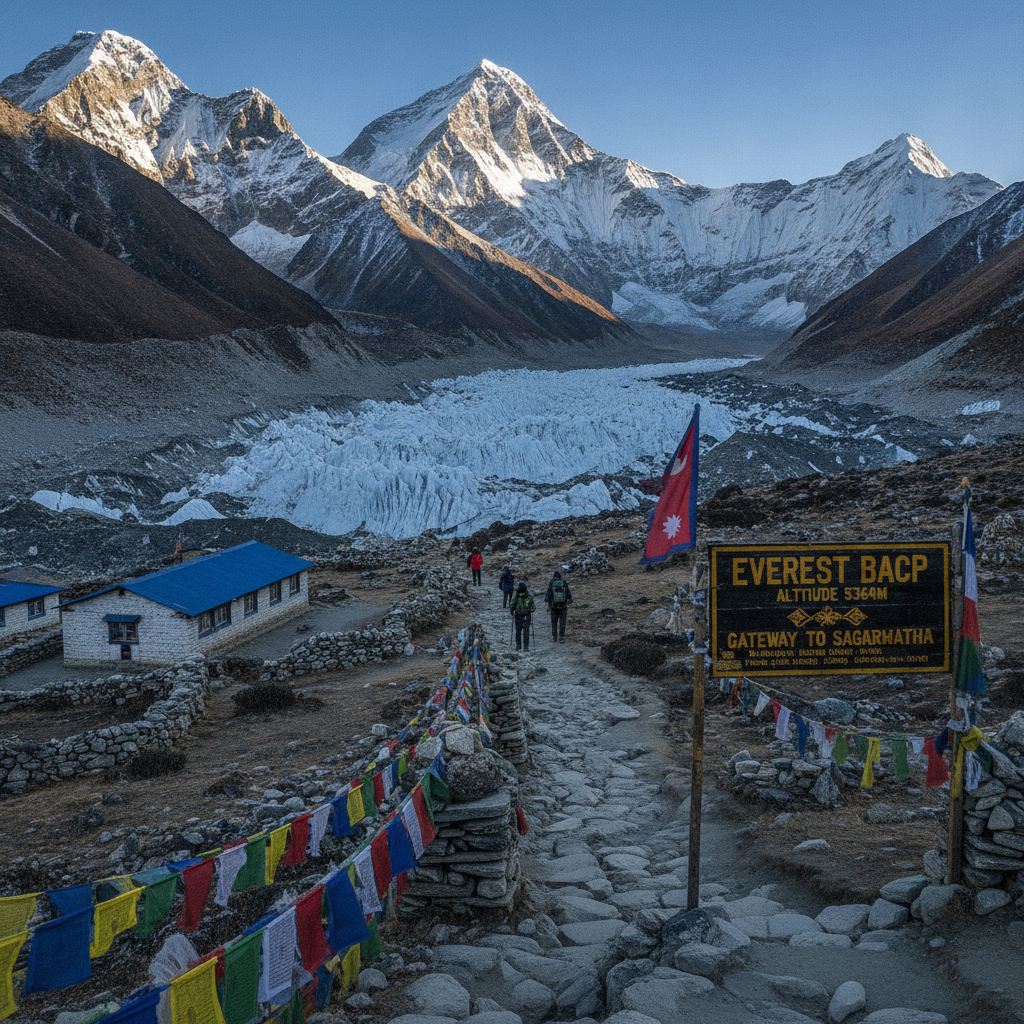
Kathmandu Trekking Hub: Everest Base Camp, the Annapurna Circuit, the Langtang Valley, and the Most Comprehensively Himalayan Single Trekking Gateway
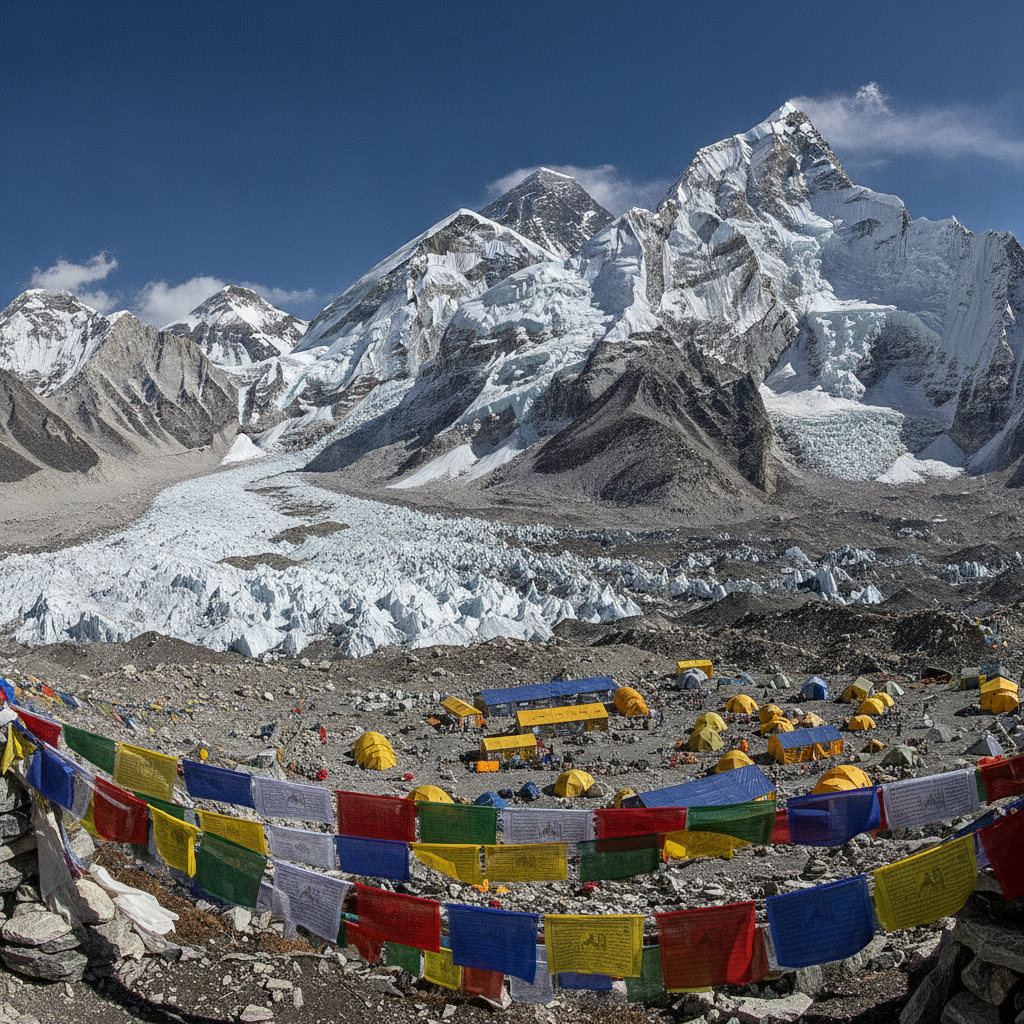
Nepal's Himalayan Adventures: Everest Base Camp, Annapurna Circuit & the Forbidden Kingdom of Mustang
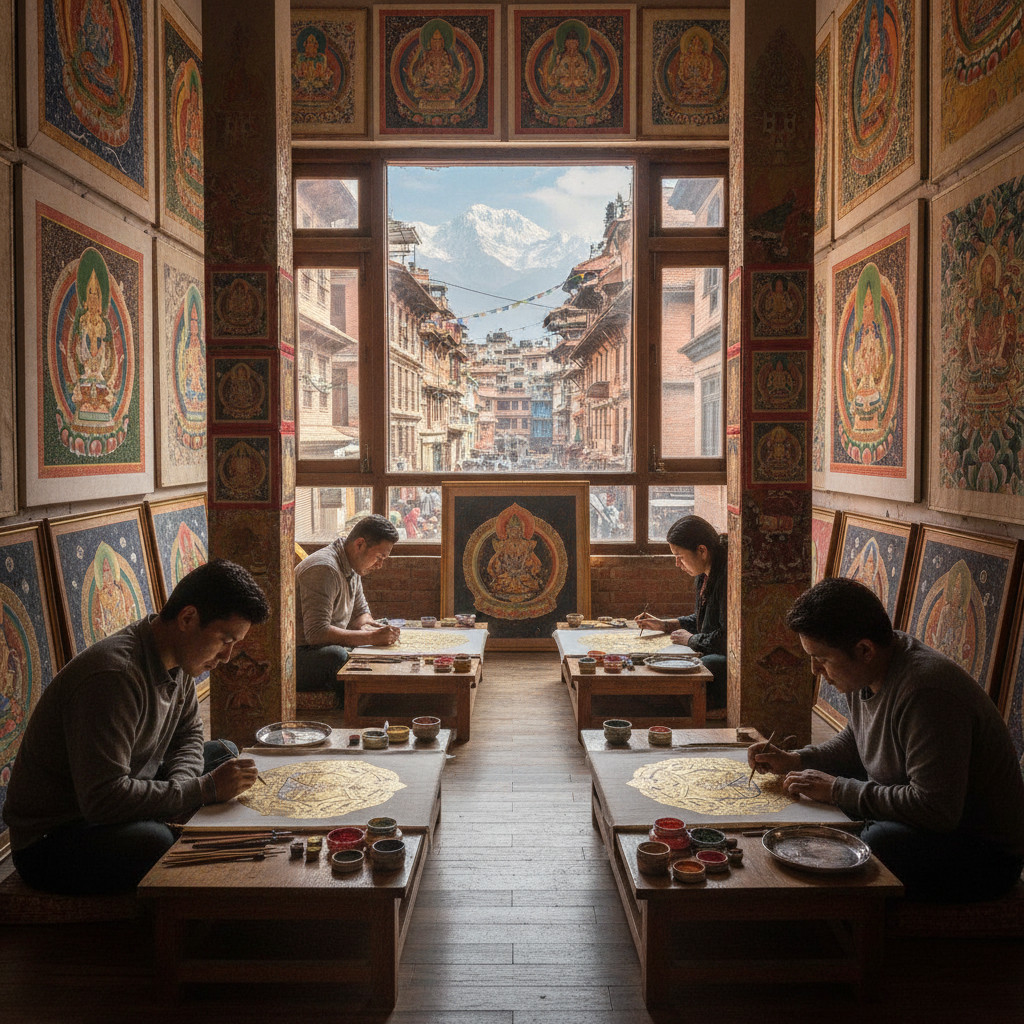
Kathmandu Arts: The Contemporary Nepali Art Scene, Music, Thanka Painting, the Craft Tradition, and the Most Creatively Vibrant Single Himalayan Capital