Kathmandu Essentials: Hindu Cremations on the Bagmati, Asia's Largest Stupa & the Monkey Temple
Encounter the world's most spiritually dense city—open-air Hindu cremations beside Pashupatinath's sacred Bagmati river, the 40-metre Boudhanath stupa surrounded by Tibetan monks spinning prayer wheels at dawn, the Monkey Temple's 2,000-year-old hilltop with all-seeing stupa eyes overlooking the valley, the living goddess Kumari appearing at her palace window, and Thamel's trekking-permit chaos that launches every Himalayan adventure.
- 1
Pashupatinath Temple & Hindu Cremations on the Bagmati
Pashupatinath—the most sacred Hindu temple in Nepal and one of the most important Shiva temples in the world, on the banks of the Bagmati river 5 km east of central Kathmandu—is a complex of temples, ashrams, and burning ghats (cremation platforms) where Hindu cremations take place continuously in the open air. Non-Hindus cannot enter the main temple precinct but can observe from the opposite bank. Sadhus (holy men covered in ash) sit along the riverbanks; the Maha Shivaratri festival draws 1 million pilgrims annually.
- 2
Boudhanath Stupa – Asia's Largest
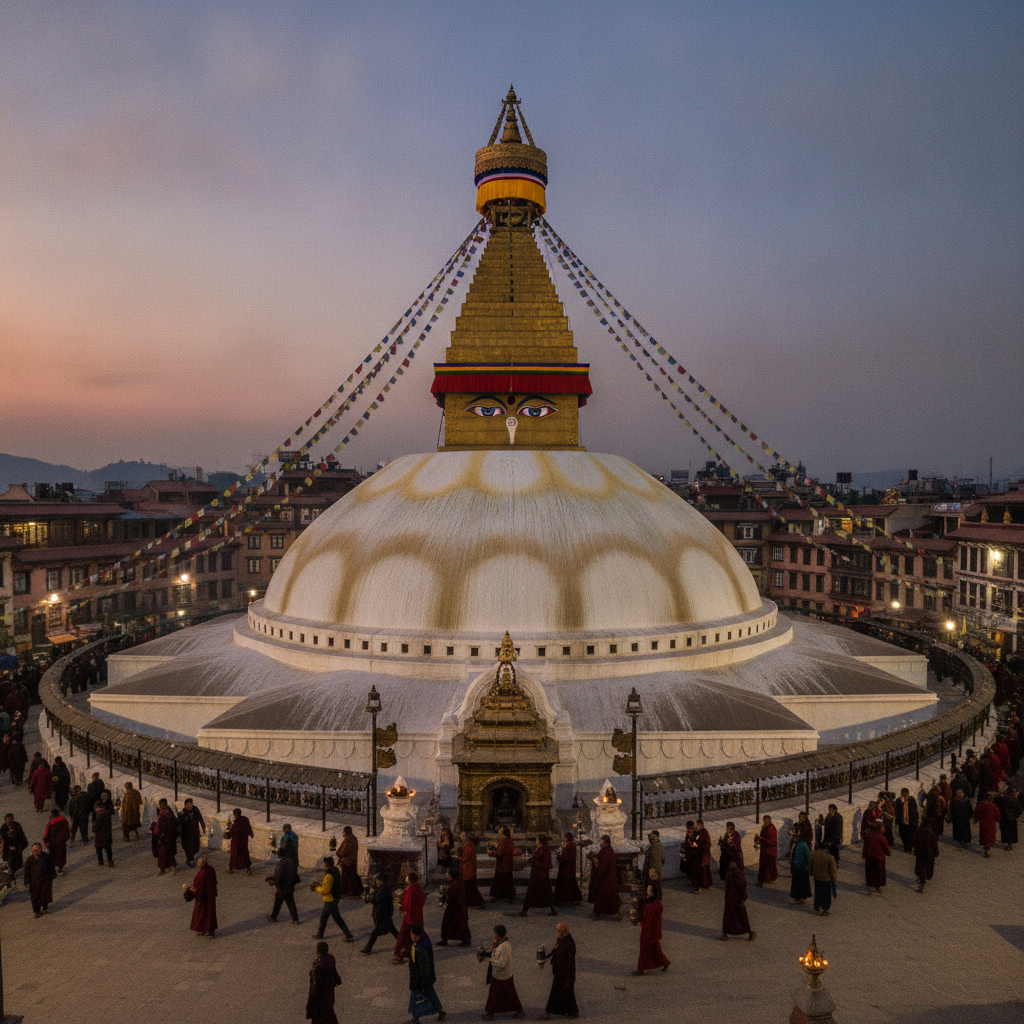
Boudhanath (Boudha)—one of the largest stupas in the world (40 metres high, 100 metre diameter mandala base), 8 km east of Kathmandu city centre—is the centre of Tibetan Buddhism in Nepal and a UNESCO World Heritage Site (1979). The stupa's all-seeing eyes painted on each face of the tower are Nepal's most reproduced image. The stupa is surrounded by Tibetan monasteries (gompa), prayer wheel corridors, and Tibetan-run shops and restaurants; the circumambulation (kora) of the stupa at dawn or dusk—when hundreds of Tibetan Buddhists spin the prayer wheels—is one of Asia's great spiritual experiences.
- 3
Swayambhunath – The Monkey Temple
Swayambhunath—one of the oldest religious sites in Nepal (2nd century BC), atop a forested hill west of Kathmandu—is a syncretic site sacred to both Buddhists and Hindus, and home to hundreds of rhesus monkeys who are considered holy. The 365-step staircase to the hilltop is lined with prayer flags, stone carvings, and stupa shrines; the hilltop complex contains a large stupa, a Vajrayana Buddhist temple, and a Hindu temple to Harati (goddess of smallpox). The view from the hilltop—Kathmandu valley spreading in every direction—is the classic Kathmandu panorama.
- 4
Kathmandu Durbar Square – The Palace of Kings
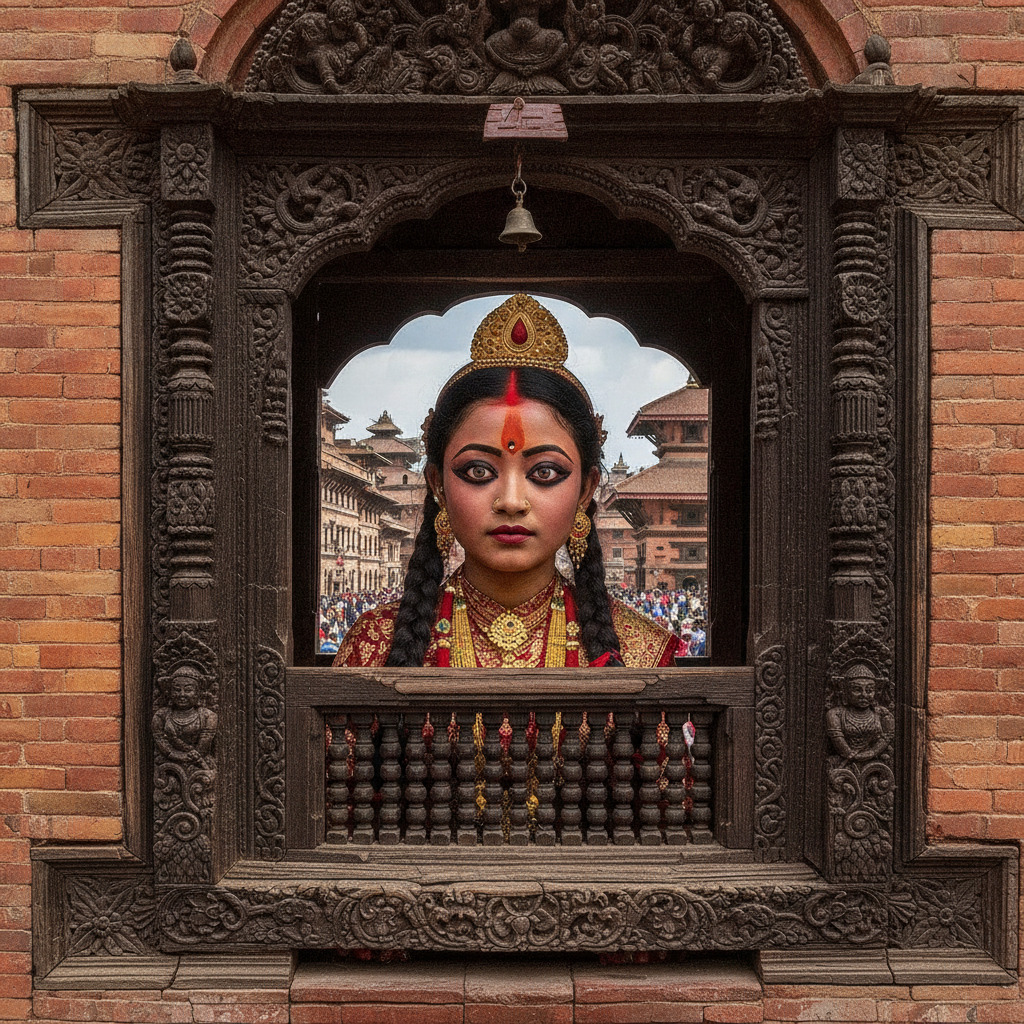
Kathmandu Durbar Square—the historic palace square in front of the old royal palace of the Malla and Shah dynasties—is a UNESCO World Heritage Site containing 50+ temples and shrines. The living goddess Kumari (a young girl selected as the manifestation of the goddess Taleju) resides in the Kumari Ghar palace; she appears at her window occasionally. The Kasthamandap pavilion (the building from which Kathmandu takes its name, originally built from a single tree's wood in the 12th century) was destroyed in the 2015 earthquake and reconstructed in 2022.
- 5
Thamel – The Backpacker District
Thamel—Kathmandu's tourist district, a labyrinthine neighbourhood of guesthouses, trekking equipment shops, restaurants, and bars—is the starting point for almost all Nepal adventures. Trekking permits, TIMS cards, equipment hire (down jackets, sleeping bags, trekking poles), and guided trek bookings are all arranged here. The food in Thamel ranges from reliable Nepali dal bhat to Israeli falafel and excellent coffee; the bars (Purple Haze, Tom & Jerry, Rum Doodle) are the social hub for trekkers returning from Everest and Annapurna. The area is chaotic, noisy, and indispensable.
- 6
The 2015 Nepal Earthquake & Reconstruction
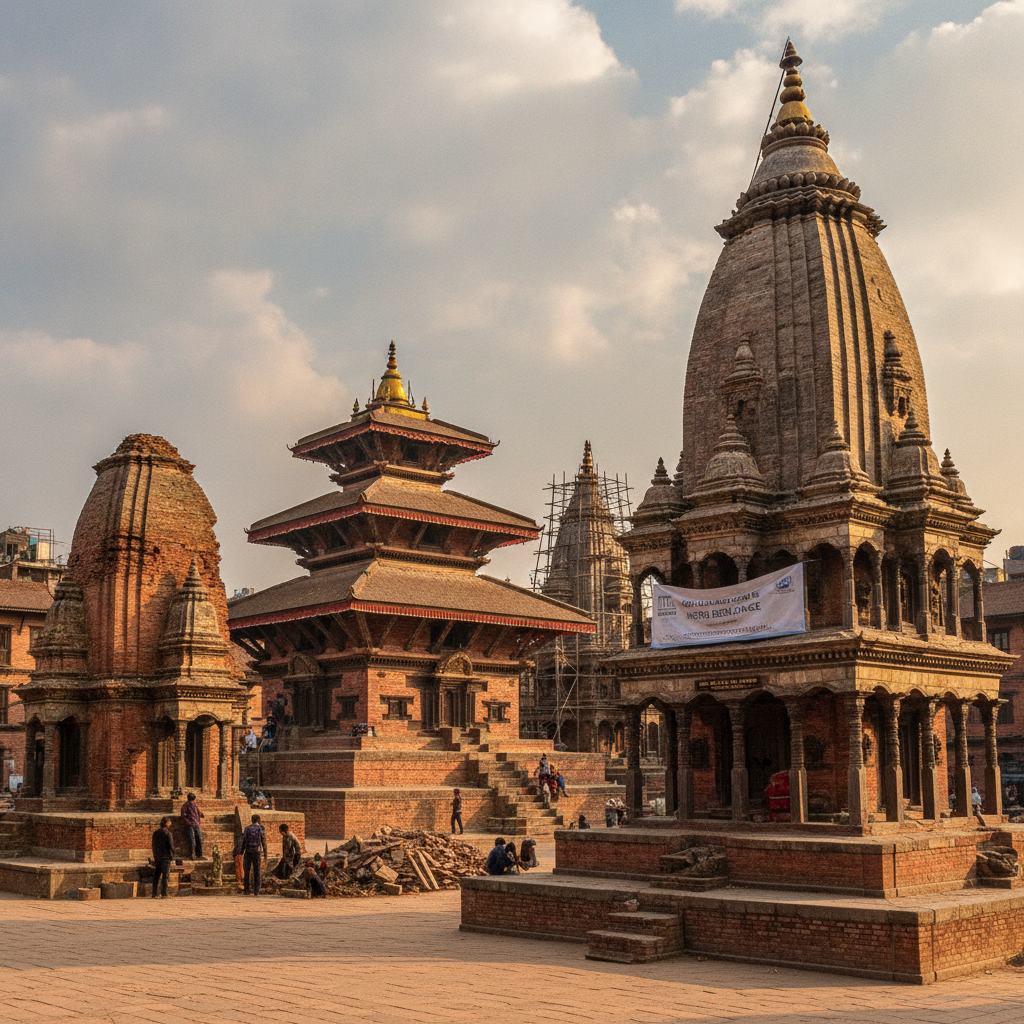
The April 25, 2015 earthquake (7.8 magnitude) killed nearly 9,000 people in Nepal and destroyed or damaged 900,000 structures including significant UNESCO World Heritage sites—Kathmandu Durbar Square, Bhaktapur Durbar Square, Swayambhunath, and Patan Durbar Square all suffered damage. The Kasthamandap (Kathmandu's most historic building) and the Vatsala Durga Temple in Bhaktapur were completely destroyed. International and Nepali reconstruction has been substantial—most sites are restored or undergoing restoration; the reconstruction process has demonstrated Newar traditional building techniques to a new generation of craftspeople.
Walk this route with audio
Stories play automatically as you reach each stop — no tapping needed.
More in Kathmandu
Kathmandu Resilience: The 2015 Gorkha Earthquake, the Heritage Reconstruction, the Nepal Recovery, and the Most Practically Inspiring Single Disaster-Recovery Heritage Story
Kathmandu's Craft & Contemplation: Thangka Painting, Singing Bowls, Newari Pagodas & Ten Days of Meditation at Kopan
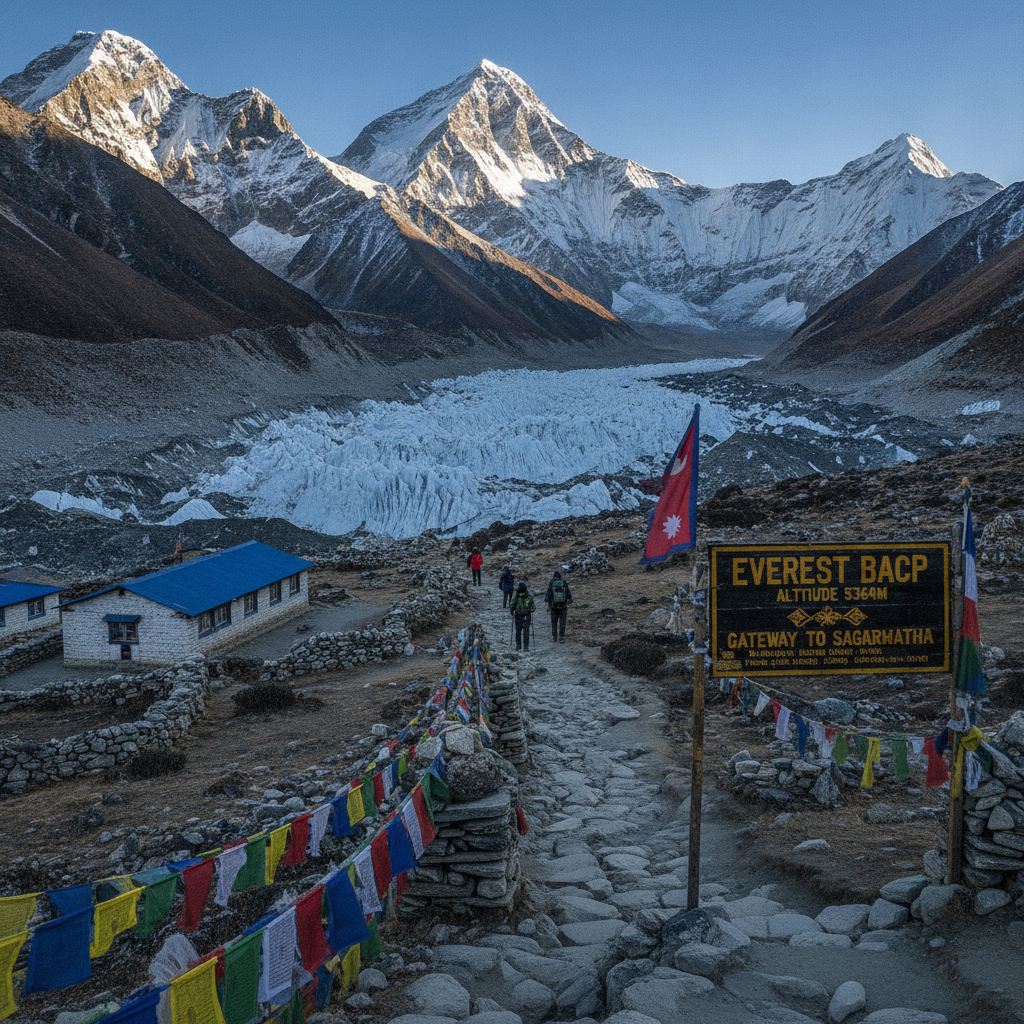
Kathmandu Trekking Hub: Everest Base Camp, the Annapurna Circuit, the Langtang Valley, and the Most Comprehensively Himalayan Single Trekking Gateway
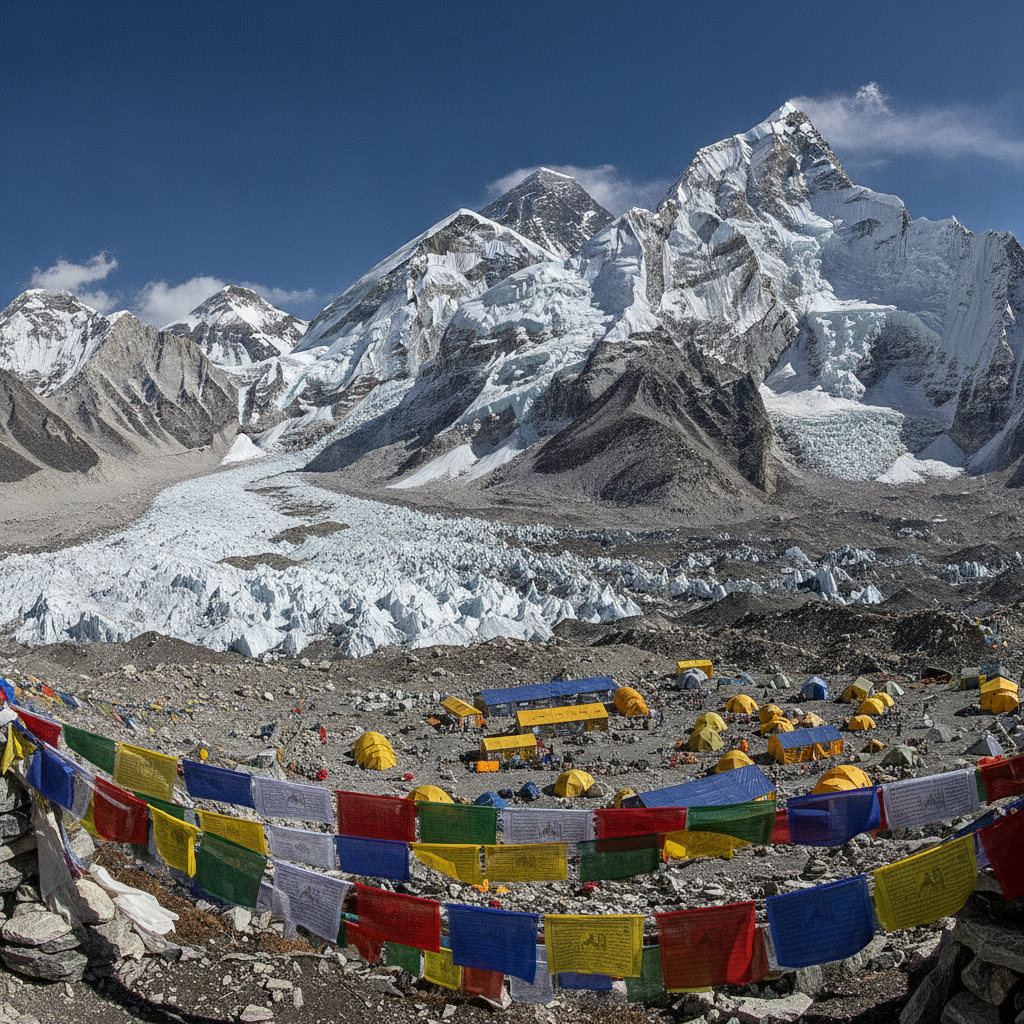
Nepal's Himalayan Adventures: Everest Base Camp, Annapurna Circuit & the Forbidden Kingdom of Mustang
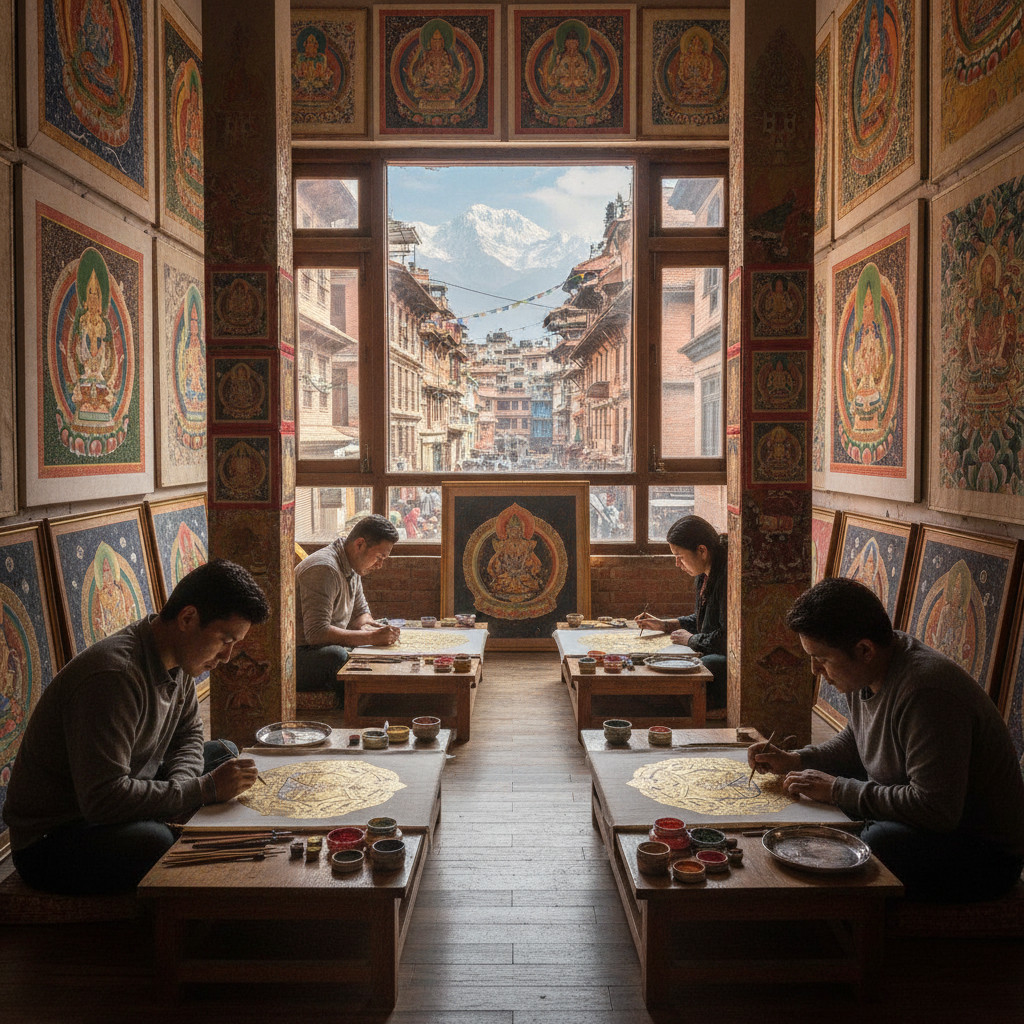
Kathmandu Arts: The Contemporary Nepali Art Scene, Music, Thanka Painting, the Craft Tradition, and the Most Creatively Vibrant Single Himalayan Capital