Kingston History: Marcus Garvey, Emancipation, National Heroes, the UWI, and Jamaican Independence
The history of Kingston encompasses the Pan-African philosophy of Marcus Garvey, the Emancipation Park monument to post-slavery freedom, the National Heroes who shaped the struggle for independence, and the University of the West Indies that became the intellectual center of the Commonwealth Caribbean.
- 1
Marcus Garvey: The Pan-African Prophet
Marcus Garvey, born in St. Ann's Bay and the most internationally significant Jamaican figure before Bob Marley, founded the Universal Negro Improvement Association in Kingston in 1914 and built it into the largest Black mass movement in history, with four million members in 40 countries by the early 1920s. Garvey's program of Pan-Africanism, Black economic self-sufficiency, and repatriation to Africa became the foundational ideology for the Rastafari movement and influenced the entire Black liberation tradition of the 20th century.
- 2
Emancipation Park: The Symbol of Freedom
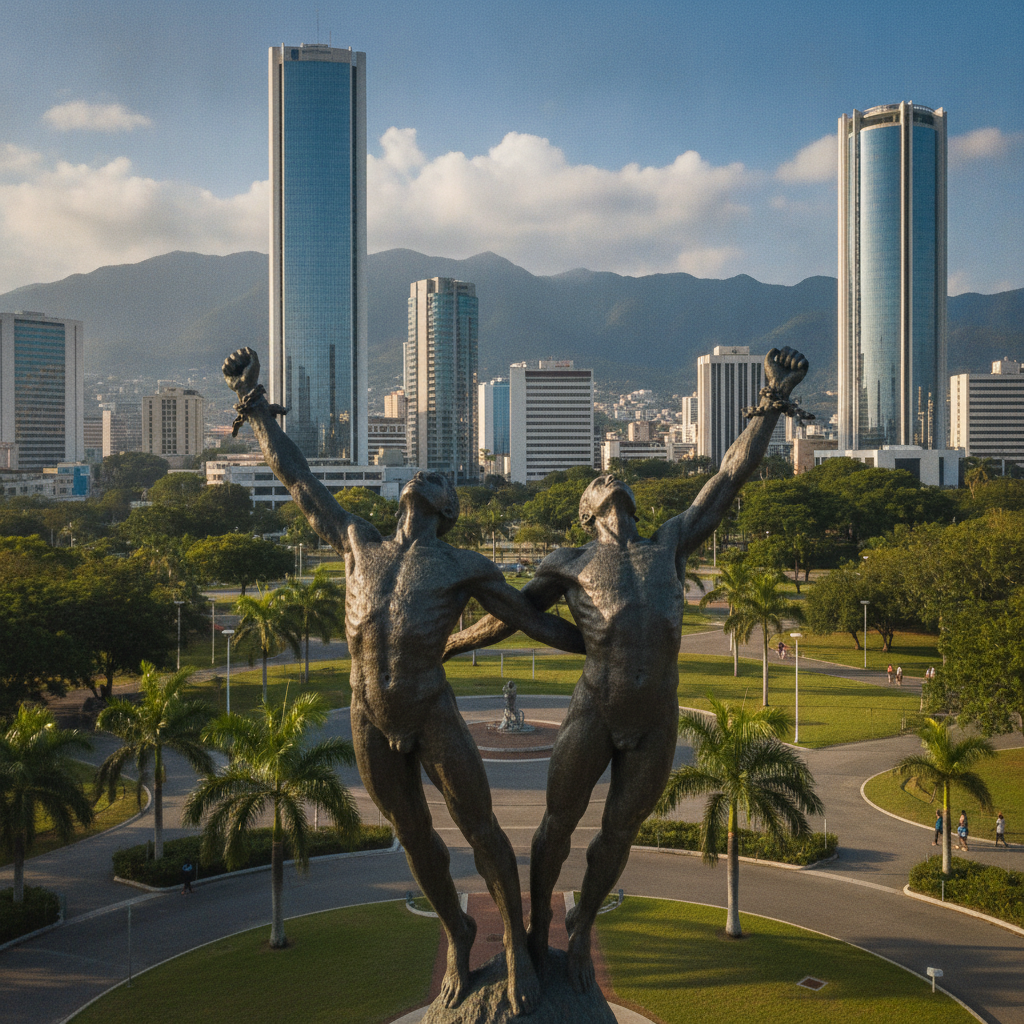
Emancipation Park in New Kingston, with the monumental sculpture of the Redemption Song depicting a naked man and woman rising free of their chains by the Jamaican artist Laura Facey, is the most powerful statement in public space of the Jamaican post-slavery national identity and the aspiration for a complete psychological emancipation that continues the work begun on August 1, 1838. The park is the primary public open space of the upscale New Kingston business district.
- 3
National Heroes Park: The Six and One
National Heroes Park in central Kingston is the burial place of the seven National Heroes of Jamaica including Marcus Garvey, Nanny of the Maroons, Samuel Sharpe, Paul Bogle, Alexander Bustamante, Norman Manley, and George William Gordon, whose lives represent the complete struggle for Jamaican freedom from the colonial period to independence. The park is the central civic space of Jamaican national memory.
- 4
Gordon House: The Parliament
Gordon House, the Jamaican Parliament building named after National Hero George William Gordon who was executed by the colonial authorities for his role in the Morant Bay Rebellion of 1865, is the center of the Westminster-model parliamentary democracy that Jamaica adopted at independence in 1962 and is open to visitors during parliamentary sittings. The debate culture of the Jamaican parliament, known for its rhetorical intensity, reflects the political tradition of a highly educated and politically engaged society.
- 5
University of the West Indies: The Caribbean Intellectual Hub
The University of the West Indies Mona Campus, built on the slopes of the Blue Mountains on the former Mona sugar plantation, is the flagship university of the Caribbean region and the intellectual center of the Commonwealth Caribbean academic tradition. The campus architecture, which integrates the industrial buildings of the former plantation in a striking contrast with the modernist academic buildings, is a powerful statement of Caribbean postcolonial ambition.
- 6
Independence Archive: August 6, 1962
The independence of Jamaica on August 6, 1962, achieved through the constitutional negotiations of the People's National Party and the Jamaica Labour Party in the final years of the Federation of the West Indies period, was celebrated in the National Stadium with the lowering of the Union Jack and the raising of the gold, black, and green of the Jamaican flag: the only national flag in the world without red, white, or blue in its design. The National Museum houses the independence archive.
Walk this route with audio
Stories play automatically as you reach each stop — no tapping needed.
More in Kingston
Kingston: Bob Marley, Trench Town, Reggae History, Devon House, and Blue Mountain Coffee
Kingston Cultural Calendar: Reggae Month, Jamaica Carnival, the Caribbean Literary Heritage, and the Visual Arts Scene
Kingston Nature and History: Port Royal Ruins, Blue Mountain Peak, Maroon Country, and Hellshire Beach
Kingston Practical Guide: Norman Manley Airport, Cultural Events, New Kingston vs Downtown, and Safety Awareness
Kingston Sport: The Sprint Island, Cricket at Sabina Park, the Champs Athletics Championship, and the Reggae Boyz