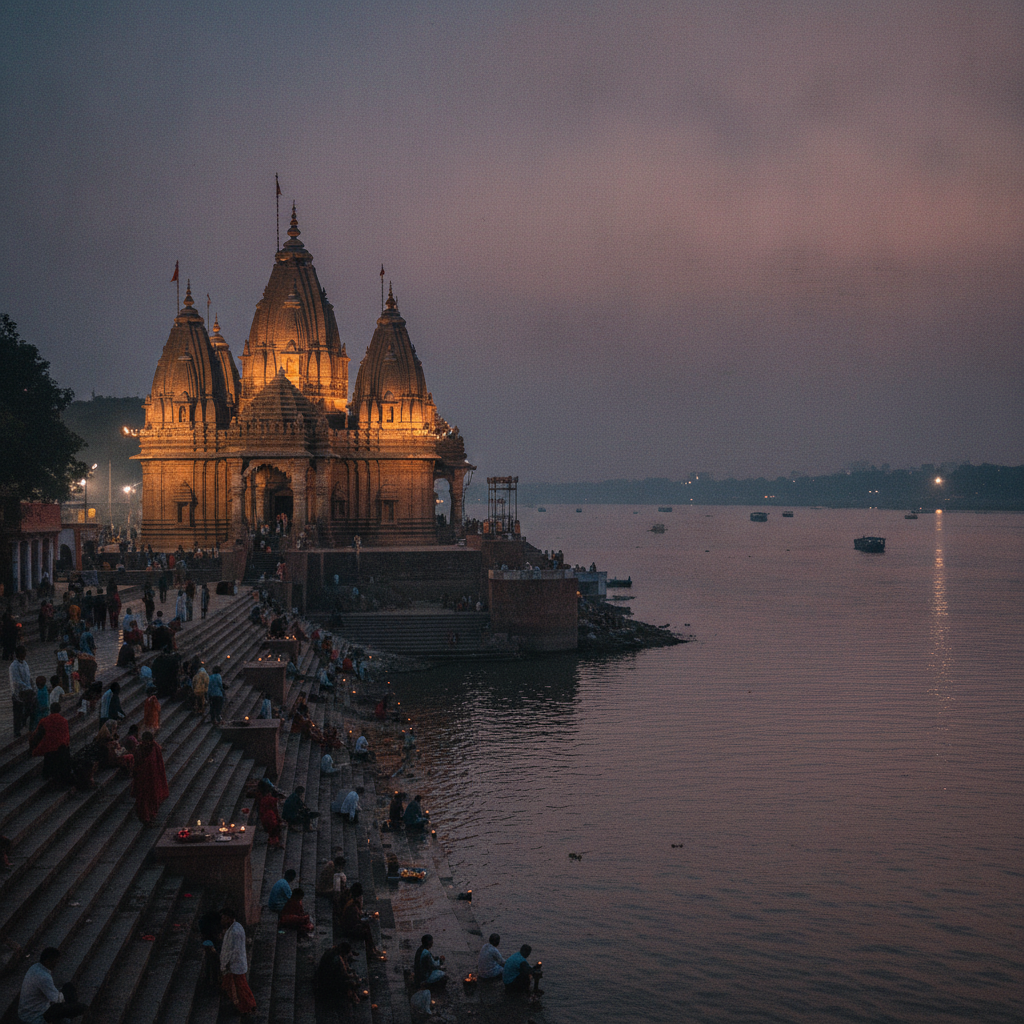
Kolkata's Hidden Communities: The Idol-Makers of Kumartuli, the Last 25 Jews in India & Kolkata's Chinese Dim Sum Morning
Find Kolkata's extraordinary ethnic and cultural layers—2,000 idol-makers working in Kumartuli's lanes from July to October sculpting the 15-foot Durga clay idols that will be immersed in the Hooghly after five nights of pandal-hopping, the Baghdadi Jewish community reduced from 5,000 to 25 people (Nahoum bakery still selling fruit cake since 1902), the Hakka Chinese community of 2,000 making Sunday dim sum at Tiretti Bazaar after being decimated by the 1962 Sino-Indian War internments, Dalhousie Square's Victorian red-brick administrative core (the finest colonial streetscape outside London), and the ₹7 Hooghly River ferry passing under Howrah Bridge as the best way to see both cities.
- 1
Dalhousie Square & British Kolkata – The City the British Built
Dalhousie Square (now BBD Bagh—'Binoy Badal Dinesh Bagh', renamed for three revolutionary martyrs)—the commercial and administrative heart of colonial Calcutta, surrounded by imposing Victorian buildings—contains the General Post Office (1868, on the site of Fort William's 'Black Hole'), the Writers' Building (1880, the civil secretariat of British India), and the Standard Life Assurance Building, all in a concentrated area. The area can be walked in 2–3 hours; the architectural quality—red brick, classical columns, Venetian Gothic elements—is the finest Victorian colonial streetscape outside London. St Paul's Cathedral (1847, the first cathedral in British India, built in Gothic Revival style) is 1 km south of Dalhousie Square; the Chowringhee area contains the Great Eastern Hotel (1841, 'the Jewel of the East'—India's first luxury hotel, now restored as a heritage property).
- 2
Kumartuli – Where Durga Puja Idols Are Made
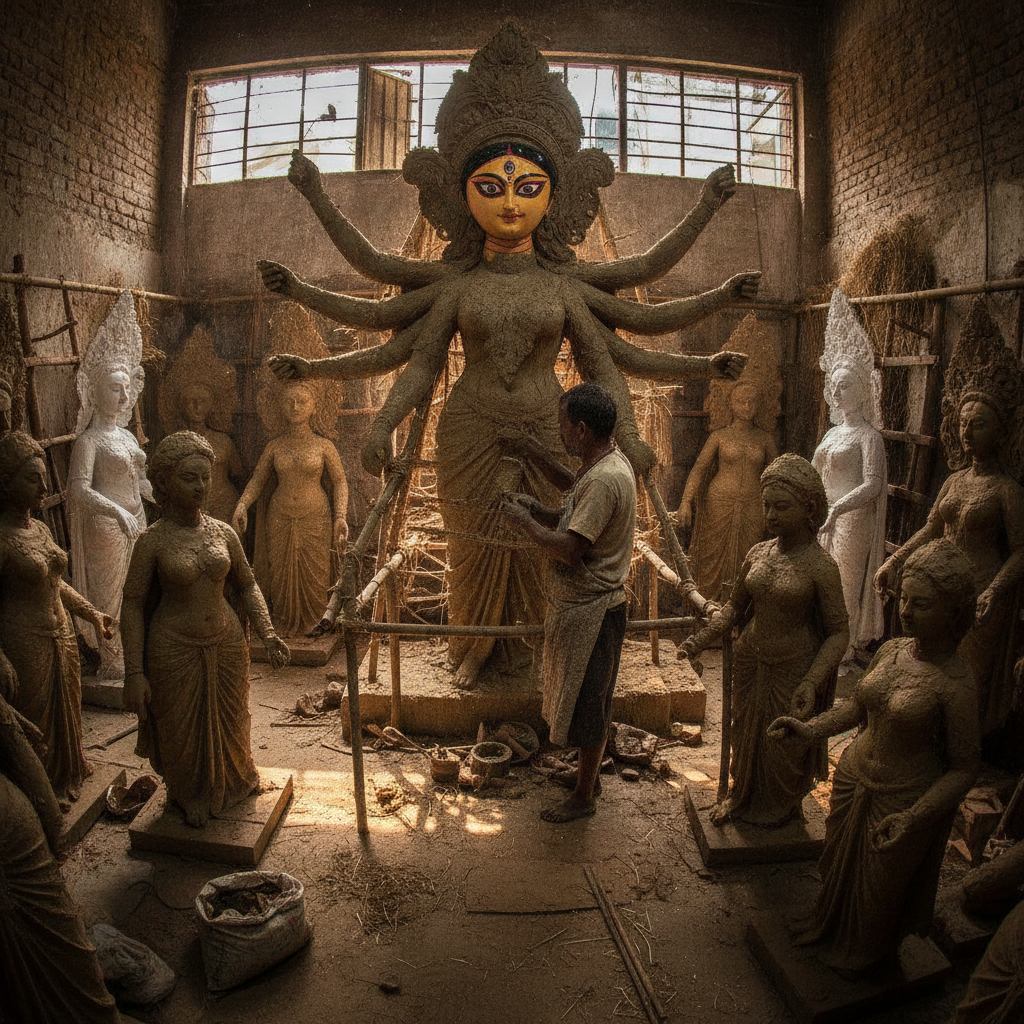
Kumartuli—a neighbourhood of north Kolkata (5 km north of Howrah Bridge) where idol-making artisans (kumors or potters) have concentrated for 200+ years—is the production centre for the clay idols of Durga (and other deities) that are used in Kolkata's 2,500+ Durga Puja pandals. The production cycle: straw frameworks arrive from September to begin construction; by July, clay from the Ganges riverbed is applied; by September/October, 2,000+ idol-makers are working in a concentrated area of narrow lanes. During the peak season (August–October), Kumartuli is one of the most extraordinary craft production environments in India: half-finished goddesses in every state of completion, the smell of clay and paint, the artisans working with extraordinary speed. The idols—often 15+ feet tall—are immersed in the Hooghly River on the final day of Durga Puja.
- 3
Kolkata's Park Street – The Entertainment Hub
Park Street (now renamed Mother Teresa Sarani, but universally still called Park Street)—Kolkata's main entertainment and dining street, 2 km south of Dalhousie Square—has been the city's social centre since the colonial era. The South Park Street Cemetery (1767, the oldest Christian cemetery in India)—containing the graves of early British settlers and officials, with elaborate neoclassical and Gothic Revival monuments—is one of the finest colonial cemeteries in the world. Peter Cat (established 1960), Mocambo (1956), and Trincas (1953) are Park Street restaurants that defined Kolkata's colonial-era dining culture and still operate. New Year's Eve on Park Street—Kolkata's most famous street party, with the street closed to vehicles, street performers, and tens of thousands of revellers—is the city's signature public celebration.
- 4
Kolkata's Chinatown – The Last Chinese Community in India
Tiretti Bazaar and Tangra—Kolkata's two Chinatown areas—are the remnants of what was once the largest Chinese community in India. The Hakka Chinese community of Kolkata (from Hakka-speaking Guangdong province) arrived in the late 18th century as tanners and leather workers; by the early 20th century, the community numbered 30,000–40,000. The 1962 Sino-Indian War (after which many Chinese-Indians were detained in Deoli Camp in Rajasthan, and their businesses and properties confiscated or sold) dramatically reduced the community; emigration to Canada, Taiwan, and Australia further depleted it. Today approximately 2,000 Chinese-Indians remain in Kolkata—the last significant Chinese community in India. The Sunday dim sum breakfast at Tiretti Bazaar's morning market is one of Kolkata's most distinctive food experiences.
- 5
Kolkata's Jewish Heritage – The Baghdadi Community
Kolkata was home to the most significant Jewish community in India: the Baghdadi Jews (Sephardic Jews from Iraq, Syria, and the broader Middle East), who arrived from the late 18th century as merchants and traders. At their peak (1920s–1940s) the Kolkata Jewish community numbered 5,000–6,000; today fewer than 25 Jews remain in the city—one of the smallest Jewish communities in any city that once had a significant population. The Beth El Synagogue (1856, on Pollock Street) and the Magen David Synagogue (1884, on Canning Street) are the two surviving functioning synagogues; both are in reasonable condition, maintained largely for heritage tourism. The Elias Meyer Free School (established by the community for Jewish and non-Jewish children) and the Nahoum & Sons bakery (established 1902, still operating in New Market, famous for its fruit cake and Jewish baked goods) are the community's most tangible living legacies.
- 6
Howrah & Crossing the Hooghly
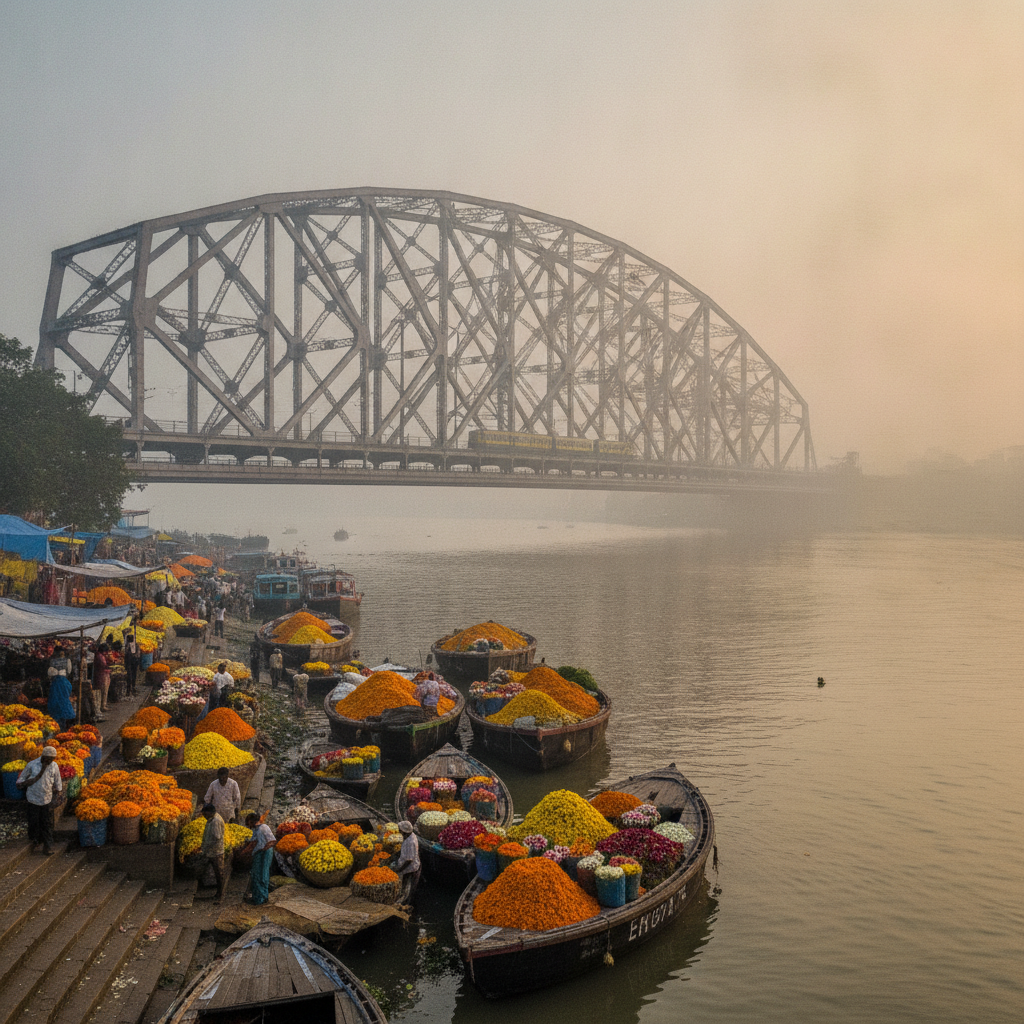
Howrah—the industrial twin city of Kolkata on the west bank of the Hooghly, population 1.1 million—is administratively separate from Kolkata but functionally integrated: Howrah Station (1854, the largest railway station in India by platform count—23 platforms) is Kolkata's main railway terminus, handling 1 million passengers daily. The Vidyasagar Setu (Second Hooghly Bridge, 1992)—a cable-stayed bridge 3 km south of Howrah Bridge—is the longest cable-stayed bridge in India (823 metres). The Hooghly River ferry service (crossing time 10–15 minutes, ₹5–7/€0.05–0.08 per crossing)—the cheapest and most evocative way to cross between Kolkata and Howrah—passes under Howrah Bridge and provides the river-level view of both cities that the bridge itself cannot. Howrah's industrial heritage (jute mills, engineering factories) sustained Kolkata's commercial dominance in British India.
Walk this route with audio
Stories play automatically as you reach each stop — no tapping needed.
More in Kolkata
Kolkata's Other Dimensions: Tagore's Open-Air University, the East Kolkata Sewage Fish Farms & the Political Walls
Kolkata's Genius: Tagore's Nobel Prize House, Satyajit Ray's Cannes Revolution & 34 Years of Democratic Communism
Kolkata Essentials: Howrah Bridge, the World's Largest Art Festival & the City That Produced Two Nobel Prizes
Kolkata's Weight: The 1943 Famine Churchill Didn't Stop, India's First Metro Under the Hooghly & the Most Passionate Football City