Kolkata's Soul: Rosogolla's Disputed Origin, Netaji's Escape from British House Arrest & the City That Teaches by Resisting Description
Complete the Kolkata portrait—the rosogolla geographical indication battle between West Bengal and Bangladesh (India won the GI in 2017; the debate continues), the 50 professional Bengali theatre groups using performance as social commentary in a 150-year continuous tradition, Kali as the city's spiritual identity (Shakti rather than Shiva—the terrifying protective goddess standing on a prostrate god), Netaji Subhas Chandra Bose escaping British house arrest in 1941 dressed as a Muslim holy man to reach Berlin and then Japan to fight for India's liberation through armed force, jazz at Someplace Else on Park Street running live music every night since 1992, and why Kolkata teaches you more the more you know about it before you arrive.
- 1
Kolkata's Sweets – Rosogolla, Sandesh & the Great Bengali Debate
Bengali sweets (mishti) are the most distinctive and most contested in India—contested not only by the Bangladeshi claim to rosogolla's origin (the Indian government registered a Geographical Indication for West Bengal rosogolla in 2017; Bangladesh has a competing claim for 'Banglar rosogolla') but by the passionate Bengal internal debate about which sweetshop makes the best sandesh. Rosogolla: a soft white ball of chhena (fresh pressed cheese) cooked in sugar syrup—light, spongy, and juicy. Sandesh: fresh chhena kneaded with sugar and flavourings, pressed into shapes—denser and less sweet than rosogolla. Mishti doi: sweet yoghurt fermented in clay pots. The sweetshop culture (mishti'r dokan) is central to Bengali social life: NC Das (inventor of rosogolla's modern form, 1868), Balaram Mullick & Radharaman Mullick (est. 1885), and K.C. Das (established 1930) are the landmark Kolkata sweetshops.
- 2
Kolkata's Theatre & Performance Tradition
Kolkata has the most active theatre culture of any Indian city: approximately 50 professional theatre groups and 400+ amateur companies operate in the city, performing in Bengali. The Kolkata theatre tradition (ranging from the 19th-century social reform plays of Dinabandhu Mitra and Girish Chandra Ghosh, through the anti-British protest theatre of the Indian People's Theatre Association—IPTA—in the 1940s, to contemporary experimental theatre) has a continuous tradition of using performance as social commentary. Minerva Theatre (est. 1893, now the Girish Mancha, a major performance venue), the Academy of Fine Arts auditorium, and the Rabindra Sadan complex are the main professional venues. Jatra—the traditional Bengali folk theatre form (melodramatic, loud, performed in the open air at melas and festivals, featuring mythological and social themes)—is performed primarily in rural Bengal but comes to Kolkata during the Durga Puja season.
- 3
Kali – The Goddess of Kolkata & Her Many Faces
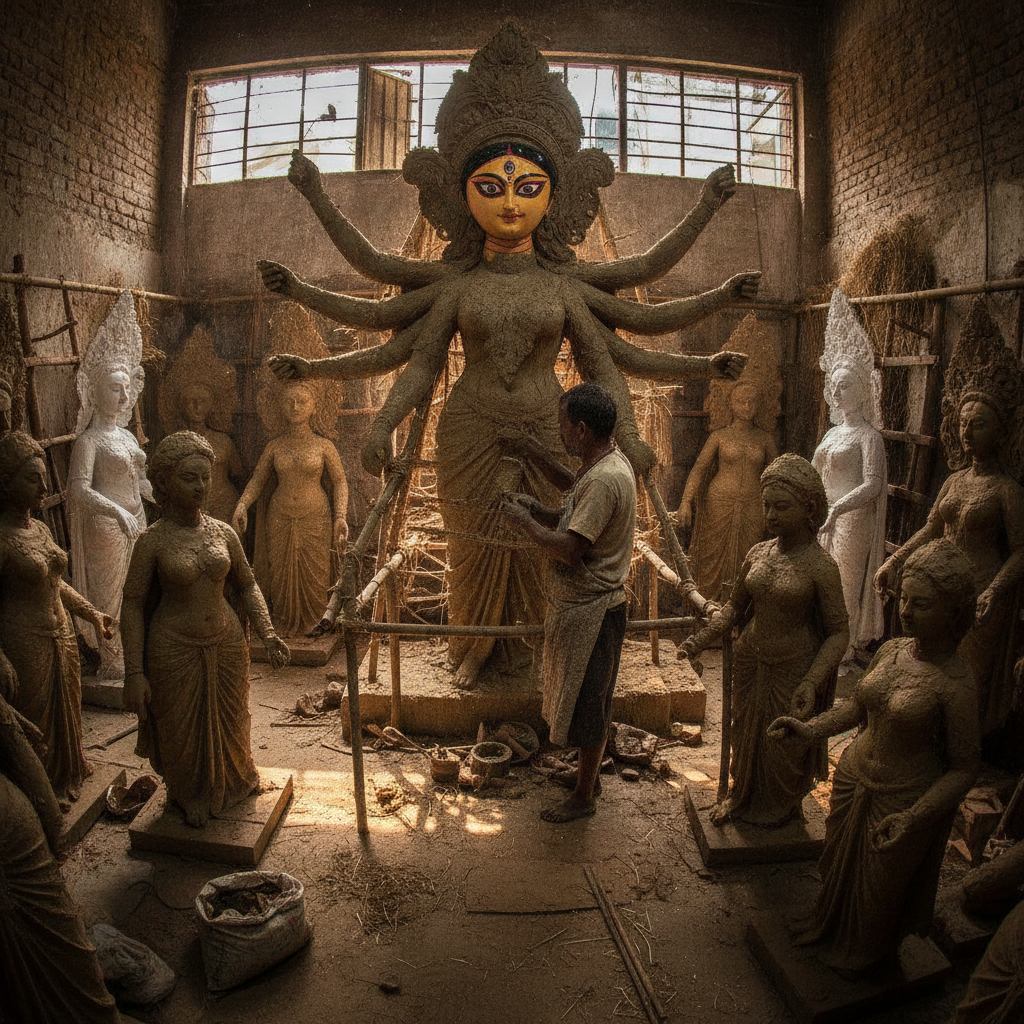
Kolkata is identified with the goddess Kali (the city's name derives from 'Kalighat', the Kali temple steps) in a way that is specific among Indian cities: other cities are identified with Shiva (Varanasi) or Vishnu (Puri), but Kolkata's spiritual identity is Shakta—centred on the female divine energy (Shakti). Kali—depicted as black-skinned (or deep blue), with a red tongue extended, wearing a garland of severed heads, a skirt of severed arms, and standing on the prostrate Shiva—represents both the most terrifying and the most compassionate aspects of the divine: she destroys illusion and ego, and her ferocity is ultimately protective. The Dakshineswar Kali Temple (9 km north of the city centre, on the Hooghly bank)—where the 19th-century mystic Ramakrishna had his divine visions—and the Belur Math (opposite bank)—headquarters of the Ramakrishna Mission—are the primary Shakta pilgrimage sites.
- 4
Kolkata's Independence Movement – The Revolutionary Tradition
Bengal was the centre of the most militant wing of India's independence movement: while Gandhi's Congress pursued non-violent civil disobedience, Bengali revolutionaries—Netaji Subhas Chandra Bose, the Jugantar group, the Anushilan Samiti—pursued armed revolution. Subhas Chandra Bose (1897–1945, 'Netaji'—Respected Leader)—who escaped British house arrest in Calcutta in 1941, travelled to Nazi Germany and Imperial Japan, formed the Indian National Army (INA) from Indian POWs in Southeast Asia, and attempted to liberate India through military means—is the defining Bengali political hero, still passionately revered in Kolkata where his name graces the airport, major roads, and public spaces. The 1905 Partition of Bengal (Lord Curzon's division of Bengal on religious lines—later reversed in 1911 after massive protests)—was the event that radicalised Bengali political opinion and launched the Swadeshi movement.
- 5
Kolkata After Dark – Clubs, Jazz & the River
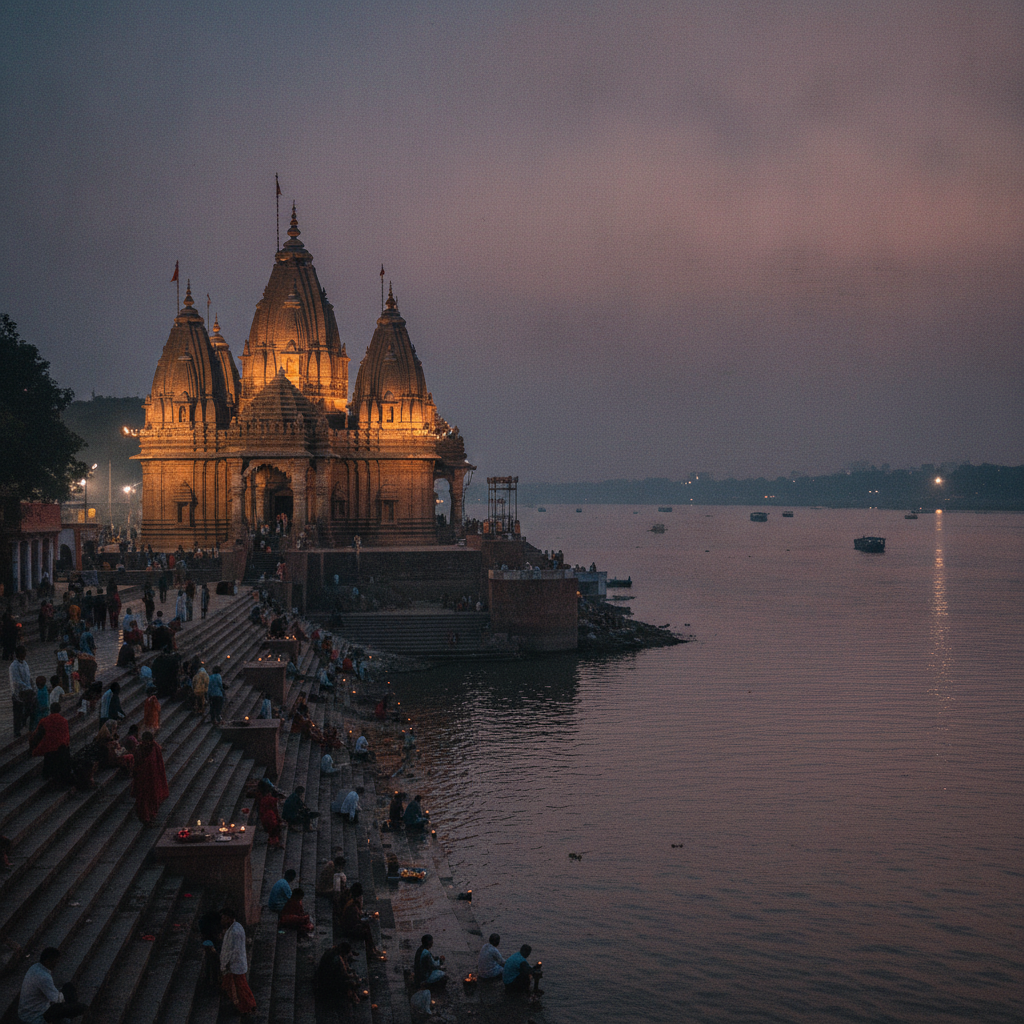
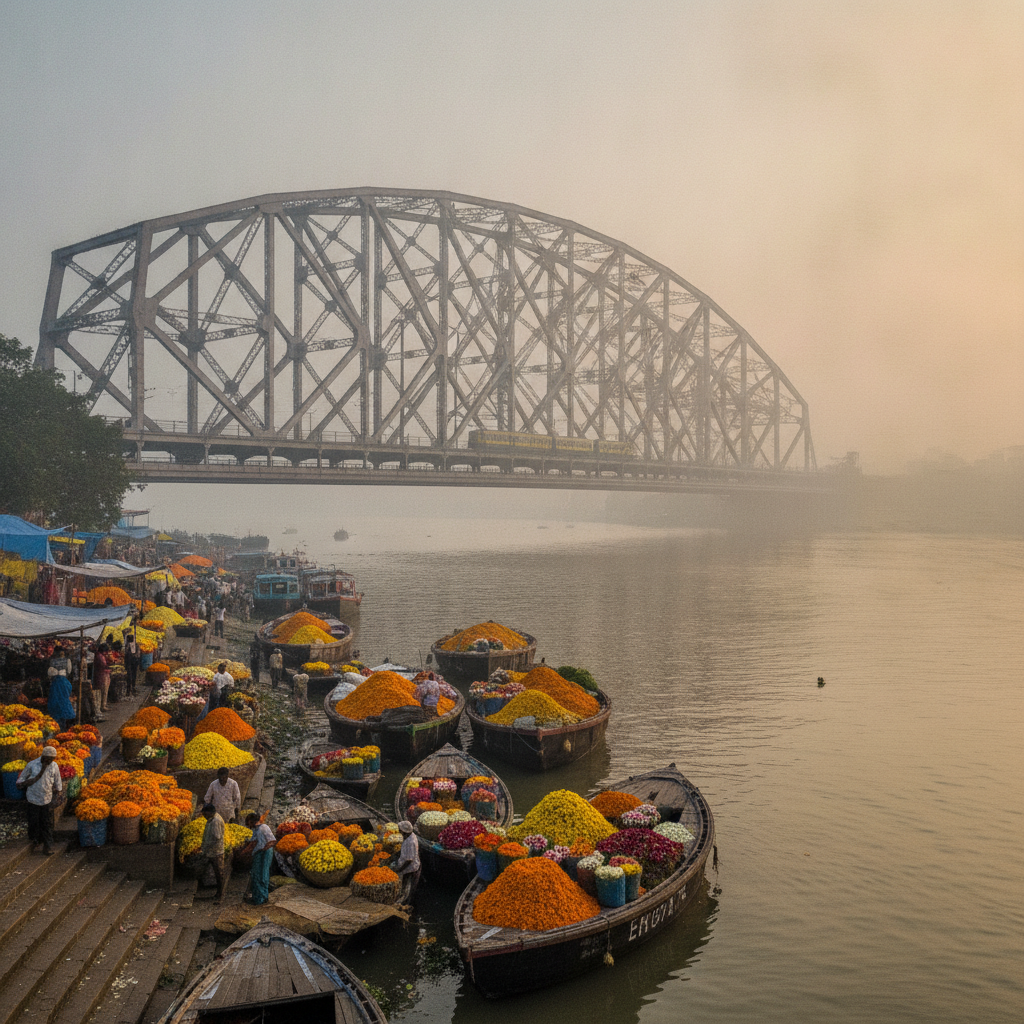
Kolkata after dark is more active than its reputation as a 'dying city' might suggest. The Princep Ghat (riverfront, near the Vidyasagar Setu bridge)—a colonial-era ghat with a Greek Revival memorial pavilion (1843) in a garden setting above the Hooghly—is the most popular evening promenade destination: couples and families sit on the ghat steps watching river traffic as the Vidyasagar Setu lights up. The Someplace Else bar at Park Hotel (Park Street) has hosted live music every night since 1992 and is the longest-running live music bar in India. The Jazz scene at Park Street (Blue Fox, Moulin Rouge—most now closed, but the tradition survives at Mocambo and Peter Cat's bar culture) dates from the 1950s–60s when Kolkata had South Asia's most vibrant jazz nightlife. The Park Street food and bar scene is still active 10pm–midnight.
- 6
Leaving Kolkata – What the City Teaches
Kolkata resists the easy categorisation that most cities submit to. It is not the 'City of Joy' of Dominique Lapierre's 1985 novel (a title many Kolkatans find patronising—the novel depicted the city's poverty as a source of spiritual beauty for its Western protagonist). It is not the 'dying city' of newspaper editorial cliché. It is a city of extraordinary intellectual seriousness—where people argue about politics and poetry in the way that other Indian cities argue about cricket and Bollywood—and also a city of real deprivation. It is simultaneously one of the most architecturally grand and most physically decayed cities in Asia. It is a city where the 1943 famine's memory shapes political consciousness the way the Partition does elsewhere. Visiting Kolkata requires more than most Indian cities: it rewards travellers who read before they go (Tagore, Satyajit Ray's films, Amartya Sen) and who leave time to sit in Coffee House.
Walk this route with audio
Stories play automatically as you reach each stop — no tapping needed.
More in Kolkata
Kolkata's Other Dimensions: Tagore's Open-Air University, the East Kolkata Sewage Fish Farms & the Political Walls
Kolkata's Genius: Tagore's Nobel Prize House, Satyajit Ray's Cannes Revolution & 34 Years of Democratic Communism
Kolkata Essentials: Howrah Bridge, the World's Largest Art Festival & the City That Produced Two Nobel Prizes
Kolkata's Weight: The 1943 Famine Churchill Didn't Stop, India's First Metro Under the Hooghly & the Most Passionate Football City