Komodo's Wider World: Kelimutu's Three-Colour Volcanic Soul Lakes, Wae Rebo's Conical 5-Floor Village Houses & Phinisi Liveaboard Bugis Crew
Komodo dragon parthenogenesis confirmed first in Chester Zoo in 2006 and subsequently in wild populations—all-male asexual offspring, juveniles spending 4–5 years arboreal to escape adult cannibalism; Flores' overland corridor from Labuan Bajo through Cancar's spider-web rice terraces to Bajawa's ngadhu totem poles to Ende where Sukarno was exiled 1934–38; Kelimutu's three lakes each a different colour from dissolved iron, manganese, sulphur chemistry that the Lio people read as three afterlife destinations sorted by manner of death; Batu Bolong pinnacle's school of surgeonfish so dense they block the sunlight at 40 metres in a 3-knot current; Wae Rebo's 7 conical mbaru niang houses at 1,200 metres reached by 4-hour mountain trail; and 500,000 Pteropus vampyrus flying foxes departing Kalong Island at dusk in a single mass exodus.
- 1
The Komodo Dragon's Biology – Hunting, Venom & Reproduction
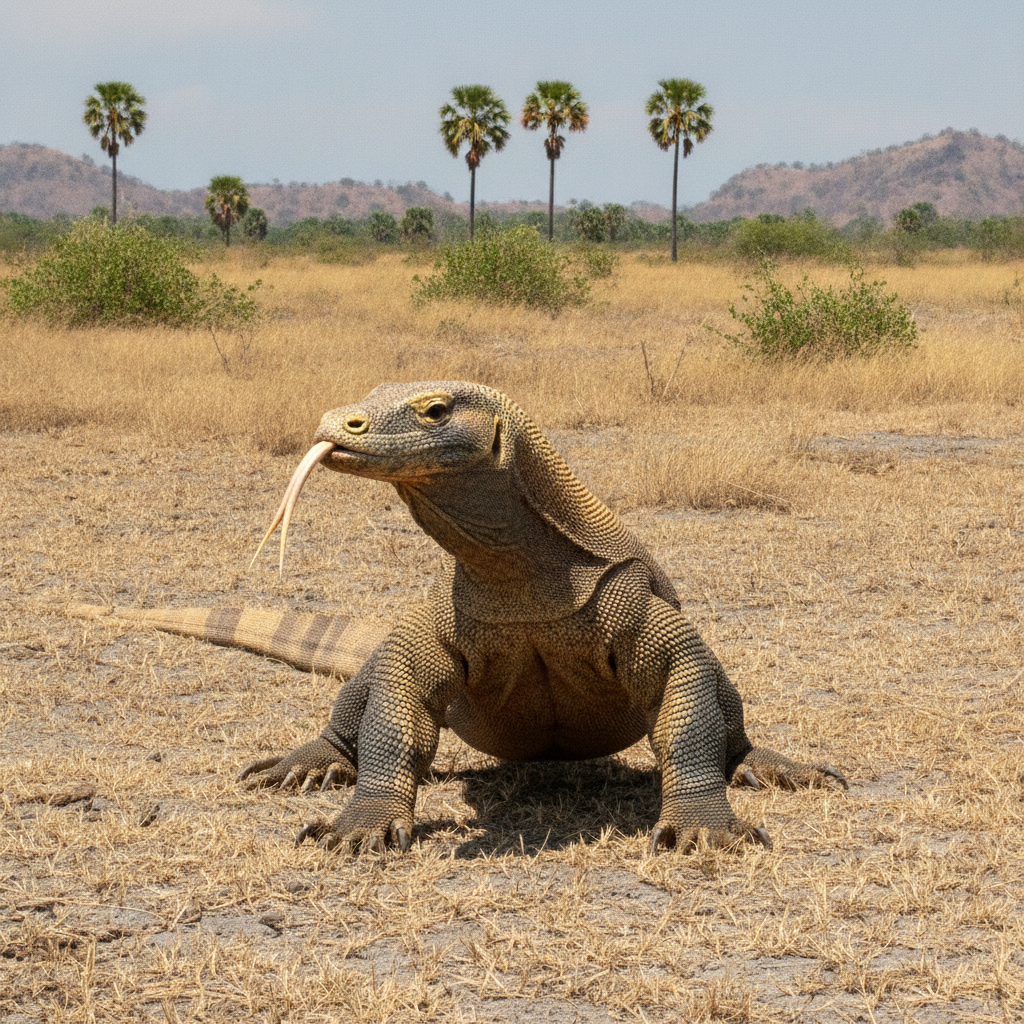
The Komodo dragon's biology—more fully understood since the 2009 venom discovery but still yielding new findings—makes it one of the most scientifically interesting reptiles in the world. The hunting strategy: Komodo dragons are ambush predators who can wait motionless for hours before striking; their bite (in addition to the venom effect) introduces bacteria; the primary mechanism of prey death is blood loss from the venom's anticoagulant effect combined with the shock of the initial attack wound. The digestion: Komodo dragons can consume 80% of their body weight in a single meal—a 50-kg dragon can eat a 40-kg deer in one sitting; the digestive system is extremely efficient (most bones and hooves are also digested); indigestible material (hair, horn fragments) is regurgitated as a pellet. The reproduction: Komodo dragons can reproduce both sexually and via parthenogenesis (asexual reproduction where unfertilised eggs develop to hatching)—the parthenogenetic offspring are always male; this mechanism was first documented in zoo populations at Chester Zoo and London Zoo in 2006 and has been confirmed in wild populations. The juvenile life: newly hatched Komodo dragons (20–45 cm) immediately climb trees to escape cannibalism from adults; they spend the first 4–5 years of their lives primarily arboreal; the transition to terrestrial life occurs as they grow too heavy for the branches. The lifespan: Komodo dragons live approximately 30 years in the wild.
- 2
Flores Island – The Komodo Corridor East
Flores (from the Portuguese 'flores'—'flowers'—named by Portuguese traders in the 16th century for the island's floral abundance)—a 360-km-long island extending east from Labuan Bajo to Larantuka, the easternmost town—is one of the most underexplored and most rewarding islands in Indonesia for overland travel: a chain of active volcanoes, traditional Catholic and animist villages, world-class diving, and the most diverse traditional textile traditions in Indonesia. The overland route: Labuan Bajo (west Flores) → Ruteng (a highland town at 1,100 metres, 130 km east—the access point for the Cancar Spider Web rice terraces, one of the most unusual agricultural landscapes in Southeast Asia, where the circular subak irrigation produces a web pattern visible from the hill above) → Bajawa (a volcanic highland town at 1,100 metres, 200 km east of Labuan Bajo—the base for visiting the Ngada villages with their traditional ancestor worship and distinctive ngadhu and bhaga structures—male and female ceremonial totems) → Ende (the coast town where Sukarno was exiled by the Dutch in 1934–38—there is a small museum in the house where he lived) → Moni (the village base for the Kelimutu crater lake visit—3 lakes of different colours at 1,640 metres). The Catholicism of Flores: approximately 85% of Flores is Catholic (in contrast to the Muslim majority elsewhere in Indonesia)—a legacy of Portuguese missionary work from the 16th century and the subsequent Dutch missionary system.
- 3
Kelimutu Crater Lakes – The Three-Coloured Volcanic Mystery
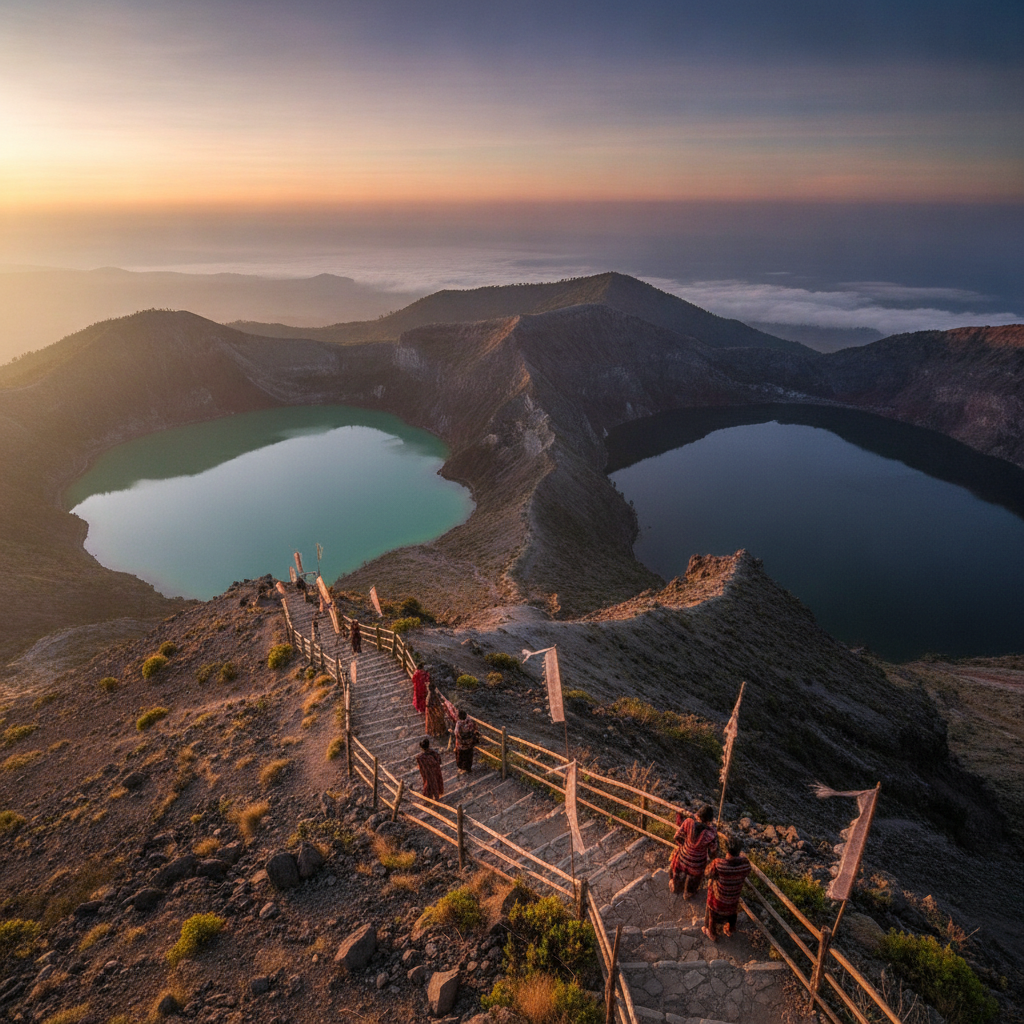
Kelimutu (Mount Kelimutu—1,640 metres, on the island of Flores, 70 km west of Ende)—is the site of three adjacent volcanic crater lakes of distinctly different colours, each with an ominous reputation in the traditional belief of the Lio people (the indigenous Flores ethnic group in the region). The lakes: Tiwu Ata Polo ('Lake of Evil Spirits'—historically red, now typically dark green or brown, the most unstable in colour), Tiwu Ko'o Fai Nuwa Muri ('Lake of Young Men and Maidens'—typically turquoise or bright blue), and Tiwu Ata Mbupu ('Lake of Old People'—typically black or dark blue). The colours: caused by varying concentrations of dissolved minerals (iron, manganese, sulphur compounds) and algae, combined with the oxidation state of the water—the colour of each lake can change over years or even months as volcanic activity alters the chemistry. The traditional belief: the Lio people believe the souls of the dead are gathered in the lakes according to the manner of their death—evil souls go to Tiwu Ata Polo, young people go to Tiwu Ko'o Fai, and elders go to Tiwu Ata Mbupu. The viewing: the standard approach is a 02:00 departure from Moni village (5 km away) for the pre-dawn ascent to arrive at the rim before sunrise—the light change at dawn gradually illuminates the colour of each lake; the contrast between the three lakes is most dramatic in the first hour of sunlight.
- 4
Komodo Diving – Advanced Sites, Currents & Marine Life
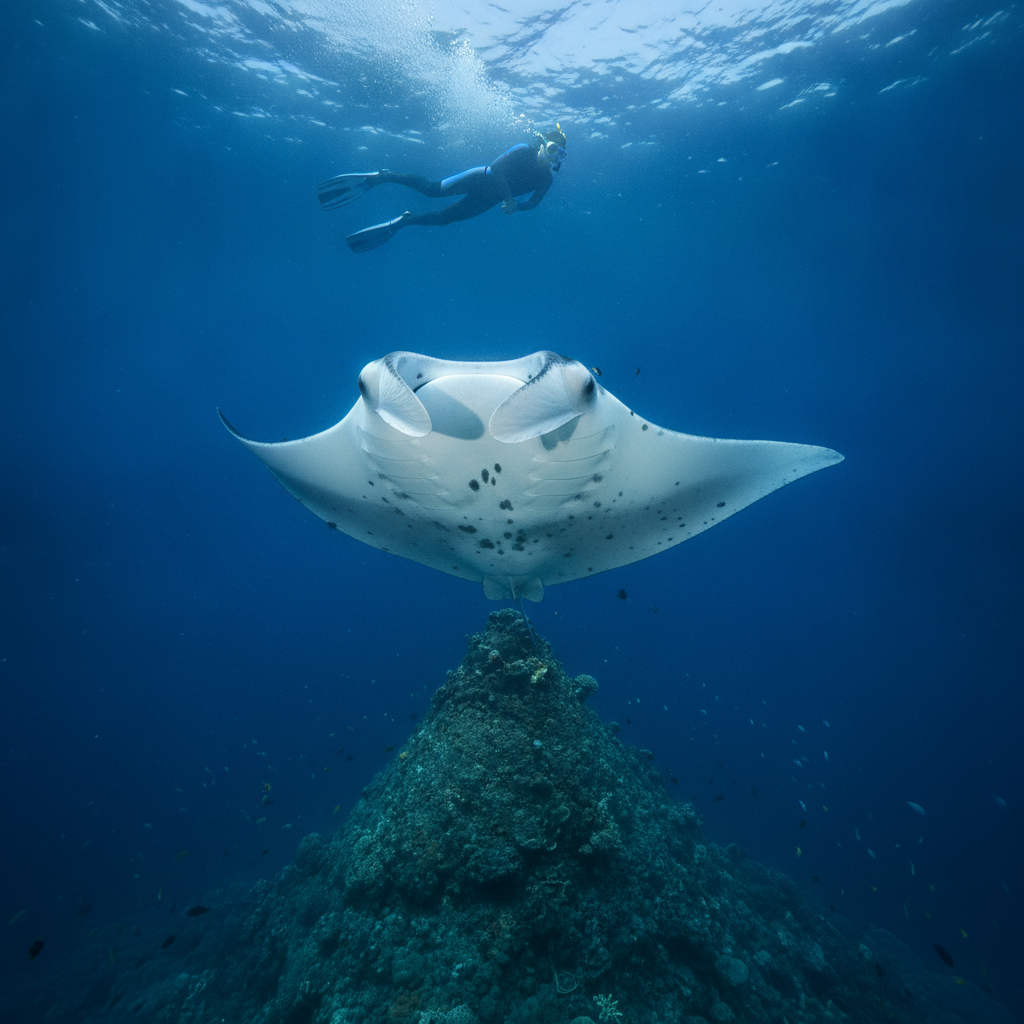
The diving in Komodo National Park—rated by dive media as one of the top five dive destinations in the world—is characterised by strong currents (which concentrate pelagic marine life), extraordinary biodiversity, and a range of conditions from beginner-friendly (sheltered bays with gentle drift) to expert-only (channel dives in 3–5 knot currents requiring advanced drift diving technique). The top sites: Batu Bolong (a pinnacle rising from 40 metres to just below the surface, surrounded by schooling fish of extraordinary density—Napoleon wrasse, surgeonfish, sweetlips in thousands—with grey reef sharks and white-tip sharks circling, and strong variable currents that require timing and buoyancy control); Crystal Rock (a pinnacle 2 km north of Komodo island, in a channel with strong current—schooling barracuda, sharks, and occasional hammerhead); Manta Point (the south Komodo seamount—the manta cleaning station, with individual mantas circling for 30–60 minutes at a time within 2–5 metres of divers; depth 5–25 metres; current variable). The cold water: Komodo's southern sites (south Komodo, the Horseshoe Bay area) receive cold-water upwellings from the Sape Strait—water temperatures as low as 16°C (extremely cold for equatorial Indonesia) are recorded; full wetsuits (5mm) are required for these sites. The diving season: April–November (dry season, best visibility); December–March (wet season, reduced visibility but occasionally epic manta encounters).
- 5
The Manggarai People & Flores' Traditional Culture
The Manggarai—the dominant ethnic group of western Flores, comprising approximately 700,000 people in the Manggarai, East Manggarai, and West Manggarai regencies—are the cultural community most associated with the Labuan Bajo region and the areas surrounding Komodo National Park. The Manggarai origin: the Manggarai are descended from a mixture of Austronesian agriculturalists (arriving approximately 3,500 years ago) and Melanesian original inhabitants, with significant Bugis, Javanese, and Portuguese admixture from the colonial period. The traditional village structure: Manggarai villages are organised in a circular (lingko) pattern around a central sacred space (compang)—where the clan's sacred objects are stored and ceremonies conducted; the traditional Manggarai house (mbaru niang—a conical thatched structure with a diameter tapering from a wide base to a pointed roof up to 15 metres high, with 5 floors) is the most distinctive traditional architecture in Flores. The Mbaru Niang village: the most intact traditional Manggarai village with mbaru niang houses is Wae Rebo (at 1,200 metres altitude, 7 km by mountain trail from the nearest road, in the southern Manggarai highlands—a 3–4 hour trek from the road trailhead); Wae Rebo has been extensively documented and is now a UNESCO-recognised living cultural heritage site, receiving approximately 5,000 visitors annually. The caci: the traditional Manggarai whip-and-shield ceremonial combat (similar to the Sasak Peresean but using a buffalo-hide whip and a round rattan shield).
- 6
Liveaboard Life – The Phinisi Tradition & Sailing Komodo
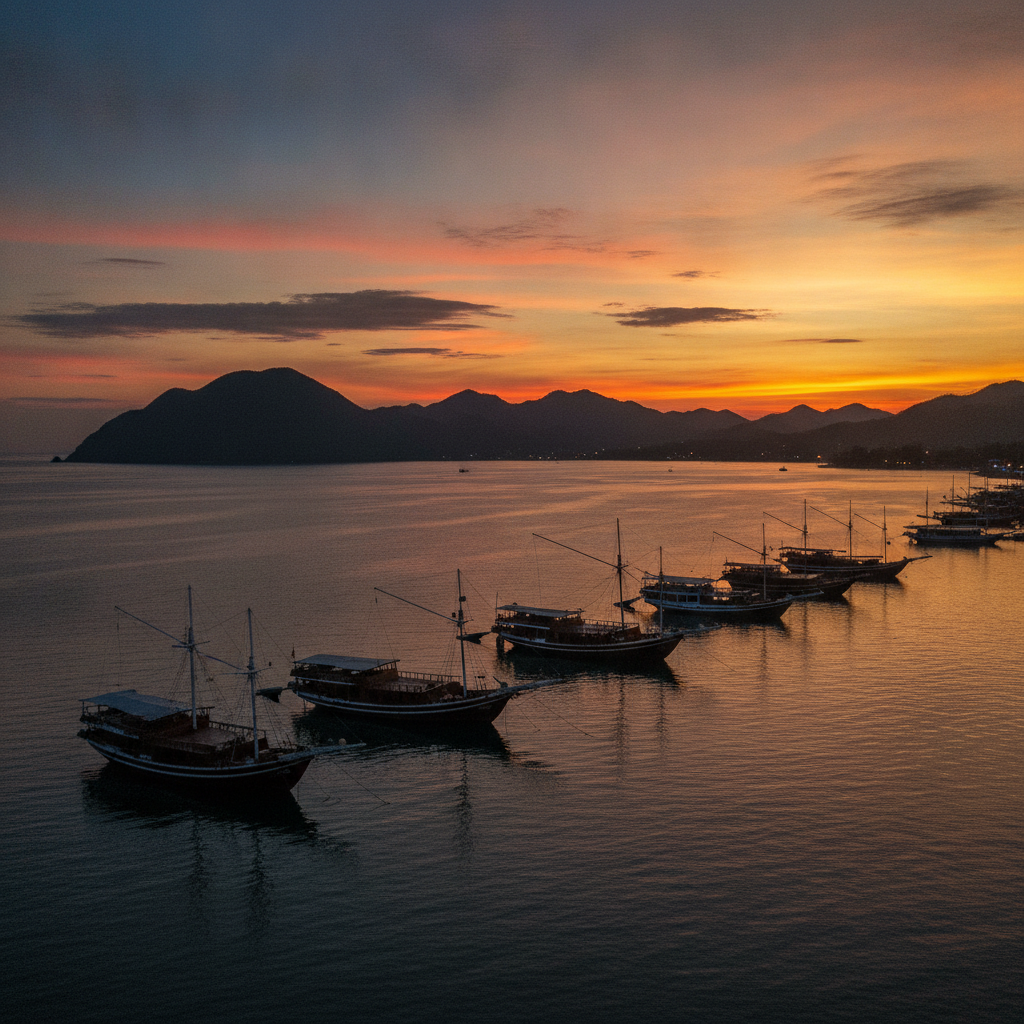
The phinisi (also spelled pinisi)—the traditional two-masted sailing vessel of the Bugis people of South Sulawesi—is the vessel type used for the Komodo liveaboard boats that have been the primary vehicle for exploring the national park since the early 1990s. The phinisi tradition: built using traditional Bugis boatbuilding techniques (without formal blueprints—the knowledge of hull proportions and construction sequence is transmitted orally from master builder to apprentice; the keel is laid in a ceremony involving offerings and prayers), the phinisi ranges from simple cargo vessels to the luxury 'floating villas' now operating in the Komodo luxury market. The Komodo liveaboard economy: approximately 200 phinisi boats operate in the Komodo area, ranging from 3-cabin budget vessels (Rp 800,000–1,500,000/person/night) to 10-cabin luxury vessels (€500–1,000+/person/night) with air-conditioned cabins, professional dive instructors, and gourmet Indonesian catering; the Bugis crew (typically 8–12 people: captain, engineer, cook, dive guides) on most boats are from the Sulawesi Bugis community that has worked the Flores Sea since the colonial period. The Komodo sailing circuit: a standard 3-night itinerary (the most common): Day 1—Labuan Bajo to Rinca (dragon trek) to Kalong Island (flying fox colony at sunset); Day 2—Komodo Island (dragon trek, Pink Beach snorkelling); Day 3—diving sites (Batu Bolong, Crystal Rock, Manta Point); Day 4—return to Labuan Bajo. The flying foxes of Kalong: approximately 500,000 Pteropus vampyrus (the large flying fox—wingspan up to 1.5 metres) roost on Kalong Island during the day and depart in a single mass exodus at dusk—one of the most spectacular wildlife events in the Komodo area.
Walk this route with audio
Stories play automatically as you reach each stop — no tapping needed.
More in Komodo
Komodo's Pelagic World: Orca Hunting Whale Shark Juveniles in the Sape Strait, 500,000 Flying Foxes at Kalong & the Road to Sumba's Pasola
Komodo's Conservation Reality: Sea Rangers vs. Blast Fishers, the Sape Strait's 1,300m Cold Upwelling & Ngada Villages' Ngadhu-Bhaga Pairs
Komodo's Overlooked Depths: Larantuka's 500-Year-Old Portuguese Easter Procession, Yellow-Crested Cockatoo & the IUCN's 2021 Climate Verdict
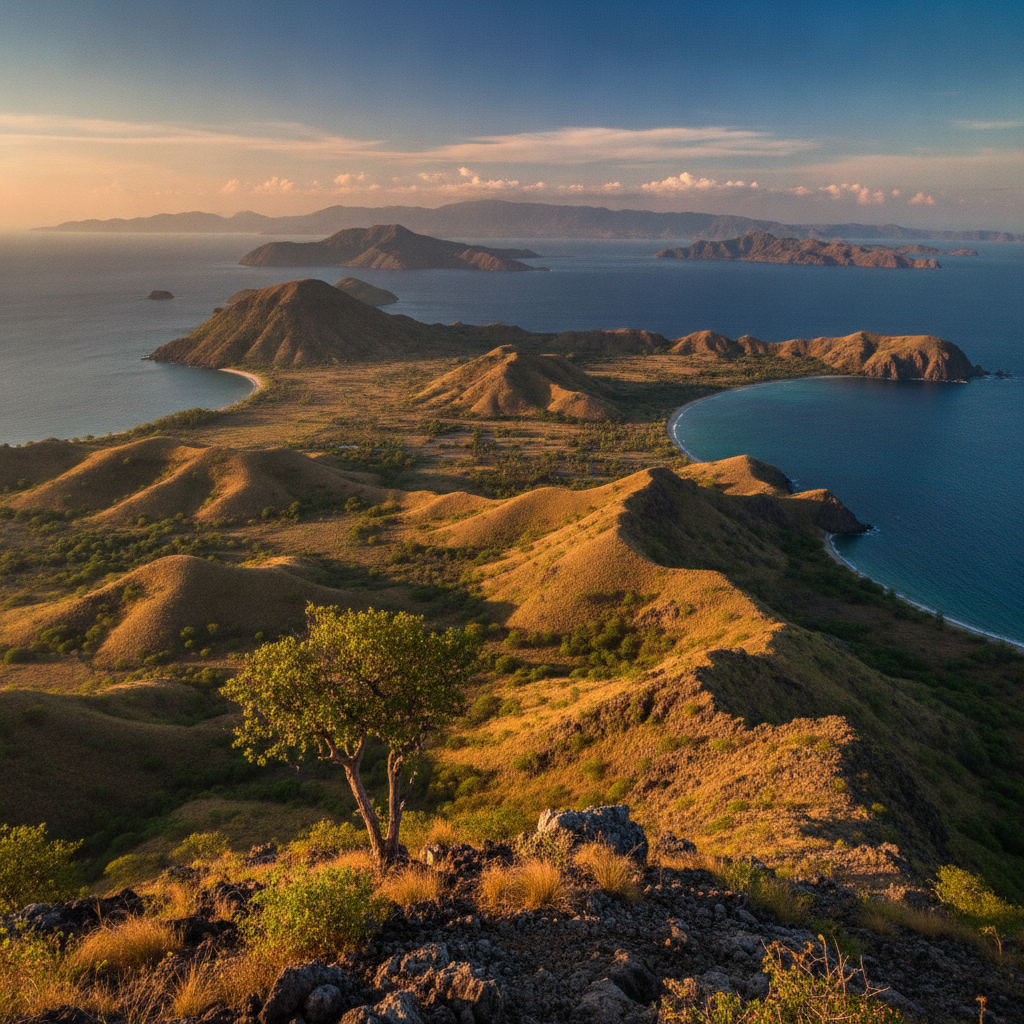
Komodo Complete: The 338m Gunung Ara Summit Panorama, Flores Sea Sperm Whales & the UNESCO 'In Danger' Warning That Stopped the Jurassic Park Resort