Komodo National Park: The World's Largest Lizard, Manta Point's Year-Round Ray Encounters & Pink Beach's Red Coral Sand
Varanus komodoensis—3 metres, 70 kg, venom gland between the teeth secreting anticoagulants (the 'septic bite' theory was wrong; Bryan Fry's 2009 Queensland research settled it), surviving on five Indonesian islands with 5,700 individuals currently Endangered due to rising sea levels reducing deer habitat; Labuan Bajo's fishermen's waterfront displaced for Marriott promenades as Jokowi's 'super-premium destination' investment arrived; Manta Point's reef manta cleaning station where 10–30 mantas are reliably present year-round for snorkellers; Rinca island's dragon compound where the kitchen smells have trained the animals to congregate at midday; Pink Beach's Stylophora pistillata red coral fragments turning the sand rose-pink; and the liveaboard phinisi debate (the sardine run between July–September draws sharks, dolphins, and seabirds in one of Asia's great marine feeding spectacles).
- 1
The Komodo Dragon – Varanus komodoensis & the World's Largest Lizard
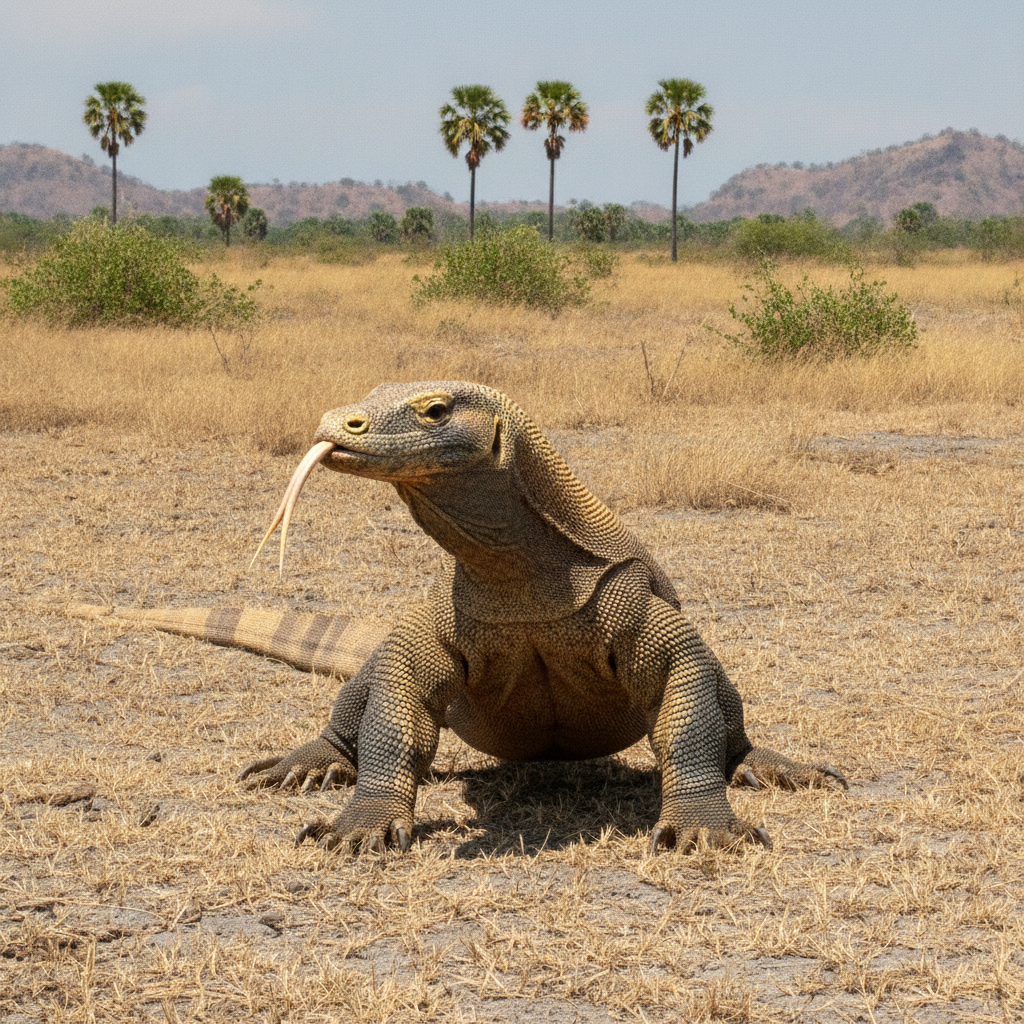
The Komodo dragon (Varanus komodoensis)—the world's largest living lizard, reaching up to 3 metres in length and 70 kg in weight—survives naturally on only five Indonesian islands: Komodo, Rinca, Gili Motang, Gili Dasami, and the western tip of Flores. The animal: an apex predator with a forked tongue that detects chemical signals (functioning like a snake's chemosensory system), excellent vision capable of detecting movement at 300 metres, and a hunting strategy that combines ambush predation with pursuit; prey animals include deer (the primary prey), water buffalo, wild boar, and—on rare occasions—humans (three fatal attacks documented in the national park since 1974). The venom question: for decades the Komodo dragon's lethal bite was attributed to the bacteria in its saliva (the 'septic bite' theory—infected wounds would cause death by septicaemia within days); research published in 2009 (by Bryan Fry at the University of Queensland) demonstrated that Komodo dragons have a venom gland between the teeth that secretes anticoagulant compounds, causing prey to bleed profusely and enter shock. The population: approximately 5,700 Komodo dragons across the five islands, with the largest population on Rinca island (1,300 animals) and Komodo island (1,700 animals). The IUCN status: Endangered—the population has been stable for decades under national park protection, but climate change (rising sea levels reducing prey habitat on the islands) was cited in the 2021 IUCN assessment as the primary new threat.
- 2
Labuan Bajo – The Gateway Town & Its Rapid Transformation
Labuan Bajo—a fishing town of approximately 30,000 on Flores' western tip, 90 km east of Komodo Island—has undergone one of the most dramatic transformations of any Indonesian town in the past decade: from a basic backpacker junction (where budget travellers assembled 3-day liveaboard boats to the dragon islands) to one of Indonesia's priority tourism destinations, with luxury hotels, a renovated waterfront, and international flight connections. The transformation driver: Indonesian President Joko Widodo designated Labuan Bajo as a 'super-premium destination' (destinasi super prioritas) in 2019, one of five Indonesian destinations receiving concentrated government investment. The infrastructure: the Komodo International Airport (LBJ) received a new passenger terminal in 2022 capable of handling 1.5 million passengers annually; the Labuan Bajo waterfront (Kampung Air) was redeveloped (displacing the original fishing community) into a promenade of restaurants and café terraces; several international hotel brands (Meruorah by Marriott, Plataran Komodo) opened properties above the bay. The tension: the pace of development has outstripped the town's water, sewage, and electricity infrastructure; the fishing community whose boats once occupied the waterfront has been moved to a commercial fishing harbour further from the centre; and the traditional backpacker liveaboard boat economy (which employs hundreds of Manggarai boat crew and cooks) competes with the new luxury floating hotel vessels that have entered the market.
- 3
Manta Point & the Komodo Marine Environment
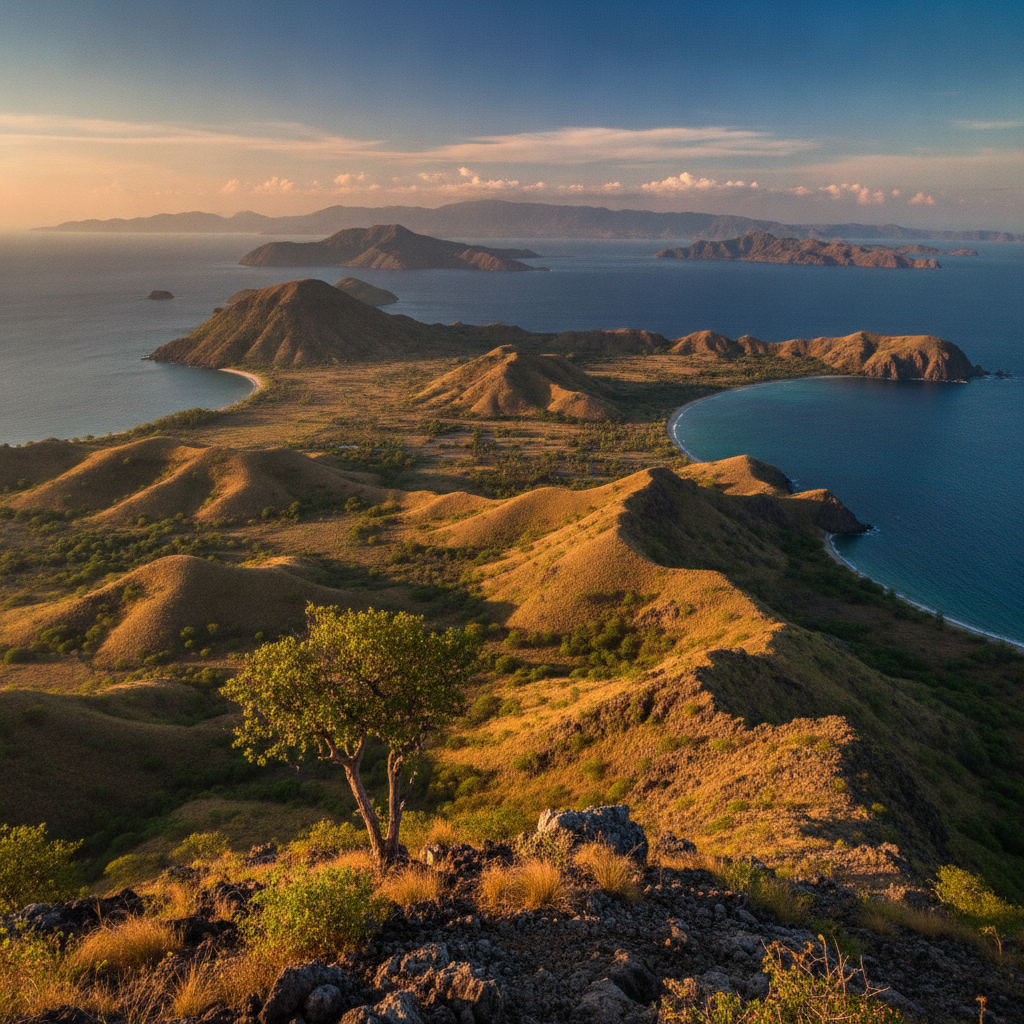
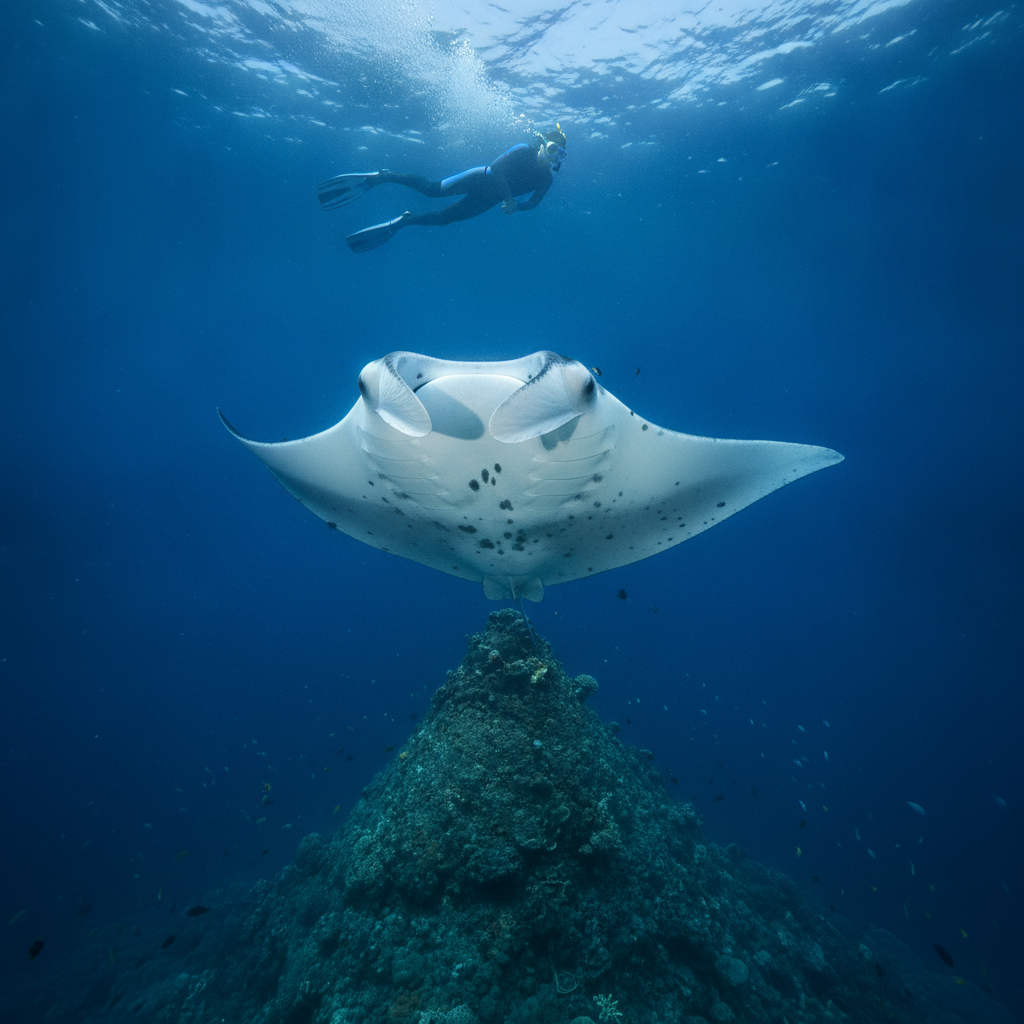
The Komodo National Park—established 1980, UNESCO World Heritage Site 1991 (one of the first in Indonesia)—encompasses 1,817 km² including the terrestrial area of Komodo, Rinca, and adjacent islands plus a marine zone covering approximately 1,000 km² of the most biodiverse marine environment in the world. The marine biodiversity: the park sits at the convergence of the Indian and Pacific Oceans, with cold, nutrient-rich upwellings from the deep Sape Strait mixing with the warmer surface water—creating conditions that support over 1,000 fish species, 260 coral species, 14 whale and dolphin species, 5 sea turtle species, and dugong. Manta Point (the southern tip of Komodo Island—a seamount where reef manta rays (Mobula alfredi) gather year-round at a cleaning station where cleaner wrasse remove parasites from their gill plates): the most reliable manta ray encounter site in the world for snorkellers and divers, with an average of 10–30 mantas visible per visit; the site is accessible only by boat, and a National Park entry fee applies. The currents: the Komodo currents—among the strongest recreational diving currents in the world (2–5 knots in the channels between the islands)—produce the marine richness but also make diving technically demanding; sites including Batu Bolong (a pinnacle dive with strong current, schooling fish, and regular shark sightings) and Crystal Rock are advanced-level.
- 4
Rinca Island – Dragon Trekking Without the Crowds
Rinca island (Pulau Rinca—the second-largest island in Komodo National Park, 198 km², lying between Flores and Komodo island)—is the most accessible dragon island for a day trip from Labuan Bajo (45 minutes by speedboat versus 2 hours to Komodo island) and the best choice for trekking encounters with Komodo dragons in a more natural setting, with fewer visitors than the Komodo island main site (Loh Liang). The Rinca ranger stations: Loh Buaya (the main visitor centre on Rinca's east coast, with a ranger compound, a small museum, and the starting point for the short (1 km), medium (3 km), and long (7 km) trekking circuits); dragons reliably gather near the ranger compound at midday (because the kitchen smells attract them—an unintended feeding bias that concentrates the animals near the visitor area). The trekking experience: mandatory ranger-guided trekking (rangers carry a forked stick for defence—not as a weapon but to block a dragon's lunge if the animal charges); the main encounter is at the compound but the longer trail provides the more naturalistic landscape view (savannah, rocky hillside, coastal forest). The Rinca ecosystem: distinct from Komodo island's in that Rinca has a larger population of water buffalo (the most dangerous prey species for the dragons—injured or ill buffalo are the most common large-prey kill) and the savannah landscape is more open, making wildlife sightings more likely.
- 5
Pink Beach & the Komodo Snorkelling Circuit
Pink Beach (Pantai Merah—'Red Beach')—on Komodo island's eastern shore, accessible by boat from Loh Liang (the main Komodo island ranger station) or directly from Labuan Bajo by speedboat—is one of only seven pink-sand beaches in the world: the colour derives from red coral fragments (from the red coral species Stylophora pistillata) mixed with white aragonite sand, producing a distinct rose-pink tint visible in the daylight. The snorkelling: Pink Beach's fringing reef is one of the best snorkelling sites in the national park for non-divers—visibility typically 15–25 metres, the shallow reef (2–8 metres) hosting parrotfish, triggerfish, sea turtles, and the occasional blacktip reef shark visible at the reef edge. The Komodo snorkelling circuit: the standard day trip from Labuan Bajo visits Pink Beach, Manta Point, and either Rinca or Komodo island in a 10-hour circuit by speedboat—the most efficient single-day introduction to the park. The coral health: the Komodo marine park has some of the healthiest coral in Indonesia—the cold upwellings that cool the water to 25–26°C (versus 28–30°C for most of Indonesia) have largely protected the reef from the bleaching events that damaged warmer Indonesian reefs in 2016 and 2019. The sardine run: between July and September, massive schools of sardines (millions of individuals) are visible in the channels between the islands, attracting hunting sharks, dolphins, and seabirds in one of the most spectacular marine feeding events in Southeast Asia.
- 6
Practical Komodo – Getting There, Liveaboard vs. Day Trip & Park Fees
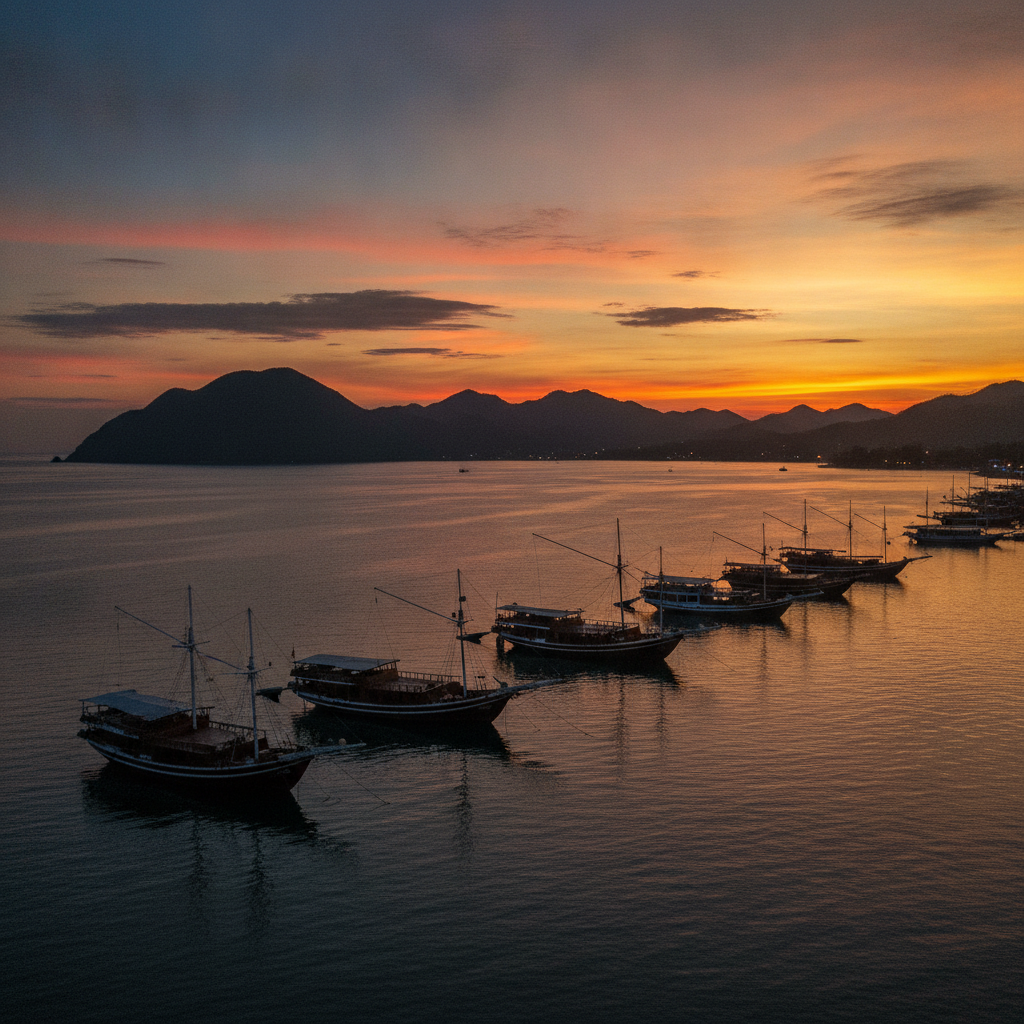
Getting to Labuan Bajo: Komodo International Airport (LBJ) receives direct domestic flights from Bali (1 hour—multiple daily on Garuda, Lion Air, TransNusa), Jakarta (2.5 hours), and Lombok (50 minutes); international connections via Bali. From the airport: Labuan Bajo town is 3 km from the airport by ojek (Rp 30,000) or metered taxi (Rp 50,000–70,000). Visiting the park: liveaboard (the traditional method—a wooden phinisi sailing boat chartered for 2–4 nights, sleeping onboard while visiting multiple islands and dive sites; prices range from Rp 1,500,000/person/night (budget) to Rp 8,000,000+/person/night (luxury); the best value for divers and those wanting multiple dragon encounters and remote sites); day trip speedboat (Rp 500,000–800,000/person for a shared boat, visiting Pink Beach, Manta Point, and Rinca or Komodo in 10 hours—the most popular option for non-divers on a limited schedule). The national park fees (as of 2023): a controversial government fee structure introduced in 2022 and subsequently revised—the current fee is approximately Rp 150,000/person/day for international visitors, plus separate fees for dragon trekking, dive permits, and camera fees; check current pricing before departure as the fee structure has changed multiple times. The closure question: the Indonesian government proposed closing Komodo island entirely to tourists in 2019 (to 'protect the Komodo dragon population')—the plan was abandoned after protests from the Komodo island fishing community and the liveaboard industry, but periodic closure threats recur.
Walk this route with audio
Stories play automatically as you reach each stop — no tapping needed.
More in Komodo
Komodo's Pelagic World: Orca Hunting Whale Shark Juveniles in the Sape Strait, 500,000 Flying Foxes at Kalong & the Road to Sumba's Pasola
Komodo's Conservation Reality: Sea Rangers vs. Blast Fishers, the Sape Strait's 1,300m Cold Upwelling & Ngada Villages' Ngadhu-Bhaga Pairs
Komodo's Overlooked Depths: Larantuka's 500-Year-Old Portuguese Easter Procession, Yellow-Crested Cockatoo & the IUCN's 2021 Climate Verdict
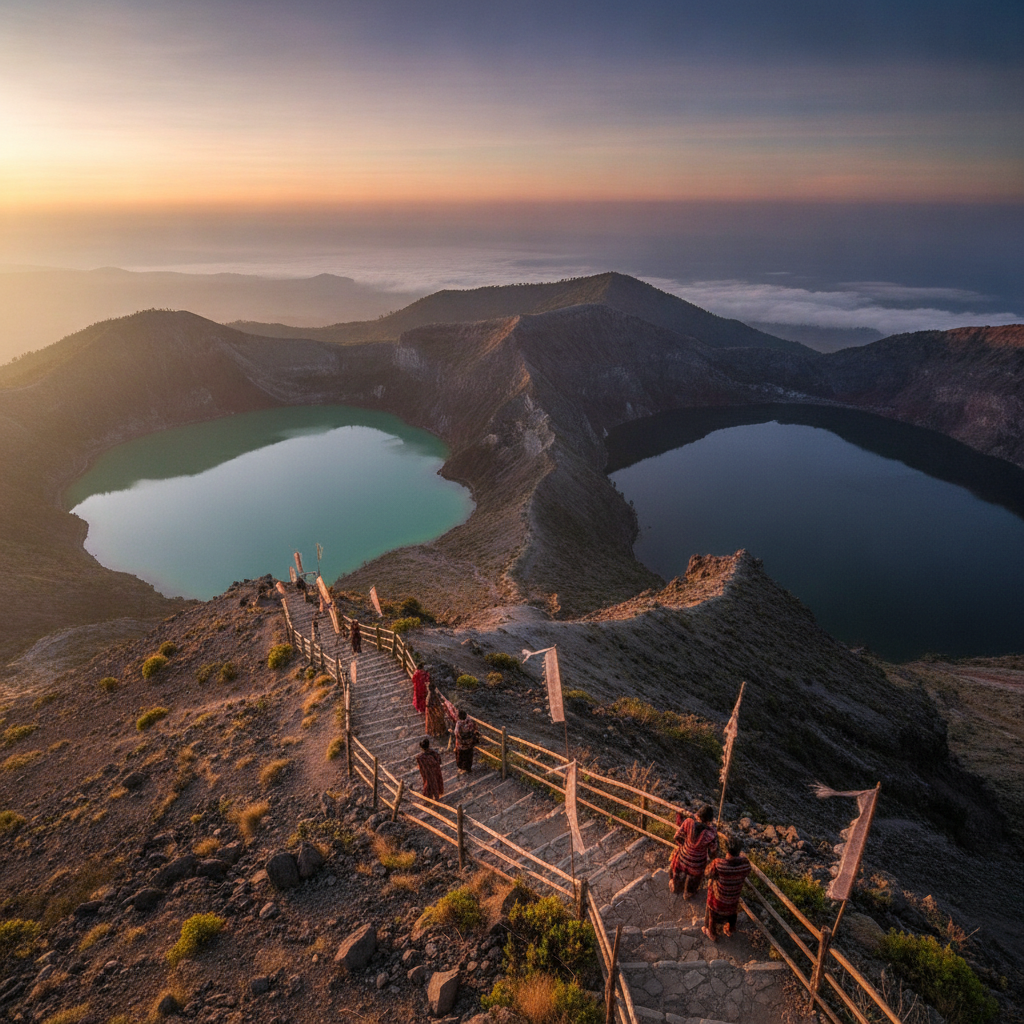
Komodo's Wider World: Kelimutu's Three-Colour Volcanic Soul Lakes, Wae Rebo's Conical 5-Floor Village Houses & Phinisi Liveaboard Bugis Crew