Komodo Complete: The 338m Gunung Ara Summit Panorama, Flores Sea Sperm Whales & the UNESCO 'In Danger' Warning That Stopped the Jurassic Park Resort
The long Komodo island trail at 06:00 through deer-track savannah to Gunung Ara's summit view of the entire island and the Sape Strait—rangers advising against midday heat; sperm whale pods in the Flores Sea north of the park hunting squid at 2,000 metres depth between bow-riding spinner dolphin pods; Labuan Bajo's 05:00 fish market where the morning catch includes parrotfish from the reef the day-trippers will snorkel by 10:00; manta photography at Manta Point requiring wide-angle lens and no flash; Raja Ampat's 1,600+ fish species surpassing Komodo's 1,000 (the highest marine biodiversity on Earth); and the UNESCO World Heritage Committee's 2021 In Danger warning that killed the Jurassic Park luxury eco-resort plan inside the park boundary.
- 1
Komodo Island's Interior – The Long Trek & Panoramic Views
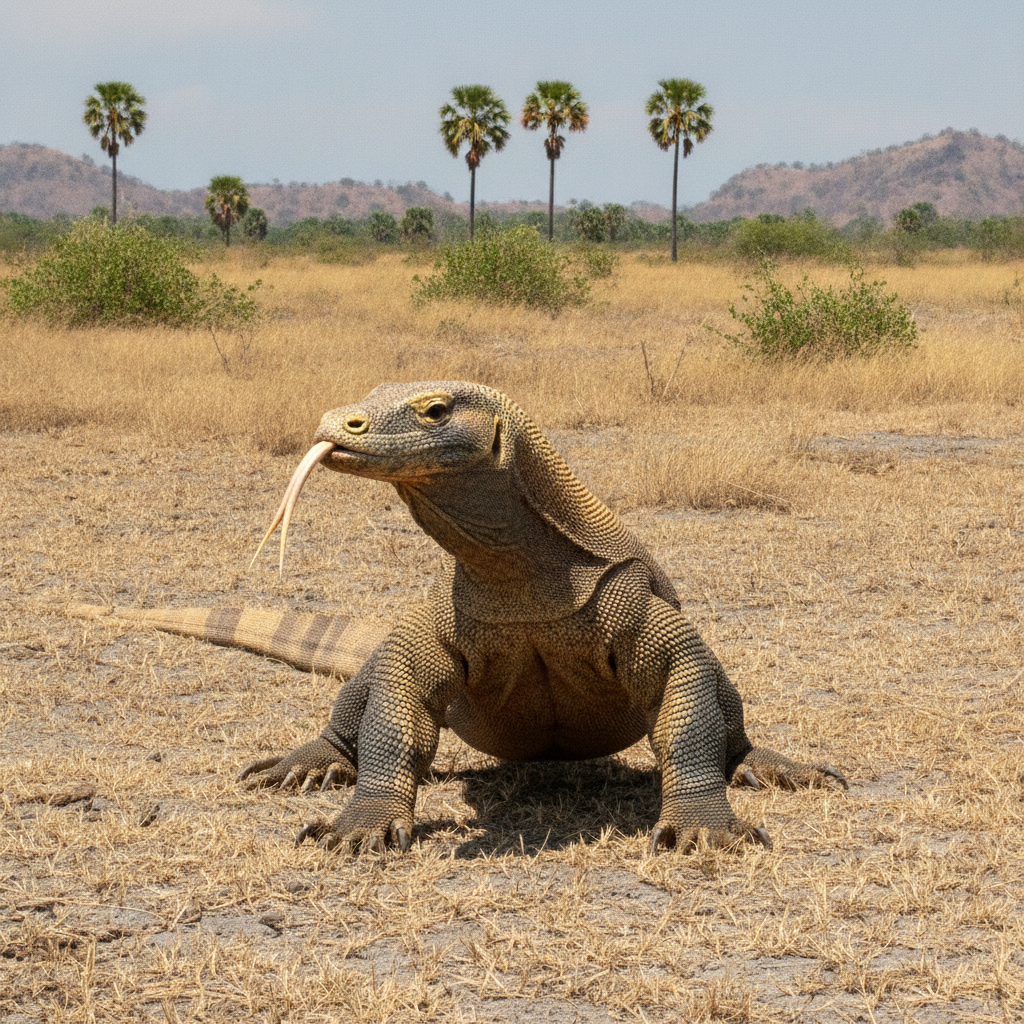
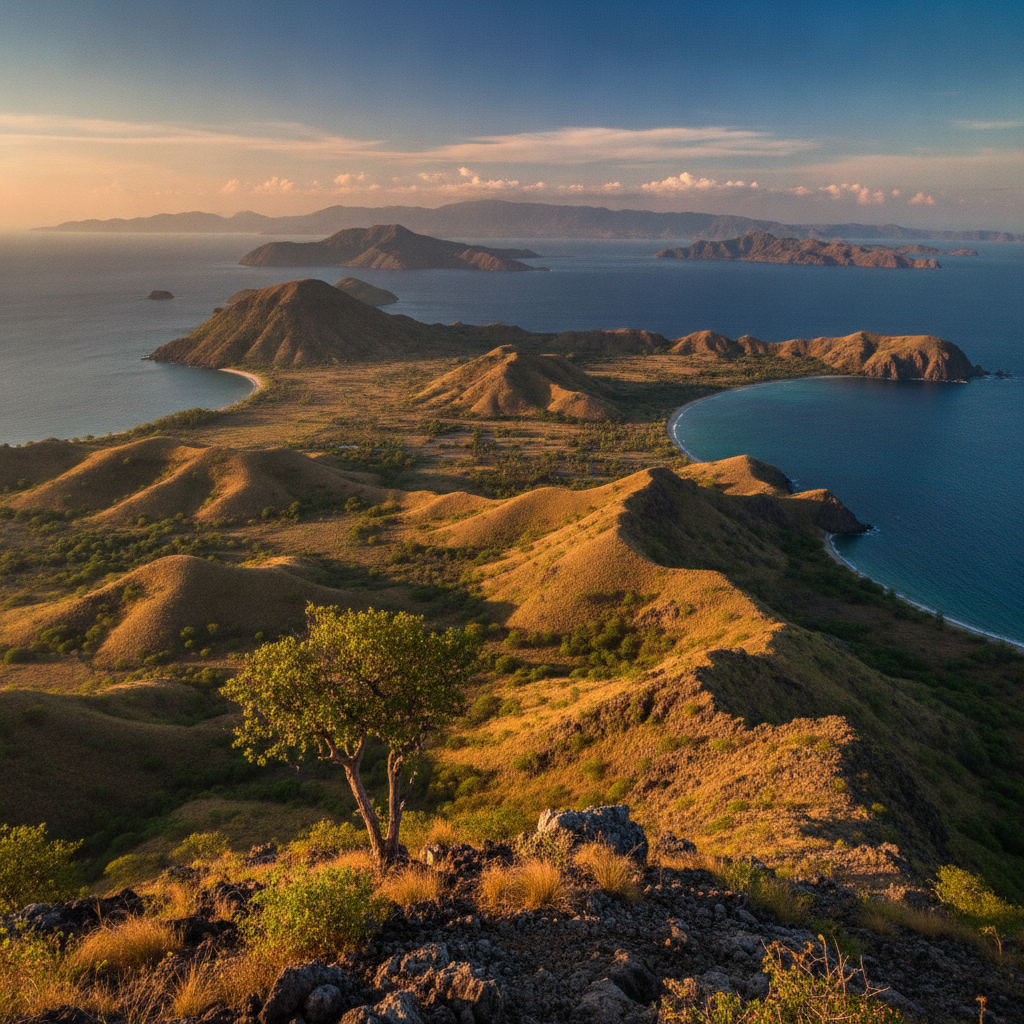
The long trekking circuit on Komodo island (7 km, approximately 4 hours round-trip from Loh Liang ranger station)—the most physically demanding and most rewarding dragon-viewing experience in the national park—traverses the island's interior savannah and climbs to the summit of Gunung Ara (338 metres), providing a panoramic view of the entire island and the surrounding sea. The trail: from Loh Liang, the trail climbs through open savannah (the most dragon-productive habitat—dragon tracks, drag marks, and the occasional animal visible in the grass) to the Gunung Ara summit, with views across Komodo island's irregular coastline, the Sape Strait to the north, and the other park islands visible to the south. The wildlife beyond dragons: the long trail is the best opportunity to observe the island's deer population (Rusa timorensis—typically visible in groups of 5–15 at the grassland edges in the early morning), wild boar rooting at the trail edge, and the birdlife of the interior forest (yellow-crested cockatoos, orange-footed scrubfowl). The heat factor: the Komodo interior, particularly in the dry season (June–October), reaches 35–40°C by midday—the long trail is recommended only before 09:00 or after 16:00; the ranger guides will not take groups on the long trail in the midday heat. The alternative: the medium trail (3 km, approximately 2 hours) covers similar habitat without the summit climb and is the most commonly recommended circuit for a balance of dragon encounters and physical manageability.
- 2
The Flores Sea Cetacean Community
The Flores Sea—the body of water north of Flores and the Komodo islands, bounded by the Lesser Sunda Islands to the south and Sulawesi to the north—is one of the most productive cetacean habitats in the Indo-Pacific, with regular populations of sperm whales, pilot whales, dwarf sperm whales, and multiple dolphin species. The sperm whale (Physeter macrocephalus): Komodo is at the edge of the sperm whale's core North Indonesian range—pods of 8–15 individuals are occasionally sighted north of Komodo island in the deeper Flores Sea water; the whales hunt squid at depth (to 2,000 metres) and surface periodically for air. The Bryde's whale (Balaenoptera edeni): a year-round resident of the Flores Sea, occasionally visible from liveaboard boats transiting between sites; the whale's characteristic three ridges on the rostrum distinguish it from the similar sei whale. The dolphin pods: spinner dolphins (Stenella longirostris—characterised by the spinning aerial displays that give them their name), common bottlenose dolphins (Tursiops truncatus), and occasionally Risso's dolphins (Grampus griseus—with their distinctive scarred silver-grey bodies) bow-ride with liveaboard vessels in the Flores Sea. The responsible whale-watching protocol: Indonesian regulations (and international best practice) require approaching cetaceans at no more than 50 metres with engines at idle, with no pursuit of diving whales and no swimming with individuals unless they approach voluntarily.
- 3
Labuan Bajo's Market & Local Life
The Labuan Bajo daily market (Pasar Labuan Bajo—in the market area 500 metres from the waterfront promenade)—is the most direct access to the non-tourist economy of the town: fishermen's wives selling the morning catch (reef fish, octopus, squid, parrotfish—species that visitors will recognise from their snorkelling), vegetable sellers from the Flores highlands supplying tomatoes, chillies, corn, cassava, and the distinctive Flores mountain cabbage, and the spice section (cloves, nutmeg, local pepper—remnants of the spice trade that brought the Portuguese to these waters in 1512). The market timing: the fish market is active from 05:00–08:00 (when the boats return from night fishing); the vegetable market peaks 06:00–10:00; the afternoon market (14:00–17:00) sells prepared foods, textiles, and general goods. The Manggarai food section: the market's prepared-food corner sells traditional Manggarai breakfast—nasi jaha (bamboo rice) wrapped in banana leaf, nasi bungkus (rice in paper packages with varied accompaniments), and the local version of porridge (bubur—thinner than the Javanese equivalent and served with fried shallots and sambal). The Bajo fishing community: the Bajo people (Orang Bajo—the sea-nomadic Bajau people who have settled the coastal areas of eastern Indonesia, sometimes described as 'sea gypsies') have a permanent community in Labuan Bajo; their traditional lifestyle of living on boats and diving for fish and sea cucumbers is increasingly sedentary, but the fishing expertise of the Bajo community remains the foundation of the Labuan Bajo fish economy.
- 4
Komodo's Photography – Wildlife, Underwater & Landscape
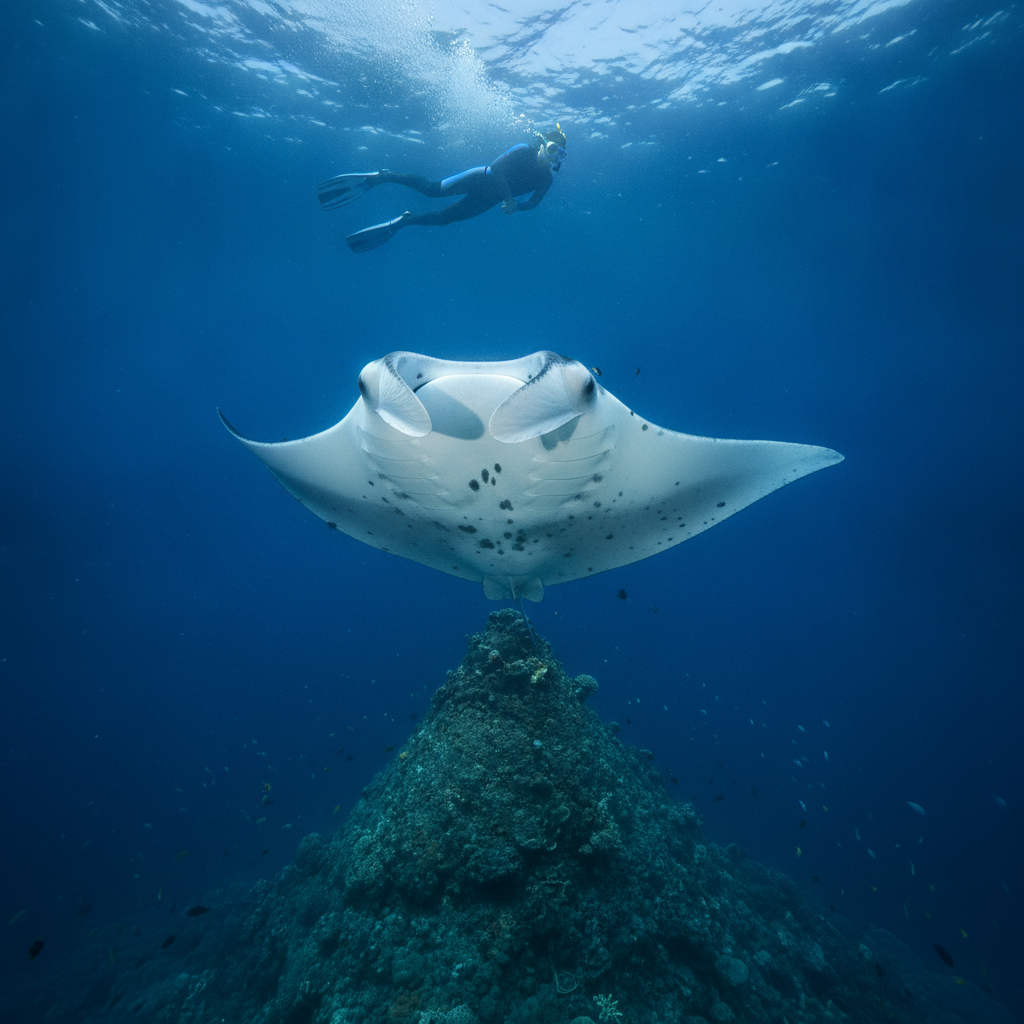
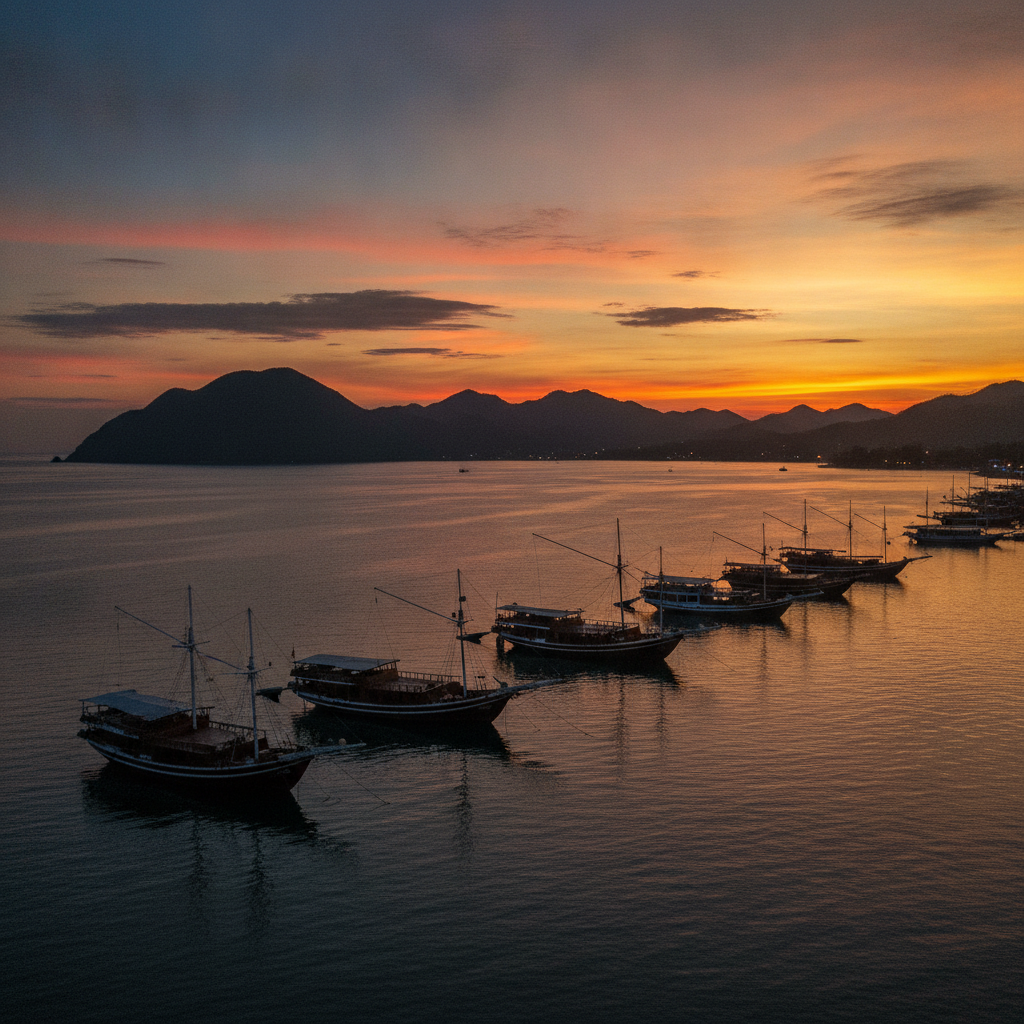
Komodo National Park offers photography opportunities across three distinct categories—wildlife (the Komodo dragon, the manta rays, the bird life), underwater (the coral reefs, the pelagic species, the dive sites), and landscape (the distinctive savannah hills, the Pink Beach colour, the Labuan Bajo harbour sunsets)—making it one of the most photographically rewarding destinations in Southeast Asia for a generalist nature photographer. The dragon photography: the golden hour (06:00–09:00) at Rinca's Loh Buaya compound typically produces the most active dragon behaviour (the animals are moving and thermoregulating in the morning rather than basking motionless in the midday heat); a 200–400mm telephoto allows safe working distances; the guides will position the group for the best angle. The manta photography: underwater photography at Manta Point requires a wide-angle lens (the mantas are large—4-metre wingspan) and a camera capable of decent performance at ISO 400–800 (the natural light at 5–10 metres depth is sufficient without flash, and flash photography of mantas is widely considered stressful to the animals). The landscape photography: the Gunung Ara summit on Komodo island (early morning, before heat haze) and Bukit Cinta in Labuan Bajo (sunset) are the two canonical landscape viewpoints; the phinisi harbour shot at golden hour is the most reproduced single image of Labuan Bajo.
- 5
Raja Ampat & Papua – The Next Frontier After Komodo
Komodo National Park's marine biodiversity—which positions it in the top five dive destinations in the world—is itself surpassed by Raja Ampat, the island group in West Papua's Bird's Head Seascape at the convergence of the Indian and Pacific Oceans. The comparison: Komodo has approximately 1,000 fish species and 260 coral species; Raja Ampat has 1,600+ fish species and 600+ coral species—the highest recorded marine biodiversity on Earth. Raja Ampat accessibility: from Labuan Bajo, the journey requires flying to Sorong (in West Papua—approximately 2 hours by air via Makassar or a direct flight when available) and then a 2-hour speedboat to Waisai (the Raja Ampat capital) or directly to the dive resorts. The Raja Ampat experience: a completely different character from Komodo—slower, more remote, less infrastructure, with the reefs accessible from simple wooden homestays (the most authentic and ecologically appropriate accommodation model) or from floating dive resorts. The Cenderawasih Bay alternative (also in West Papua, 400 km northeast of Sorong): the most reliable whale shark encounter site in the world—20–30 whale sharks condition themselves to approach the bagan (traditional fish lift nets) platforms year-round, providing virtually guaranteed encounters at the surface. The Bird of Paradise: the Bird's Head Seascape of West Papua is also the centre of Bird of Paradise diversity (38 of the world's 44 species recorded in Papua)—the forests above the Sorong coast provide accessible sightings of species including the Western Parotia and Lesser Bird of Paradise.
- 6
Komodo in the Indonesian National Narrative – Pride & Pressure
The Komodo dragon holds a unique place in Indonesian national identity: it is Indonesia's sole entry in the global 'iconic megafauna' category (alongside the orangutan, the Sumatran tiger, and the Javan rhino—but the Komodo dragon is the most internationally recognisable)—and its survival has been a point of national pride since the international scientific community first described the animal in 1912 (based on specimens collected by Dutch colonial administrator JKH van Steyn van Hensbroek and described by Pieter Ouwens). The national symbol: the Komodo dragon appears on the Indonesian Rp 50,000 banknote (the current series), on several commemorative stamps, and in the logo of the Indonesia Tourism Authority's international campaigns; the phrase 'The Land of Komodo' has been used in international tourism promotion since the 1990s. The political pressure: the competing pressures on the national park—conservation, community rights (the Bugis fishing families within the park), and commercial tourism development (the government's luxury tourism initiative)—have made Komodo one of the most contested sites in Indonesian environmental politics. The UNESCO threat: the Indonesian government's 2021 Komodo island luxury tourism development plan (which proposed a Jurassic Park-style luxury eco-resort within the national park) prompted a UNESCO World Heritage Committee warning that the site could be placed 'In Danger'—the plan was subsequently modified. The outcome: a reduced development programme was approved, maintaining the park's World Heritage status while allowing limited infrastructure expansion in the park buffer zone.
Walk this route with audio
Stories play automatically as you reach each stop — no tapping needed.
More in Komodo
Komodo's Pelagic World: Orca Hunting Whale Shark Juveniles in the Sape Strait, 500,000 Flying Foxes at Kalong & the Road to Sumba's Pasola
Komodo's Conservation Reality: Sea Rangers vs. Blast Fishers, the Sape Strait's 1,300m Cold Upwelling & Ngada Villages' Ngadhu-Bhaga Pairs
Komodo's Overlooked Depths: Larantuka's 500-Year-Old Portuguese Easter Procession, Yellow-Crested Cockatoo & the IUCN's 2021 Climate Verdict
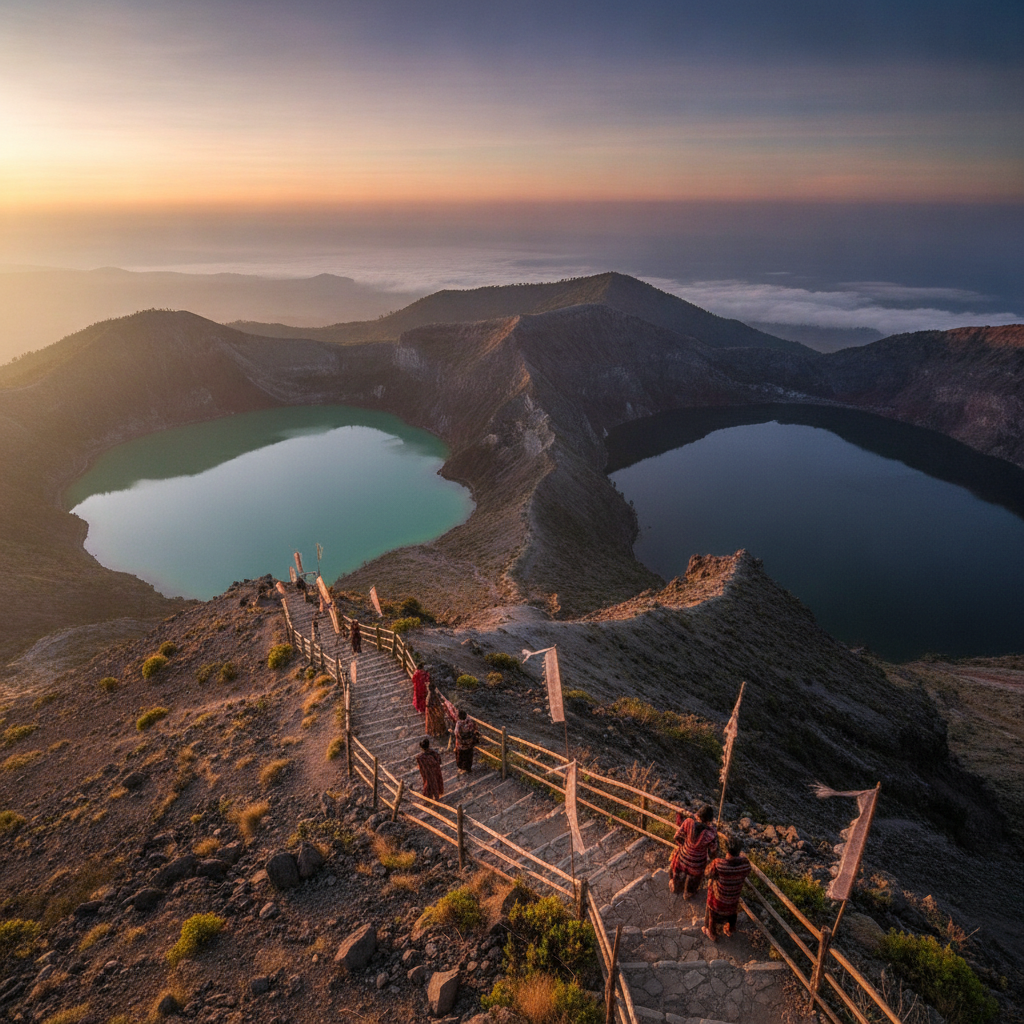
Komodo's Wider World: Kelimutu's Three-Colour Volcanic Soul Lakes, Wae Rebo's Conical 5-Floor Village Houses & Phinisi Liveaboard Bugis Crew