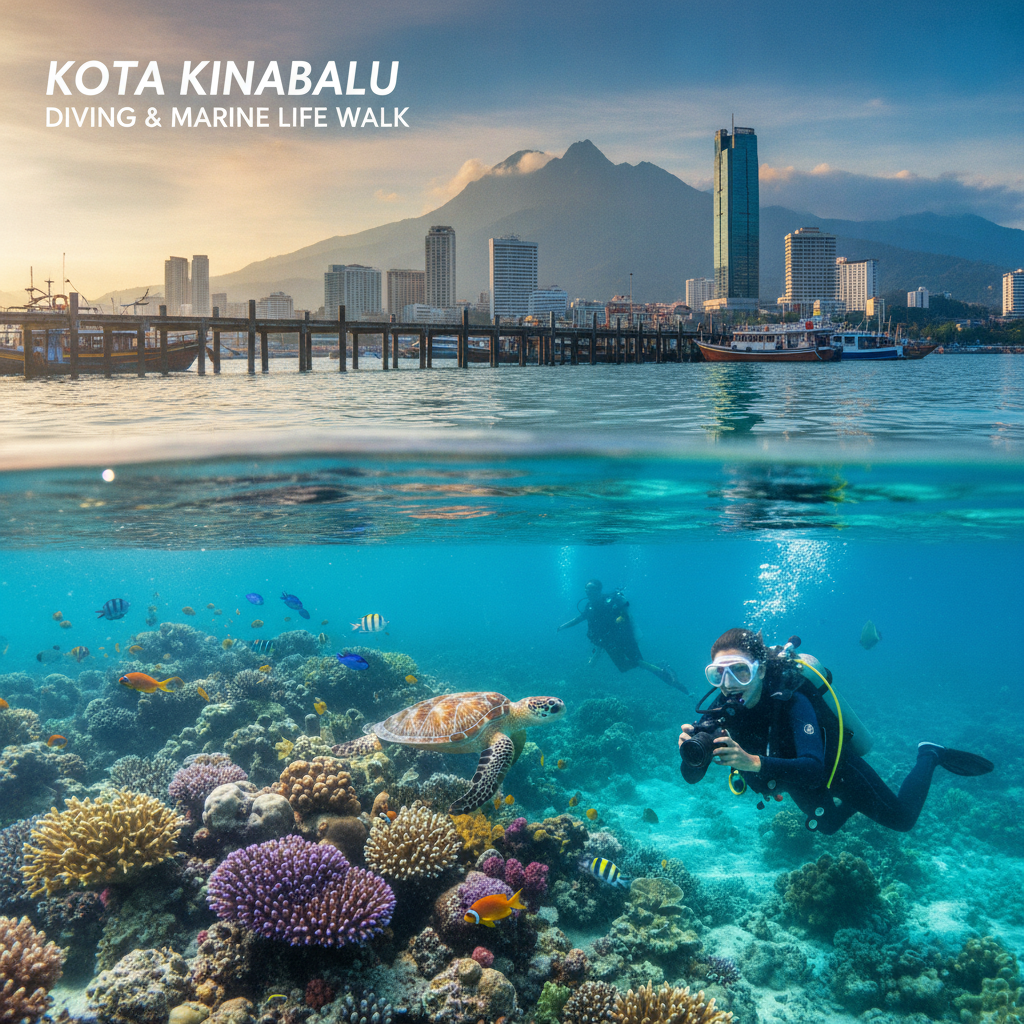
Kota Kinabalu Diving & Marine Life Walk
Dive and snorkel the waters around Kota Kinabalu — Sabah has some of the world's finest diving, from the beginner-accessible reefs of the Tunku Abdul Rahman Marine Park to the legendary dive sites of Sipadan Island off the east coast, accessible from KK by air and making Sabah a complete marine tourism destination.
- 1
Sipadan Island World-Class Dive Site
Sipadan Island off the east coast of Sabah is consistently rated one of the top five dive sites in the world — the oceanic island rising from 600m depth to a small coral island provides vertical wall diving through dense fish populations (schools of barracuda, jackfish, and bumphead parrotfish in the hundreds), regular encounters with green and hawksbill sea turtles nesting on the beach, and the hammerhead shark aggregations at certain times of year. Jacques Cousteau described Sipadan as 'an untouched piece of art', and access is now limited to 120 divers per day to manage the pressure on this exceptional marine environment.
- 2
TAR Marine Park Diving
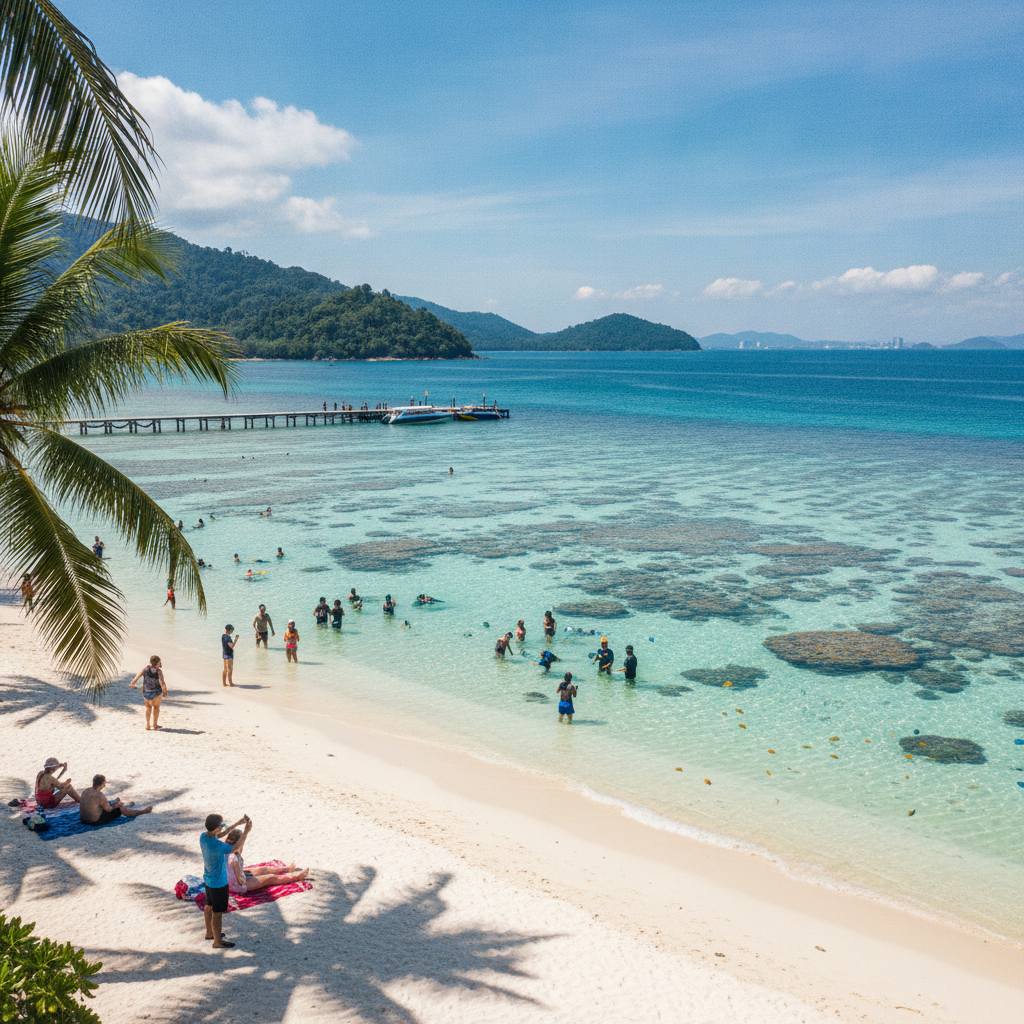
The dive sites of the Tunku Abdul Rahman Marine Park adjacent to KK provide accessible diving for visitors of all experience levels — the reef walls around Pulau Gaya's eastern side, the coral bommies around Pulau Sapi, and the rubble reef zones have been partially restored through coral rehabilitation work. While the TAR park diving does not compare to Sipadan, the accessibility (15 minutes by boat from the city centre) and the fish diversity of the South China Sea reef community make it a viable diving destination for visitors without the time to travel to the east coast sites.
- 3
Labuan Wreck Diving
Labuan Federal Territory offshore from KK is famous for its WWII wreck diving — the Australian warships and cargo vessels sunk during the 1945 recapture of Labuan from Japanese forces lie in shallow to moderate depths accessible to recreational divers. The Blue Water wreck (USS Salute), the Cement wreck, and the American wreck provide historically significant dive sites where the marine life that has colonised the wrecks over 80 years creates artificial reef habitats supporting significant biodiversity. Labuan wreck diving is accessible as a day trip from KK.
- 4
Mantanani Island Dugong
Mantanani Island north of KK has one of Malaysia's most reliable dugong populations — the seagrass beds around this remote island provide habitat for the dugongs (sea cows) that feed on the marine grass and are considered a critically endangered species throughout their range. Snorkelling and diving at Mantanani can produce dugong encounters in addition to the reef fish diversity, and the island's relative remoteness from KK (2-3 hours by boat) means it receives fewer visitors than the marine park islands and has better-preserved reef systems.
- 5
Sabah Diving Conservation
Sabah's reputation as a world-class diving destination has created a conservation economy around its marine resources — the dive operators investing in reef restoration, the government's management of dive quotas at Sipadan, and the marine protected area network around Sabah's coasts represent the institutional response to the pressures of dive tourism on fragile reef ecosystems. The economic dependence of local communities on dive tourism income creates the incentive structure for marine conservation that government regulation alone cannot provide.
- 6
KK Diving Hub Infrastructure
Kota Kinabalu has developed into the logistical hub for Sabah's dive tourism industry — the dive operators based in KK organise liveaboard expeditions to Sipadan and the east coast dive sites, day trips to the TAR marine park, and the multi-day island combinations that provide the most comprehensive sampling of Sabah's marine environments. The combination of international airport connections to KK with the dive site diversity accessible from the city (from the beginner-friendly TAR park to the world-class Sipadan) makes KK the most complete dive tourism hub in Malaysian Borneo.
Walk this route with audio
Stories play automatically as you reach each stop — no tapping needed.
More in Kota Kinabalu
Kota Kinabalu Mount Kinabalu & Kinabalu Park Walk
Kota Kinabalu City Centre & Waterfront Walk
Kota Kinabalu Orangutan & Sabah Wildlife Walk
Kota Kinabalu Bajau Culture & Kota Belud Walk
Kota Kinabalu Tunku Abdul Rahman Marine Park Walk