Kotor as Montenegro Base: Lovćen, Ostrog Monastery & the Albanian Alps
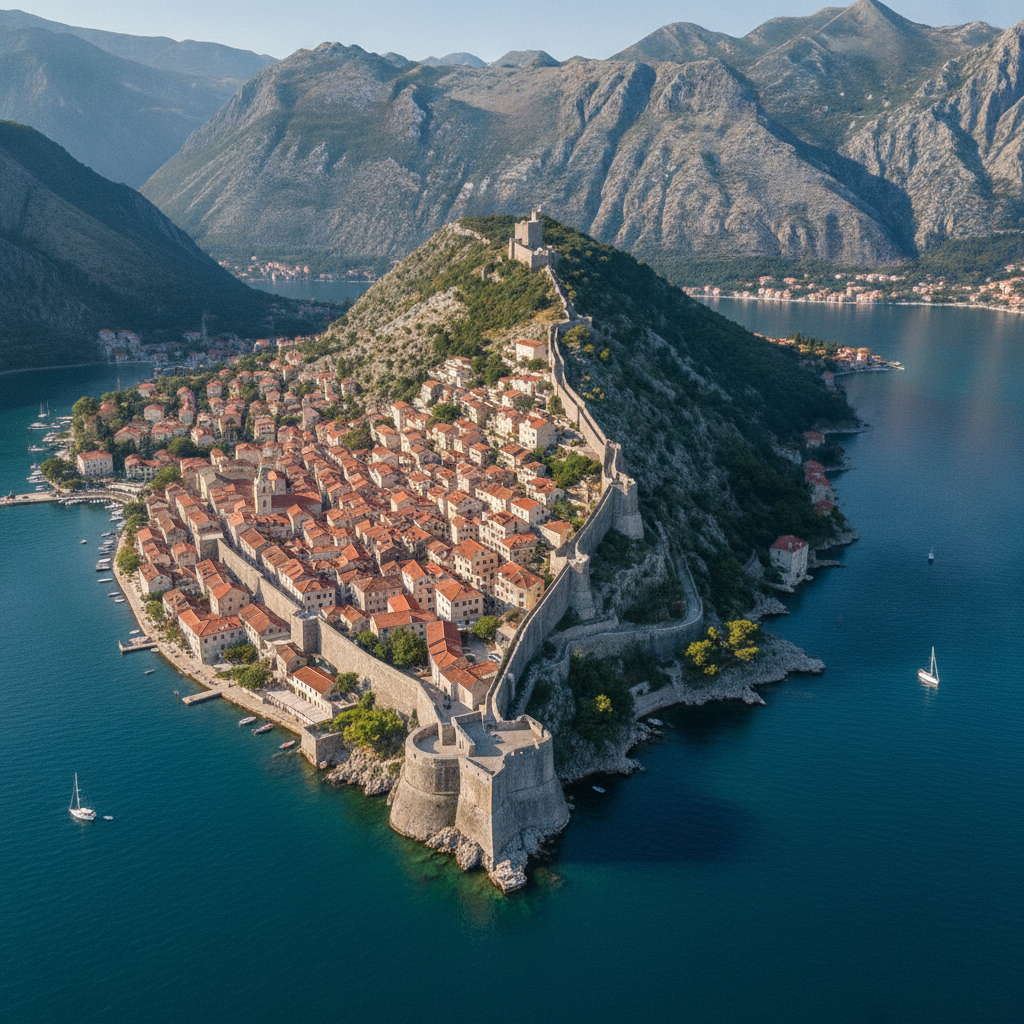
Use Kotor as the gateway to all Montenegro—the hairpin road to Njegoš's mountaintop mausoleum on Lovćen, the historic royal capital of Cetinje, the cliff-face miracle of Ostrog Monastery, and the wild Albanian Alps beginning just 150 km south where the Peaks of the Balkans trail crosses three countries.
- 1
Kotor as a Base for Montenegro
Kotor's position at the innermost point of the bay makes it the ideal base for exploring all of Montenegro. Budva is 25 km south; Herceg Novi 45 km northwest; Podgorica (capital) 90 km east; Cetinje (historic capital) 35 km; and Lake Skadar 55 km. The Lovćen National Park above Kotor—where Montenegro's founder Prince-Bishop Petar II Petrović-Njegoš is entombed in a mausoleum at 1,749 metres—takes just 45 minutes by road.
- 2
Lovćen National Park & Njegoš Mausoleum
Mount Lovćen ('the Black Mountain' that gave Montenegro its name) rises directly behind Kotor to 1,749 metres, accessible by a spectacular road of 25 hairpin bends. At the summit, the mausoleum of Prince-Bishop Njegoš—designed by Ivan Meštrović and completed in 1974—commands 360° views from the Adriatic to the Albanian Alps. The interior granite chamber houses Njegoš's tomb under a heroic golden figure.
- 3
Cetinje – Montenegro's Historic Capital
Cetinje (35 km from Kotor) was Montenegro's capital until 1918—a tiny royal capital of late 19th-century embassy buildings around a monastery-palace complex. The National Museum of Montenegro occupies four buildings including the former Royal Palace (Biljarda), King Nikola's Museum, and the Art Museum. Cetinje's unassuming scale and proud national memory make it a moving visit.
- 4
Ostrog Monastery – Montenegro's Most Sacred Site
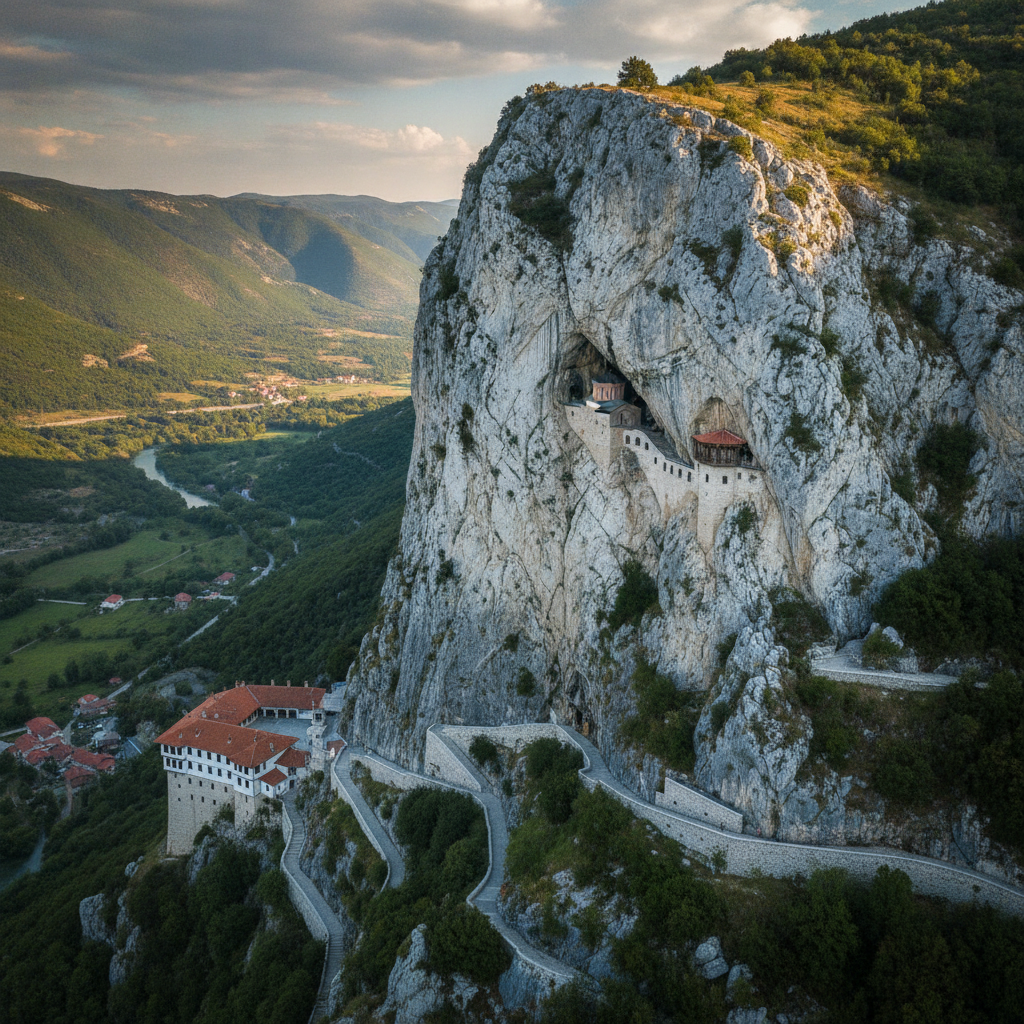
The Ostrog Monastery—built into a near-vertical cliff face 900 metres above the Zeta valley (90 km from Kotor)—is Montenegro's most visited site and one of the most remarkable monasteries in the Balkans. Two cave churches (Upper Monastery, 1665) are built directly into the white limestone cliff; the relics of Saint Basil of Ostrog attract Orthodox Christian pilgrims in their hundreds of thousands annually.
- 5
Albanian Alps & Accursed Mountains
Just 150 km south of Kotor, the Albanian Alps (Bjeshkët e Namuna, 'Accursed Mountains') offer some of Europe's most dramatic and least-visited mountain scenery. The Theth valley in northern Albania has opened to hikers since 2010; the Peaks of the Balkans trail circuit connects Kosovo, Albania, and Montenegro in a 192 km loop through villages with traditional hospitality (guesthouse accommodation and home cooking).
- 6
Kotor's Growing Creative Scene
Despite its small size (13,000 residents), Kotor has developed a small but genuine creative scene in recent years—a design festival, art galleries in former Venetian palaces, independent bookshops, and a cluster of coffee bars with programming around Piazza of the Arms. The annual Boka Night festival (decorated boat flotilla on the bay) and Kotor Art summer programme bring international artists and audiences to the medieval setting.
Walk this route with audio
Stories play automatically as you reach each stop — no tapping needed.
More in Kotor
Kotor Food & Festivals: Smoked Ham, Bay Seafood & February Carnival
Kotor Bay & Montenegro: Perast, Budva & Durmitor National Park
Kotor Practical Guide: Flights, Bay Ferry & Avoiding the Cruise Crowds
Kotor History & Photography: Nine Centuries, Naval Heritage & Bay Light