Kraków Food — Pierogi, Żurek, Zapiekanka & the Polish Restaurant Tradition
Kraków's food scene (the most diverse in Poland after Warsaw, combining the Polish culinary tradition with the Jewish Galician heritage, the student population of 200,000 supporting the cafe and bar culture, and the tourist infrastructure of the Main Market Square) operates at three distinct price levels: the milk bar, the traditional Polish restaurant, and the upmarket European restaurant.
- 1
Pierogi — the Essential Polish Dumpling
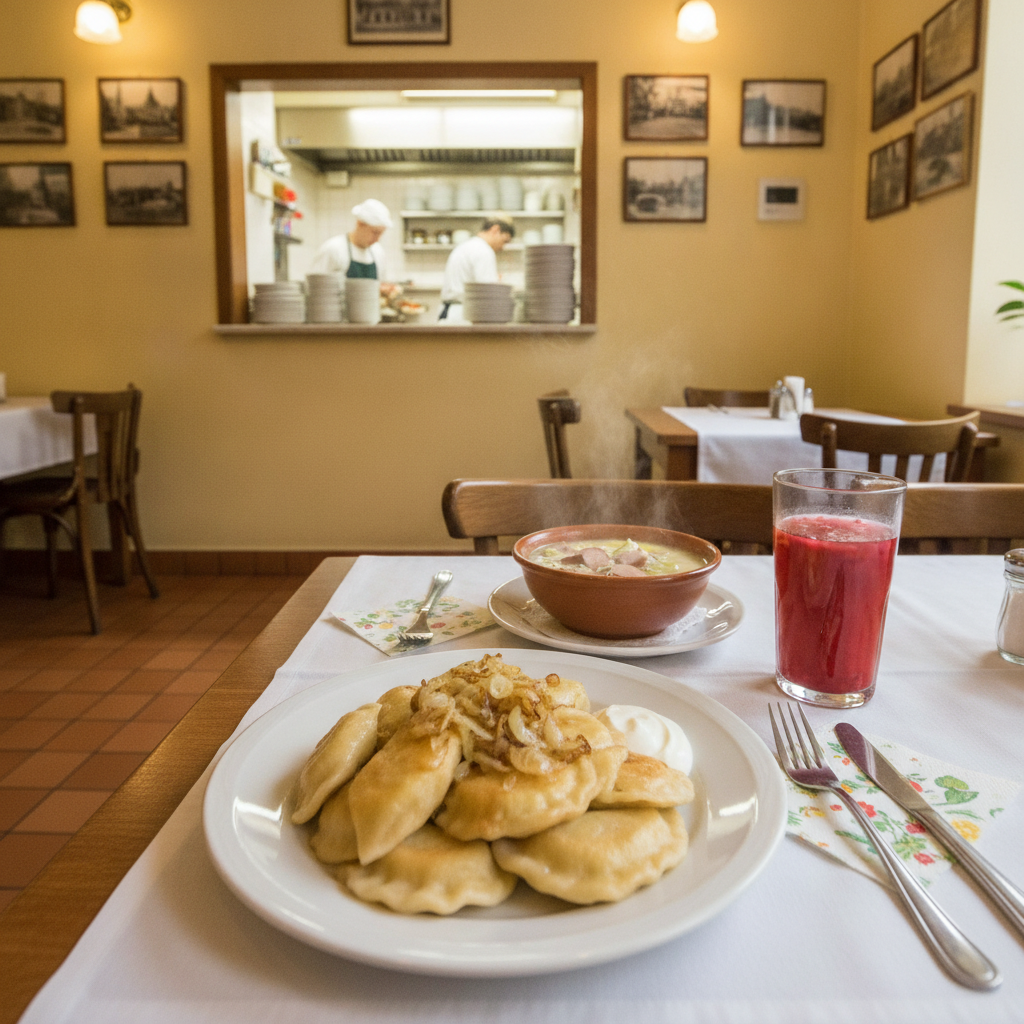
Pierogi (the stuffed dumplings that are the most internationally recognized Polish food, the dough made from flour, egg, and water, the filling varying by type — pierogi ruskie: the potato and cottage cheese filling with caramelized onion and sour cream, the most traditional; pierogi z mięsem: minced meat and onion; pierogi z kapustą i grzybami: sauerkraut and dried mushroom, the filling of the Christmas Eve tradition; pierogi z jagodami: blueberry, the sweet summer version — the dumplings boiled then optionally pan-fried in butter to crisp the skin, served with sour cream or fried onions) are available at dedicated pierogi restaurants throughout Kraków. The correct sources: Pierogi Ruskie (the dedicated pierogi restaurant on Szewska Street in the old town, the most popular pierogi spot in Kraków among local students, the queue at lunch, the cost €4-6 per portion of 8-10 dumplings, open daily noon-10pm), Stara Jadłodajnia (the old restaurant on Mikołajska Street, the boiled and fried versions of all traditional fillings, the sour cream provided by default, open noon-9pm, €5-8 per portion).
- 2
Żurek and the Polish Soup Tradition
Żurek (the sour rye flour soup — the fermented rye starter liquid boiled with potato, hard-boiled egg, and white kielbasa sausage, served sometimes in a hollowed bread boule, the flavour sour and deeply savoury from the fermentation, the most traditionally Polish soup and the correct entry point to the Polish soup tradition, available at every traditional restaurant in Kraków at €4-7) and barszcz (the beet soup — the deep crimson clear consommé made from roasted beets, served with uszka, the tiny ear-shaped dumplings filled with mushroom and sauerkraut, the correct Christmas Eve soup in Poland, available at traditional restaurants year-round, the version at the Bar Mleczny Pod Temidą on Grodzka Street the traditional benchmark at €3) are the two essential Polish soups. The bigos (the hunter's stew of sauerkraut, fresh cabbage, various meats and smoked sausage, dried mushrooms, and often plums or wine, slow-cooked for 2-3 days, the flavour impossible to replicate in less time, the dish improving with each reheating — the traditional logic being that the best bigos is the one that has been on the stove for a week — available at €8-12 at the traditional Kraków restaurants) is the soup-adjacent dish most worth seeking.
- 3
Zapiekanka — the Kraków Street Food
Zapiekanka (the street food of communist Poland, a baguette half topped with sautéed mushrooms and cheese and heated under a grill, the original version from the communist-era bar mleczny (milk bar) where it was created as a cheap hot food, the Kraków version distinguished by the variety of toppings that have developed since the 1990s — the classic mushroom and cheese, the ham and mushroom, the spinach and cheese, the kebab meat — and by the queues at the zapiekanka windows of Plac Nowy in Kazimierz, the circular market rotunda housing 6-8 zapiekanka sellers each with their own slight variation, the price at €2-4 per half-baguette, the product eaten standing at the outdoor tables surrounding the rotunda) is the most directly accessible food experience in Kraków. The Plac Nowy zapiekanka (available from 10am to 2am daily, the variety of toppings the reason to queue at the specific windows favoured by the Kazimierz bar crowd) is the defining Kraków street food, the late-night version (after midnight on weekends, the queue at the rotunda windows extends to 30-40 people, the zapiekanka the carbohydrate conclusion to the Kazimierz bar evening) the most sociable food experience in the city.
- 4
Bar Mleczny — the Communist Milk Bar
Bar mleczny (the milk bar, the communist-era subsidized cafeteria serving traditional Polish food at prices designed to be accessible to the working class, the bars established in communist Poland from the 1950s and surviving into the post-1989 period as a category of restaurant unique to Poland and difficult to explain to non-Polish visitors — the menu of soups, meat and potato mains, salads, and sweet desserts served through a counter system where you queue at the serving window and carry your tray to the formica tables, the prices the lowest in the Polish restaurant system at €3-6 for a full meal including soup, main, and kompot drink) survives in Kraków in its original form at: Bar Mleczny Pod Temidą (Grodzka 43, the most atmospheric surviving milk bar in the old town, the communist-era décor intact, the menu written on a chalkboard, the portions enormous and the prices unchanged in structure since 1975 — the żurek at €3, the pierogi at €4, the kotlet schabowy pork cutlet with potato and cabbage salad at €6, open Monday-Friday 8am-8pm, Saturday-Sunday 9am-6pm, the lunch queue at noon the authentic Kraków social experience) and Bar Grodzki (Grodzka 47, the bar adjacent to Pod Temidą, slightly more tourist-aware but maintaining the milk bar format and prices).
- 5
Restaurants — from Traditional to Contemporary
The Kraków restaurant circuit beyond the milk bar: Szara Gęś (Rynek Główny 17, the 'Grey Goose', the most acclaimed Polish regional restaurant on the Main Market Square, the menu organized around the seasonal Polish hunting and foraging tradition — the venison tartare, the roasted duck with plum and beetroot, the mushroom and barley soup, the desserts using the bilberry and rose hip of the Polish forest, the mains at €20-35, the view onto the Main Market Square) and Restauracja Fiorentina (Sławkowska 3, the restaurant in a 14th-century vaulted cellar with Gothic brick arches, the Polish-Italian menu, the pierogi with truffle and the wild boar ragù pasta the strongest dishes, the environment the best of the old-town cellar restaurant category, mains at €18-28). The correct market: the Stary Kleparz market (the traditional farmer's market 400m north of the Florian Gate, Plac Jana Matejki, the market operating Tuesday-Saturday 6am-3pm, the regional produce of Lesser Poland — the smoked oscypek cheese from the Tatra Mountains, the poppy seed cakes, the dried forest mushrooms, the local fruit and vegetables — the most direct connection to the Polish regional food tradition outside the restaurant context).
- 6
Oscypek — the Smoked Tatra Cheese and the Tatra Excursion
Oscypek (the smoked sheep's milk cheese of the Tatra Mountains and the Polish Podhale region, PDO-protected, produced exclusively by the traditional method — the spindle-shaped mould, the sheep's milk from the specific Tatra breed, the smoking over spruce wood for 14 days, the cheese sold by the shepherd women in the Zakopane market and increasingly available at Kraków delicatessens — the flavour smoky, firm, and mildly salty, the most distinctive Polish regional cheese) is available in Kraków at the Stary Kleparz market and at the specialty food shops of the old town. The Zakopane excursion (the mountain resort town at the foot of the Tatra Mountains, 100km south of Kraków, accessible by bus from the main bus station in 2 hours at €6, or by rental car in 1.5 hours — the bus the most practical option as the Zakopane road is heavily congested on weekends — the Tatra National Park with the cable car to Kasprowy Wierch at 1,987m, the valley of Dolina Kościeliska, the mountain hiking trails from Zakopane, the Kuźnice gondola) is the correct day trip from Kraków for visitors wanting the mountain landscape complement to the historic city.
Walk this route with audio
Stories play automatically as you reach each stop — no tapping needed.
More in krakow
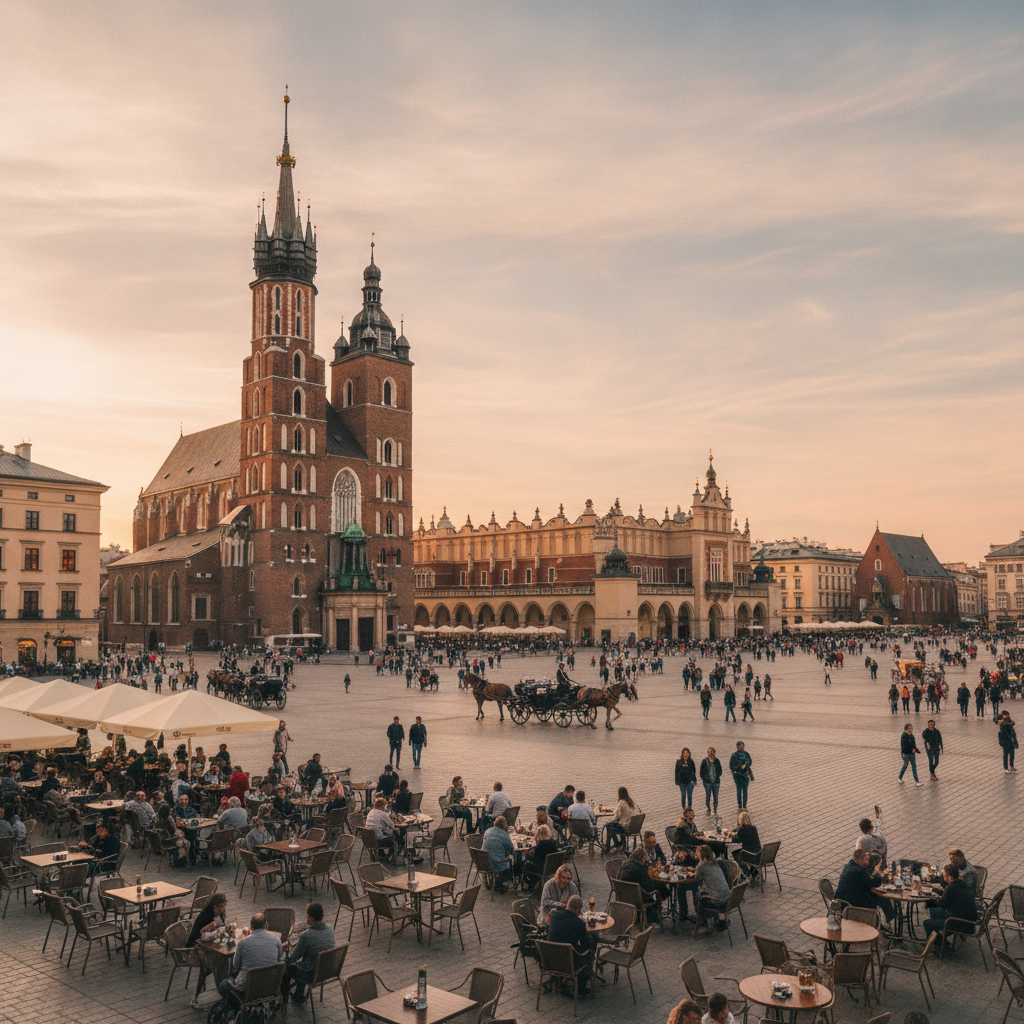
Kraków Old Town — the Main Market Square, St. Mary's Basilica & Wawel Castle
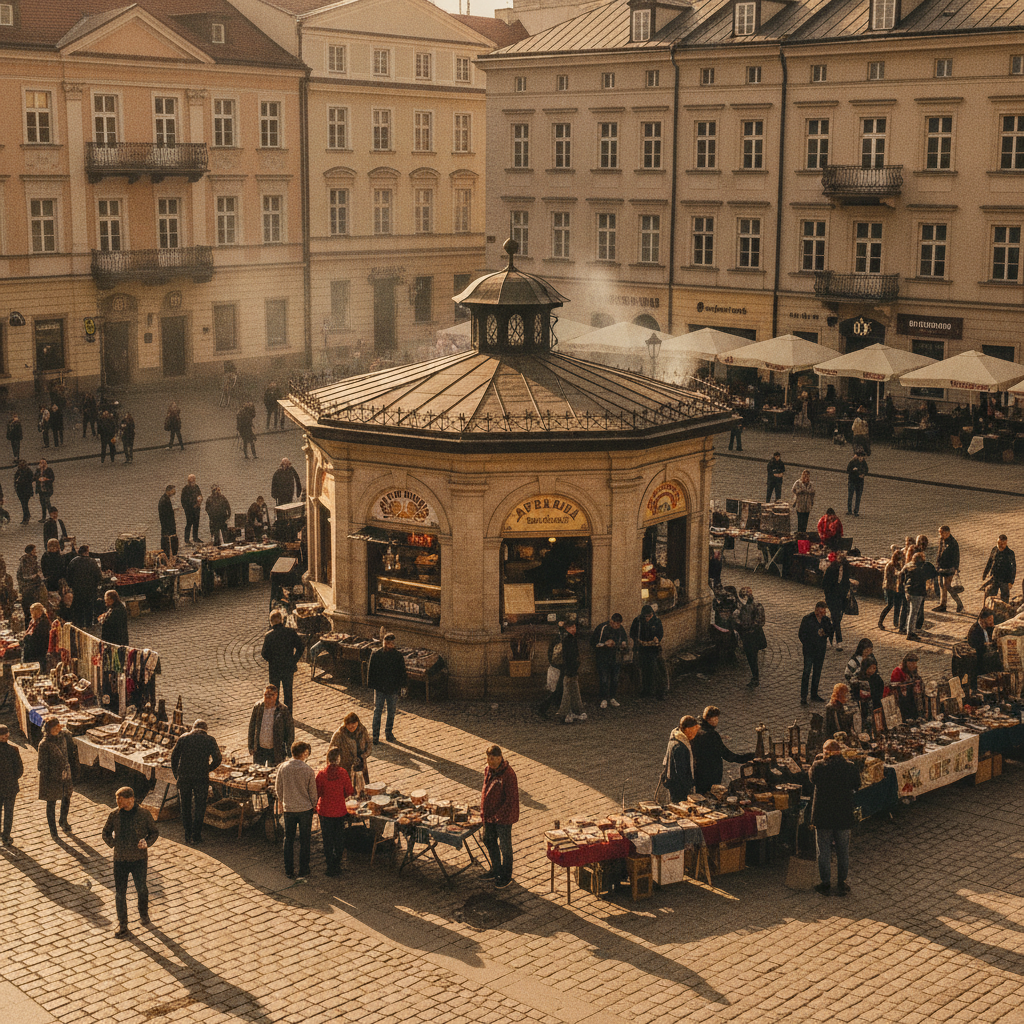
Kazimierz — the Jewish Quarter, Synagogues & the Schindler Factory
Kraków Museums & the Royal Road — the Czartoryski Collection, Lady with an Ermine & National Galleries
Kraków Practical Guide — Seasons, Trams, Nightlife & Getting Around