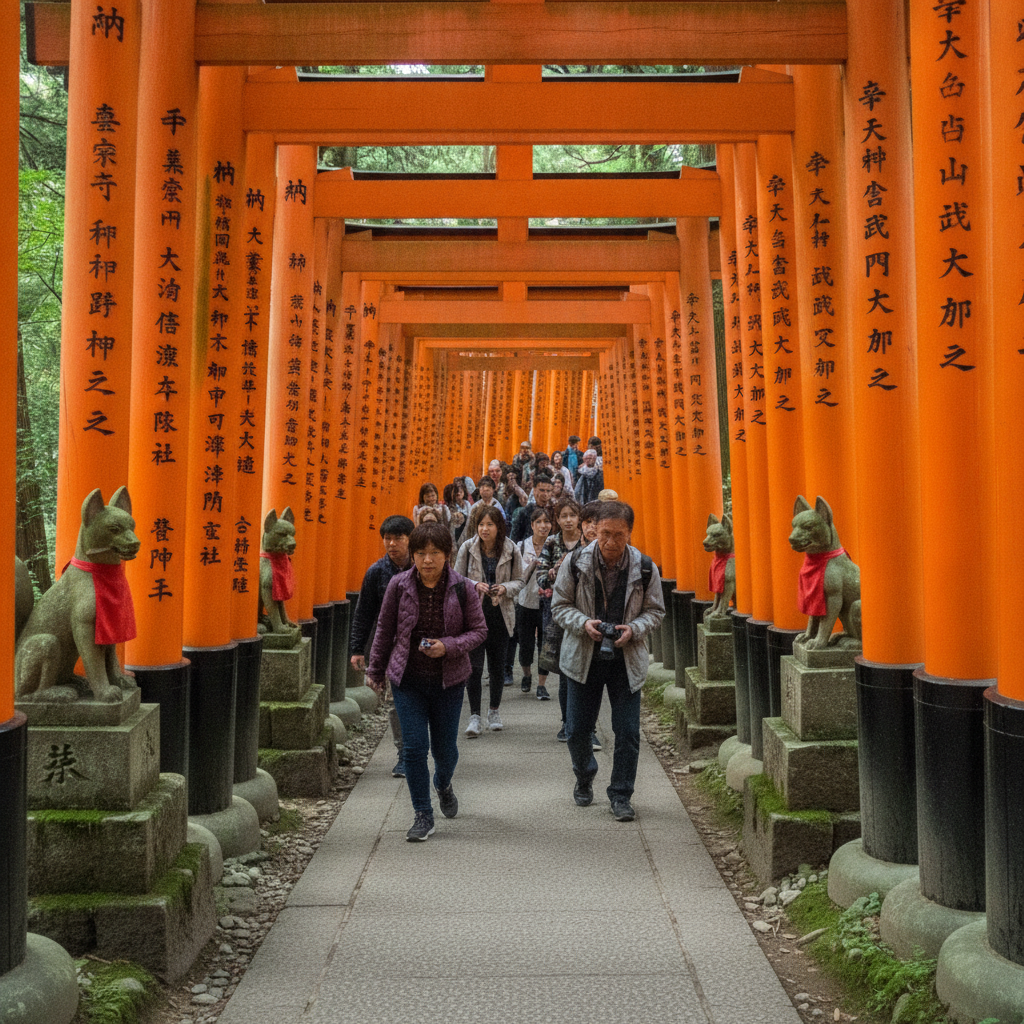
Arashiyama — Bamboo Grove, Tenryuji & the Togetsu Bridge
Kyoto (the ancient capital of Japan (794-1868), population approximately 1.46 million, UNESCO World Heritage city with 17 designated sites — the most culturally concentrated city in Japan): Arashiyama (the mountain district on the western edge of Kyoto, the most visited single district in Kyoto) combines the Sagano Bamboo Grove, the Zen garden of Tenryuji, and the Togetsu-kyo Bridge in a setting of extraordinary natural and cultural beauty.
1. Sagano Bamboo Grove — Japan's Most Iconic Forest Path
- 1
Sagano Bamboo Grove — Japan's Most Iconic Forest Path
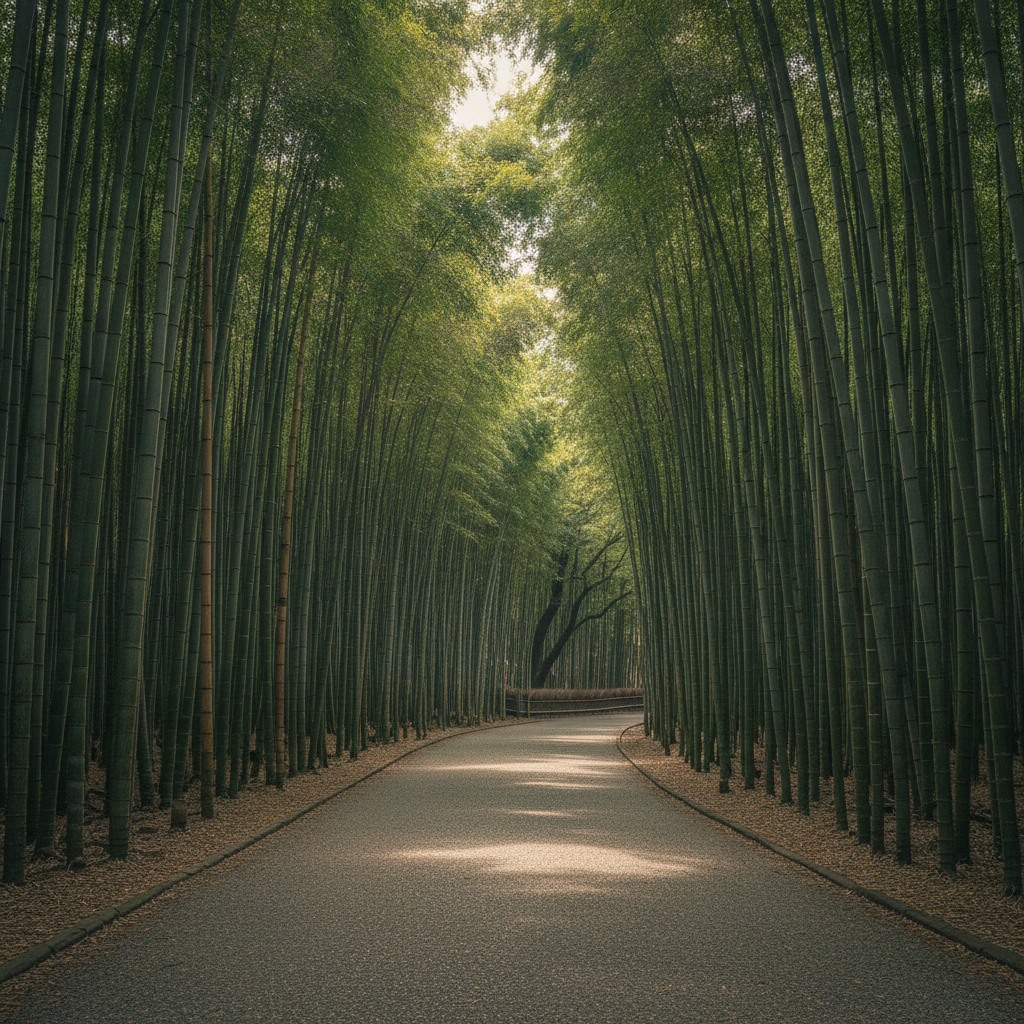
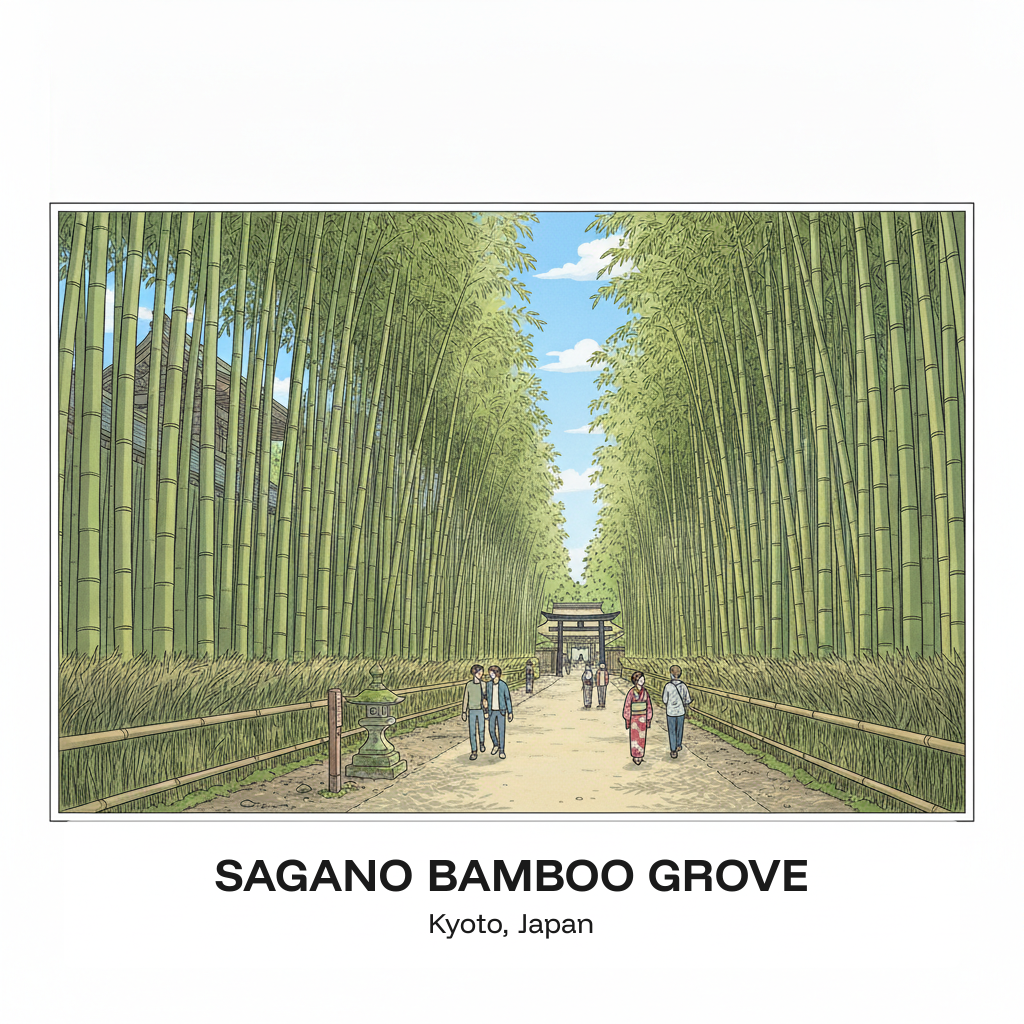
Sagano Bamboo Grove (the bamboo forest in Arashiyama, northern Kyoto — the path through the grove (approximately 500 metres long, running from the Tenryuji north gate to the Okochi-Sanso garden gate) is one of the most visited and most photographed natural landscapes in Japan): the grove (moso bamboo (Phyllostachys edulis) — the largest bamboo species, with culms reaching 20-25 metres) creates an extraordinary visual tunnel of vertical green lines, the bamboo rustling in the wind with a sound that Japan's Ministry of the Environment designated as one of the 'One Hundred Soundscapes of Japan' (Nihon no Oto Fūkei Hyakusen); the grove is best experienced in the early morning (before 8am, when it opens to the public) or on weekday mornings (the grove receives approximately 10 million visitors per year and is extremely crowded from mid-morning); the adjacent Jojakko-ji temple (the moss-covered stone steps and pagoda visible from the northern end of the grove) and the Nonomiya-jinja shrine (the small Shinto shrine in the grove, the shrine that Heian-period court ladies visited before departing for Ise — featured in the 'Sakaki' chapter of the 'Tale of Genji' (Genji Monogatari)) make the bamboo grove a literary as well as natural experience.
- 2
Tenryuji — The Greatest Zen Garden in Arashiyama
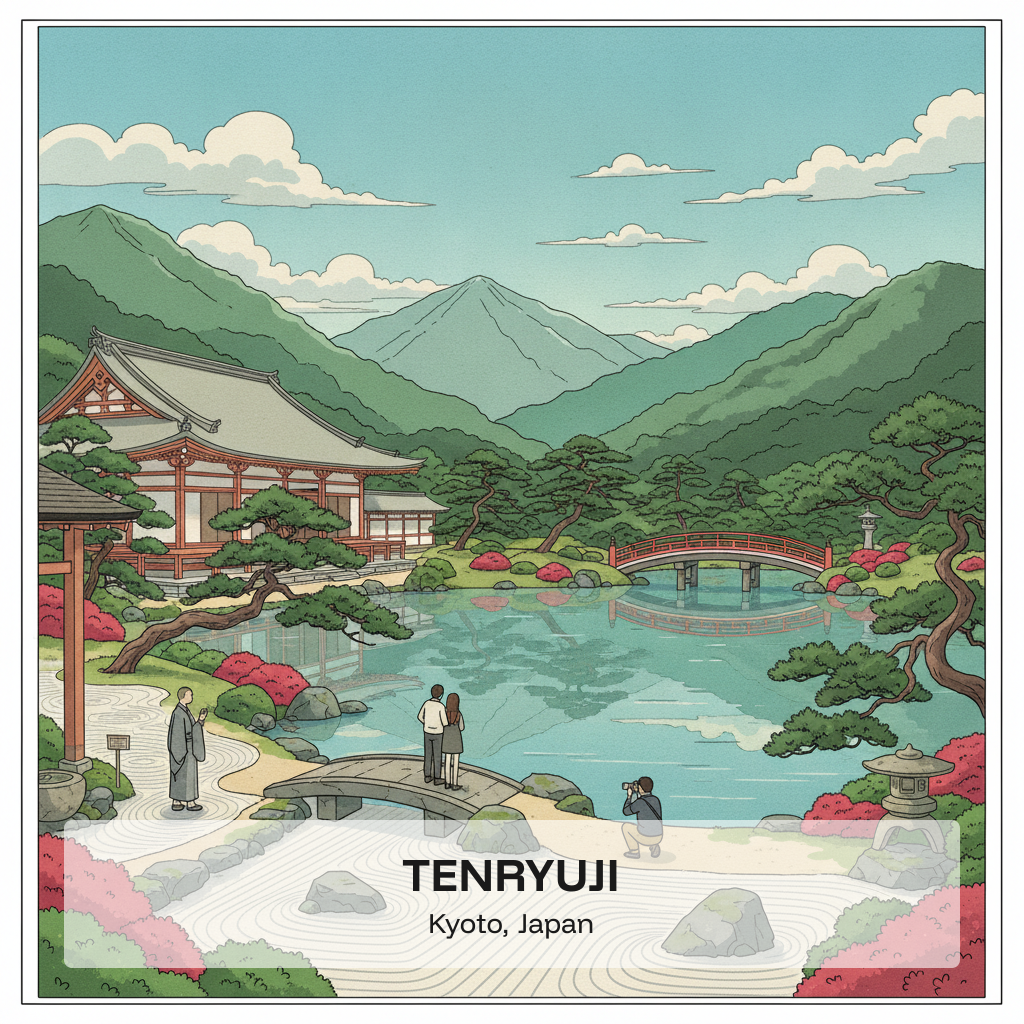
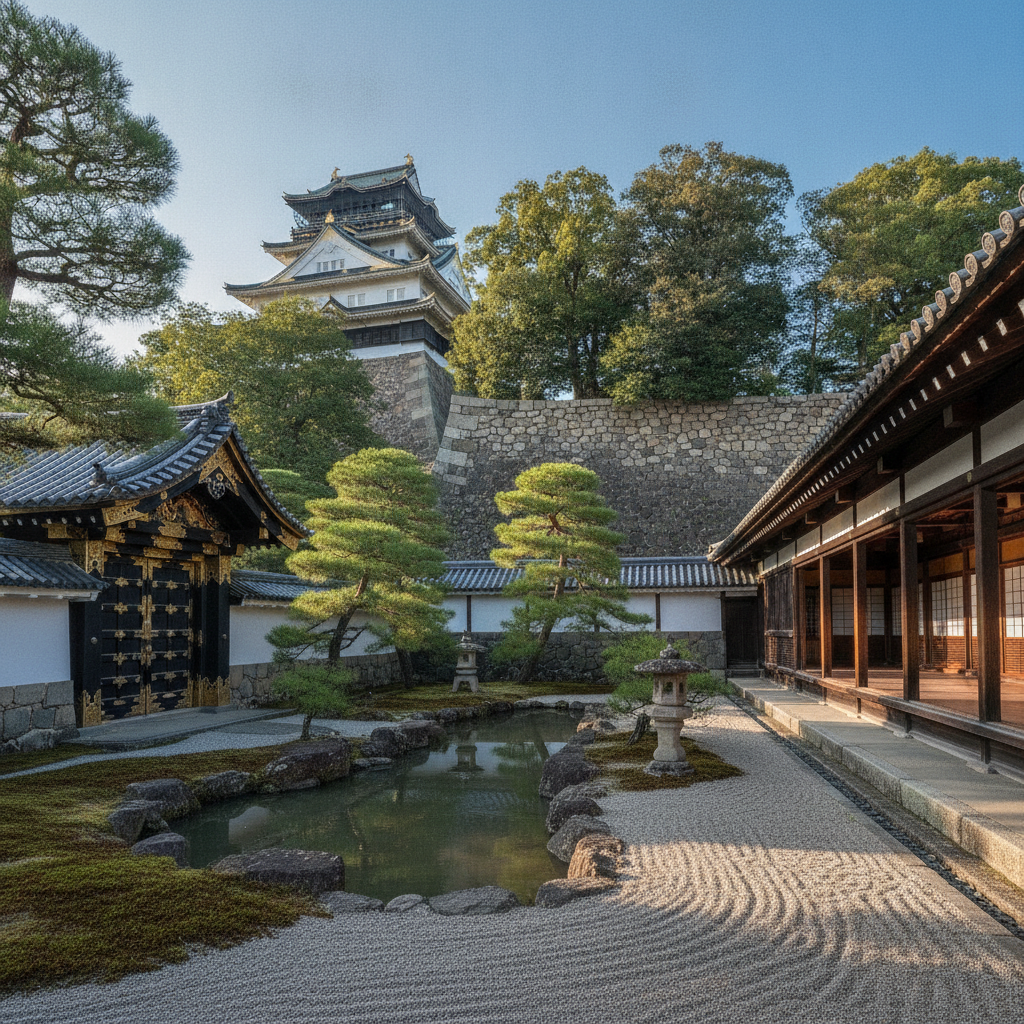
Tenryuji (天龍寺 — Rinzai Zen Buddhist temple in Arashiyama, founded 1339 by the shogun Ashikaga Takauji on the instruction of the monk Musō Soseki (Musō Kokushi), to pacify the spirit of Emperor Go-Daigo — the head temple of the Tenryuji branch of Rinzai Zen, UNESCO World Heritage since 1994 as part of the 'Historic Monuments of Ancient Kyoto'): the Sōgenchi garden (the Zen garden created by Musō Soseki in the 14th century — the oldest surviving karesansui (dry landscape) and pond garden combination in Japan) is the defining attraction: the large central pond (Sōgen-chi, meaning 'Source and Origin Pond') reflecting the borrowed scenery (shakkei) of the Arashiyama and Kameyama mountains beyond, the curved stone bridges and azalea banks, the carefully raked white gravel (fusei) areas, and the Chinese-style arch bridge — the garden has been recognized as the finest Zen garden in Japan by the Japanese Ministry of Culture (designated a Special Historic Site and Special Place of Scenic Beauty).
- 3
Togetsu-kyo Bridge — The Bridge That Crosses the Moon
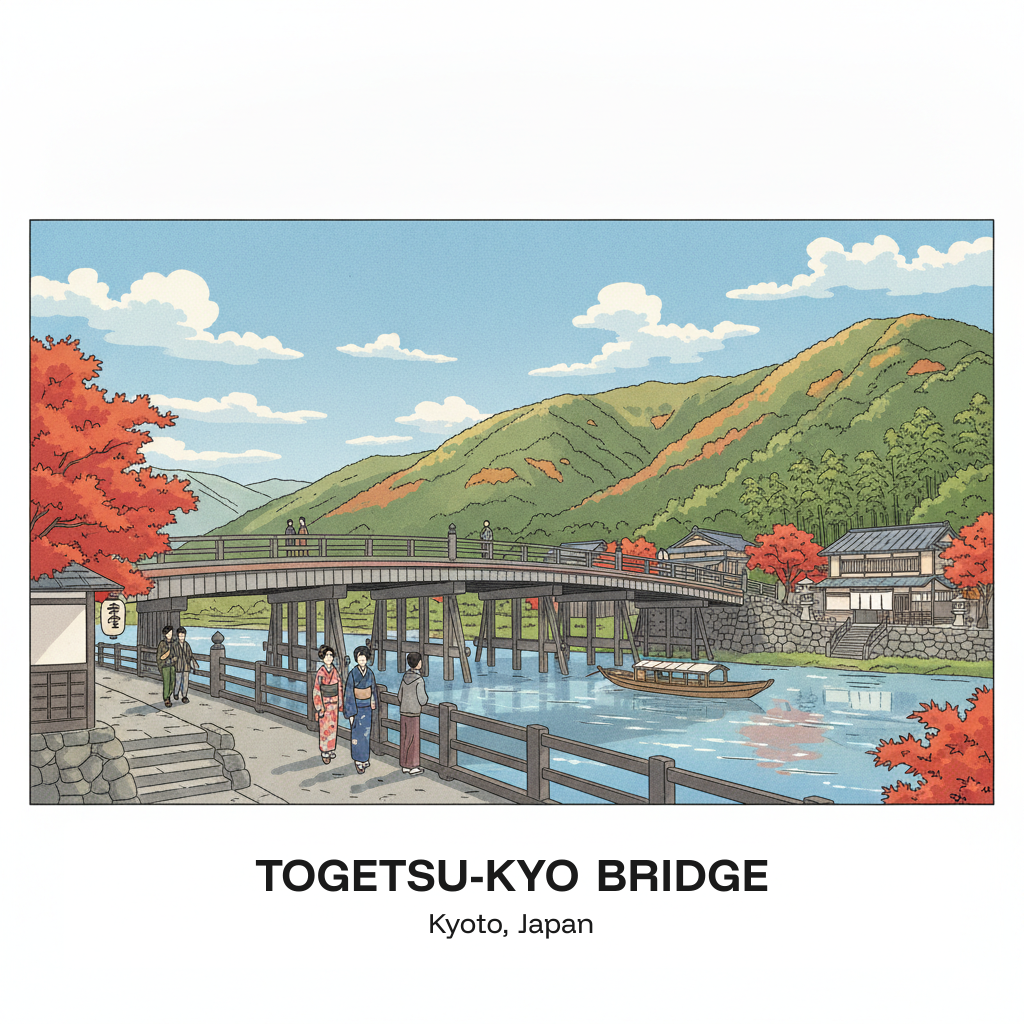
Togetsu-kyo (渡月橋 — 'Moon Crossing Bridge' — the wooden bridge over the Oi River (the section of the Katsura River running through Arashiyama) in central Arashiyama — the defining landmark of Arashiyama and one of the most recognized bridge images in Japan): the bridge (154 metres long, rebuilt in its current form in 1934 using traditional Japanese wooden bridge construction methods, though the original bridge at this location dates to the 9th century) takes its name from a poem by the Emperor Kameyama (13th century), who watched the moon appear to 'cross' the bridge; the view from the bridge (Arashiyama mountain (375 metres) directly ahead, its slopes covered with maples (momiji) in autumn (November — the finest autumn colour viewing (koyo) spot in Kyoto) and cherry blossoms (sakura) in spring (late March to early April), the Oi River reflecting the mountains and sky) is one of the most photographed views in Kyoto; the southern bank of the river below the bridge is lined with traditional restaurants and tea houses serving shojin-ryori (Zen Buddhist vegetarian cuisine) and kaiseki (the multi-course Kyoto haute cuisine).
- 4
Okochi-Sanso Villa — The Actor's Garden
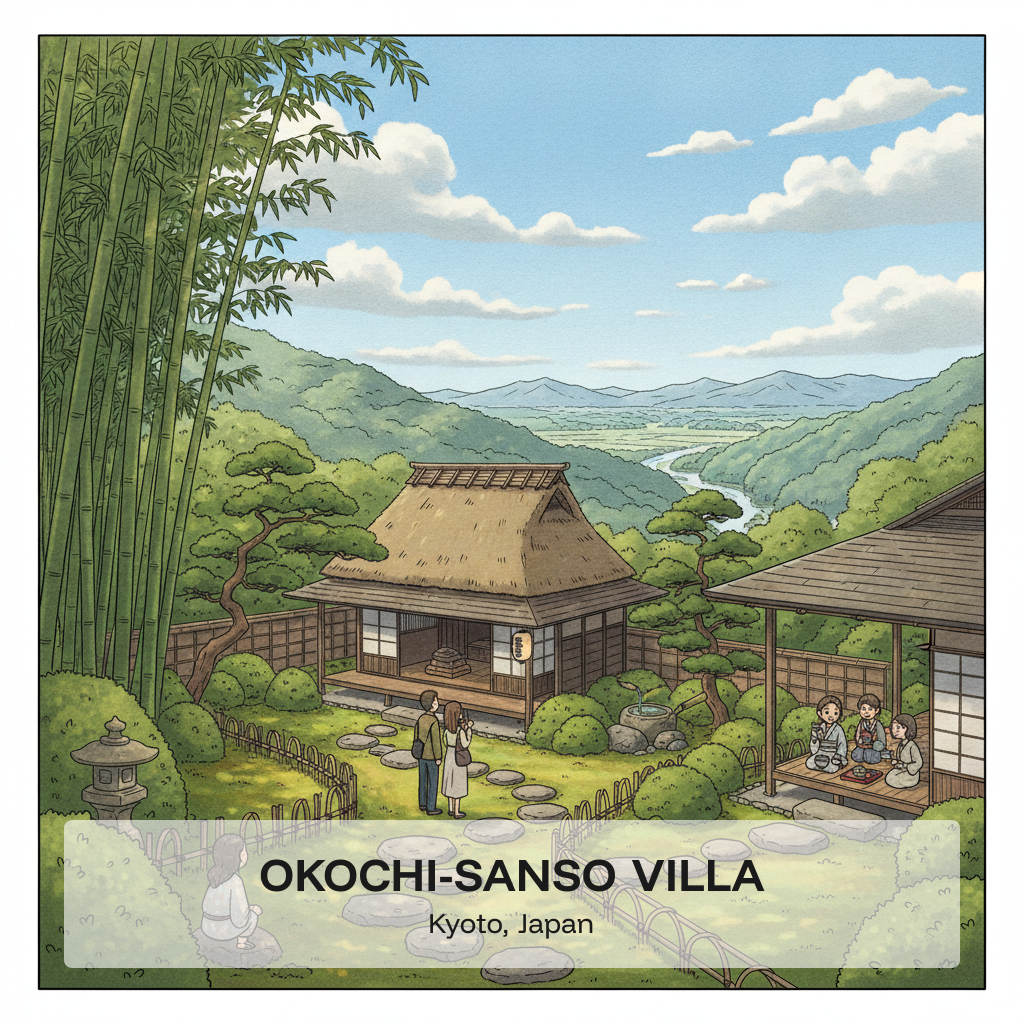
Okochi Sanso (大河内山荘 — the villa and garden of the silent film actor Denjiro Okochi (1898-1962), the most celebrated samurai film actor of the silent film era, who spent 30 years (1929-1961) creating this exceptional garden on the hillside above Arashiyama): the garden (covering approximately 20,000 square metres on the hillside, with views west over the Hozu Gorge and north over Sagano to the Kitayama mountains) is the finest private garden in Arashiyama, with a series of strolling garden paths through moss gardens, bamboo groves, tea pavilions (the three tea ceremony pavilions where matcha and a Japanese sweet (wagashi) are served with the admission ticket — the included matcha ceremony is one of the finest casual tea experiences in Kyoto), and landscape views; the villa complex (the main villa, the Hasso-an tea house, and the Tekisui-ken tea pavilion) is preserved as Okochi built it, and the garden rewards slow contemplative exploration rather than quick photography.
- 5
Arashiyama Monkey Park — Iwatayama & the View Over Kyoto
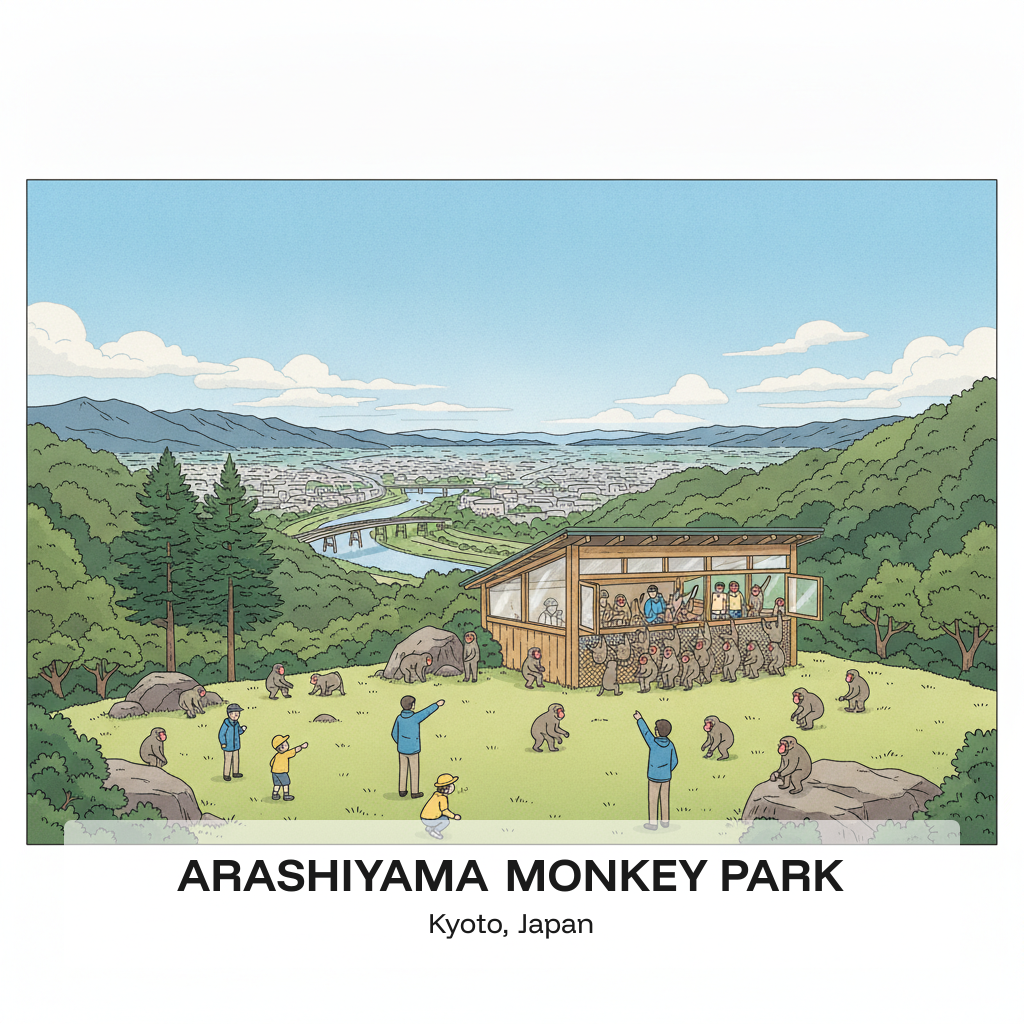
Arashiyama Monkey Park Iwatayama (嵐山モンキーパークいわたやま — the wildlife park on the slopes of Iwatayama (160 metres) on the south side of the Togetsu-kyo Bridge): the park houses approximately 120 wild Japanese macaques (Macaca fuscata — 'snow monkeys', the northernmost non-human primate species in the world, native to Japan) that roam freely on the mountain slopes; the 20-minute uphill walk to the summit (past the macaques, who may approach visitors at close range) rewards with a panoramic view over the Kyoto basin — the finest accessible panoramic view of Kyoto from the west, with the entire city spread across the Kyoto basin from Arashiyama to Higashiyama; the indoor feeding station at the summit (where visitors feed the macaques from inside a wire mesh cage — the animals being outside and the humans inside, a reversal of the usual zoo dynamic) is the most popular wildlife interaction experience in Kyoto.
- 6
Hozu River Boat Ride — Through the Gorge to Arashiyama
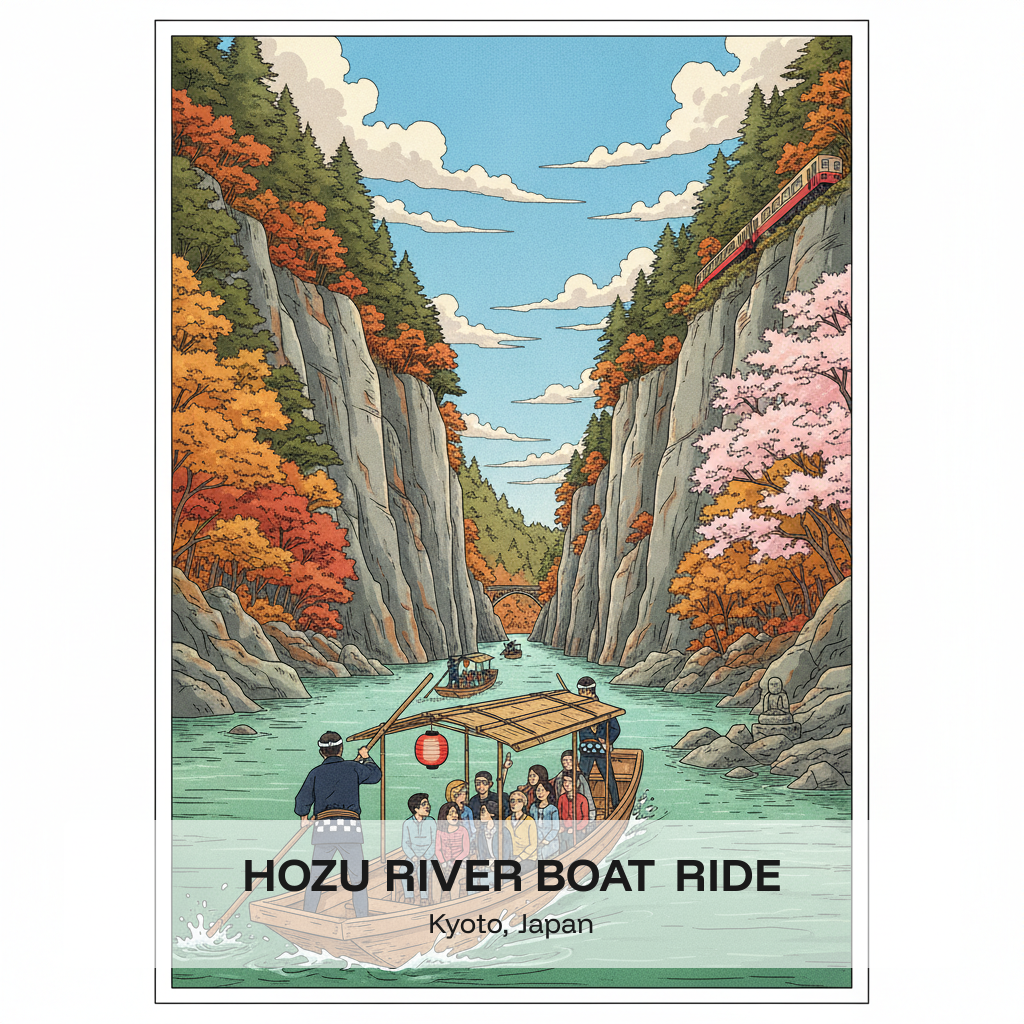
Hozugawa Kudari (保津川下り — the traditional wooden boat ride down the Hozu River gorge from Kameoka (the town 10 km west of Arashiyama) to the Togetsu-kyo Bridge in Arashiyama — one of the most scenic river journeys in Japan): the Hozugawa boat ride (operated continuously since 1606 — the longest continuously operating commercial boat trip in Japan, originally used to transport timber, rice, and charcoal from the mountains to Kyoto) takes approximately 2 hours (16 km) through the spectacular Hozu Gorge (the river canyon cut through the Tanba Plateau, with granite cliffs, forested slopes, and rapids sections (the most exciting sections of the gorge where the boatmen (the professional pole-and-oar river pilots) navigate the boats through the white water with traditional wooden poles and long oars)) to arrive at Arashiyama; the best season for the boat ride is autumn (October-November — the gorge is spectacular with autumn colour) and spring (March-April — cherry blossoms on the gorge walls); the return from Arashiyama to Kameoka is by the Sagano Romantic Train (the restored steam train (トロッコ列車 — torokko ressha) that runs along the gorge rim through the tunnel sections and forest).
Walk this route with audio
Stories play automatically as you reach each stop — no tapping needed.
More in kyoto
Nishiki Market & Kyoto Cuisine — The Kitchen of Kyoto
Gion — Kyoto's Geisha District, Hanamikoji & the Ochaya Tea Houses
Higashiyama — Kiyomizudera & the Historic Preserved Streetscapes
Ryoan-ji, Daitokuji & the Zen Garden Philosophy of Kyoto
Kyoto Imperial Palace, Nijo Castle & the City's Imperial History