Food, Nightlife, and the La Fortuna Town Experience
La Fortuna de San Carlos is a small agricultural town that has been transformed by two decades of heavy tourism into one of the most service-dense destinations in Costa Rica. The central park and surrounding streets contain the highest concentration of restaurants, tour operators, souvenir shops, and accommodation per capita of any Costa Rican town outside San Jose. This route covers the food landscape from traditional sodas serving the local farming community to the tourist restaurants that have emerged around the volcano experience, and examines the economic and social transformation of the town.
- 1
La Fortuna Central Park and the Town Grid
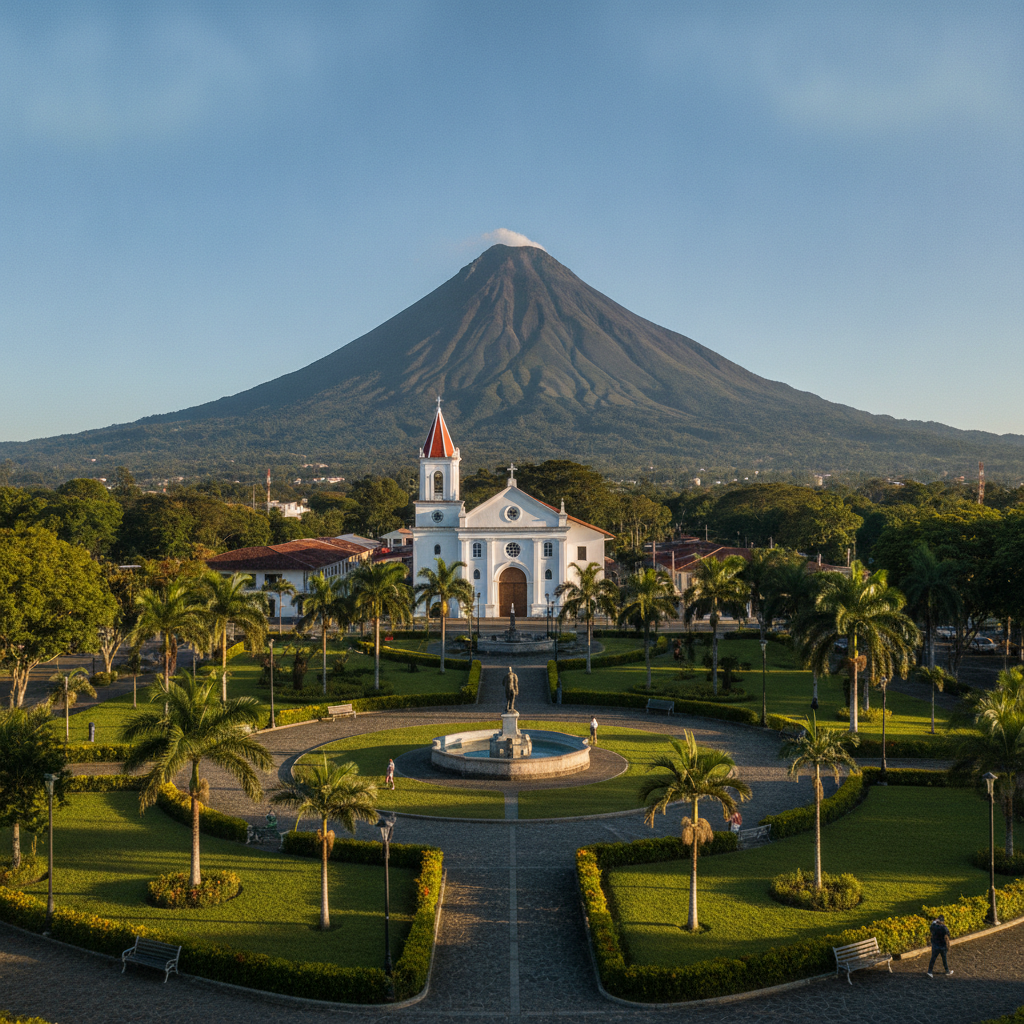
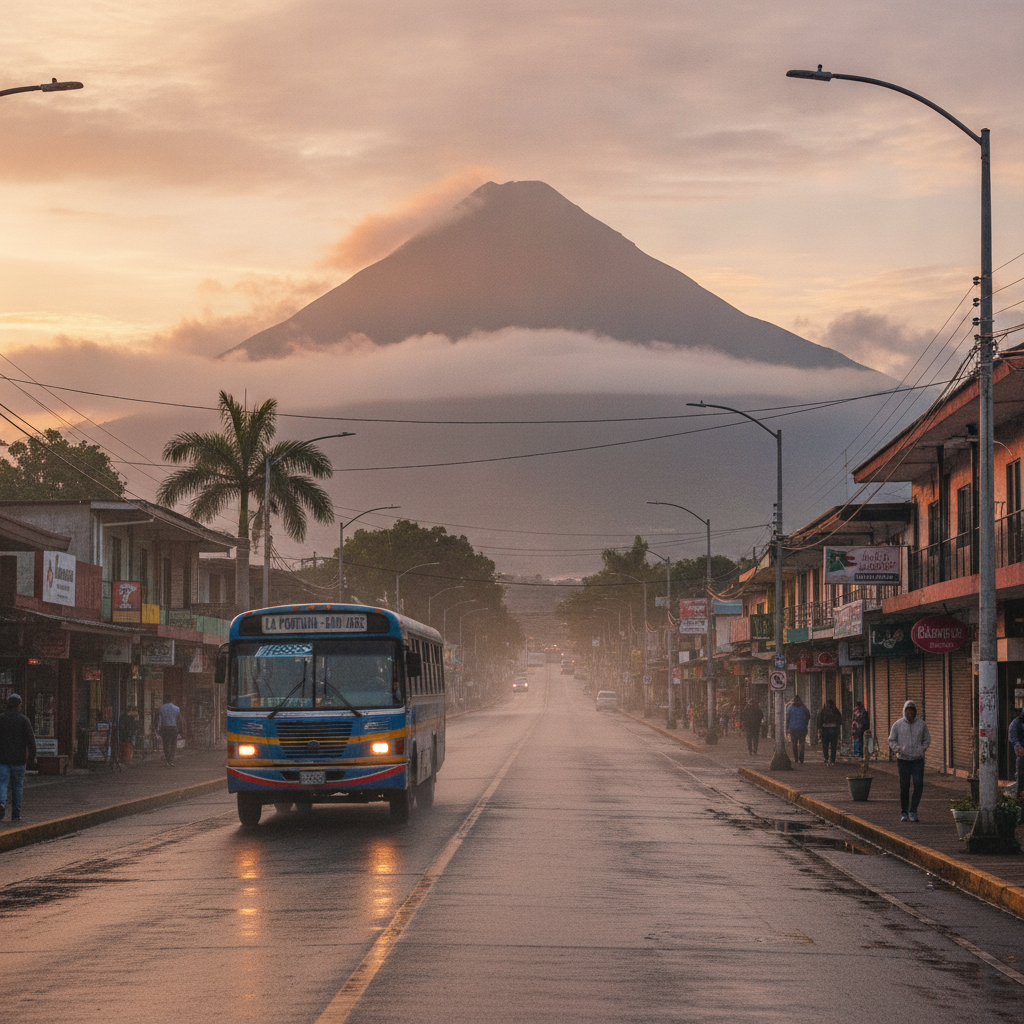
La Fortuna grew from an agricultural service town serving the cattle and dairy farming communities of the San Carlos canton into a tourism hub following the 1968 eruption. The central park, anchored by the church with Arenal Volcano visible behind it on clear mornings, is the photographic center of the town and the social hub for both local residents and the international tourist population. The streets radiating from the park are lined with tour operator offices offering every activity in the region from a single booking point. The density of competition keeps tour prices relatively honest, though some operators are more reliable than others. The local agricultural economy continues alongside the tourism infrastructure: the weekly farmer market and the dairy cooperative serve a parallel economy largely invisible to visitors.
- 2
Soda Economy: Local Food for Local Prices
The traditional sodas in La Fortuna serve gallo pinto, casado, and fresh fruit juices at prices calibrated to the agricultural worker budget rather than the tourist budget. Finding these establishments requires walking half a block off the main tourist strip; they are rarely signed in English and do not appear on tourist-oriented review platforms. The weekly market near the bus terminal on Saturday mornings connects with the San Carlos agricultural production base, selling the highland dairy products, root vegetables, and tropical fruits grown in the surrounding canton. This parallel food economy is a more accurate representation of how the majority of Costa Ricans eat than anything available on the main tourist strip.
- 3
Tourist Restaurants and the International Menu
The tourist restaurant strip along the main street from the central park features menus in English, Spanish, and in some cases German and Italian, serving a combination of Costa Rican standards and international comfort food: pasta, pizza, burgers, and Thai-style curries alongside casados and ceviche. The quality range is wide; the best establishments use local produce and freshly caught fish from Pacific suppliers. Several restaurants have positioned themselves around the Arenal Volcano view angle, with open-air terraces oriented toward the volcano skyline and priced to reflect the location premium. Breakfast is the meal most differentiated between the tourist and local economies: a full American breakfast at a tourist restaurant costs six to ten times more than gallo pinto at a local soda.
- 4
Craft Beer, Bars, and La Fortuna After Dark
La Fortuna is not a nightlife destination in the way that beach towns like Jaco or Manuel Antonio are, but it has a small bar scene concentrated around the central park and the streets immediately adjacent. Several bars with sports television serve the local working population; a few establishments specifically oriented to tourists offer cocktails, live music on weekends, and the social mixing that comes from a town where large numbers of travelers are passing through. The craft beer movement has reached La Fortuna with local and regional small-batch beers appearing on menus alongside the standard Imperial and Bavaria brands. The atmosphere after dark is more small-town than resort, which is either a limitation or a feature depending on traveler expectations.
- 5
Chocolate Tours and Agricultural Experiences
Several farms near La Fortuna offer cacao cultivation and chocolate processing tours that have become part of the standard activity menu. The tours walk participants through the cultivation of the Theobroma cacao tree, the harvesting of the pods, fermentation and drying of the beans, and the artisanal chocolate-making process. The San Carlos canton has a small but growing specialty cacao production sector, and the tours connect visitors with the agricultural heritage of the region alongside the volcano and rainforest activities. Pineapple farm visits, a more unusual agricultural tour, are available in the Sarapiqui direction and show the industrial face of Costa Rican export agriculture that contrasts with the artisanal chocolate experience.
- 6
Getting to La Fortuna: Routes and Transport Options
La Fortuna is accessible from San Jose by direct bus (3.5 to 4 hours on the Autotransportes San Jose-San Carlos service), by shared shuttle (3 hours, 40 to 60 USD), or by rental car via the highway through Ciudad Quesada. The lake crossing boat-taxi option from Monteverde takes approximately 3 hours and is the scenic alternative for travelers doing the La Fortuna-Monteverde leg. From Liberia in Guanacaste, La Fortuna is accessible via Canas and the lake road in approximately 3 hours. The La Fortuna to San Jose route can be done via the Inter-American Highway through Naranjo, which is faster but less scenic than the Ciudad Quesada route. Most tour operators in La Fortuna offer shuttle booking services to all major Costa Rican destinations.
Walk this route with audio
Stories play automatically as you reach each stop — no tapping needed.
More in La Fortuna
Ziplining, ATV Tours, and the Adventure Activity Economy of La Fortuna
Arenal Lake, Windsurfing, and the Tilaran Highlands Connection
Sarapiqui Lowlands: Rainforest, Rivers, and the Caribbean Slope from La Fortuna
Volcanism, Geology, and the Tectonic Story of Arenal and Northern Costa Rica
La Fortuna Practical Guide: Accommodation, Seasons, Costs, and Scams to Avoid