La Paz Arts, Music, and the Cholita Wrestling Scene
La Paz has a vibrant performing arts and music scene that mixes Aymara folkloric traditions with contemporary Bolivian creativity and international influences. The Teatro Municipal Alberto Saavedra Perez in the historic center is the primary venue for classical music, opera, and formal performing arts. The folk music tradition of the altiplano, built around the charango small guitar, the zampoña panpipes, and the bombo drum, is performed both in formal folkloric contexts and informally at festivals throughout the year. Cholita wrestling in El Alto is a genuinely popular working-class entertainment that has also become an international tourist phenomenon. The contemporary art scene is concentrated in the Sopocachi neighborhood galleries. The annual carnival and the Alasitas miniature market festival are the most culturally distinctive events of the La Paz calendar.
- 1
Andean Folkloric Music: Charango, Zampoña, and the Bolivian Sound
The musical traditions of the Bolivian altiplano are among the oldest in South America, rooted in pre-Columbian wind and percussion instruments and transformed by the introduction of European stringed instruments during the colonial period into a hybrid tradition that now defines Bolivian national music. The charango, a small ten-string guitar originally made with the shell of an armadillo as the resonating body and now more commonly made from wood, is the primary melodic instrument of Andean folk music and one of the most recognizable sounds of Bolivian culture. The zampoña, the Andean panpipe constructed in two interlocking rows of pipes played by alternating breaths, is the primary wind instrument and the sound most associated internationally with Andean music. The siku, a variant of the zampoña, is traditionally played by two musicians who alternate notes in an interlocking pattern called hocketing. Bolivian folkloric music is presented at penas, music venues that combine live traditional music with food and drink, concentrated in the Sopocachi neighborhood and around the San Francisco area. The Orquesta Experimental de Instrumentos Nativos in La Paz has been an influential ensemble in developing contemporary compositions using traditional indigenous instruments.
- 2
Cholita Wrestling: The Spectacular Sport of El Alto
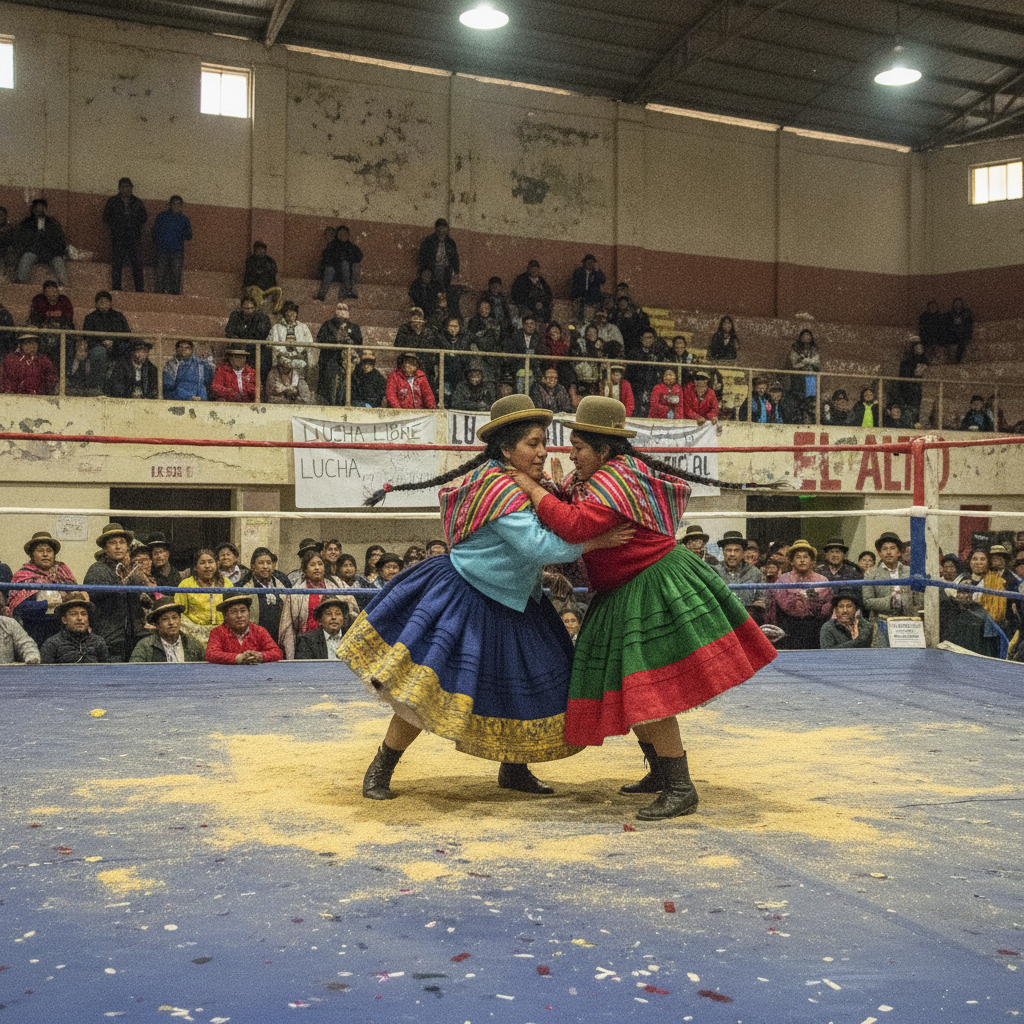
Cholita wrestling, formally known as lucha libre a la boliviana with cholita wrestlers, takes place every Sunday afternoon in the small arena of El Alto and has grown from a local working-class entertainment to an international tourism attraction without losing its grassroots character. The matches involve Aymara women wrestlers performing in full traditional cholita dress including the multilayered pollera skirt, manta shawl, and bowler hat, executing genuine wrestling moves including throws, pins, and aerial maneuvers while maintaining the drama and theatrical narrative of the lucha libre tradition. The format follows the standard lucha libre division between technical rule-following wrestlers and rule-breaking villains, with the cholita wrestlers performing both roles and with male wrestler counterparts who often serve as comic foils or opponents. The choreography is planned but the athleticism is real, and the audience, which is primarily local El Alto residents with a section for tourists, participates vocally throughout. The original cholita wrestling group began performing in 2001; the success has generated multiple competing groups operating in the same venue and on tour internationally.
- 3
Alasitas and the Miniature Economy: The Festival of Abundance
The Alasitas festival, celebrated primarily on January 24 in La Paz and throughout the year at various market fairs, is based on the tradition of purchasing miniature objects representing desires and having them blessed by a yatiri spiritual specialist in the belief that the Ekeko figure of abundance will make the miniature real. The miniatures sold at Alasitas cover every conceivable category of aspiration: tiny houses, cars, university diplomas, passports, dollar bills, medical degrees, and smaller consumer goods are all available from vendors who set up around the major markets in the weeks before the festival. The Ekeko, the deity of abundance associated with the festival, is depicted as a small rotund figure loaded with goods and carrying a lit cigarette; traditional versions had a removable cigarette that could be replaced. The January 24 main fair in La Paz draws hundreds of thousands of visitors and operates in the space around the Estadio Hernando Siles, with miniature vendors covering multiple blocks. The tradition has pre-Hispanic roots but has absorbed Catholic blessing ceremonies, and the miniature fair is now one of the largest annual gatherings in Bolivia.
- 4
The Sopocachi Neighborhood: Arts, Galleries, and Bohemian La Paz
Sopocachi, the neighborhood on the canyon rim above the historic center to the west, is the primary arts and bohemian residential zone of La Paz, concentrating the city's independent galleries, design studios, bookshops, and the restaurants and bars frequented by the Bolivian creative class. The Museo Nacional de Arte Contemporaneo is located in the neighborhood, and several private galleries show contemporary Bolivian artists alongside international work. The Plaza Avaroa in the heart of Sopocachi functions as a social hub where the neighborhood's professional and creative residents gather in the surrounding cafes and restaurants. The architecture of Sopocachi is a mix of Art Nouveau and modernist buildings from the early 20th century alongside later residential construction, giving the neighborhood a more European scale than the denser historic center below. The concentration of mid-range restaurants serving Bolivian and international cuisine makes Sopocachi the practical dining base for visitors staying in the city center. The neighborhood is walkable from the historic center via a steep uphill climb or a short taxi or cable car ride.
- 5
Teatro Municipal and the Classical Performing Arts Scene
The Teatro Municipal Alberto Saavedra Perez, constructed in the early 20th century in the historic center of La Paz, is the primary venue for classical music concerts, opera, ballet, and formal theatrical productions in Bolivia. The Orquesta Sinfonica Nacional de Bolivia performs regular concert seasons at the theater, programming a mix of European classical repertoire and Bolivian composed works. The theater building itself, with its ornate facade in the classical style favored for civic buildings in Latin American capitals of the era, is one of the more architecturally impressive structures in the La Paz center. Ticket prices for performances are low by international standards, reflecting both the subsidized status of the institution and the income level of the primary Bolivian audience. The Plurinational Cultural Center, a larger government-backed cultural complex, hosts festivals, folk music events, and cinema programming across several venues. La Paz also has an active independent theater scene with smaller venues in Sopocachi and San Pedro producing Bolivian and translated international dramatic works.
- 6
Carnival and Festivals: The La Paz Calendar of Celebration
La Paz and the surrounding altiplano observe a festival calendar of extraordinary density, with major celebrations concentrated in the months before and after the Catholic pre-Lent carnival season and continuing through the agricultural year. The Gran Poder festival, held in late May or June, is the largest folkloric dance celebration in La Paz, filling the streets of the historic center with thousands of costumed dancers performing in organized fraternidades that have spent months preparing their costumes and choreography; the celebration has its origins in the devotion to the Senor del Gran Poder, a Christ image venerated in the working-class neighborhoods of the city. The Oruro Carnival four hours south of La Paz, recognized as a UNESCO Intangible Cultural Heritage, is the most famous Bolivian festival and draws visitors from across Bolivia and internationally for its Diablada devil dance processions; La Paz tour operators organize day and overnight trips to Oruro during carnival. The Todos Santos and Dia de los Difuntos observances in early November are marked in Bolivia by the preparation of t'antawawas, bread figures shaped like humans and animals, and by cemetery vigils that combine Catholic and indigenous remembrance traditions.
Walk this route with audio
Stories play automatically as you reach each stop — no tapping needed.
More in La Paz
La Paz History: From Inca Settlement to the Seat of Government
La Paz Adventure: Death Road Cycling, Cholita Wrestling, and Urban Zip Lines

La Paz: The World Highest Seat of Government and the City in a Canyon
La Paz Aymara Culture: Language, Cosmology, and Living Indigenous Traditions
La Paz Practical Guide: Altitude, Neighborhoods, Transport, and Bolivia Circuit