Lagos Fashion, Markets, Street Food, the Lekki Conservation Centre, and the Complete Nigeria Legacy
Lagos depth: the aso-ebi fashion culture and Nigerian designers, the Lagos markets (Computer Village, Alaba electronics, Mile 12 food market), the street food scene (suya, pepper soup, buka), the Lekki Conservation Centre canopy walkway, the Lagos vs Accra comparison, and the six-route Nigeria planning legacy.
- 1
Lagos Fashion - Aso-Ebi, Nigerian Designers, and the African Fashion Capital
Lagos fashion: the most dynamic fashion scene in sub-Saharan Africa and the primary African market for luxury goods. The aso-ebi culture: the Yoruba tradition of coordinated fabric dress at celebrations (aso-ebi: own clothes): invited guests at weddings, funerals, and celebrations purchase and wear the same specific fabric in coordinated outfits: the aso-ebi tradition drives significant demand for fabric (particularly the lace fabrics from France and Switzerland and the Ankara wax-print fabrics from the Netherlands) and for tailors (the Lagos tailoring industry: the large number of tailors who produce custom aso-ebi outfits to order in 24-48 hours). The Nigerian fashion designers: the most internationally recognized Nigerian fashion designers include Deola Sagoe (the pioneer of Nigerian luxury fashion), Lisa Folawiyo (known for Ankara fabric-based luxury fashion), Kenneth Ize (nominated for LVMH Prize 2020), and Fruche. The Lagos Fashion Week (LFW): held annually in Lagos, the most significant fashion event in West Africa. The luxury market: Lagos is the primary African market for European luxury goods brands (Louis Vuitton, Gucci, Hermes): the Civic Centre and the high-end malls of Victoria Island house the primary luxury retail outlets in Nigeria.
- 2
Lagos Markets - Computer Village, Alaba, and the Lagos Market Economy
The Lagos markets: the extraordinary variety of specialist markets that make Lagos one of the most commercially vibrant cities in the world. Computer Village (Ikeja Computer Village: the largest computer and electronics market in Africa: located in the Ikeja area of Lagos mainland: the market is a maze of stalls and shops selling computers, smartphones, accessories, and electronics (both new and second-hand): Computer Village has approximately 5,000-6,000 stalls: the total annual sales volume is estimated in the billions of USD: the market is the primary destination in West Africa for electronics trade). The Alaba International Market (the Alaba International Market in the Ojo area of Lagos: the primary wholesale market for electronics and consumer goods in West Africa: traders from across West and Central Africa come to Alaba to buy goods for resale: the market handles a significant portion of the electronics entering the West African market). The Idumota Market (Idumota on Lagos Island: the largest pharmaceutical and medical supplies market in West Africa: also significant for fabric and textiles). The Mile 12 Market (the primary food wholesale market for Lagos: the largest fresh produce market in Lagos where vegetables, fruits, and staple foods are traded in bulk quantities for distribution across the city).
- 3
The Lagos Street Food Scene - Suya Spots, Pepper Soup, and the Late Night Hawkers
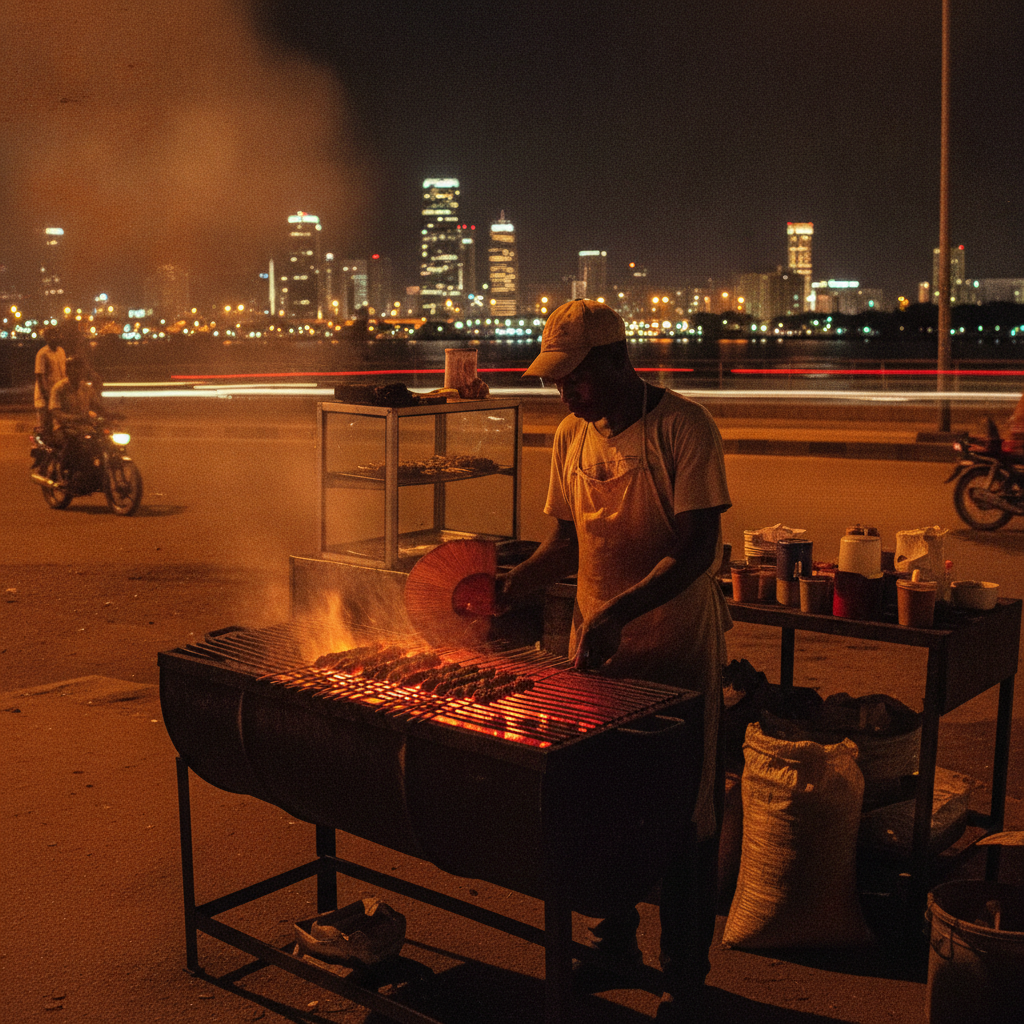
Lagos street food: the extraordinary variety and quality of food available on the streets of Lagos at all hours of the day and night. The suya (the most iconic Lagos street food): the late-evening suya spots: the roadside grills that set up from approximately 6pm onward in every Lagos neighborhood: the best suya in Lagos (the Mallam suya (the northern Nigerian Hausa suya makers who operate the majority of Lagos suya stalls): the grills are typically charcoal-fired barrel drums: the meat (beef, chicken, and ram) is sliced thin, marinated in the yaji spice blend, and grilled to order: served wrapped in newspaper with sliced onions and tomatoes). The pepper soup (the Nigerian pepper soup: a thin, intensely spiced broth typically made with catfish (point and kill: the fish selected live from a tank at the restaurant), goat meat (nkwobi: the Igbo spiced goat dish), or assorted meat): the pepper soup bars (the Lagos pepper soup joints: informal bars that specialize in pepper soup and cold beer: the primary late-night food destination). The buka and the mama put (the buka: the small Lagosian canteen serving home-style Nigerian food to a local clientele: rice and stew, eba and egusi soup, fried plantain: the most authentic and affordable Lagos food experience). The hawkers (the Lagos road food hawkers: the vendors who walk between cars during traffic jams selling food, drinks, newspapers, and goods).
- 4
Lekki Conservation Centre and the Lagos Lagoon
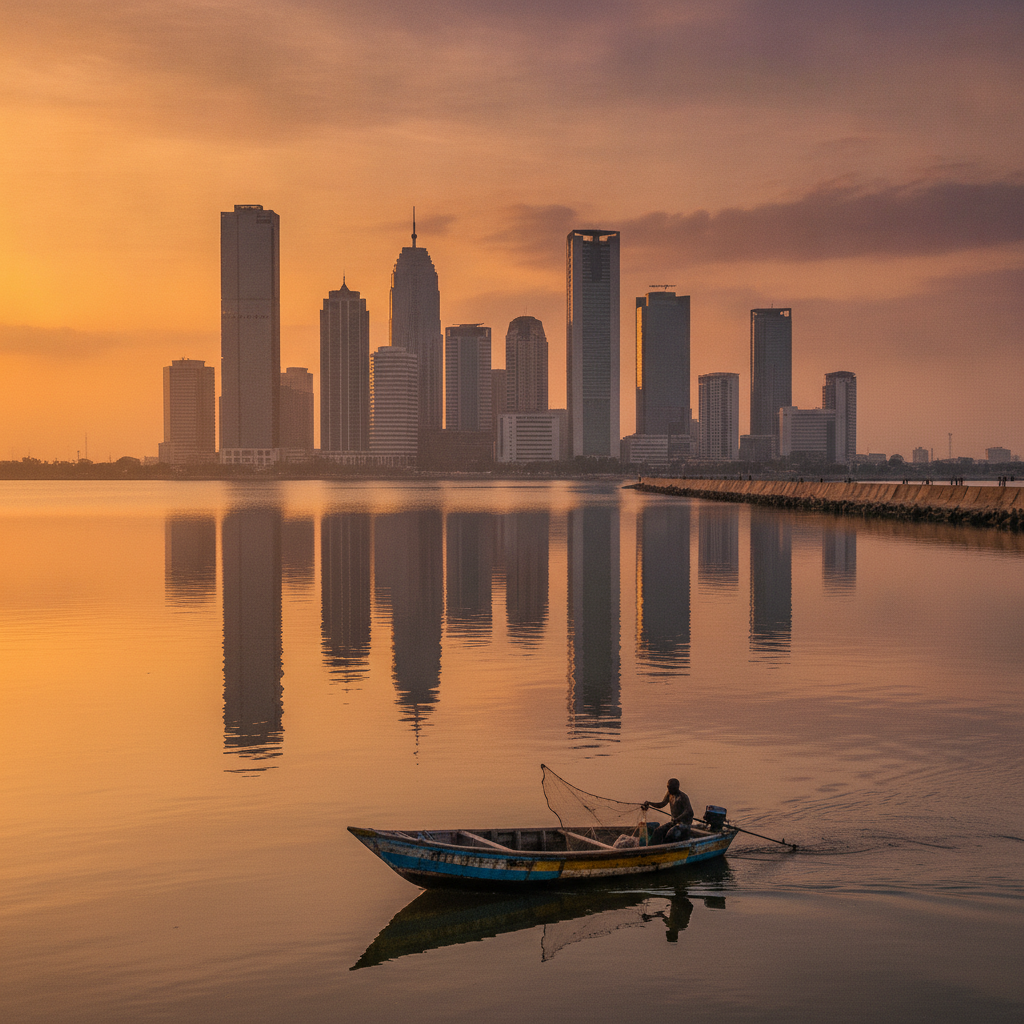
The Lekki Conservation Centre: the primary natural area in Lagos, a sanctuary of mangrove and rainforest habitat in the middle of the rapidly expanding city. The centre (the Lekki Conservation Centre: managed by the Nigerian Conservation Foundation: the centre protects approximately 78 hectares of lagoon-side forest and wetland on the Lekki peninsula: the canopy walkway (the Lekki Conservation Centre canopy walkway: the longest canopy walkway in Africa (approximately 401 meters): the walkway is at a height of approximately 22 meters above the forest floor: the views of the Lagos lagoon and the surrounding mangrove forest from the walkway). The wildlife (the Lekki Conservation Centre wildlife: the centre protects a variety of Lagos wildlife including the Mona monkey, the green monkey, the African palm civet, the red-bellied paradise flycatcher, and the long-tailed cormorant: the lagoon-facing sections of the park provide habitat for wading birds and water birds). The Lagos lagoon (the Lagos Lagoon: the large brackish water lagoon system separating Lagos Island from the mainland: one of the largest lagoon systems in West Africa: the lagoon is ecologically significant (mangrove forests, fish nurseries) and commercially significant (the water transport route between Lagos Island and the mainland, the fishing industry)).
- 5
Lagos vs Accra - The West African City Comparison
Lagos vs Accra: the primary comparison for West African travelers. The size difference (Lagos: approximately 15-20 million people; Accra: approximately 3.5 million people: Lagos is approximately 4-5x larger): the comfort level (Accra is significantly easier for first-time visitors: better road conditions, less traffic, lower crime risk, better English-language infrastructure, more established tourism infrastructure: Lagos is more intense but more rewarding for experienced travelers): the cost (Lagos and Accra have similar price levels at the high end (international hotels and restaurants in VI and Ikoyi are comparable in price to Accra): Lagos can be cheaper at the street food and market level). The music (Lagos is the clear winner: Afrobeats is a Lagos product: Accra has a strong music scene but Lagos is the undisputed African music capital). The food (Nigerian cuisine is arguably more varied and more intensely flavored than Ghanaian cuisine: suya, egusi, jollof, and pepper soup are all extraordinary: the jollof competition is real and both countries produce excellent versions). The culture (Lagos has more raw energy and more cultural intensity: the Yoruba culture of Lagos, the Nollywood industry, the art market, and the fashion scene: Accra has more historical depth (the Cape Coast slave forts, the Nkrumah legacy) and a longer established art scene). The recommendation (for the serious West Africa traveler: visit both: 5 days Accra, 5 days Lagos, with a day trip to Cape Coast from Accra).
- 6
Lagos Six-Route Legacy - The Complete Nigeria Planning Reference
Lagos six-route complete summary and the Nigeria planning reference. Route 1: Lagos megacity geography, Eko Atlantic City, the National Museum and Benin Bronzes, Balogun Market, Afrobeats origins, and the practical guide. Route 2: Fela Kuti and the Afrika Shrine, Nollywood (world third-largest film industry), Nigerian cuisine (egusi, suya, jollof), Lagos nightlife and owambe culture, Lagos beaches (Elegushi, Tarkwa Bay), Nigeria in continental context. Route 3: Lagos colonial history (Yoruba settlement to British colony, the Badagry slave trade, the Brazilian returnees), Yoruba traditional religion and Ifa, Nigerian independence (1960) and the Biafra civil war, the Lagos economy (oil, fintech, Silicon Lagoon), Art Lagos and Nigerian contemporary art. Route 4: Lagos fashion (aso-ebi, Nigerian designers, Lagos Fashion Week), Lagos markets (Computer Village, Alaba, Mile 12), street food (suya spots, pepper soup, buka), Lekki Conservation Centre, and the Lagos vs Accra comparison. Routes 5-6: this complete reference. Nigeria at a glance: population approximately 220-230 million; languages: English (official), Yoruba, Hausa, Igbo, and approximately 500 others; currency: the Nigerian Naira (NGN); the best time to visit Lagos is November to March (the dry season); fly into Lagos Murtala Muhammed International Airport (LOS); most nationalities require a visa (available via the Nigeria e-Visa portal online).
Walk this route with audio
Stories play automatically as you reach each stop — no tapping needed.
More in lagos
Lagos History and Culture: Yoruba Heritage, Nigerian Independence, the Lagos Economy, and Art Lagos
Lagos: Africa Commercial Capital, Eko Atlantic, the Bronzes, Afrobeats, and the Nigeria Guide
Lagos Region and Nigeria Legacy: Benin Kingdom, Osun-Osogbo, Nigerian Literature, and Music History