Lake Atitlan Birdwatching: Endemic Species and Shoreline Habitats
Lake Atitlan and the surrounding highlands support an exceptional concentration of bird species, including several endemic and near-endemic birds found nowhere else. The reed beds along the lakeshore, the forested slopes of the three volcanoes, and the cloud forest fragments above 2,500 meters create a layered set of habitats. The Atitlan grebe, a flightless diving bird specific to this lake, was declared extinct in 1989 following a combination of introduced bass predation and coot hunting pressure on its nesting sites. Today the lake attracts serious birders seeking the highland endemics of the Guatemala highlands alongside a rich waterbird assemblage.
- 1
The Atitlan Grebe: Extinction and Ecological Lessons
The Atitlan grebe, known locally as poc, was a flightless diving bird that evolved from the pied-billed grebe and was found only on this lake. By the 1960s the population had declined to fewer than 200 individuals following the introduction of largemouth bass as a sport fish in 1960, which competed with grebes for food and preyed on chicks. An earthquake in 1976 destroyed much of the reed bed nesting habitat. The last confirmed sighting was in 1989. The poc became a symbol of the consequences of introducing non-native fish species into closed lake ecosystems; it is depicted on Guatemalan currency as a reminder of the loss.
- 2
Atitlan Highlands Endemics: Pink-Headed Warbler and Horned Guan
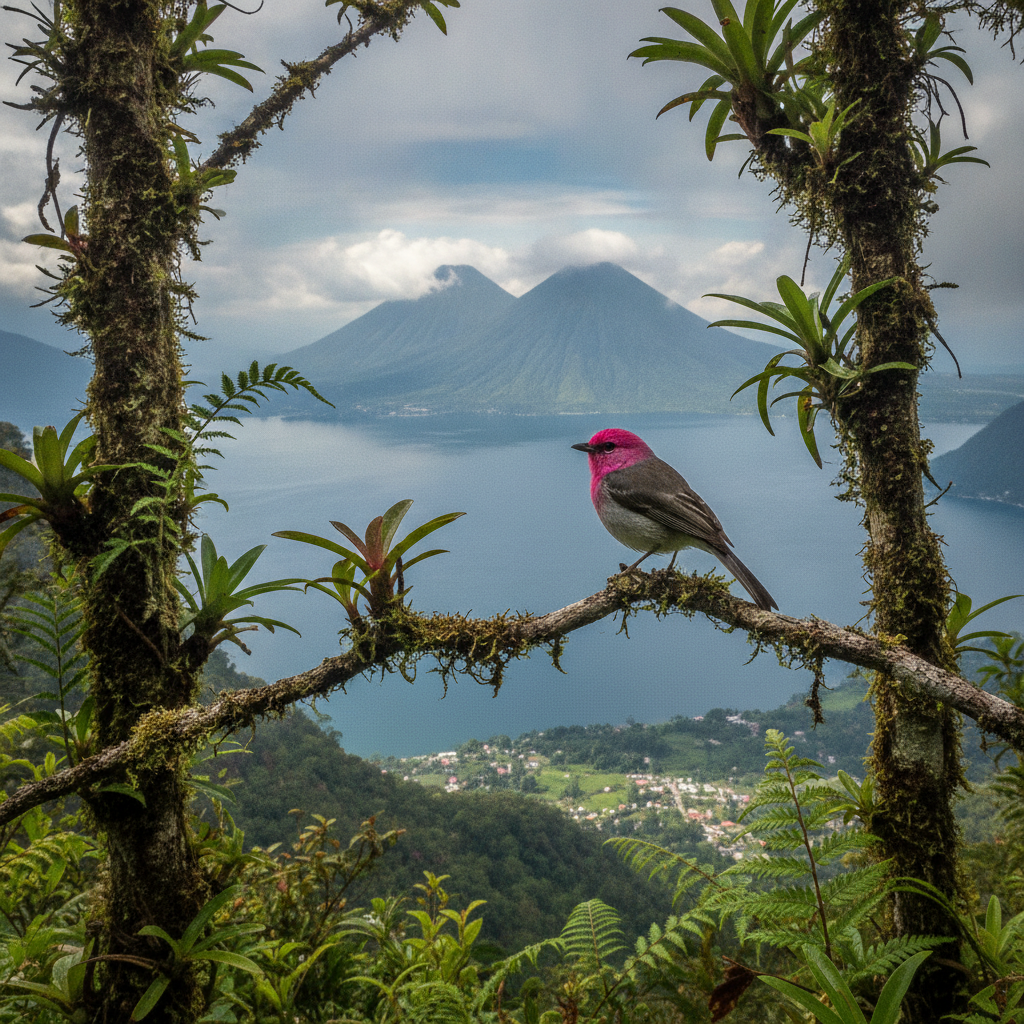
The highland forests above 2,500 meters around Lake Atitlan are among the most accessible sites in Guatemala for several near-endemic species. The pink-headed warbler, a striking bird with a deep crimson body and pink head found only in the cloud forests of Chiapas and highland Guatemala, is regularly encountered on the slopes of Volcan San Pedro and in the forests above San Marcos La Laguna. The horned guan, a large turkey-sized bird with a red horn on its forehead, inhabits undisturbed cloud forest above 2,000 meters and is endangered by habitat loss; sightings require early morning ascents to the higher elevation forest zones.
- 3
Reed Bed Species: Grebes, Coots, and Herons at the Shoreline
The shallow reed beds and emergent vegetation along the lakeshore, particularly around Santa Cruz La Laguna and San Pedro, support a diverse waterbird community. Least grebes, pied-billed grebes, American coots, and various heron species including great blue heron, little blue heron, and tricolored heron are regularly present. The reed beds also attract rails, including the ruddy crake, which is heard far more often than seen. Kingfishers including the ringed, belted, and Amazon kingfisher patrol the open water margins. Morning boat trips along the vegetated shoreline before 8 AM offer the best waterbird viewing before boat traffic disturbs the more sensitive species.
- 4
Volcano Forest Birding: Tanagers, Quetzals, and Raptors
The forested slopes of the three volcanoes above the lakeshore villages transition from pine-oak forest through cloud forest and support different bird communities at each elevation zone. The resplendent quetzal, while more reliably found at Monteverde in Costa Rica, does occur in the higher cloud forest zones on Volcan San Pedro and Volcan Atitlan during the March to May nesting season. Mountain tanagers, emerald toucanets, and various trogon species are more commonly encountered. Raptors including white hawk, barred forest falcon, and the swallow-tailed kite are visible soaring over the lake surface during migration periods.
- 5
Birding by Lancha: Accessing Remote Shoreline Sites
Several of the most productive birding sites around Lake Atitlan are accessible only by boat, as the steep caldera walls make road access impossible on the northern and western shores. The villages of Tzununa, San Marcos La Laguna, and Jaibalito are connected only by lancha, and the forested slopes behind them are among the least disturbed around the lake. Early morning lancha departures from Panajachel allow birders to spend several hours in quiet villages before the midday tourist traffic increases. Local guides in San Juan La Laguna and San Pedro specialize in highland birding and can locate specific target species on the volcano slopes.
- 6
Migration and Seasonal Patterns: When to Visit for Birds
Lake Atitlan sits on a migration corridor for North American breeding species moving through Central America, making October through November and March through April particularly productive for migrants. Warblers, vireos, and flycatchers pass through in large numbers, often mixing with resident species in the lakeside scrub and gardens. The dry season from November through April coincides with cooler temperatures and clearer skies, making it the preferred period for highland birding. The wet season from May through October brings lush vegetation and active breeding behavior from resident species, including the pink-headed warbler, but cloud cover frequently obscures the volcano slopes that provide the best endemic-species habitat.
Walk this route with audio
Stories play automatically as you reach each stop — no tapping needed.
More in Lake Atitlan

Lake Atitlan Day Trips: Chichicastenango, Antigua, and the Pacific Coast

Lake Atitlan Textiles: Maya Weaving Traditions and the Huipil

Lake Atitlan Practical Guide: Getting There, Accommodation, and Village Logistics

Lake Atitlan Food and Coffee: Dining Between the Villages
Lake Atitlan History: Maya Kingdoms, Spanish Conquest, and Civil War