Lake Titicaca Birdwatching: Flamingos, Grebes, and Andean Waterbirds
Lake Titicaca and the surrounding altiplano wetlands support one of the richest high-altitude waterbird communities in the world. Three flamingo species, Andean, James, and Chilean, feed in the shallower alkaline margins. The critically endangered Titicaca flightless grebe, with fewer than 1,000 individuals remaining, is found only on this lake. The extensive reed beds shelter coots, grebes, rails, and herons. The adjacent altiplano grasslands and salt flats support a completely different community of plovers, seedsnipe, and Andean shorebirds. This route covers the key birdwatching sites around the lake and the species most likely to be encountered.
- 1
Titicaca Flightless Grebe: The Critically Endangered Lake Endemic
The Titicaca flightless grebe, also called the short-winged grebe, is found only on Lake Titicaca and is one of the rarest birds in the world, with a total population estimated at fewer than 1,000 individuals. The species evolved flightlessness from a flying grebe ancestor in the same way as the Atitlan grebe of Guatemala, developing reduced wings and enhanced diving capability in the absence of terrestrial predators. The population has declined sharply due to hunting for meat and feathers, accidental capture in subsistence fishing nets, and competition from the introduced rainbow trout that has depleted the native fish populations on which the grebe depends. The birds are concentrated in the Peruvian sector of the lake near the reed beds of the Bahia de Puno and around the Uros islands, where the reed density provides both food in the form of small fish and frogs and nesting cover. Birdwatchers specifically targeting this species arrange early morning boat trips from Puno dock before the tourist boats disturb the birds.
- 2
Three Flamingo Species on the Altiplano
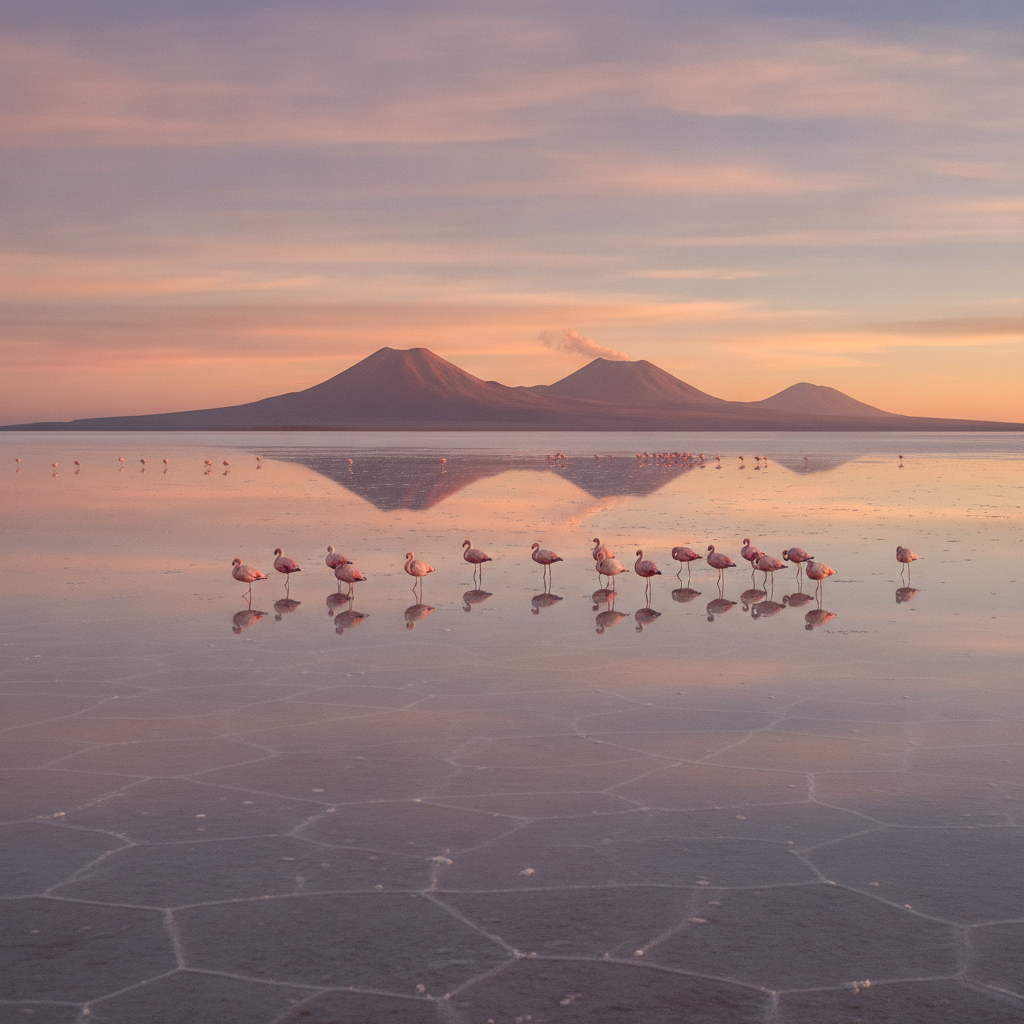
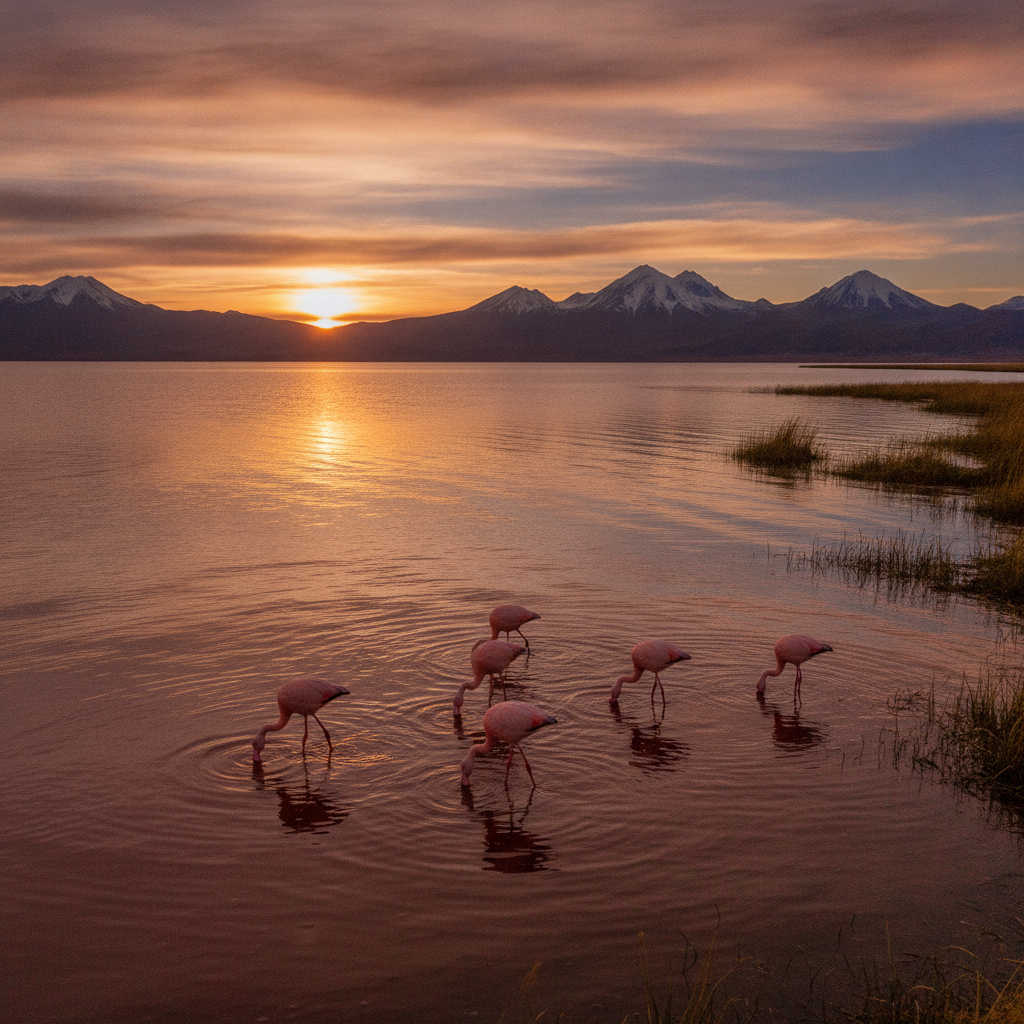
The altiplano wetlands surrounding and adjacent to Lake Titicaca support all three South American flamingo species, providing one of the few locations in the world where all three can be seen together. The Andean flamingo, the rarest of the three, is distinguished by its yellow legs and the large amount of black in the secondary wing feathers visible in flight. The James flamingo, with its brick-red legs and more intensely pink plumage, is found in slightly different microhabitats than the Andean. The Chilean flamingo, the most widespread South American species, has pink-and-grey legs and more pale overall plumage. The flamingos feed by filtering microscopic algae and diatoms from the water using their specialized bent bills, and the alkaline shallow lagoons on the margins of the main lake provide ideal feeding conditions. The Laguna Umayo near Sillustani on the Peruvian side, and the high altitude saline lagoons of the Bolivian altiplano south of the lake, are reliable flamingo sites.
- 3
Reed Bed Specialists: Coots, Rails, and Grebes
The extensive totora reed beds that fringe the shallower sections of the lake support a community of reed-bed specialist birds found throughout the lake margins. The slate-colored coot, a large black waterbird with a red frontal shield, is present in enormous numbers; flocks of hundreds gather on the open water between reed sections. The plumbeous rail is a secretive reed bed resident that is heard as a loud explosive call far more often than it is seen; patient observers in the reed margins at dawn may glimpse it crossing open channels between reed sections. Several grebe species including the silvery grebe and the pied-billed grebe breed in the reed beds. The wren-like rushbird, a small brown bird that scrambles through reed stems, is common throughout the lake margins. The Junin grebe, another endangered lake endemic found on Lake Junin in central Peru, is sometimes confused with the Titicaca grebe by visiting birdwatchers; the two species are not co-occurring but their similar appearance reflects parallel evolutionary responses to the same high-altitude lake environment.
- 4
Altiplano Grassland Birds: Plovers, Seedsnipe, and Puna Species
The vast puna grassland that surrounds Lake Titicaca and extends across the altiplano supports a different bird community from the waterbirds of the lake itself. The Andean lapwing, a large bold plover with a wine-red shoulder patch, is the most conspicuous altiplano bird, calling loudly from any elevated position and dive-bombing perceived threats to its nest. The puna plover nests on the open gravelly margins of the lake. The least seedsnipe, a cryptically colored quail-like bird that sits motionless in short grassland, is regularly flushed from roadsides on the altiplano. The white-winged diuca finch and the band-tailed sierra finch are common altiplano seed-eaters visible from bus windows across the altiplano. The Andean flicker, a large woodpecker that has adapted to the treeless puna by excavating nest holes in earthen banks, is often seen perching on stone walls along the lake road. The puna ibis, a dark iridescent ibis, feeds in the marshy margins.
- 5
Sillustani and the Chullpa Burial Towers: Birdwatching with History
Sillustani, the pre-Inca and Inca chullpa burial tower complex on a peninsula jutting into the Laguna Umayo 34 kilometers from Puno, provides a remarkable combination of archaeological spectacle and productive birdwatching. The chullpas, cylindrical stone burial towers reaching up to 12 meters in height built by the Colla culture and later the Inca to house the mummified remains of nobles, command a dramatic view over the lake surface. The Laguna Umayo below the chullpa complex is a productive flamingo site, with all three South American species regularly present. The grassland around the ruins supports Andean lapwing, ground tyrants, and the occasional short-eared owl hunting in daytime. Sillustani is typically visited as a half-day trip from Puno and is the most archaeologically significant site in the department of Puno aside from the island sites on the lake itself.
- 6
Migration and Seasonality: When Altiplano Birds Are Most Numerous
The birdwatching at Lake Titicaca is productive year-round but shows seasonal peaks corresponding to the Andean breeding season and the austral summer migration. The rainy season from November through March brings the highest overall bird activity, with breeding activity among the reed bed species, the arrival of austral migrants from Argentina and Chile using the altiplano as a wintering ground, and the maximum extent of the reed beds and flooded margins that support waterbird feeding. The dry season from May through October brings clearer weather that makes the distant snow peaks more visible and provides better lighting for photography, though overall bird activity is lower. The flamingo concentrations at the high altitude Bolivian salt lakes including Laguna Colorada and Laguna Verde, which lie south of the lake at 4,200 to 4,700 meters and are accessible on tours from Uyuni, peak in the austral summer breeding season and are worth extending the altiplano itinerary to visit.
Walk this route with audio
Stories play automatically as you reach each stop — no tapping needed.
More in Lake Titicaca
Lake Titicaca Practical Guide: Getting There, Island Visits, and Peru-Bolivia Border Crossing

Lake Titicaca Puno Festivals: The Candelaria and Altiplano Folklore
Titicaca Aymara Culture: Language, Textiles, and the Living Tradition

Lake Titicaca: The Highest Navigable Lake and the Birthplace of the Inca

Lake Titicaca Bolivia: Copacabana, Tiwanaku, and the Bolivian Shore