Como City — the Gothic Cathedral, Funicular to Brunate & the Silk Museum
Como (population 85,000, the principal city of Lake Como at the southern tip of the lake's western branch, the historic Roman town of Comum founded by Julius Caesar in 59 BCE, the birthplace of Pliny the Elder and Pliny the Younger, the gateway city for Lake Como visited by most tourists as a transit point without spending adequate time in the city itself) merits a full day's exploration independent of the lake.
- 1
Duomo di Como — the Gothic-Renaissance Cathedral Completed in 1740
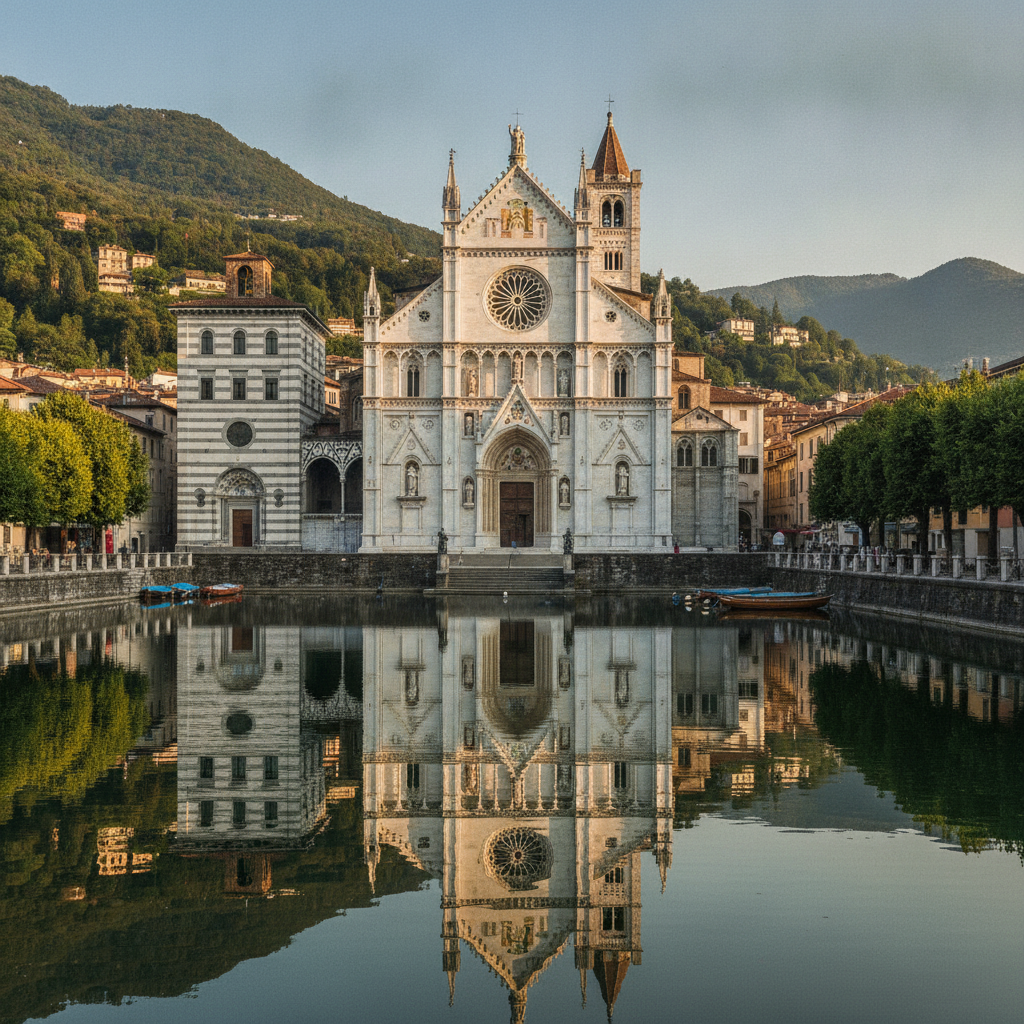
The Duomo di Como (the Cathedral of Santa Maria Assunta, Piazza del Duomo, free entry, daily 7:30am-7:30pm, begun 1396 in the Lombard Gothic style, the apse completed in 1489, the nave extended into the Renaissance in the 16th century, the dome completed in 1740 by Filippo Juvara in the Baroque style — the 344-year construction span making it a documentary history of Italian architectural development from Gothic to Baroque) is the largest Gothic cathedral in Lombardy and the only major church in Italy where the statues flanking the main portal are two pagan Roman authors (Pliny the Elder and Pliny the Younger, both born at Como, both honoured without the usually mandatory Christian conversion) — the interior (the Flemish tapestries of 1598 depicting the Life of Mary, the 16th-century altar paintings by Bernardino Luini) is the most completely furnished Gothic cathedral in Lombardy.
- 2
Broletto and Piazza del Duomo — the Medieval Town Hall Complex
The Broletto (the 13th-century communal town hall, immediately adjacent to the Duomo on the north side of Piazza del Duomo, the medieval striped marble facade — alternating bands of grey Moltrasio stone and white marble — in the Lombard communal Gothic style) is the finest surviving communal building of medieval Lombardy. The Piazza del Duomo (the combined cathedral and town hall square, the central social space of Como, the aperitivo bars on the south side of the cathedral serving the same Aperol Spritz as every other Italian city but with the cathedral facade as the backdrop) and the pedestrian core of old Como (the Via Vittorio Emanuele II, the old main street running east from the cathedral to the Volta Museum, the shop-lined medieval street entirely pedestrianized) define the city's historic identity.
- 3
Funicular to Brunate — the View from 720 Metres
The Como-Brunate funicular (the rack railway connecting Como lakefront to Brunate, the hilltop village at 720m altitude, operating daily 6am-midnight with departures every 30 minutes, round-trip ticket €6, the journey taking 7 minutes, the railway inaugurated in 1894 as Europe's second electric funicular) provides the most important single view in the Lake Como area: the panorama from Brunate (the view south over the entire Como branch of the lake with the city of Como immediately below, the Lecco branch visible to the east, and — on clear days, October-April — the Duomo of Milan visible 45km south across the Po plain) is the definitive orientation view for understanding Lake Como's geography. The walk from Brunate to Torno (1.5 hours on the marked trail, descending to the lakeside village with the ferry back to Como) is the standard half-day circuit.
- 4
Museo Volta — Alessandro Volta's Laboratory and the Electric Battery
Museo Volta (Viale Marconi 1, Tempio Voltiano, on the lakefront west of the city centre, €3 adults, Tuesday-Sunday 10am-6pm, the neo-classical temple built in 1927 to celebrate the centenary of Alessandro Volta's death, 1745-1827, the inventor of the electric battery and discoverer of methane, born and buried in Como) is a small but scientifically significant museum. The original voltaic pile (the first electric battery, a stack of copper and zinc discs separated by brine-soaked cloth, Volta demonstrated the device to Napoleon in Paris in 1801), Volta's original laboratory instruments (the electrometers, the condensers, the eudiometer), and the correspondence with Napoleon (who made Volta a Count, installed the voltaic pile in the Paris Polytechnique, and attended every one of Volta's Paris lectures in person) are the collection's three most important elements.
- 5
Villa Olmo — the Neo-Classical Villa and Lakefront Garden
Villa Olmo (Via Cantoni 1, the neo-classical villa on the lake's western shore 1km north of Como city centre, the largest and most imposing private villa on Lake Como, built 1782-1797 for the Odescalchi family in the neo-classical style, the garden and lakefront free to visit daily 9am-7pm April-October, the villa interior only open during temporary exhibitions) is the correct starting point for understanding Lake Como's villa tradition — the garden (the formal Italian parterre immediately in front of the villa, the English landscape park between the villa and the lake, the 19th-century water feature, the view south across the lake with Como's Duomo visible on the opposite shore) and the lakefront promenade (the walk from Villa Olmo north along the lake to Villa Geno and the lido) are the best free experiences immediately accessible from Como city.
- 6
The Silk Museum and the Como Textile Industry
Museo della Seta di Como (Silk Museum, Viale Roosvelt 9, Como city, €10 adults, Tuesday-Friday 9am-noon and 3-6pm, the museum documenting the full history of the Lake Como silk industry from the 16th-century introduction of silk cultivation to the present-day high-fashion industry) is housed in the former school of silk weaving (the Setificio di Como, the technical school that trained Como's silk workers from 1883 onwards). The museum's collection (the Jacquard looms from the 1800s still in working order, the colour recipes for Hermes orange and Chanel navy visible in the dye-vat section, the finished silk samples — the 16mm thickness of a Como silk scarf achievable only by the double-weave technique taught at the Setificio) is the essential context for purchasing Como silk; the factory outlet at Via Cantu 9 (10 minutes walk from the museum, the direct factory sale at 30-50 percent below retail price) is the destination after the museum.
Walk this route with audio
Stories play automatically as you reach each stop — no tapping needed.
More in lakecomo
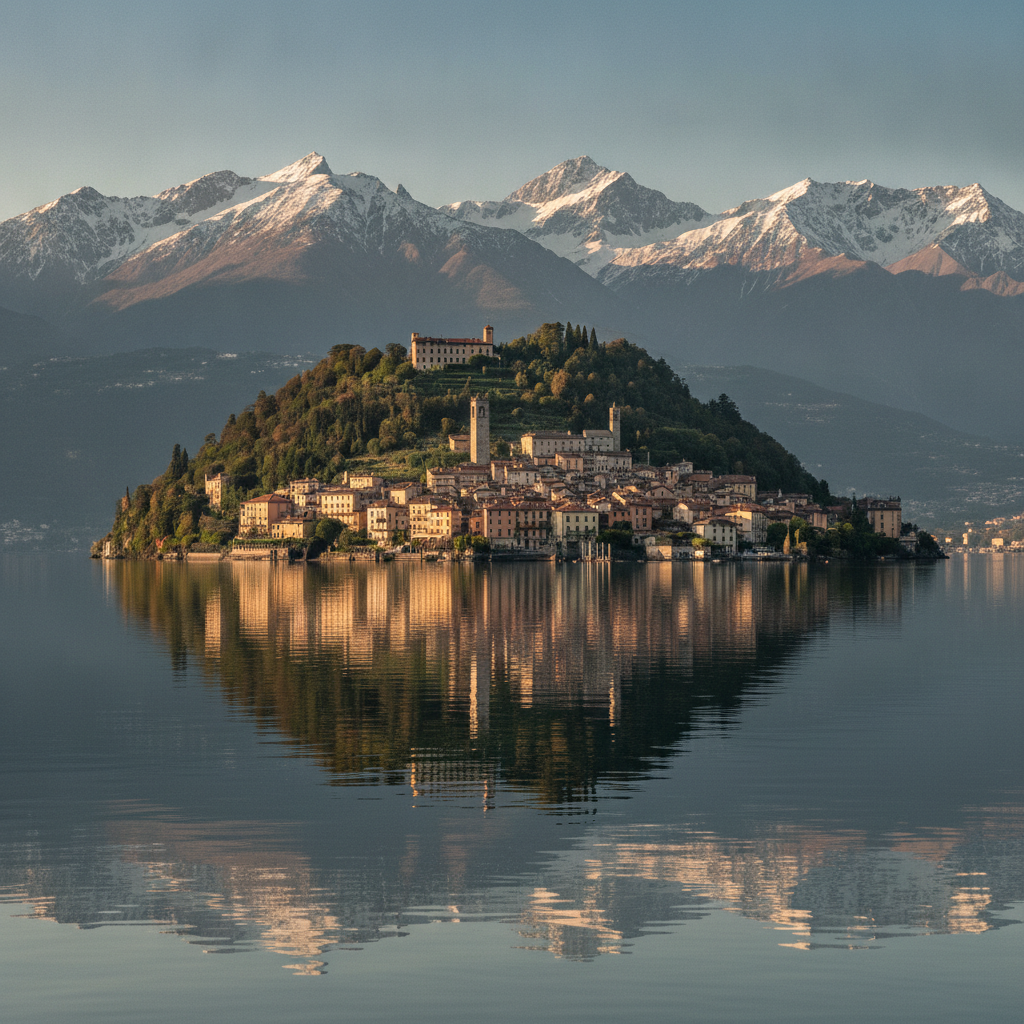
Bellagio — the Pearl of the Lake, Villa Serbelloni Gardens & the Ferry Triangle
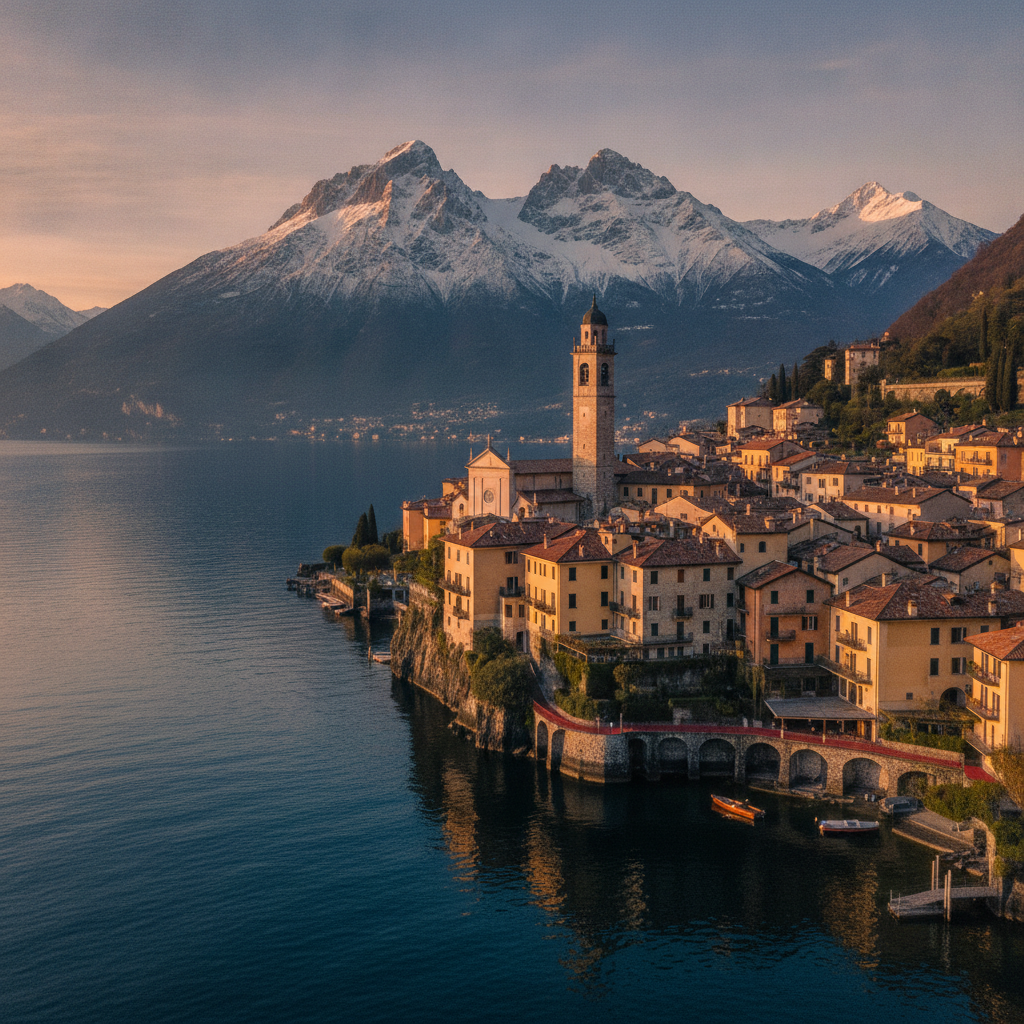
Varenna — the Passeggiata degli Innamorati, the Gardens & the Grigne Mountains
Cernobbio — Villa d Este, Lake Como's Grand Hotel Tradition & George Clooney's Lake
Villa Carlotta, Tremezzo & Lenno — the Western Shore's Botanical Gardens