The Las Vegas Strip — The Greatest Show on Earth
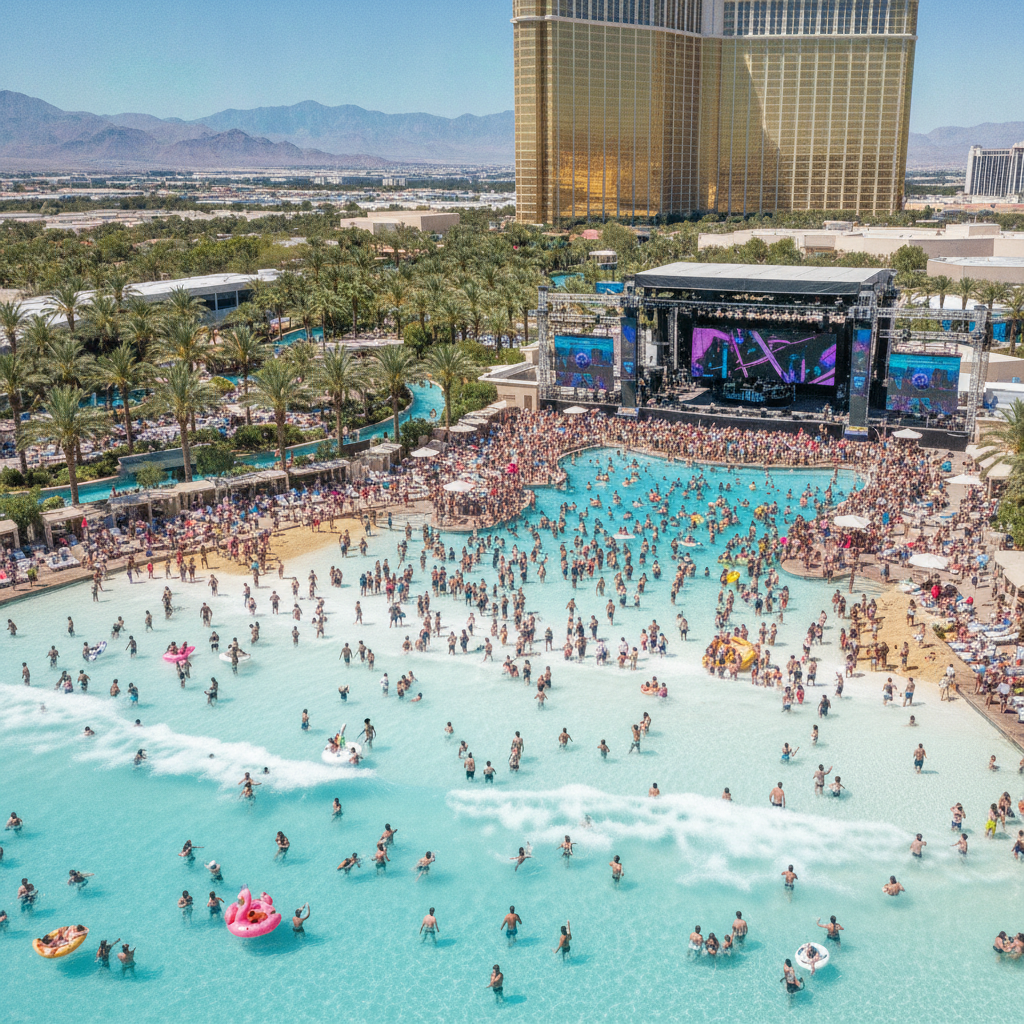
Las Vegas (the city in Clark County, Nevada — population approximately 650,000 in the city, 2.2 million in the metro area — the Entertainment Capital of the World, the city that generates approximately $7 billion in gaming revenue annually, receives approximately 40 million visitors per year, and has more hotel rooms (approximately 150,000) than any other city in the world): The Strip (Las Vegas Boulevard South between Russell Road and Sahara Avenue — the 6.7 km (4.2 mile) stretch of Las Vegas Boulevard that contains the world's highest concentration of luxury hotels, casinos, restaurants, and entertainment venues) is the most extravagant built environment in human history.
- 1
Bellagio — The Fountains & the Standard of Las Vegas Luxury
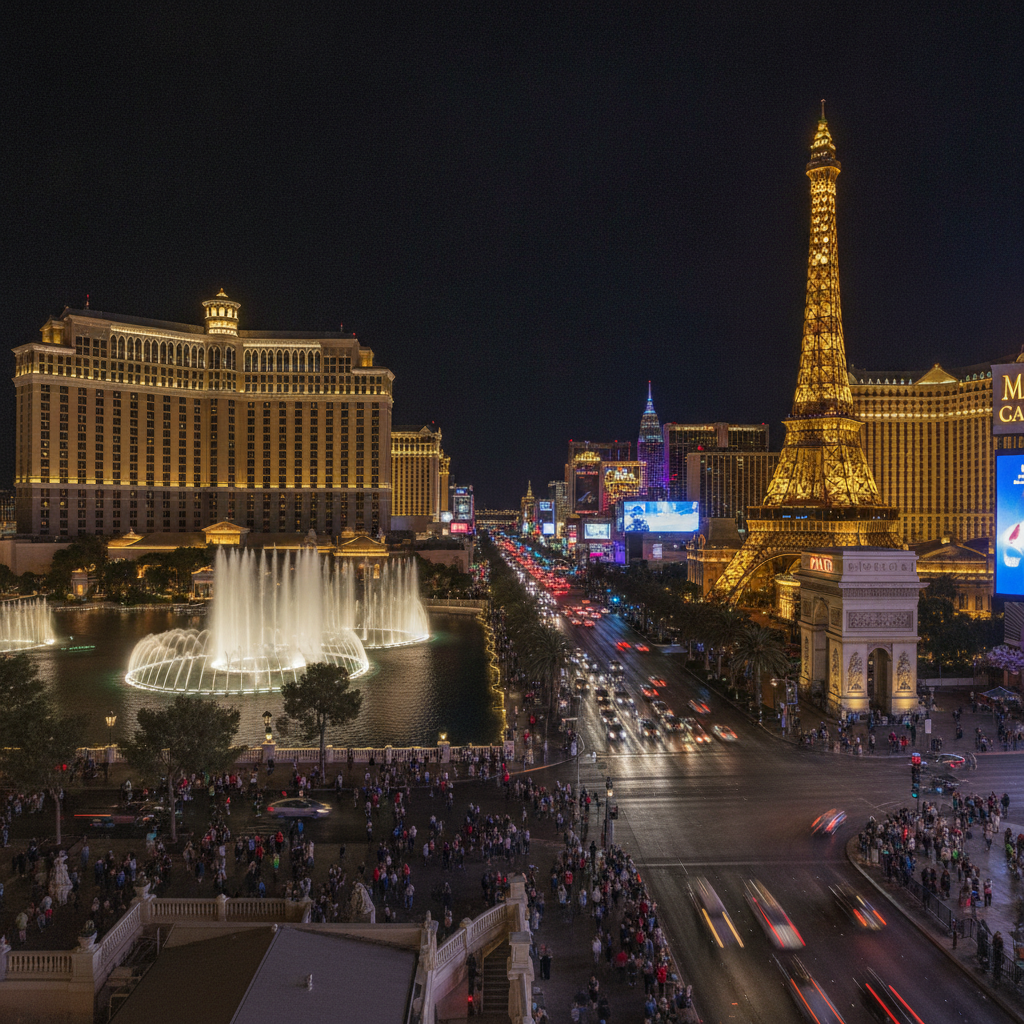
Bellagio (the 36-floor luxury hotel and casino at 3600 Las Vegas Boulevard South, built in 1998 by Steve Wynn at a cost of $1.6 billion (the most expensive hotel ever built at that time) and sold to MGM Resorts International in 2000 for $6.4 billion (the largest real estate transaction in US history to that date)): the Fountains of Bellagio (the choreographed water show in the 8.5-acre artificial Lake Bellagio in front of the hotel — 1,214 fountain nozzles, 4,792 LED lights, and water cannons capable of shooting water 460 feet (140 metres) into the air, performing 15-minute shows every 30 minutes during the day and every 15 minutes in the evening to a rotation of classical music (Pavarotti's 'Nessun Dorma', Sinatra's 'Luck Be a Lady', Elton John's 'Your Song'), Broadway show tunes, and seasonal pieces — the most-watched free attraction in Las Vegas, with approximately 36 million viewers per year) is the defining image of Las Vegas; the Bellagio Gallery of Fine Art (the rotating exhibitions of museum-quality art (works from the permanent collections of major museums loaned for six-month exhibitions)), the Bellagio Conservatory & Botanical Gardens (the 14,000 sq ft (1,300 m²) atrium with seasonal botanical displays changed five times per year (Chinese New Year, Spring, Summer, Fall, and Winter/Holiday — each display using thousands of living plants, flowers, and elaborate floral sculptures)), and the Via Bellagio (the luxury retail arcade (Chanel, Dior, Hermès, Louis Vuitton, Tiffany, Prada, Gucci, Armani)) make the Bellagio the cultural and luxury standard of the Las Vegas Strip.
- 2
Caesars Palace & the Forum Shops — Ancient Rome on the Strip
Caesars Palace (the iconic Roman-themed hotel and casino at 3570 Las Vegas Boulevard South, opened in 1966 by Jay Sarno — the hotel that established the 'theme resort' concept that has defined Las Vegas resort development ever since): the Forum Shops at Caesars (the luxury shopping mall connected to Caesars Palace, opened 1992 — the highest-grossing shopping mall per square foot in the United States, with approximately $1,500 in annual sales per square foot (compared to approximately $500 for a typical successful American mall)): the Forum Shops (the retail experience designed as an ancient Roman street (Via della Pace) under a painted ceiling that transitions from dawn to dusk over a 3-hour cycle, with the characteristic 'sky' ceiling (the painted clouds on the ceiling giving the illusion of being outdoors in Roman Italy)), the animatronic shows (the 'Fall of Atlantis' fountain show featuring Neptune, Atlas, and Atlantis mythology acted out by large animatronic figures rising from the central fountain), and the range of tenants (from the Apple Store (one of the busiest Apple stores in the US by revenue) to Versace, Valentino, Dolce & Gabbana, and the restaurant row featuring celebrity chef outposts); the main Caesars Palace casino (the 124,181 sq ft (11,534 m²) casino floor, one of the largest in Las Vegas, with the characteristic Roman décor (the marble columns, the classical statuary, the coffered ceilings) and the famous high-limit rooms where the most significant poker and baccarat play in the world takes place).
- 3
The High Roller & the LINQ Promenade
The High Roller (the observation wheel at the LINQ Hotel and Casino at 3545 Las Vegas Boulevard South — at 167.6 metres (550 feet) tall, the tallest observation wheel in the world (surpassing the 135-metre (443-foot) London Eye) since its opening in March 2014): the High Roller (the wheel consists of 28 air-conditioned cabin pods (each 9.1 metres (30 feet) in diameter and capable of carrying 40 people), rotating at a rate that takes approximately 30 minutes to complete one full rotation — the slowest large observation wheel in the world, designed to maximize viewing time at the top) offers the finest panoramic views of Las Vegas available from any fixed structure: at the top of the rotation (84 metres (275 feet) above the Strip), the complete 360° panorama of Las Vegas (the Las Vegas Valley floor (the flat desert basin surrounded by mountain ranges — Spring Mountains (Charleston Peak, 3,632 metres) to the west, Frenchman Mountain to the east, and the bare Mojave Desert stretching in every direction beyond the valley)) and the Strip from above (the extraordinary geometric pattern of the Las Vegas casino complexes viewed from above — the Bellagio lake, the CityCenter complex, the MGM Grand, and the convergence of Las Vegas Boulevard and Flamingo Road visible as the densest cluster of the world's largest hotels in a single intersection area); the LINQ Promenade (the open-air retail and dining corridor connecting the High Roller to Las Vegas Boulevard) is the finest outdoor dining and bar strip in Las Vegas.
- 4
Fremont Street Experience — Old Vegas & the Original Strip
Fremont Street (the historic main street of Las Vegas in the Downtown Las Vegas area, 6.4 km (4 miles) north of the Strip — the original 'Strip' of Las Vegas (the Fremont Street casinos (the Golden Gate Hotel (opened 1906 — the oldest hotel in Las Vegas), the Golden Nugget (opened 1946, the most famous Downtown casino), the Fremont Hotel (opened 1956), and the Four Queens (opened 1966)) predate the Las Vegas Boulevard Strip and were the dominant Las Vegas entertainment destination from the 1940s through the early 1970s)): the Fremont Street Experience (the pedestrian mall created by covering the 5-block (460-metre) section of Fremont Street between Main Street and Las Vegas Boulevard North with the Viva Vision LED canopy (opened 1995, updated 2022 — the world's largest LED display at 1,500 feet (460 metres) long and 90 feet (27 metres) above the street, consisting of 16.4 million individually controlled LEDs displaying hourly light and music shows from dusk to midnight)) is the free light show attraction of Downtown Las Vegas; the SlotZilla zip line (the world's largest slot machine themed zip line, launching from a 12-storey slot machine replica 77 feet (23 metres) above the Fremont Street pedestrian mall and travelling 850 feet (260 metres) in the 'Zip Line' configuration or 1,750 feet (533 metres) in the Superman 'Zoomline' configuration) is the most adventurous free (well, $25-35) activity in Downtown Las Vegas.
- 5
Las Vegas Shows & Entertainment — The World's Entertainment Capital
Las Vegas entertainment (the show business ecosystem that has made Las Vegas the Entertainment Capital of the World — the city where the greatest concentration of live entertainment outside of Broadway takes place year-round, with approximately 400 shows playing nightly at any given time): the Las Vegas residency (the format of extended multi-year performance contracts with Las Vegas casinos that has defined the careers of the biggest names in entertainment since the 1940s (Frank Sinatra at the Sands in the 1950s-60s, Elvis Presley at the International Hotel (now the Westgate) 1969-1977 (837 sold-out performances), Liberace, Celine Dion at Caesars Palace 2003-2007 and 2011-2019 (1,141 sold-out performances totalling over $1 billion in ticket revenue — the highest-grossing entertainment residency in Las Vegas history), and the current generation (Adele, Bruno Mars, Maroon 5, Lady Gaga, Katy Perry, and numerous others) is the dominant model of Las Vegas entertainment today; the Cirque du Soleil productions (the Montreal-based circus arts company that operates 5 permanent shows in Las Vegas simultaneously — 'O' (the aquatic spectacular at the Bellagio (since 1998)), 'Mystère' (the original Las Vegas Cirque show at Treasure Island (since 1993)), 'The Beatles Love' (at the Mirage (2006-2024)), 'KÀ' (the martial arts spectacular at the MGM Grand), and 'Mad Apple' (at the New York-New York)) represent the most technically sophisticated live performance productions in the world.
- 6
Las Vegas Food — From Buffets to Michelin Stars
Las Vegas dining (the restaurant scene that has transformed from the stereotype of cheap casino buffets into one of the most celebrated fine dining destinations in the United States, driven by the influx of celebrity chef restaurant outposts beginning in the late 1990s): the Las Vegas buffet (the casino buffet — the Las Vegas innovation of the 1940s (the first casino buffet was the 'Buckaroo Buffet' at the El Rancho Vegas Hotel-Casino, introduced by Herb McDonald in 1941 as 'the Midnight Chuck Wagon' to keep gamblers on the premises — a free midnight supper offer that became one of the most successful marketing innovations in casino history) has evolved from a marketing giveaway to a serious dining destination (the Bacchanal Buffet at Caesars Palace and the Wicked Spoon at the Cosmopolitan are now destination dining experiences serving 200+ items); the celebrity chef restaurant scene (the Gordon Ramsay restaurants (Hell's Kitchen, Gordon Ramsay Fish & Chips, Gordon Ramsay Burger, Gordon Ramsay Pub & Grill — Ramsay has more restaurants in Las Vegas than any other celebrity chef with 8 outlets), the Joël Robuchon Restaurant at the MGM Grand (the only 3-Michelin-star restaurant in Las Vegas — opened 2005, the late French chef's most acclaimed restaurant outside of Paris, serving a 16-course tasting menu in a Belle Époque dining room)) represent the highest level of Las Vegas gastronomy.
Walk this route with audio
Stories play automatically as you reach each stop — no tapping needed.
More in las-vegas
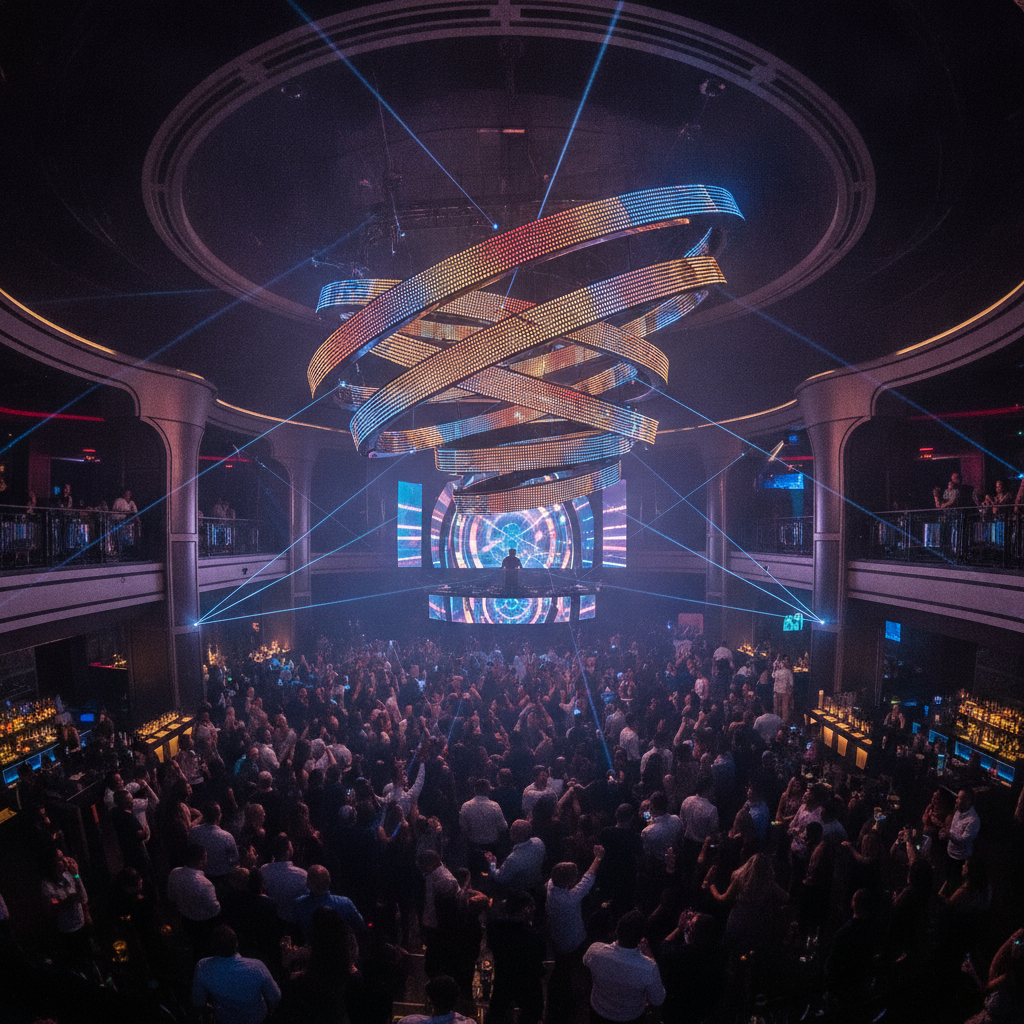
Las Vegas Nightclubs, EDM & the World's Greatest DJ Culture
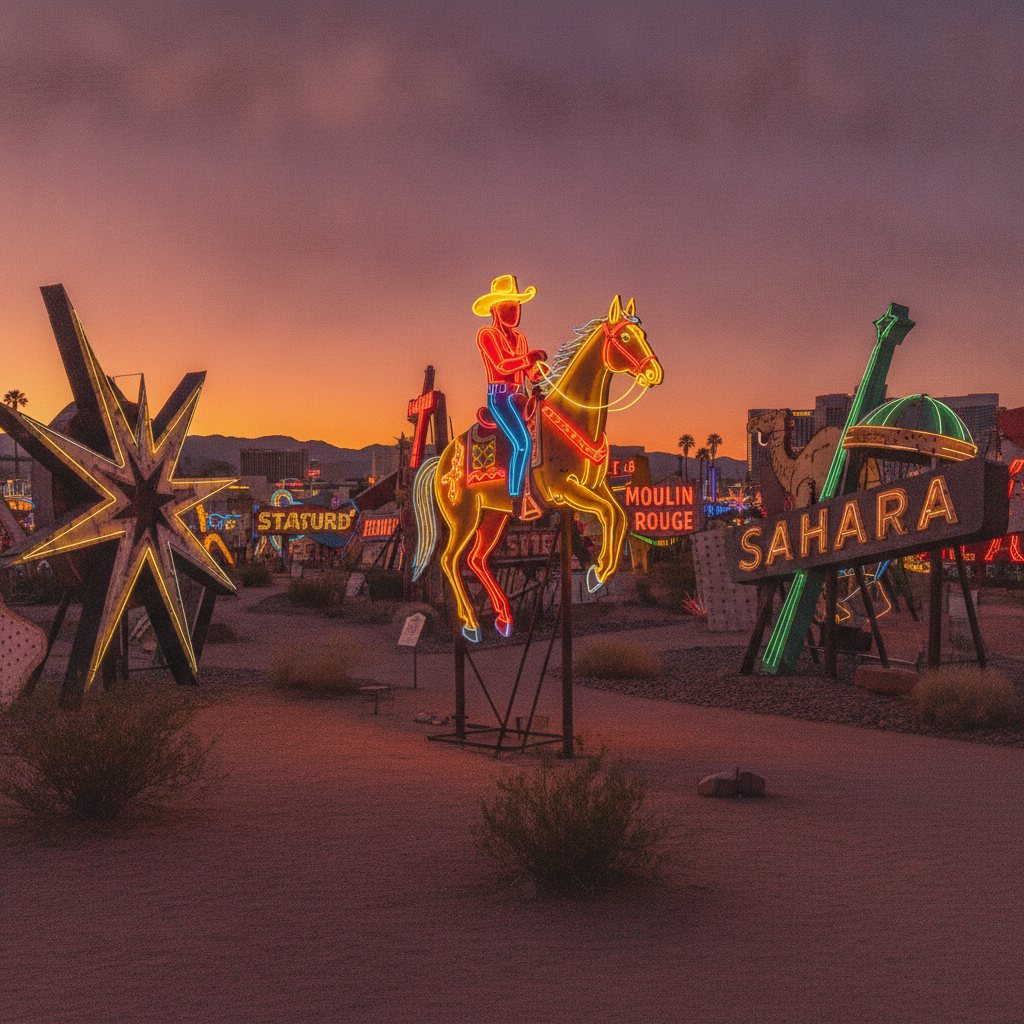
Neon Museum, Wedding Chapels & Downtown Las Vegas Arts
Poker, Blackjack & the Science of Las Vegas Gambling
Sinatra, the Rat Pack & the Golden Age of Las Vegas
Grand Canyon, Valley of Fire & Desert Escapes from Las Vegas