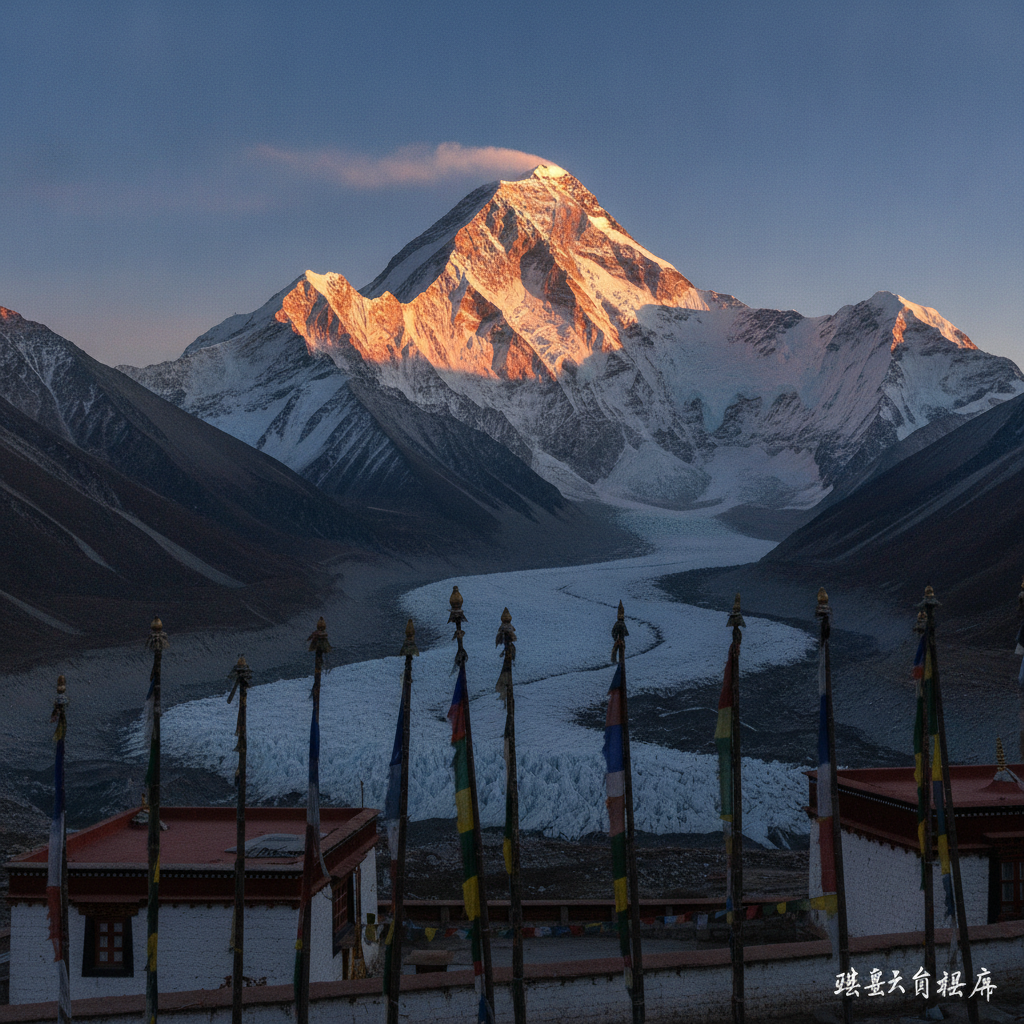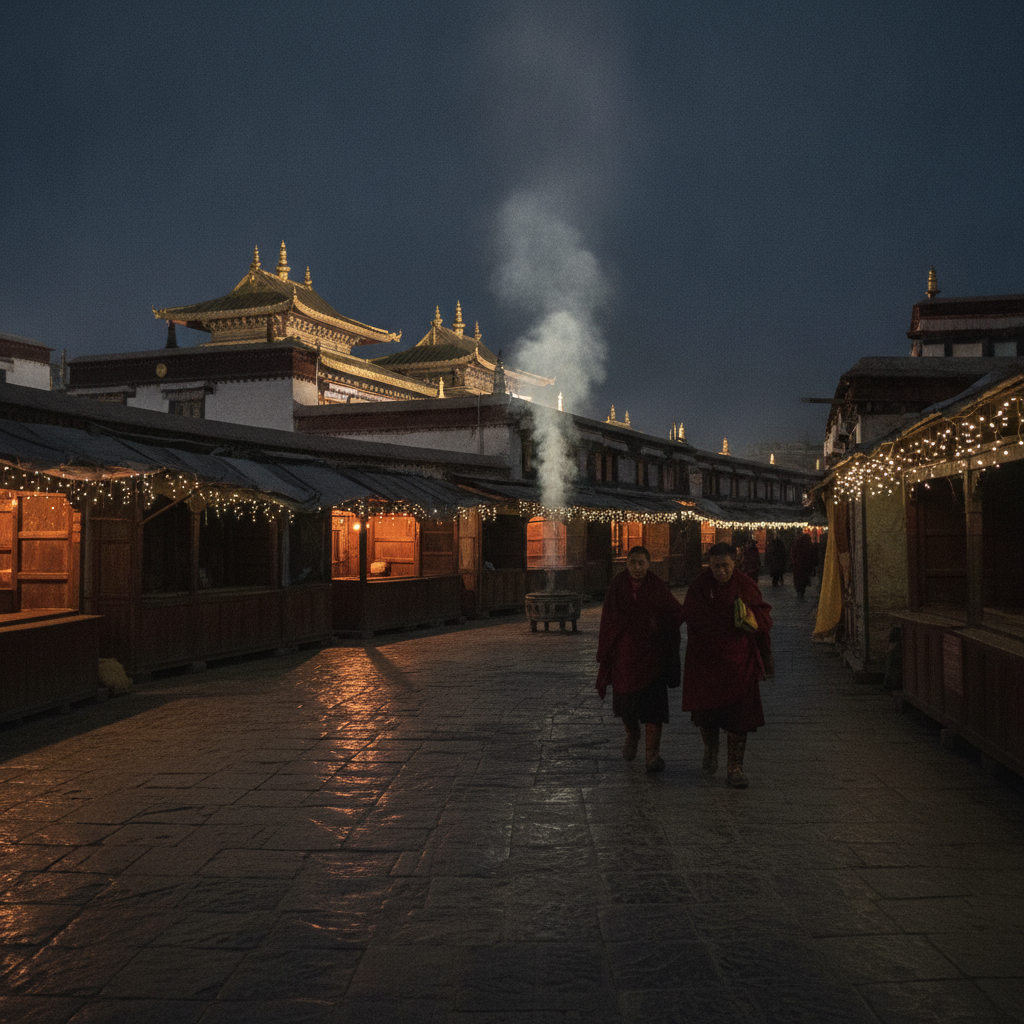
The Escape in a Soldier's Disguise in 1959, the Paving Stones Worn Concave by 1,380 Years of Pilgrim Feet & the Observatory at 5,100 Meters That Studies the Clearest Sky in Asia
The 14th Dalai Lama's March 1959 nighttime escape from Norbulingka disguised as a soldier triggering the Tibetan uprising; the Barkhor paving worn concave by 1,380 continuous years of circumambulation; the Ngari Astronomical Observatory at 5,100m as Asia's highest professional observatory; the Kalachakra Tantra's eclipse predictions accurate to within minutes for events 1,000 years ahead; the butter tea's emulsified yak butter and salt as the primary Tibetan plateau calorie source; and the Lhasa blue sky's enhanced saturation from altitude UV transmission.
- 1
The Forbidden City of Lhasa – Norbulingka Summer Palace
The Norbulingka (罗布林卡—Luóbù Línkǎ—'Jewel Garden'): the summer palace of the Dalai Lamas and the largest park in Lhasa—the UNESCO World Heritage site that is the least visited of Lhasa's 3 World Heritage components. The history (the Norbulingka was established in 1755 by the 7th Dalai Lama (Kelzang Gyatso) as a garden retreat from the Potala Palace and expanded by successive Dalai Lamas into the most elaborate palace garden complex in Tibet—36 palace buildings within an 80-hectare park). The 14th Dalai Lama's Norbulingka Palace (Takten Migyur Phodrang—the palace built for the current 14th Dalai Lama in 1954–1956, the last palace building added to the complex before the 1959 exile): the escape of 1959 (on the night of March 17, 1959, the 14th Dalai Lama escaped from the Norbulingka disguised as a soldier—the Chinese military had surrounded the complex and a crowd of Tibetans had gathered to protect the Dalai Lama (they believed he was about to be abducted)—the escape triggered the 1959 Tibetan uprising and began the Dalai Lama's exile in India). The Norbulingka today (the park functions as the primary recreational green space for Lhasa residents—Tibetan families picnic on the park lawns on summer weekends, traditionally bringing yak butter tea (酥油茶) and tsampa (roasted barley flour) in woven bags).
- 2
Lhasa's Tibetan Old Town – Architecture & Urban Form
The Lhasa Tibetan Old Town (拉萨旧城区—the historic residential neighborhood centered on the Barkhor Street and the Jokhang Temple): the surviving traditional architecture and urban fabric of historic Lhasa. The Tibetan urban architecture (the traditional Lhasa residential building: 2–4 stories, flat-roofed, with whitewashed mud-brick walls, the dark-painted window frames and door surrounds (a feature of the Lhasa building tradition associated with warding off evil spirits), the rooftop prayer flag poles and the bundles of holy branches (the juniper-and-rhododendron bundles burned as incense offerings on the rooftop): the construction material (the traditional Lhasa building uses sun-dried mud brick (土坯) faced with a coating of whitewash mixed with red ochre at the upper-wall level—the distinctive red-and-white banding of the Potala Palace walls is the same technique applied at residential scale). The Barkhor neighborhood (the 200 traditional residential buildings within the Barkhor kora circuit that have survived the 20th century urban development): the architectural survey (the Tibet Cultural Heritage Protection Center (西藏文化遗产保护中心) survey of 2015 documented 166 traditional buildings in the Barkhor neighborhood—the number has fallen from the 300+ documented in 1985 due to modernization): the 3-story wooden balcony buildings on the north side of the Jokhang forecourt—the most intact example of traditional Lhasa residential architecture visible from the public space.
- 3
Mount Kailash & Sacred Lakes – Tibet's Pilgrimage Circuit
The Mount Kailash circuit (冈仁波齐—the 6,638m peak in western Tibet—the most sacred mountain in the world, revered by Hindus, Buddhists, Jains, and Bön practitioners as the earthly abode of the gods): the Kailash kora (the 52 km circumambulation circuit around Mount Kailash—the most sacred pilgrimage circuit in Asia, completed in 3 days by the average trekker or in 1 day by the most dedicated Tibetan pilgrims): the Kailash access (Lhasa to Mount Kailash: 1,400 km by road (3–4 days via the Southern Tibet Highway (国道318), passing Lake Manasarovar (玛旁雍措—the most sacred freshwater lake in Hinduism and Buddhism, at 4,590m elevation)). Lake Namtso (纳木错—'Sky Lake'—240 km north of Lhasa at 4,718m elevation): the world's highest saltwater lake (1,920 km²) and the second-largest lake in Tibet by area: the photography (the lake surface perfectly reflects the Nyenchen Tanglha mountain range (念青唐古拉山) rising to 7,162m on the south bank—the combination of the Tibetan blue sky, the turquoise lake, the snow-mountain reflection, and the prayer flags on the Tashi Dor peninsula (扎西岛—the rock promontory extending into the lake from the south shore)). The access (Lhasa to Namtso: 4.5 hours by road via the Damxung (当雄) highway—altitude 4,718m at the lake requires 3+ days acclimatization in Lhasa before visiting).
- 4
Tibetan Food – Tsampa, Butter Tea & Momo
The Tibetan food culture (the cuisine of the Tibetan Plateau—the high-altitude cuisine developed for survival at 3,500–5,000m elevation, calorie-dense, fat-rich, and warming): the Lhasa food guide. Tsampa (糌粑—the roasted barley flour that is the staple food of the Tibetan Plateau): the preparation (tsampa is mixed with yak butter tea (酥油茶) and molded into small balls (gag) by hand—the technique of mixing tsampa in a leather or wooden bowl by rotating the wrist until the flour absorbs the butter tea—the most universal Tibetan food gesture): the butter tea (酥油茶—the tea churned with yak butter and salt in a wooden tube (cha dong) until emulsified—the primary source of fat and calories for Tibetan plateau nomads; the taste is described by non-Tibetan visitors as 'savory and initially unpleasant, but acquired within 3 encounters'). Momo (藏式饺子—the Tibetan steamed dumplings filled with yak meat or vegetables): the Lhasa thukpa (藏面—the Tibetan noodle soup with yak meat broth): where to eat (the Tashi Restaurant (扎西饭店) on the Barkhor circuit: the most popular authentic Tibetan restaurant in the Barkhor area, serving tsampa, butter tea, momo, and the complete range of traditional Tibetan dishes alongside the traveler-oriented Tibetan-Western fusion menu).
- 5
Tibet's Sky – Astronomy at the World's Roof
Tibet's astronomical environment (the Tibetan Plateau's sky at 3,500–5,000m elevation provides the clearest natural viewing conditions in Asia—the reason Tibet hosts the largest astronomical observatory array in Asia). The Ngari Astronomical Observatory (阿里天文台—the China National Astronomical Observatory's high-altitude facility at 5,100m in western Tibet, the highest professional astronomical observatory in Asia): the dark sky (the Tibetan Plateau's distance from any major urban light pollution and the high altitude above 60% of the atmosphere creates the darkest natural sky accessible by road in Asia): the Milky Way from Lhasa (the Lhasa night sky in clear weather (typically October–November): the Milky Way galactic core visible to the naked eye as a dense star band from the horizon—the most accessible Milky Way photography within 100 km of a major city in Asia). The Tibetan astronomical tradition (the Tibetan calendar (藏历—the lunisolar calendar used to determine the dates of Tibetan religious festivals) is calculated by the Tibetan Medical and Astrological Institute (门孜康) in Lhasa using a 12-year Jupiter cycle combined with lunar months—the same mathematical framework as the Chinese lunar calendar but with different astronomical parameters). The Tibetan astronomical texts (the Kalachakra Tantra contains the most detailed astronomical observations in any Buddhist text—the Kalachakra's prediction of eclipses was accurate to within minutes for events 1,000 years in the future, the most precise pre-modern eclipse prediction in any Asian tradition).
- 6
Lhasa Photography – The Light at 3,656 Meters
The Lhasa photography guide (the quality and character of the light at 3,656m altitude that makes the Tibetan Plateau the most photographic environment in Asia): the complete guide. The Lhasa light (the thinner atmosphere at 3,656m transmits UV radiation at 30–40% higher intensity than at sea level—the visual effect is a sharper, more saturated color rendering than any sea-level photography: the Tibetan blue sky is more intensely blue than any sky in the standard photography environment (the Rayleigh scattering effect is more pronounced at altitude, shifting the sky color toward shorter blue wavelengths)). The Potala Palace dawn (the optimal Potala photography: from the Potala Square (布达拉宫广场) north side at 05:30–06:30 in summer: the horizontal dawn light catches the east face of the White Palace in orange before the face goes into shadow—the sequence lasts 25–35 minutes): the Barkhor afternoon light (the southwest-facing Jokhang forecourt is in afternoon sun from 13:00–17:00—the butter lamp room visible from the forecourt doorway with the sunlit dust particles creating the most atmospheric indoor-outdoor lighting in Lhasa at approximately 16:00). The prayer wheel sequence (the butter lamp room at the Jokhang at 07:00–08:00: the most active prayer time at the temple, with the pilgrims performing prostrations and the monks chanting—the most layered single interior photography environment in Lhasa).
Walk this route with audio
Stories play automatically as you reach each stop — no tapping needed.
More in Lhasa
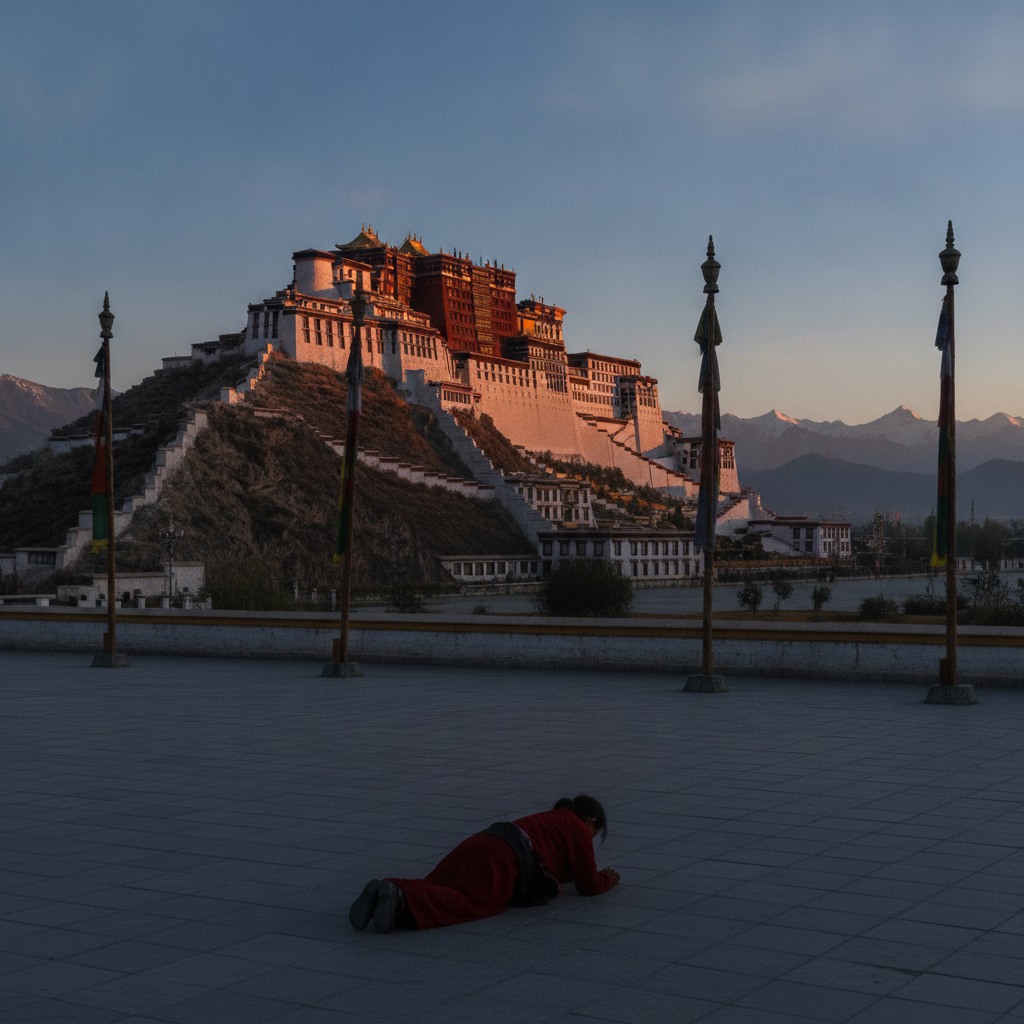
The 1,380-Year Pilgrimage Circuit That Has Been Walked Every Day Since 639 CE, the Golden Tomb Containing 18,680 Taels of Gold & the Train That Crosses 5,072 Meters to Reach the World's Highest Capital
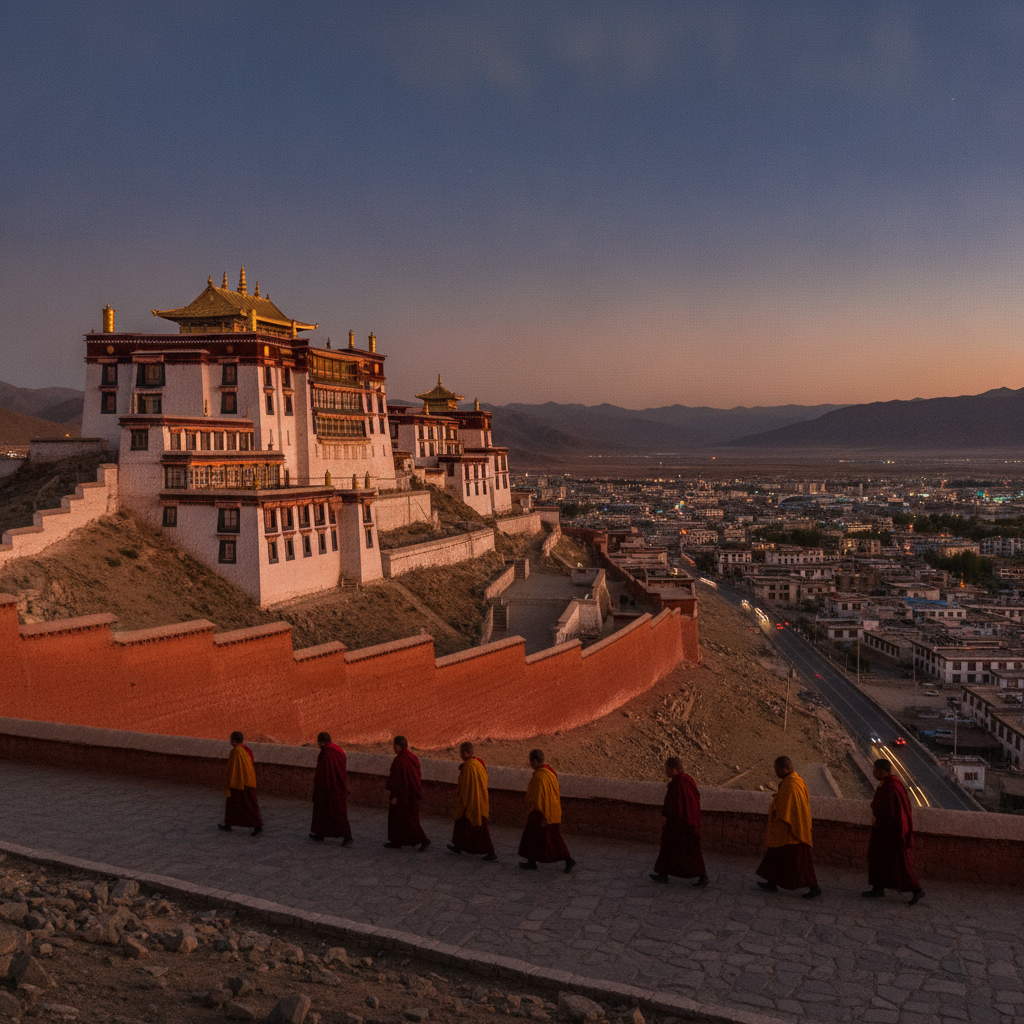
The Snow Leopard With a 35% Sighting Probability in 7 Days, the Shahtoosh Shawl That Required Killing 5 Antelopes & the 26-Meter Copper Buddha Plated With 300 kg of Gold
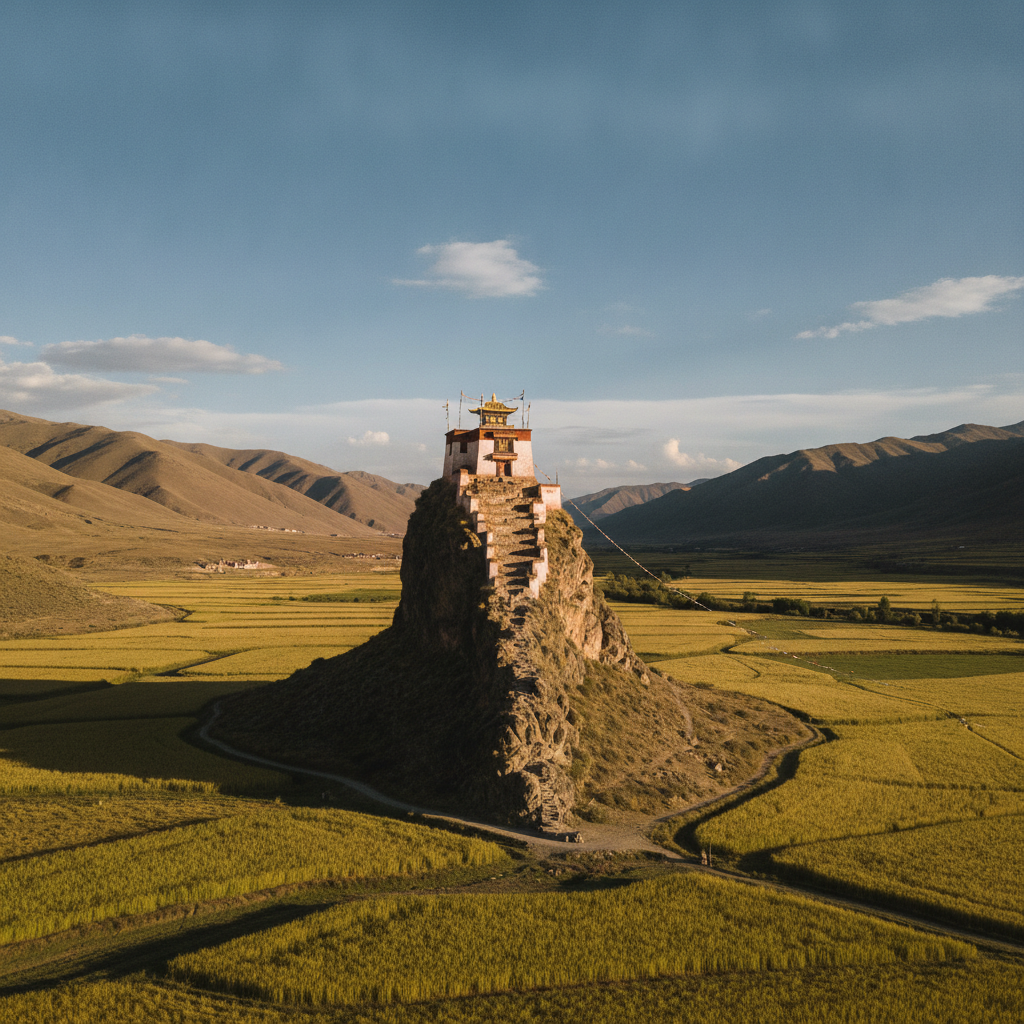
The First Building in Tibet Built Before 127 BCE, the 36-Position Pulse Diagnosis System & the Child Whose 1995 Recognition by the Dalai Lama Led Immediately to His Disappearance
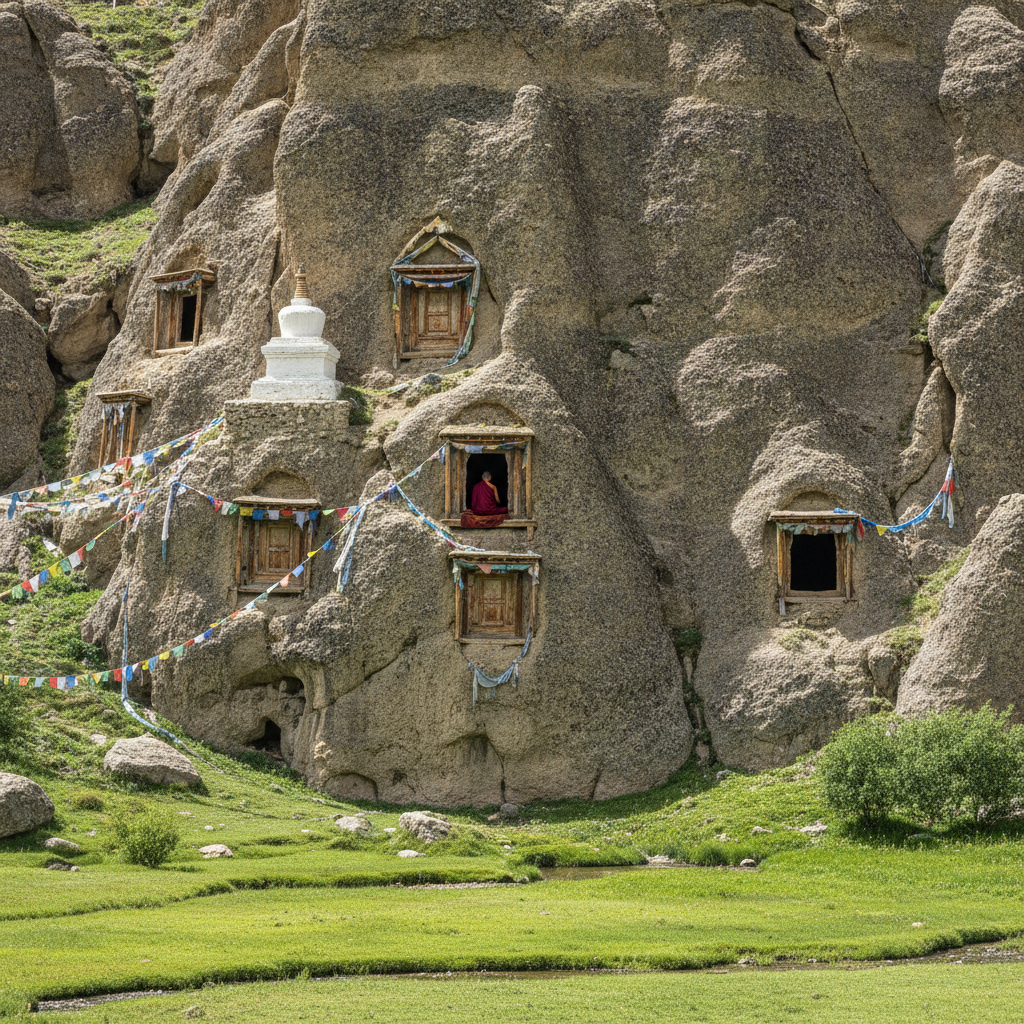
The 42 Meditation Caves Where Padmasambhava Subdued Tibet's Spirit World, the Yak-Hair Tent That Waterproofs Itself in Rain & Why the Kathmandu-to-Lhasa Overland Circuit Is the Most Complete Himalayan Experience