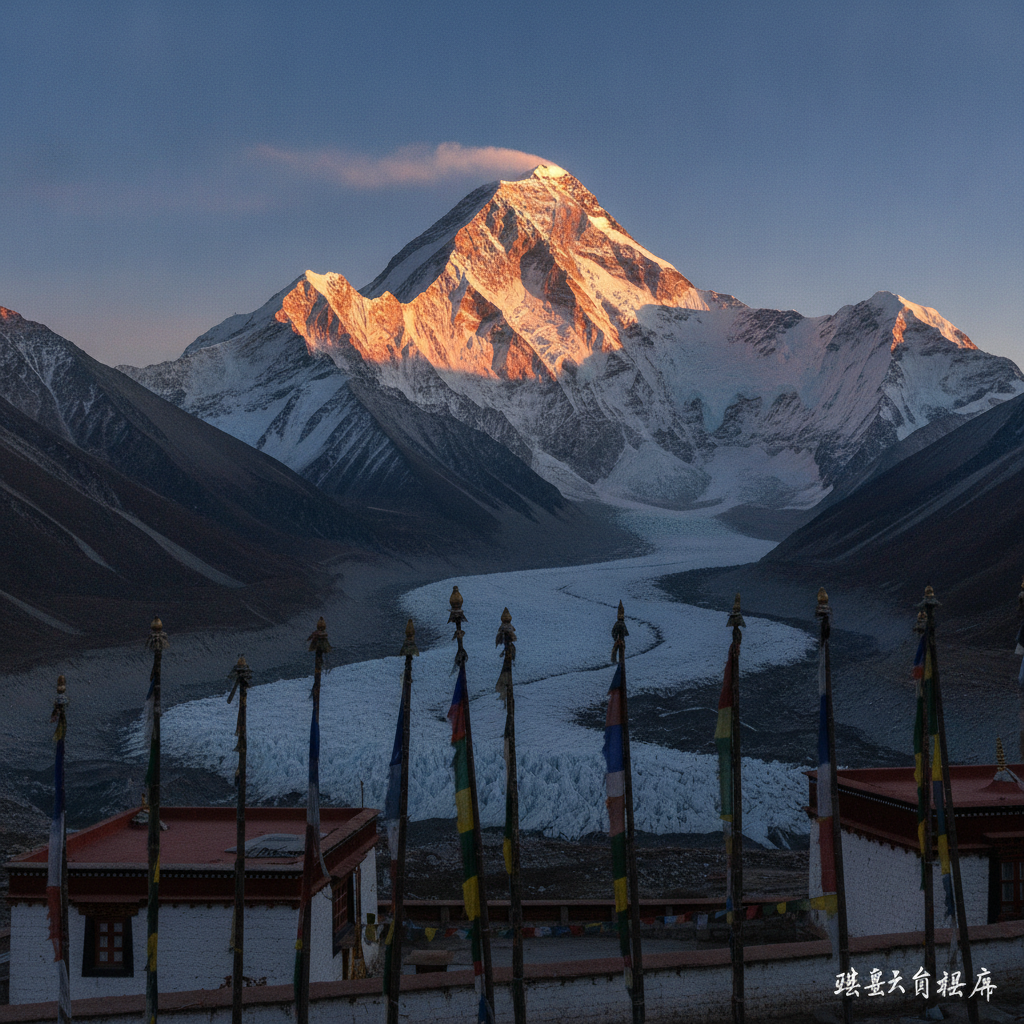
The 1,380-Year Pilgrimage Circuit That Has Been Walked Every Day Since 639 CE, the Golden Tomb Containing 18,680 Taels of Gold & the Train That Crosses 5,072 Meters to Reach the World's Highest Capital
The Jokhang's Barkhor circuit as the most continuously used pilgrimage route on earth since 639 CE; the 5th Dalai Lama's golden stupa containing 18,680 taels of gold and 15,000 pearls; the Sera Monastery afternoon monk debate using hand claps and pointing as the most theatrical spectacle in Tibetan religious education; the Tibet Travel Permit requirement for foreign nationals and the licensed guide mandate; the Qinghai-Tibet Railway crossing Tanggula Pass at 5,072m; and the sky burial as the most radical funeral practice in terms of human-nature relationships.
- 1
The Potala Palace – The World's Highest Fortress-Palace
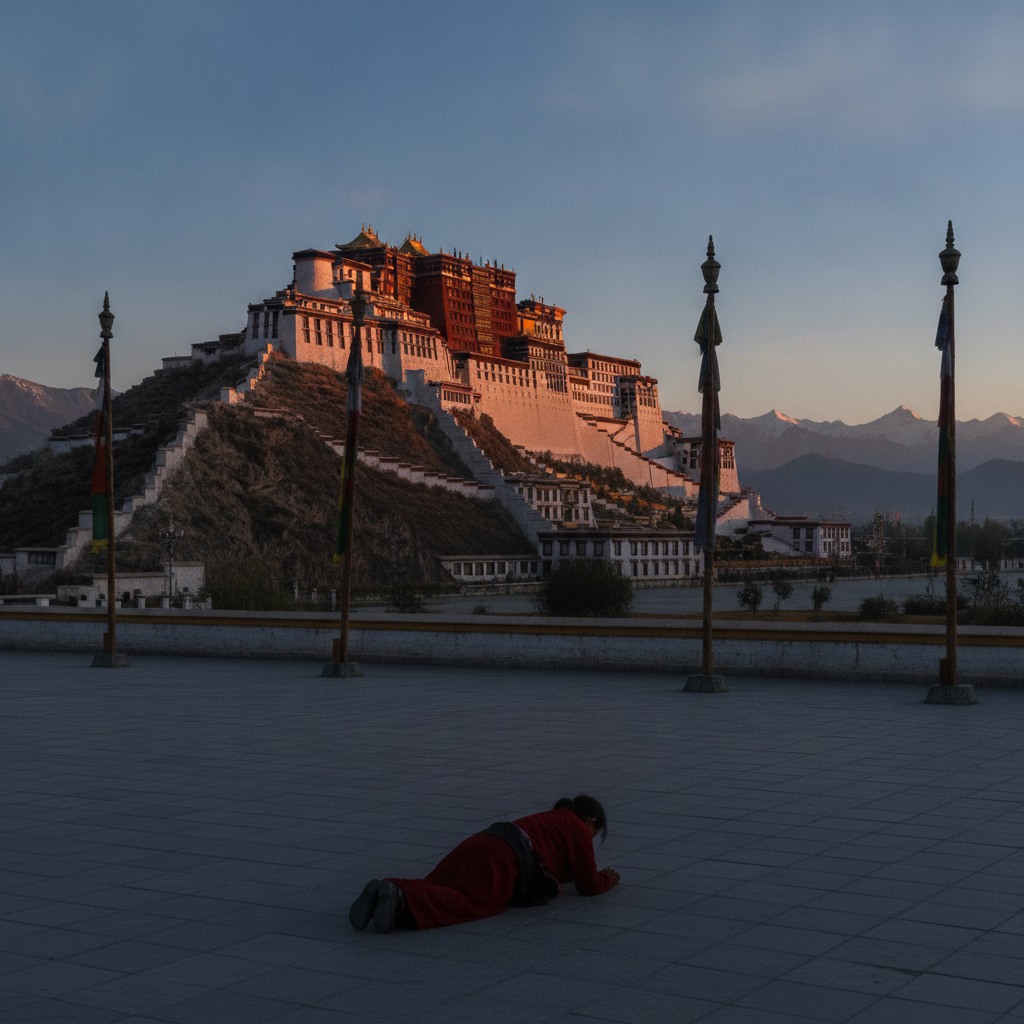
The Potala Palace (布达拉宫—Bùdálā Gōng): the UNESCO World Heritage winter palace of the Dalai Lamas, built on the Red Hill (Marpori—红山) at 3,700m above sea level in central Lhasa: the most recognizable building in Asia. The history (the original palace was built by the 33rd Tibetan King Songtsen Gampo (松赞干布) in the 7th century CE as a gift to his Chinese bride Princess Wencheng (文成公主); the current palace was constructed by the 5th Dalai Lama (Ngawang Lobsang Gyatso, 1617–1682) from 1645 to 1694): the structure (the 13-story palace contains 1,000 rooms, 10,000 shrines, and approximately 200,000 statues—the White Palace (Phodrang Karpo) for administrative functions and the Red Palace (Phodrang Marpo) for religious functions): the most sacred room (the tomb of the 5th Dalai Lama—the 3-story golden stupa containing the embalmed body of the 5th Dalai Lama, surrounded by 18,680 taels of gold, 15,000 pearls, and 1,000+ precious stones—the wealthiest single tomb interior in Asia by material value). The altitude effect (the Potala Palace sits at 3,756m—visitors from sea level experience significant breathlessness on the 300-step stone staircase approach to the main entrance—the recommended acclimatization time before the Potala climb is 48 hours at Lhasa altitude).
- 2
Jokhang Temple – The Spiritual Heart of Tibet
The Jokhang Temple (大昭寺—Dàzhāo Sì—'Great Enlightenment Temple'): the most sacred building in Tibetan Buddhism, the destination of the Barkhor circumambulation circuit, and the UNESCO World Heritage spiritual center of Lhasa. The founding (the Jokhang was built in 639 CE by King Songtsen Gampo to house the Jowo Rinpoche (觉沃仁波切—'Precious Lord')—the most sacred statue in Tibetan Buddhism: the image of the Buddha at age 12, brought to Tibet as part of Princess Wencheng's dowry from the Tang Emperor Taizong): the Jowo Rinpoche statue (the golden-bronze standing Buddha wearing an ornate jewel crown, housed in the innermost sanctum (Jowo Lhakhang) behind multiple door locks, accessible during limited prayer hours): the pilgrimage (the Barkhor (八廓街—Bāguò Jiē—the circumambulation route around the Jokhang): the 500m kora (circumambulation route) around the Jokhang temple that has been walked daily by Tibetan pilgrims for 1,380 years—the most continuously used pilgrimage circuit on earth): the butter lamp hall (the most dramatic interior of the Jokhang: the anteroom before the Jowo sanctum where hundreds of butter lamps burn continuously, tended by monks in yellow robes—the thick atmosphere of yak butter smoke and juniper incense that is the sensory signature of the Jokhang interior).
- 3
The Barkhor Circuit – Lhasa's Living Marketplace
The Barkhor Street (八廓街—Bāguò Jiē): the circular marketplace and pilgrimage circuit enclosing the Jokhang Temple—the most vibrant and oldest continuously inhabited street in Lhasa. The Barkhor function (the Barkhor serves simultaneously as: a Buddhist kora (circumambulation route) where pilgrims walk clockwise and accumulate merit; a traditional Tibetan market where butter, yak products, thangka paintings, prayer flags, jewelry, and religious objects are sold; and the most concentrated social gathering point in Lhasa for both Tibetan residents and visitors). The market goods (the Barkhor market specializes in: thangka paintings (唐卡—the traditional Tibetan Buddhist scroll paintings on cotton or silk depicting deities, mandalas, and the Wheel of Life—authentic hand-painted thangkas range from ¥500 to ¥500,000+ depending on size and detail); prayer wheels (转经筒—the hand-held metal cylinders containing a paper roll of the mantra 'Om Mani Padme Hum' (ॐ मणिपद्मे हूँ) that accumulates merit for each rotation); turquoise and coral jewelry (the traditional Tibetan jewelry materials—the most valuable pieces use natural turquoise from the Tibetan plateau and Mediterranean coral). The pilgrim demographics (the Barkhor pilgrims in 2024 are predominantly Tibetan (Tibetan women in their traditional chuba dress, the older men with amber beads and yak-hair-wrapped braids): the prostration pilgrims (the devotees performing full-body prostrations around the Barkhor—the most extreme physical pilgrimage practice in Tibetan Buddhism).
- 4
Tibetan Buddhism – Traditions, Schools & Practices
Tibetan Buddhism (the Vajrayana Buddhist tradition practiced across Tibet, Bhutan, Mongolia, and parts of Nepal and India): the foundational guide to the religion that defines every experience in Lhasa. The 4 major schools (the Tibetan Buddhist tradition has 4 main lineages: the Nyingma (rnying ma—'Ancient'), the Kagyu (bka' brgyud—'Oral Transmission'), the Sakya (sa skya—'Gray Earth'), and the Gelug (dge lugs—'Virtuous Way')—the Gelug school founded by Je Tsongkhapa (1357–1419) is the school of the Dalai Lamas and the dominant school in Lhasa): the Dalai Lama (the Dalai Lama (ཏཱ་ལའི་བླ་མ།—'Ocean Teacher')—the spiritual leader of the Gelug school—the title was created by the Mongol ruler Altan Khan in 1578 for the 3rd Dalai Lama and has been the head of the Gelug school since—the 14th Dalai Lama (Tenzin Gyatso, b. 1935) has lived in exile in Dharamsala, India, since 1959). The Kalachakra (the Wheel of Time initiation ceremony—the most elaborate of all Tibetan Buddhist initiations, performed publicly by the Dalai Lama approximately every 4 years—the 2024 Kalachakra was held in Bodhgaya, India): the sky burial (jhator—the Tibetan funeral practice of placing the deceased on a high rock platform for vultures to consume—the most radical funeral practice in Asia in terms of the relationship between human remains and the natural world).
- 5
Drepung, Sera & Ganden – The Three Great Monasteries
The Three Great Monasteries of Lhasa (the 3 primary Gelug Buddhist monasteries that together formed the most powerful religious university system in Asian history): the monastic circuit. Drepung Monastery (哲蚌寺—Zhébàng Sì—'Rice Heap Monastery'): founded 1416 CE; the largest monastery in the world at its peak (the early 17th century population of 10,000+ monks; the monastery complex covers 25 hectares): the Dalai Lama's first residence (Drepung was the principal residence of the first 4 Dalai Lamas before the Potala Palace was expanded). Sera Monastery (色拉寺—Sèlā Sì—'Wild Rose Fence Monastery'): founded 1419 CE; the most famous for the monk debate (the Sera Debating Court (辩经院)—the afternoon monk debate session (14:00–17:00 daily except Sunday): the most theatrical spectacle in Tibetan Buddhist education—the monks debate philosophical points using dramatic hand claps and pointing gestures, the method used to certify mastery of the Buddhist scriptures). Ganden Monastery (甘丹寺—Gāndān Sì—40 km east of Lhasa by road): founded 1409 CE by Je Tsongkhapa (the founding master of the Gelug school): the Ganden Thangka Festival (the annual display of the 20m × 30m golden thangka painting on the hillside above Ganden—the largest thangka in Tibet, displayed once per year on the 15th day of the 6th Tibetan month).
- 6
Lhasa Practical Guide – Permits, Altitude & Access
The Lhasa practical guide (the essential logistics for reaching and staying in Lhasa—the most regulated major tourist destination in China). The Tibet Travel Permit (西藏旅行许可证—the Tibet Entry Permit): required for all non-Chinese nationals and for Chinese nationals from Hong Kong, Macau, and Taiwan—the permit must be obtained before arrival in Tibet (it cannot be obtained at Lhasa airport or the railway station): the application process (the permit is obtained through a licensed Tibetan travel agency (the list of licensed agencies is available at the China National Tourism Administration website)—the permit takes 7–15 working days to process): the additional permits (the Alien's Travel Permit (外国人旅行许可证) is required for areas outside Lhasa city—including the Namtso Lake, the Samye Monastery, and Shigatse): the group requirement (foreign nationals cannot travel independently in Tibet—all foreign travel within Tibet must be on a booked tour with a licensed guide). The altitude (Lhasa sits at 3,656m—the altitude sickness risk for visitors from sea level: 70–80% of visitors experience mild symptoms (headache, fatigue) in the first 24–48 hours; 5–10% experience severe symptoms requiring descent): the acclimatization protocol (rest on arrival, drink water, avoid alcohol for 48 hours, do not ascend further until symptoms subside). The Qinghai–Tibet Railway (青藏铁路—the world's highest railway): the train from Xining (西宁, Qinghai) to Lhasa (1,956 km, 21 hours, maximum altitude 5,072m at Tanggula Pass): the most dramatic railway journey in the world.
Walk this route with audio
Stories play automatically as you reach each stop — no tapping needed.
More in Lhasa
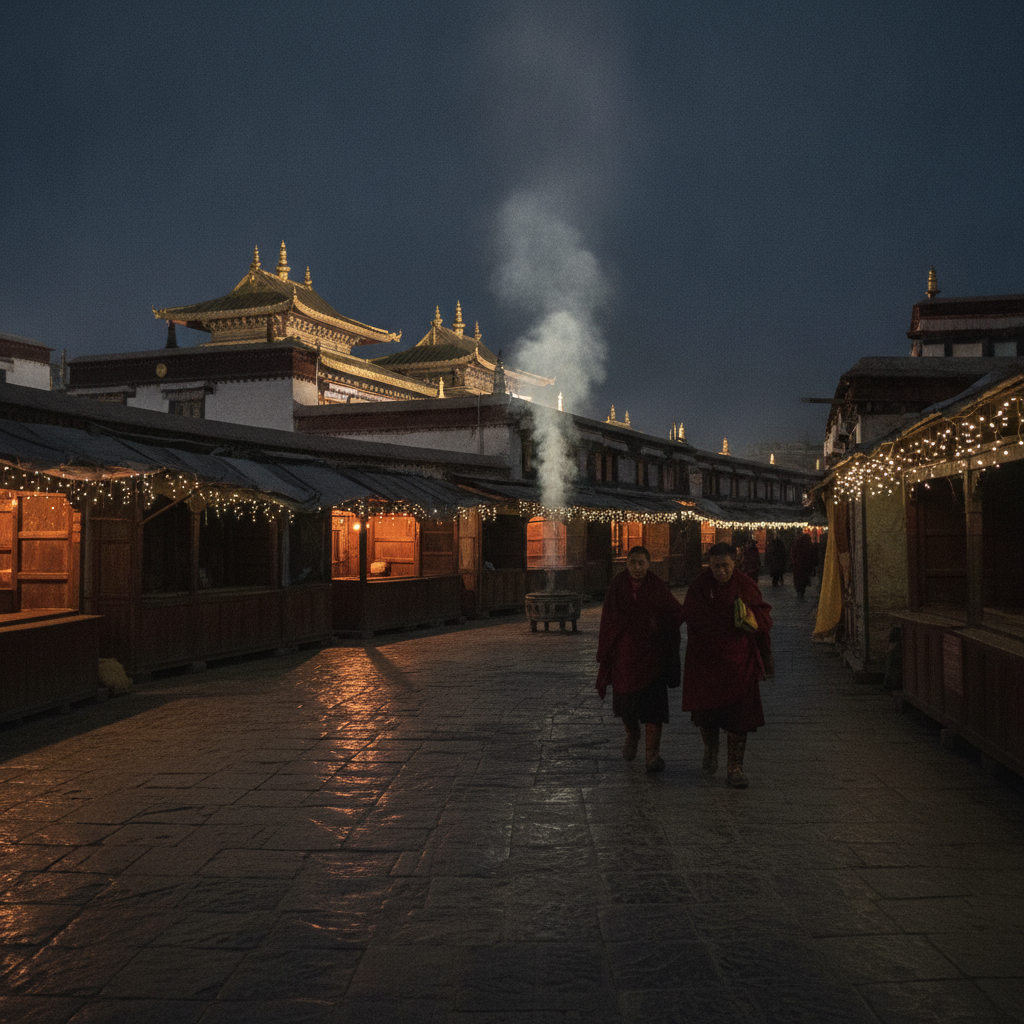
The Escape in a Soldier's Disguise in 1959, the Paving Stones Worn Concave by 1,380 Years of Pilgrim Feet & the Observatory at 5,100 Meters That Studies the Clearest Sky in Asia
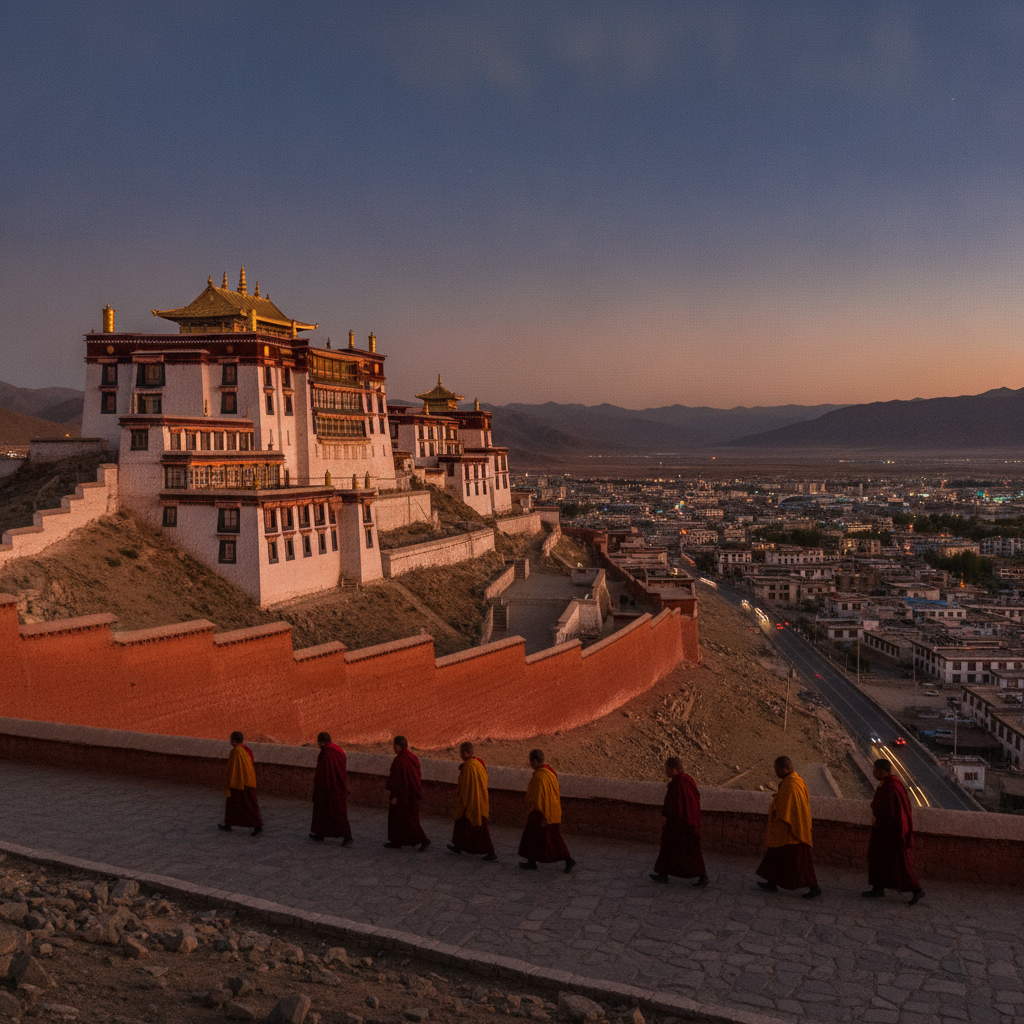
The Snow Leopard With a 35% Sighting Probability in 7 Days, the Shahtoosh Shawl That Required Killing 5 Antelopes & the 26-Meter Copper Buddha Plated With 300 kg of Gold
The First Building in Tibet Built Before 127 BCE, the 36-Position Pulse Diagnosis System & the Child Whose 1995 Recognition by the Dalai Lama Led Immediately to His Disappearance
The 42 Meditation Caves Where Padmasambhava Subdued Tibet's Spirit World, the Yak-Hair Tent That Waterproofs Itself in Rain & Why the Kathmandu-to-Lhasa Overland Circuit Is the Most Complete Himalayan Experience