Huaca Pucllana & Lima's Urban Archaeological Wonders
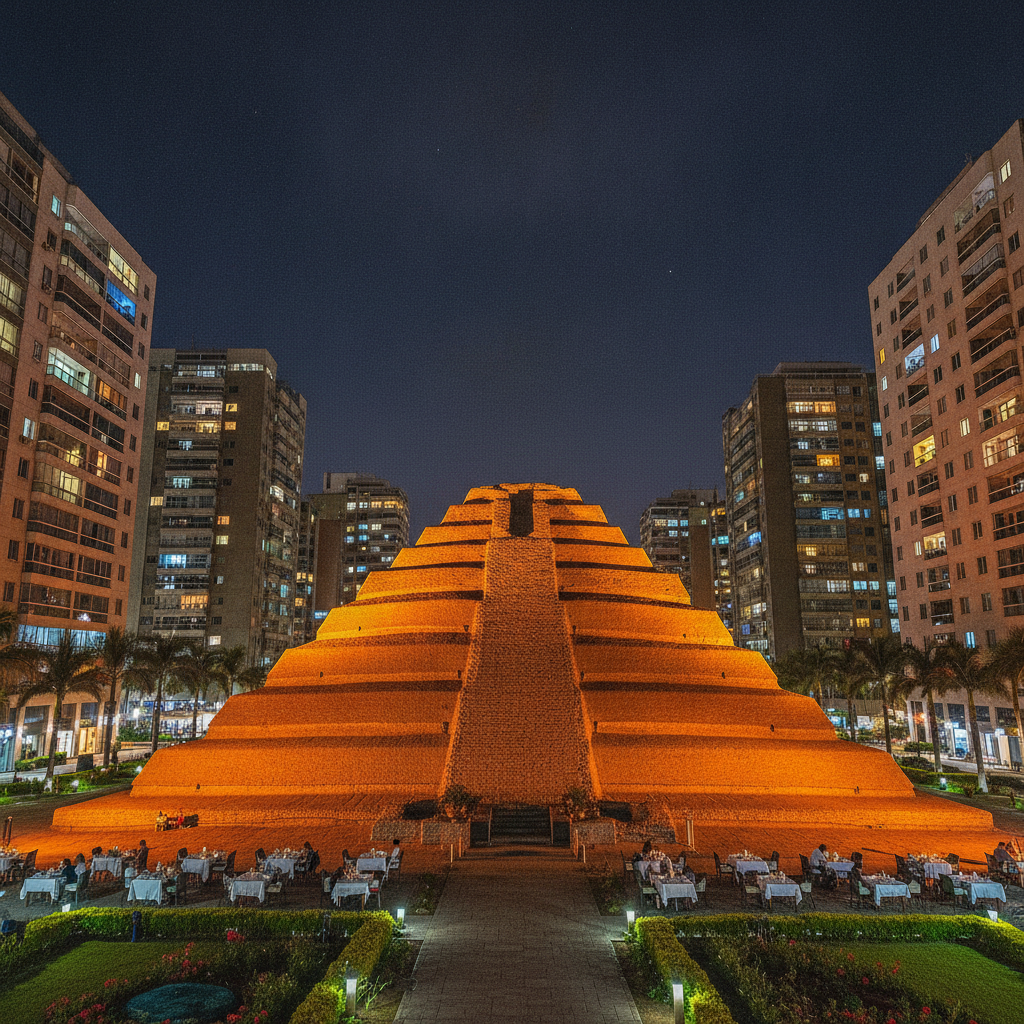
Lima's urban huacas (the pre-Columbian adobe pyramid temples that survive within the urban fabric of modern Lima — the most remarkable urban archaeology in the Americas): the Huaca Pucllana (the 22-metre (72-foot) tall adobe pyramid of the Lima culture in the middle of Miraflores, surrounded by apartment buildings and restaurants) is the most surreal and most memorable archaeological site that any major city in the world contains within its urban fabric.
- 1
Huaca Pucllana — Pyramid in the City
The Huaca Pucllana (Calle General Borgoño cuadra 8, Miraflores — the adobe pyramid of the Lima culture (c. 400-700 CE) in the heart of the Miraflores residential district): the pyramid (the 22-metre (72-foot) tall stepped adobe brick pyramid, covering approximately 7 hectares (17 acres) of the Miraflores urban fabric — the pyramid that was used as a ceremonial centre by the Lima culture for approximately 300 years before being abandoned and later used as a burial site by the Wari culture (c. 700-900 CE)): the construction (the pyramid constructed using the 'librero' technique — the characteristic Lima culture adobe construction method of stacking small rectangular adobe bricks vertically (like books on a shelf) rather than horizontally, a technique that gives the structure its earthquake resistance and its distinctive visual texture): the excavation (the ongoing archaeological excavation that has revealed the ceremonial plazas, the food preparation areas, and the elite burial sites of the Lima culture within the pyramid complex, the excavation that has produced some of the finest Lima culture textiles and ceramics in the world): the night experience (the Huaca Pucllana is dramatically illuminated at night by floodlights, and the surrounding garden serves as the setting for the Huaca Pucllana restaurant — the most atmospheric dining experience in Lima, with tables set at the foot of the illuminated pre-Inca pyramid).
- 2
Lima Culture — The First Urban Civilization of the Coast
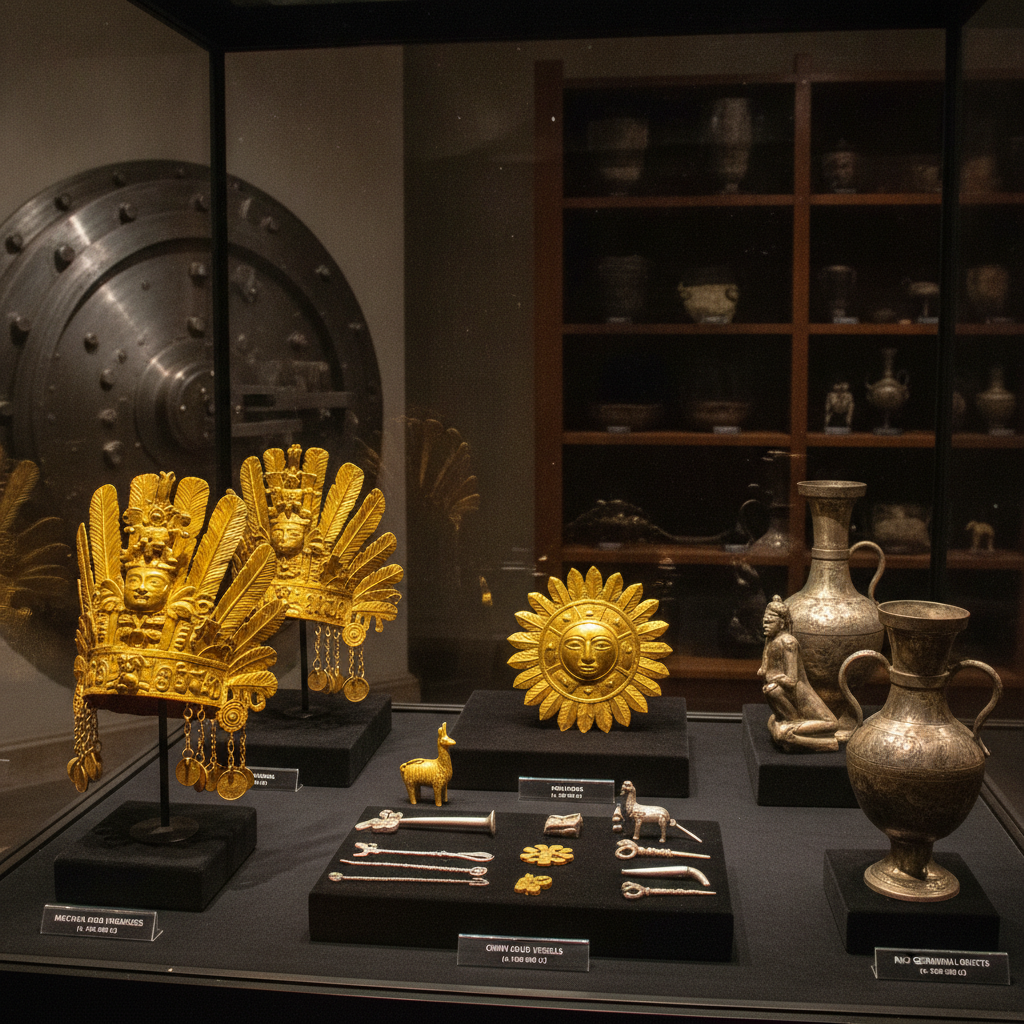
The Lima culture (the pre-Inca civilization that flourished on the central Peruvian Pacific coast from approximately 100 CE to 700 CE — the culture that built the earliest urban centres in the region that is now the city of Lima): the Lima culture (the culture that built the series of adobe pyramid ceremonial centres that still survive within the urban fabric of modern Lima — the Huaca Pucllana, the Huaca Huallamarca, the Huaca Pando, and others — the pyramids that were the centres of the civic and religious life of the Lima culture settlements): the Lima culture art (the ceramics (the distinctive Lima culture vessels — the white-on-red painted pottery with the geometric patterns and the modeled face-neck jars), the textiles (the interlaced woven textiles with the geometric patterns in ochre, brown, and cream colours), and the metal objects (the small gold and silver ornaments) that are the primary evidence for the Lima culture's artistic production): the transition to the Wari (the replacement of the Lima culture by the Wari culture (c. 700-900 CE) — the highland Andean culture that expanded from the Ayacucho Valley to dominate the Peruvian coast and highlands, the culture that used the Lima culture sites (including Huaca Pucllana) as burial grounds for their own dead.
- 3
Pachacámac — The Great Pre-Columbian Pilgrimage Centre
Pachacámac (the major pre-Inca and Inca ceremonial centre 31 km (19 miles) south of Lima at the mouth of the Lurín Valley — the most important pilgrimage site on the Pacific coast of South America for more than 1,000 years): the Pachacámac history (the site that was a major ceremonial centre of the Lima culture (c. 200-700 CE), then the Wari culture (c. 700-900 CE), then the Ichma culture (c. 900-1450 CE), and finally the Inca Empire (c. 1450-1533 CE) — the continuity of sacred use at this site over 1,300+ years): the Inca oracle of Pachacámac (the most important oracle in the Inca Empire — pilgrims from throughout the Tawantinsuyu (the Inca Empire) traveled to Pachacámac to consult the oracle of Pachacámac (the 'Pachacámac' deity — the 'Earth-maker' or 'Animator of the World' in Quechua), the wooden idol inside the Templo de Pachacámac): the site (the 465-hectare (1,149-acre) archaeological park with the Temple of the Sun (the Inca-built temple dedicated to the Inca sun god Inti), the Templo de Pachacámac, the Templo Pintado (the 'Painted Temple' — the Lima culture pyramid with the remains of polychrome painted murals on the exterior walls), and the Acllawasi (the 'House of the Chosen Women' — the Inca complex for the training of the 'aclla' (the chosen women who were dedicated to the service of the Inca religion)).
- 4
Lima's 'Garúa' Climate & Coastal Desert Ecology
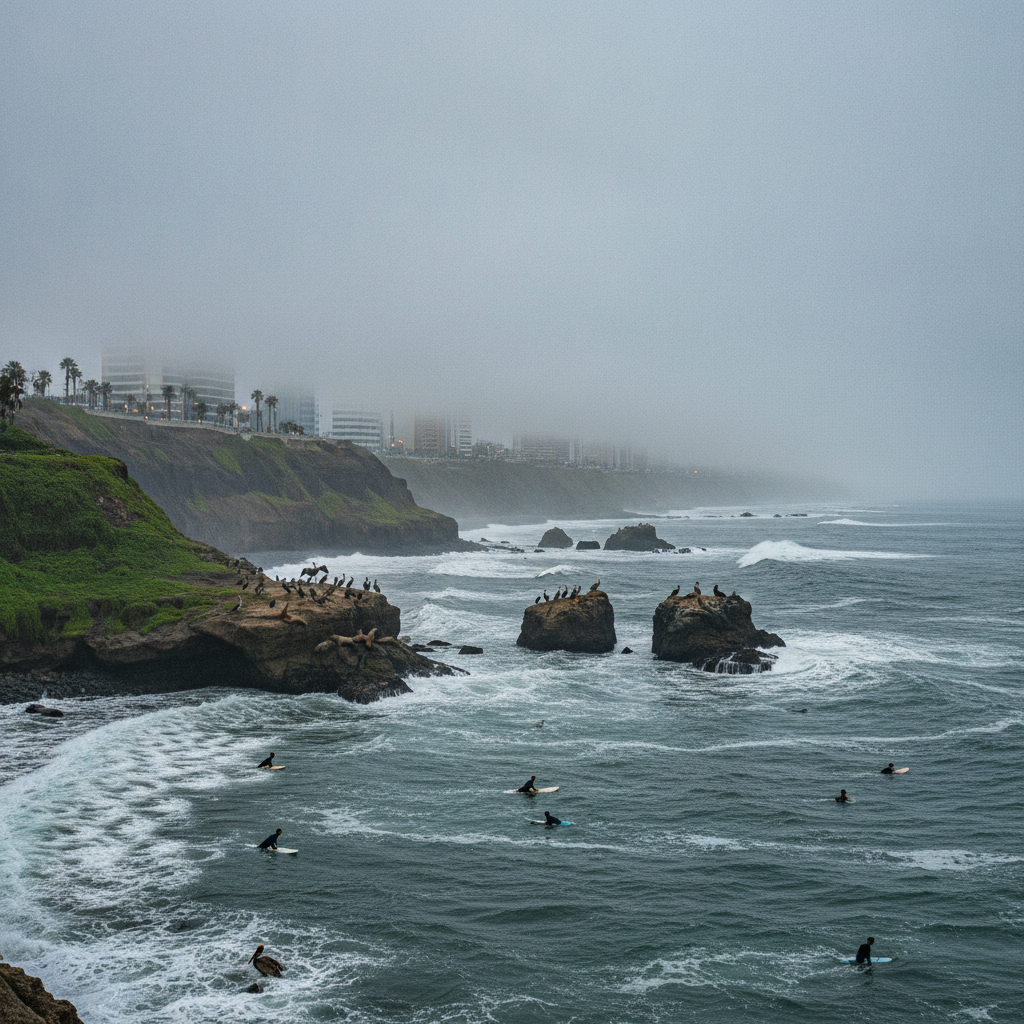
Lima's climate (the 'garúa' climate — the unique microclimate of the Lima metropolitan area, one of the most unusual urban climates in the world): the garúa (the 'garúa' (the mist or drizzle in Spanish) — the dense coastal fog and low-level cloud that covers Lima from May through October (the 'winter' season), driven by the cold Humboldt Current (the cold Pacific current that sweeps north from Antarctica along the coasts of Chile and Peru, cooling the Pacific surface water to approximately 16-18°C (61-64°F) year-round at Lima's latitude) and the temperature inversion that traps the cold, humid marine air below the warm air above): the result (the result of the garúa climate — the Lima sky that is overcast and grey from May through October, with occasional drizzle (the 'garúa' mist) that provides enough moisture to support the distinctive 'lomas' vegetation (the coastal fog oasis ecosystems on the slopes of the Andean foothills) but not enough to be considered rain): the Lima November-April (the 'summer' — the season of clear skies and temperatures of 25-30°C (77-86°F) when the cloud clears and the Pacific sun illuminates the city — the season when Lima's beaches fill and the Pacific becomes swimmable).
- 5
Chinatown (Barrio Chino) & Lima's Asian Communities
Lima's Barrio Chino (the 'Barrio Chino' — the Chinatown of Lima, centred on the Calle Capón (Jirón Ucayali) in the Centro Histórico of Lima — the oldest Chinatown in Latin America and one of the most historically significant Chinese communities in the Americas): the history of Chinese immigration to Peru (the 'culí' — the Cantonese Chinese indentured labourers who were brought to Peru between 1849 and 1874 under the 'contract labor' programme (the 'sistema de enganche' — the 'hook system'), the programme that brought approximately 100,000 Cantonese workers to Peru to replace the freed slave labour force on the coastal plantations and in the construction of the coastal railways): the chifa (the 'chifa' — the Peruvian-Chinese fusion cuisine that emerged from the Cantonese immigrant community's adaptation of Cantonese cooking techniques to the available Peruvian ingredients — the cuisine that has become the most popular restaurant category in Lima by number of establishments (30,000+ chifa restaurants in Lima)): the Barrio Chino today (the Calle Capón (the pedestrian street of Lima's Chinatown, marked by the 'Arco Chino' (the Chinese Gate — the ornamental gate built in 1999 with materials donated by the People's Republic of China), the narrow street lined with the chifa restaurants, the Chinese grocery stores, and the herbal medicine shops of the Chinese-Peruvian community).
- 6
Lima Nightlife — From Salsa to Electronic Music
Lima's nightlife (the nightlife of the gastronomic capital of the Americas — the city where nightlife begins late (the bars fill after midnight, the clubs after 1 AM) and continues until dawn): the salsa scene (the salsa dancing culture of Lima — the city where the 'salsa limeña' (the Lima style of salsa dancing, influenced by the Cuban and Colombian styles but with its own footwork patterns) is danced in the salsa clubs of Barranco (the La Habana (Avenida Manuel Segura 143, Barranco — the most famous salsa venue in Lima)) and the dance schools of Miraflores): the Barranco nightlife (the bars and clubs of Barranco that make the district the primary nightlife destination in Lima — the Bar Ayahuasca (Prolongación San Martín 130, Barranco — the most beautiful bar in Lima, housed in a restored early 20th century mansion with the bar set in the high-ceilinged colonial rooms and the garden patio)), the Craft beer bars of Barranco (the Bar Piselli, the Barbarian, and the other craft beer bars that have made Barranco the craft beer hub of Lima): the electronic music scene (the electronic music and DJ culture of Miraflores and San Isidro — the clubs of the Óvalo Gutiérrez district that host the international DJs and the Lima electronic music producers who have made Lima one of the most vibrant electronic music cities in Latin America).
Walk this route with audio
Stories play automatically as you reach each stop — no tapping needed.
More in lima
Lima's Coastal Walk: From Barranco to Miraflores
Barranco, Peñas & Lima's Bohemian Colonial District
Lima's Pacific Coast: Surfing and Sea Lions
Museo Larco: Peru's Greatest Pre-Columbian Collection
Machu Picchu, Cusco & Peru's Inca Heritage