LX Factory, Alcântara & the 25 de Abril Bridge: Industrial Lisbon Reborn
The riverside district of Alcântara, west of Belém and beneath the massive towers of the 25 de Abril suspension bridge, was Lisbon's industrial heartland in the 19th and 20th centuries — its textile factories, shipyards, and industrial buildings occupying the Tagus waterfront for several kilometers. Today the same district has become the center of Lisbon's creative economy, with the LX Factory — a converted textile mill — as the most vibrant creative hub in the city, and the adjacent waterfront serving as a major cultural and gastronomic destination.
- 1
LX Factory (Fábrica Braço de Prata)
The LX Factory, occupying the 19th-century Companhia de Fiação e Tecidos Lisbonense textile factory complex on Rua Rodrigues de Faria, is a permanent 'pop-up city' of creative businesses, restaurants, bars, art galleries, bookshops, and cultural venues that has occupied the abandoned industrial buildings since 2008. The brick factory buildings are maintained in a deliberate state of creative dereliction — graffiti murals cover the walls, the original machinery halls host concerts and markets, and the Sunday market (every Sunday, 10am-6pm) is the best place in Lisbon to browse for vintage design, independent crafts, and local food. The resident community includes some of Lisbon's best restaurants (Time Out Market's precursor aesthetic was developed here) and the Ler Devagar bookshop — housed in a former printing hall with a full-scale vintage printing press suspended from the ceiling and a bicycle embedded in the wall.
- 2
25 de Abril Bridge (Ponte 25 de Abril)
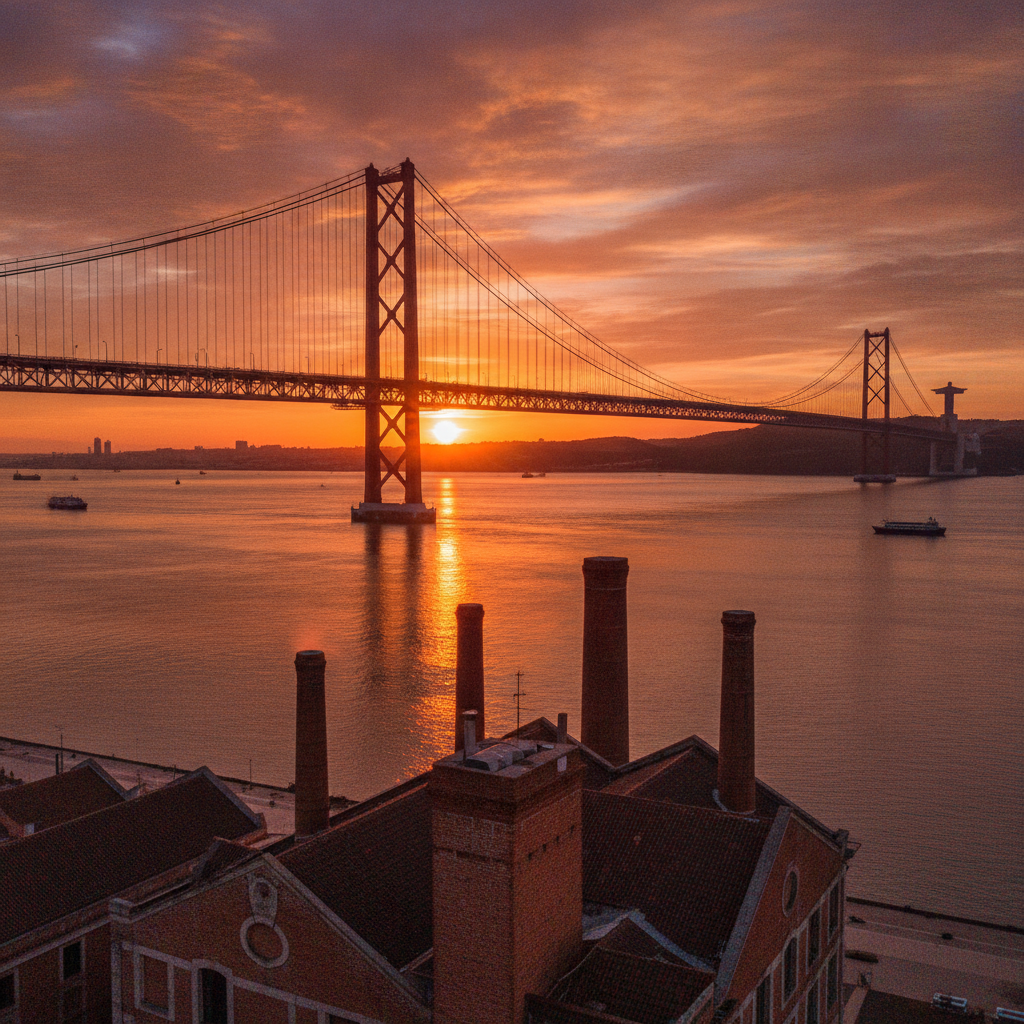
The Ponte 25 de Abril, the suspension bridge crossing the Tagus between Almada and Lisbon, was opened in 1966 as the Salazar Bridge (after the dictator António de Oliveira Salazar) and renamed after the Carnation Revolution of April 25, 1974 that ended 48 years of authoritarian rule. It is visually similar to the Golden Gate Bridge in San Francisco (it was built by the same company, American Bridge, using the same engineering principles) and was for decades the longest suspension bridge in Europe. The bridge has a lower deck carrying the suburban railway (added in 1999) beneath the road deck. The viewpoint from the Alcântara waterfront, looking up at the bridge towers and out to the Cristo Rei statue across the Tagus, is one of Lisbon's most dramatic urban compositions.
- 3
Cristo Rei (seen from Alcântara)
Cristo Rei, the 28-meter statue of Christ with outstretched arms standing on a 75-meter concrete pedestal on the south bank of the Tagus opposite Lisbon, was inaugurated in 1959 as a Portuguese answer to the Christ the Redeemer statue in Rio de Janeiro — built in fulfillment of a vow made by Portuguese Catholic bishops during World War II if Portugal was spared from the conflict. The statue's combined height (133 meters from the ground to the top of the arms) makes it visible from throughout Lisbon; at night it is illuminated and visible from even greater distances. It can be visited from Almada (accessible by ferry from Cais do Sodré or by crossing the 25 de Abril Bridge by bus) and has a lift to the observation platform at the top of the pedestal with panoramic views of Lisbon and the Tagus.
- 4
Museum of Electricity (Museu da Electricidade)
The Museu da Electricidade, in the monumental red-brick Tejo Power Station (Central Tejo) that supplied Lisbon with electricity from 1909 to 1972, is the most remarkable industrial heritage building in Lisbon — a cathedral-scale engine hall with enormous steam turbines, boilers, and electrical generators still in place, the scale and completeness of the industrial archaeology unmatched in Portugal. The museum presents the history of electricity and the Lisbon power network through the original machinery, including the world's largest surviving collection of steam electricity-generating equipment from the early 20th century. The power station's exterior — its massive brick chimney stacks visible from the Tagus — has become one of the defining images of the western Lisbon waterfront.
- 5
Docas de Alcântara & Santo Amaro Marina
The Docas de Alcântara (Alcântara Docks) and the adjacent Santo Amaro Marina occupy the former cargo docking facilities beneath the 25 de Abril Bridge, their warehouses converted in the 1990s into a strip of bars, restaurants, and nightclubs along the Tagus waterfront. The transformation of Lisbon's docks from working industrial infrastructure to leisure destination began here in the late 1980s, preceding the more complete EXPO 98 redevelopment to the east. The marina itself, with its yachts and sailboats against the backdrop of the bridge towers, offers a particularly scenic evening destination in summer.
- 6
Time Out Market Lisboa (Mercado da Ribeira)
The Time Out Market Lisboa, in the Mercado da Ribeira — Lisbon's main municipal market hall (1882, iron-and-glass structure by Cesar Igrejas Caetano) on the Cais do Sodré waterfront — opened in 2014 as the first outpost of what has since become a global food market brand. The concept (curated stalls representing the best of Lisbon's restaurant scene, including Michelin-starred chefs cooking simple dishes at accessible prices) was developed in Lisbon before being replicated in New York, Miami, Dubai, and Montreal. The market draws over 4 million visitors annually and has both democratized access to top-quality Lisbon cuisine and transformed the Cais do Sodré neighborhood from a red-light district into one of the city's most dynamic quarters.
Walk this route with audio
Stories play automatically as you reach each stop — no tapping needed.
More in lisbon
Alfama & São Jorge Castle: Lisbon's Moorish Heart
Parque das Nações: Expo '98 and Lisbon's City of the Future
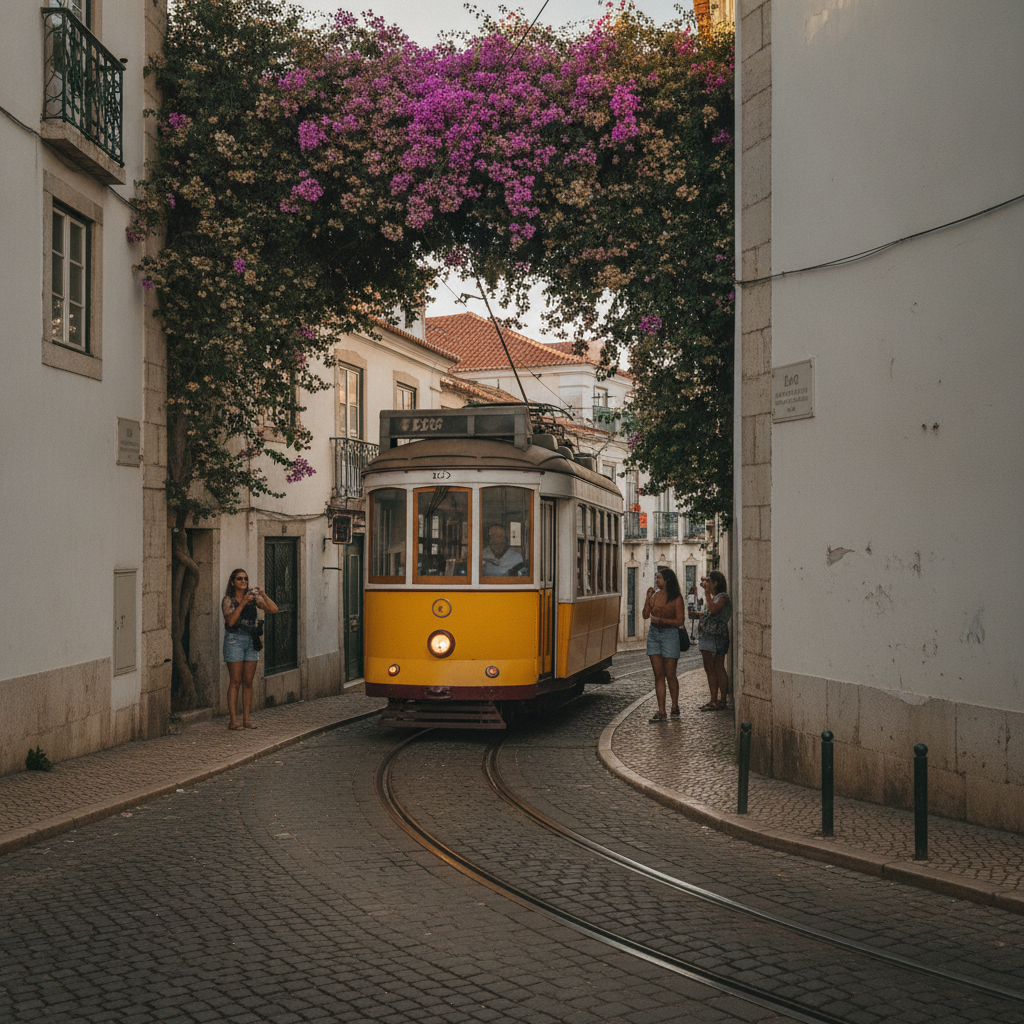
Tram 28, Estrela & Campo de Ourique: Lisbon's Most Scenic Ride
Cascais & Estoril: The Portuguese Riviera by the Sintra Line
Mouraria, Intendente & Graça: Lisbon's Most Authentic Neighbourhoods