Tram 28, Estrela & Campo de Ourique: Lisbon's Most Scenic Ride
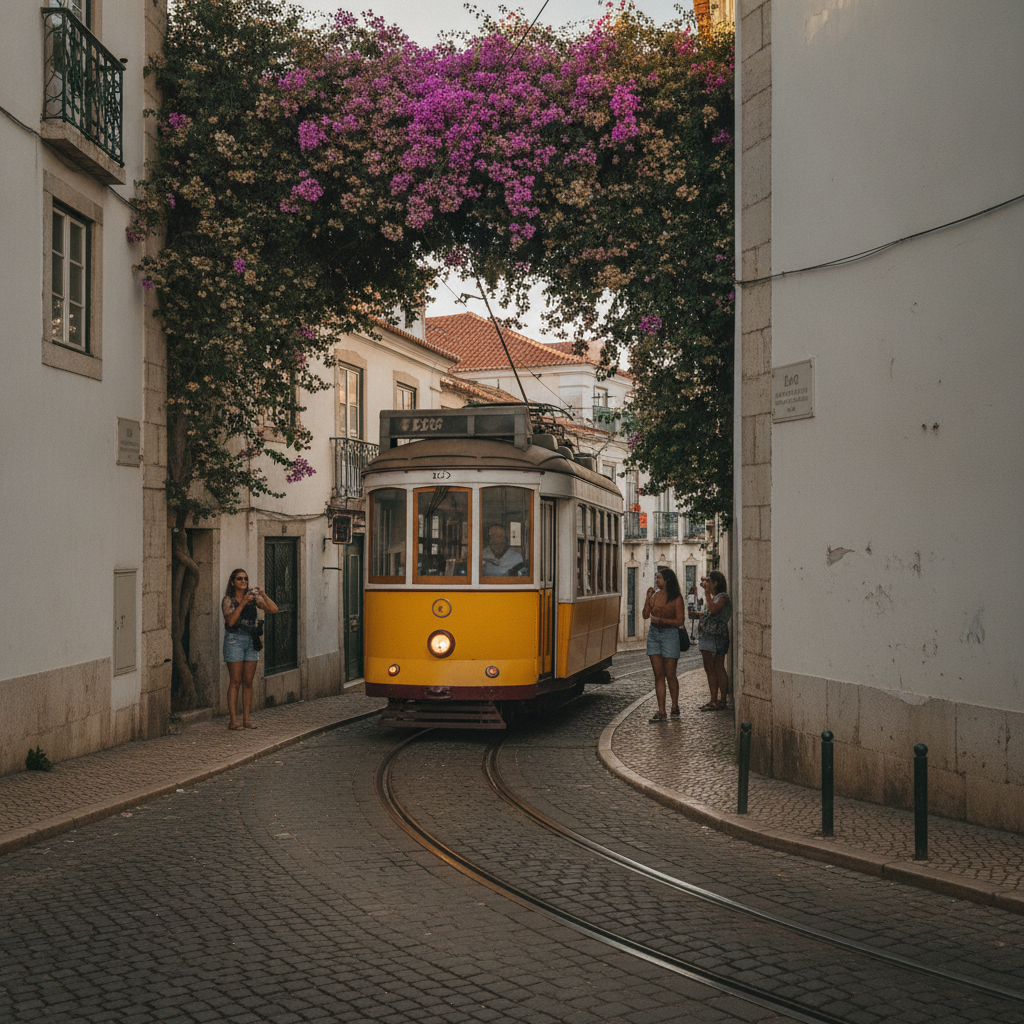
Lisbon's historic yellow trams — the eléctricos — are as much a part of the city's identity as its hills, its fado, and its azulejos. The most famous route, Tram 28, runs from Martim Moniz through Alfama, past the cathedral, up through the Chiado, across the Largo de Camões, and into the western neighborhoods of Estrela and Campo de Ourique. The full 7-km ride takes about 45 minutes and passes through more of Lisbon's essential streetscape than any other single transit line.
- 1
Largo de Camões & Tram 28 Boarding
The Largo de Camões — the small square in Chiado flanked by a neo-classical statue of Portugal's national poet Luís de Camões (1524-1580), author of Os Lusíadas, the epic of Portuguese maritime expansion — is one of the main boarding points for Tram 28 heading west. The square itself is a favorite meeting point for Lisbonites and tourists alike, its cafés spilling onto the pavement under the shadow of the statue. Camões is depicted as a classical warrior-poet, one eye missing (he lost it in battle in Morocco), draped with allegorical figures representing his epic heroes and the peoples he wrote about. The tram line (inaugurated 1914) uses original vintage carriages on narrow-gauge tracks and is one of the few surviving examples of historic electric tramways in regular daily service.
- 2
Santos & Madragoa Neighbourhoods
The tram passes through Santos and Madragoa — two of Lisbon's least touristic central neighborhoods, their streets of 18th-century buildings, neighborhood bakeries, and corner tascas (taverns) little changed since the Pombaline reconstruction. The Museu Nacional de Arte Antiga (National Museum of Ancient Art), known to Lisbonites as 'the Janelas Verdes' (Green Windows) for the distinctive color of its window shutters, is the most important art museum in Portugal outside the Gulbenkian — its collection spans Portuguese painting from the 15th to 18th centuries (including Nuno Gonçalves' Panels of Saint Vincent, the most important medieval painting in Portugal), Flemish masters, and the decorative arts of the Portuguese empire.
- 3
Estrela Basilica (Basílica da Estrela)
The Basílica da Estrela, the large white neo-Classical and Baroque church visible from throughout the western part of Lisbon, was built between 1779 and 1790 by Queen Maria I (the first queen regnant of Portugal) in fulfillment of a vow she made if she bore a male heir. The church — whose twin towers and dome dominate the Estrela skyline — is the earliest neo-Classical church in Portugal. Queen Maria I (who spent her later years insane, confined in the Queluz National Palace where she died in 1816) is buried in the sacristy. The church's extraordinary presepio (Christmas nativity scene), created for Queen Maria I in 1783 by the sculptor Machado de Castro using over 500 cork-and-terracotta figures, is displayed annually.
- 4
Estrela Garden (Jardim da Estrela)
The Jardim da Estrela (Estrela Garden), opposite the basilica, is the most elegant and well-maintained of Lisbon's Victorian public gardens — a romantic English-style landscape of winding paths, mature trees, duck ponds, a Victorian bandstand (still used for Sunday concerts), and a 19th-century iron-and-glass greenhouse. Created in 1842 on the grounds of a former convent, the garden was redesigned in 1852 by the landscape architect João Federico Ludovice and remains the favorite park of the Estrela and Campo de Ourique residential neighborhoods. The café-kiosk at the center of the garden, beneath ancient magnolia trees, is one of the most pleasant outdoor seating experiences in Lisbon.
- 5
Prazeres Cemetery (Cemitério dos Prazeres)
The Cemitério dos Prazeres ('Cemetery of Pleasures' — the name pre-dates its use as a burial ground), opened in 1833 during a cholera epidemic, is the oldest and largest cemetery in Lisbon and one of the most remarkable examples of 19th-century funerary architecture in Europe. Its avenues of towering cypress trees are lined with elaborate family tombs and mausoleums — neo-Gothic chapels, Egyptian Revival obelisks, Romantic portraits in stone — housing the remains of major figures in Portuguese political, artistic, and intellectual life. The writer Fernando Pessoa (1888-1935) was originally buried here (he was transferred to the Jerónimos Monastery in 1985). The Tram 28 terminates at the Prazeres stop immediately outside the cemetery gate.
- 6
Campo de Ourique Market & Neighbourhood
Campo de Ourique, the residential neighborhood at the end of the Tram 28 line, is one of the most sought-after addresses in Lisbon — its grid of late 19th-century streets lined with pastelaria, bakeries, delicatessens, and neighborhood restaurants that serve the area's predominantly professional resident population. The Mercado de Campo de Ourique (1934, a functionalist covered market hall recently renovated as a gourmet food market) is the second-most-visited food market in Lisbon after the Time Out Market, its stalls representing a well-curated selection of Portuguese cuisine and craft producers. The neighborhood also contains the Estrela Park (Parque da Estrela), a recently opened extension of the Estrela Garden across the former railway marshalling yards.
Walk this route with audio
Stories play automatically as you reach each stop — no tapping needed.
More in lisbon
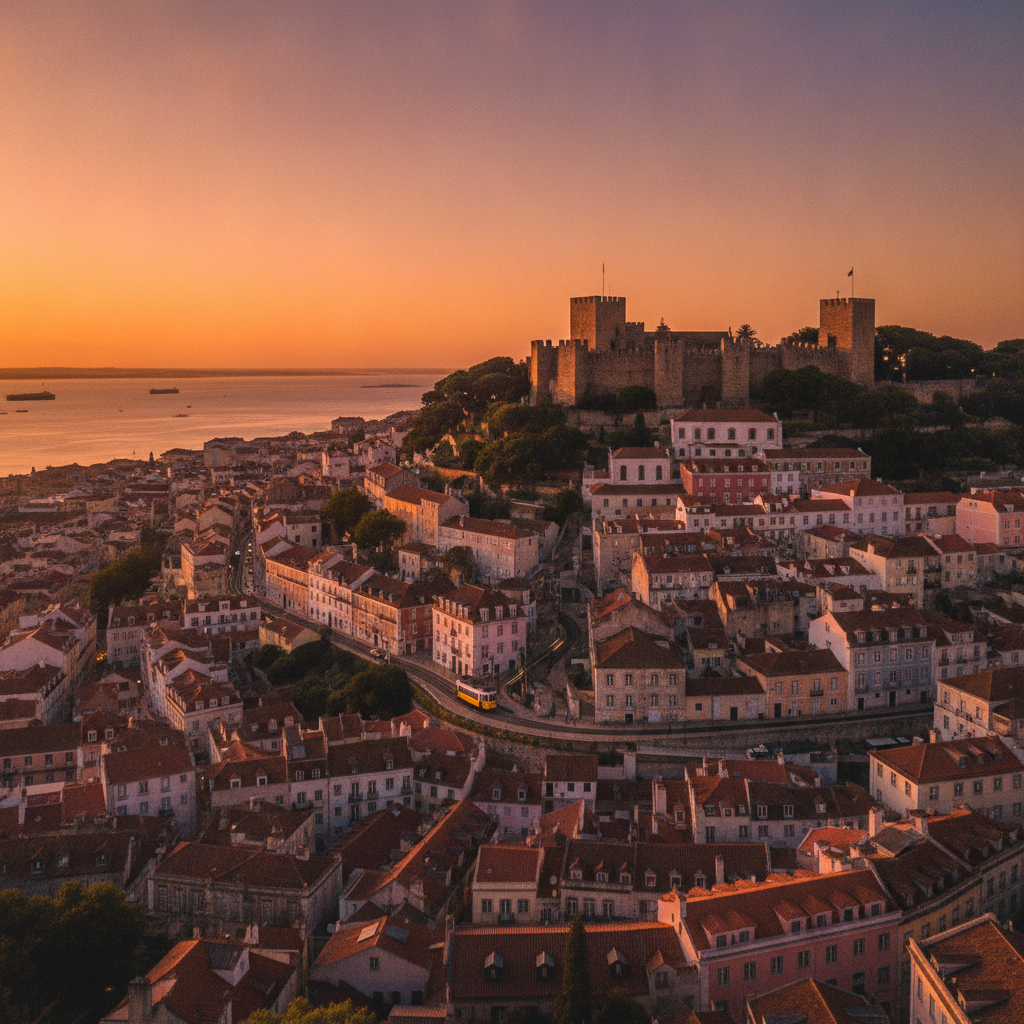
Alfama & São Jorge Castle: Lisbon's Moorish Heart
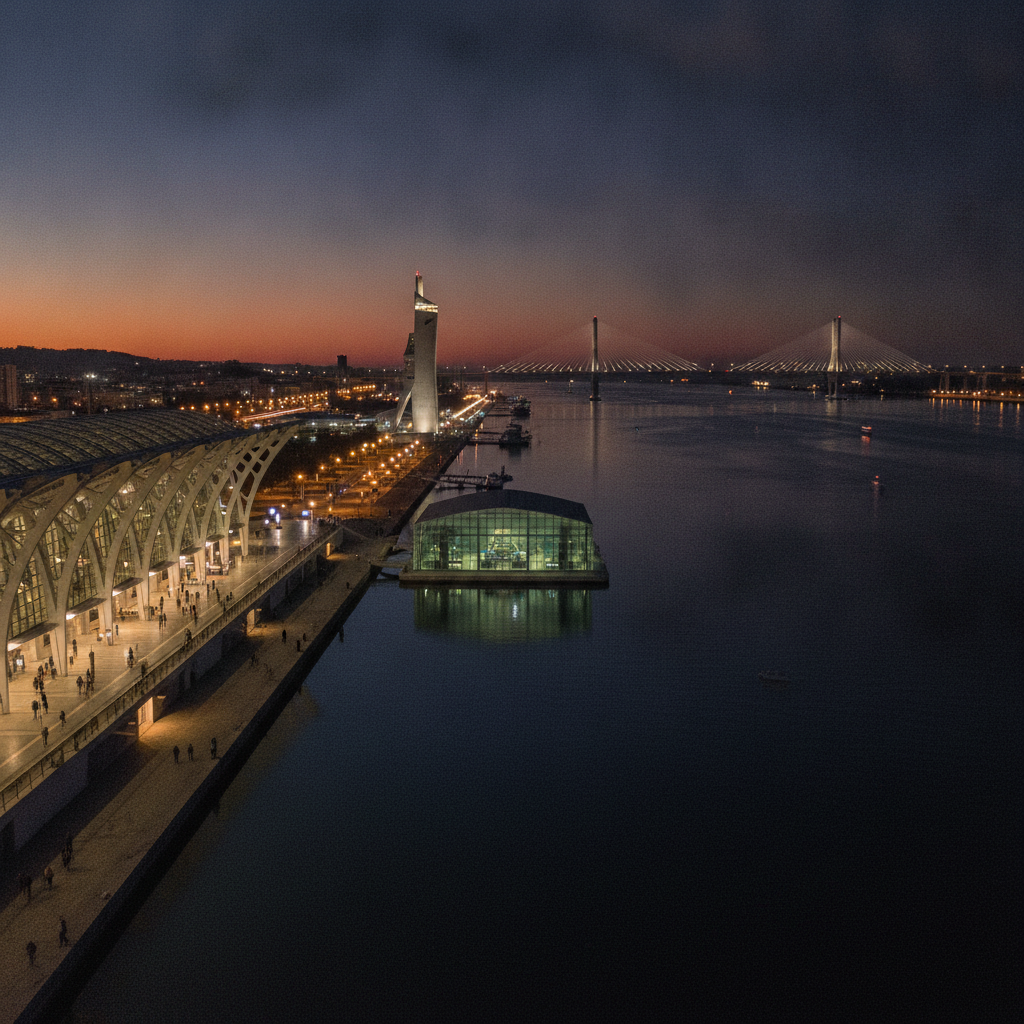
Parque das Nações: Expo '98 and Lisbon's City of the Future
LX Factory, Alcântara & the 25 de Abril Bridge: Industrial Lisbon Reborn
Cascais & Estoril: The Portuguese Riviera by the Sintra Line

Mouraria, Intendente & Graça: Lisbon's Most Authentic Neighbourhoods