Ljubljana on a Plate: Štruklji, Slovenian Wine & the Open Kitchen
Taste a cuisine that blends Austrian dumplings with Italian pasta and Adriatic seafood—Ljubljana's Friday Open Kitchen market with 60 food vendors, outstanding Rebula and Teran wines from Slovenia's micro-appellations, the intensely nutty pumpkin seed oil from Styria, and the secret-recipe Bled cream cake that has been made since 1953.
- 1
Slovenian Cuisine – Between Central Europe & Mediterranean
Slovenian cuisine uniquely combines Central European (Austrian, Hungarian) and Mediterranean (Italian, Venetian) traditions across a tiny country. Štruklji (rolled dumplings with sweet or savoury fillings), žganci (buckwheat porridge), potica (a walnut-filled yeasted roll—Slovenia's national pastry), and idrijski žlikrofi (potato dumplings from Idrija) all appear in Ljubljana's traditional restaurants alongside fresh Mediterranean seafood from the Adriatic coast.
- 2
Open Kitchen & Ljubljana's Street Food Scene
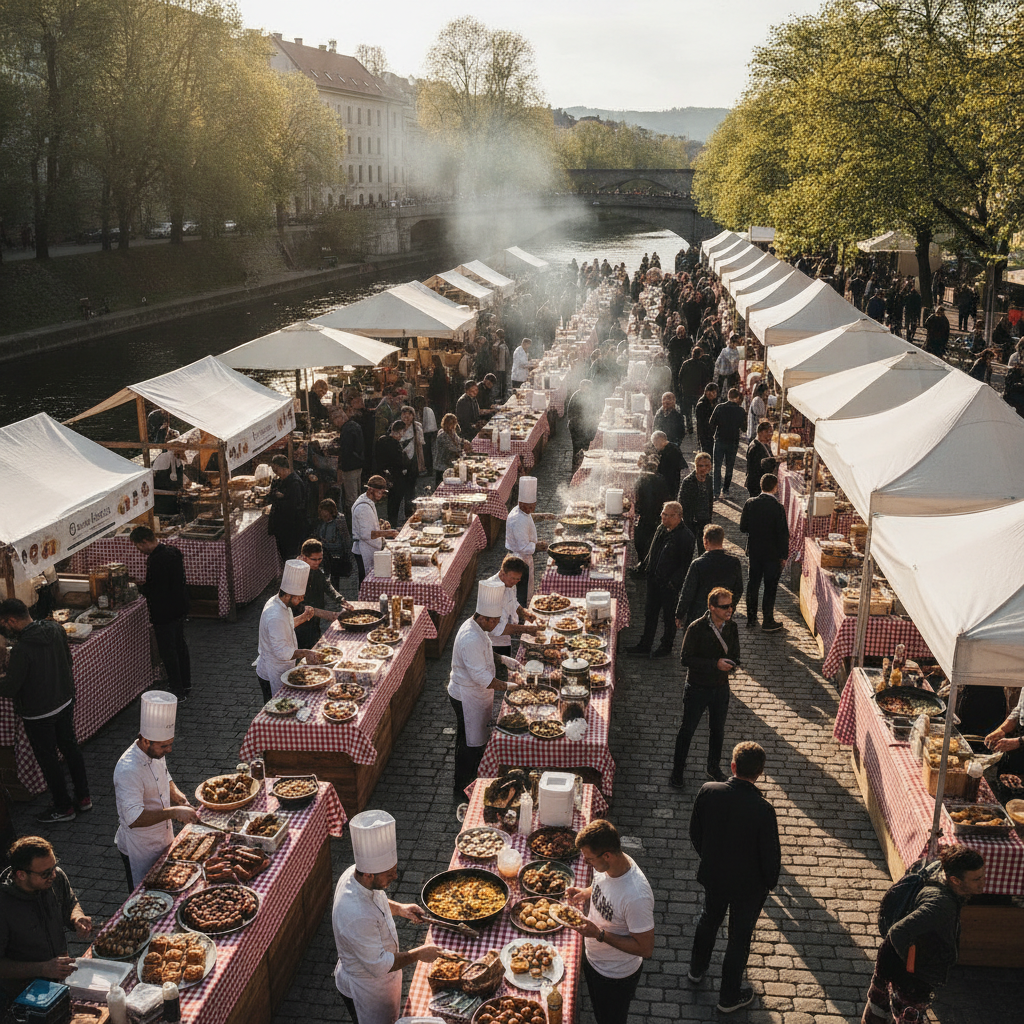
The Friday Open Kitchen (Odprta Kuhinja) at the Central Market attracts 60+ vendors from 10 am to 9 pm in the warmer months. Local chefs test new concepts, traditional Slovenian producers sell grilled meats and pumpkin seed oil, and international food trucks round out the offer. The event has become so popular that a winter edition operates indoors November–March. It is the single best food experience in Ljubljana.
- 3
Slovenian Wine – Rebula, Teran & Malvazija
Slovenia's three wine regions produce wines of startling quality at prices far below equivalent quality in France or Italy. The Goriška Brda region (bordering Italian Friuli) produces outstanding Rebula (Ribolla Gialla) white; the Karst (Kras) region's iron-rich red soil produces Teran—a unique, high-acid red from Refosco grapes; Malvazija from the Vipava Valley and the Slovenian coast rounds out a remarkable indigenous white wine tradition.
- 4
Pumpkin Seed Oil – Slovenia's Black Gold
Styrian pumpkin seed oil (bučno olje) is produced from a specific pumpkin variety (Cucurbita pepo var. styriaca) grown in the Štajerska region of northeastern Slovenia. Cold-pressed to a dark green-black oil with an intense nutty flavour, it is used as a condiment on salads, soups, and vanilla ice cream. The oil has EU Protected Designation of Origin status and is Slovenia's most distinctive culinary product—exported in small quantities but best tasted fresh.
- 5
Bled Cream Cake & Slovenian Patisserie
Blejska kremna rezina (Bled cream cake) is Slovenia's most famous pastry—two layers of flaky puff pastry enclosing a thick vanilla custard cream, served since 1953 in the Park Hotel Bled. The recipe is secret; the cream cake can only be tasted at certain Bled and Ljubljana venues. Slovenian patisserie also includes potica (walnut roll), gibanica (a multi-layered poppy seed, walnut, and cheese strudel from the Prekmurje region), and kremšnita (cream cake variants).
- 6
Ljubljana Restaurant Scene
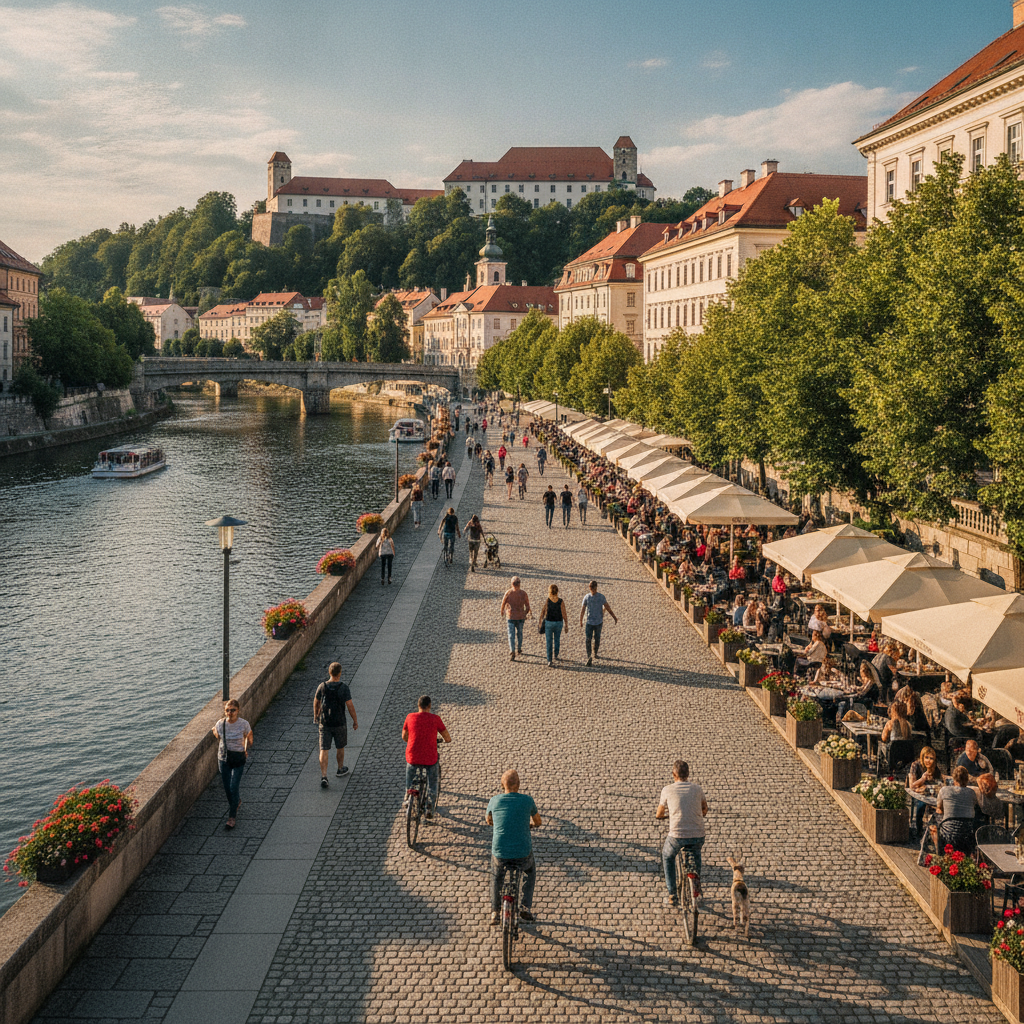
Ljubljana's restaurant scene has developed rapidly since the 2000s—the city now has several Michelin-starred and Bib Gourmand establishments. JB Restaurant (Janez Bratovž) pioneered Slovenian fine dining; Atelje and Monstera Bistro serve creative modern Slovenian cuisine. The riverside café terraces serve everything from Slovenian wine to coffee; the covered market brasseries are the best value for traditional Slovenian home cooking at lunch.
Walk this route with audio
Stories play automatically as you reach each stop — no tapping needed.
More in Ljubljana
Ljubljana Day Trips: Bled, Postojna Cave & the Adriatic at Piran
Ljubljana Essentials: Castle, Plečnik's Bridges & River Cafés
Ljubljana Identity: Independence, Triglav & Europe's Greenest Capital

Ljubljana Art & Architecture: Plečnik's Library, Laibach & Modern Culture