Lombok's Deeper Cuts: Segara Anak's Twin Pilgrimage Traditions, Desert Point's World-Record Barrel & Ayam Taliwang's Sasak Chilli Heat
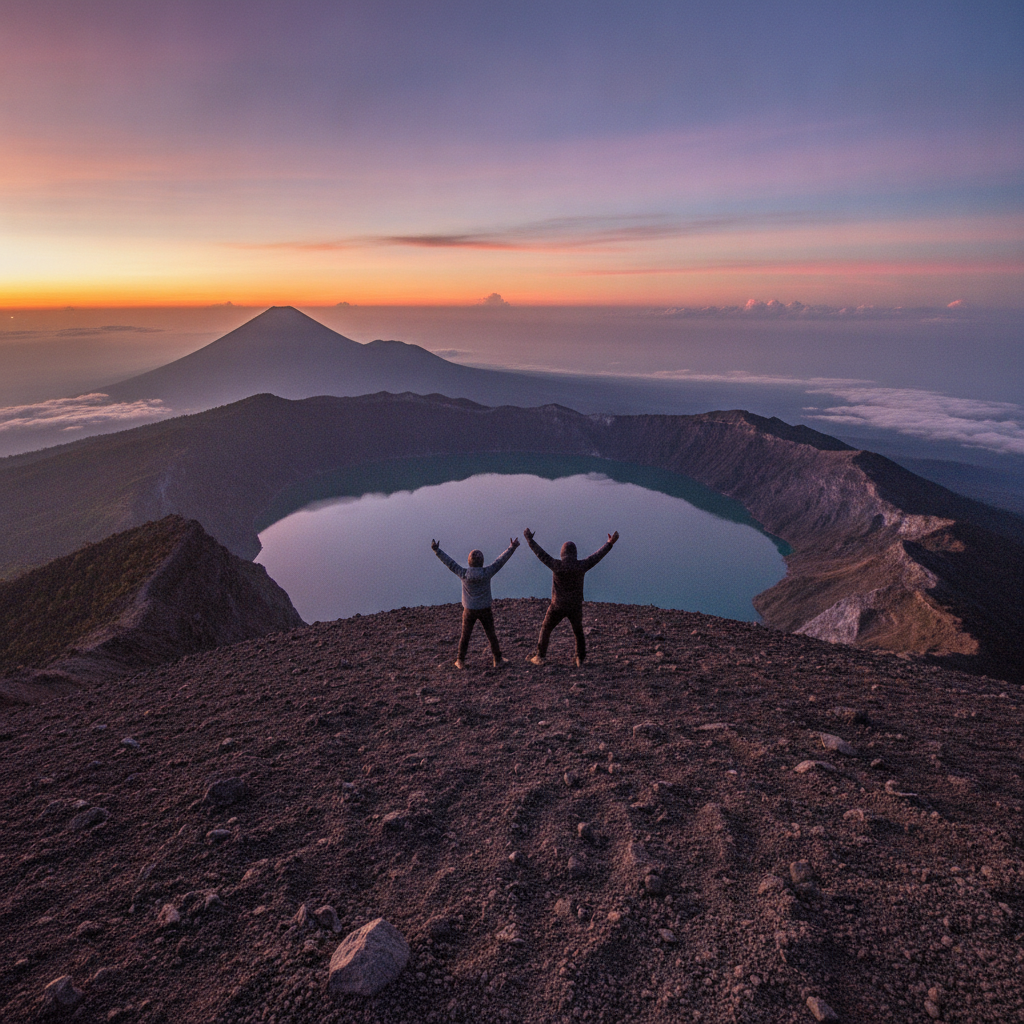
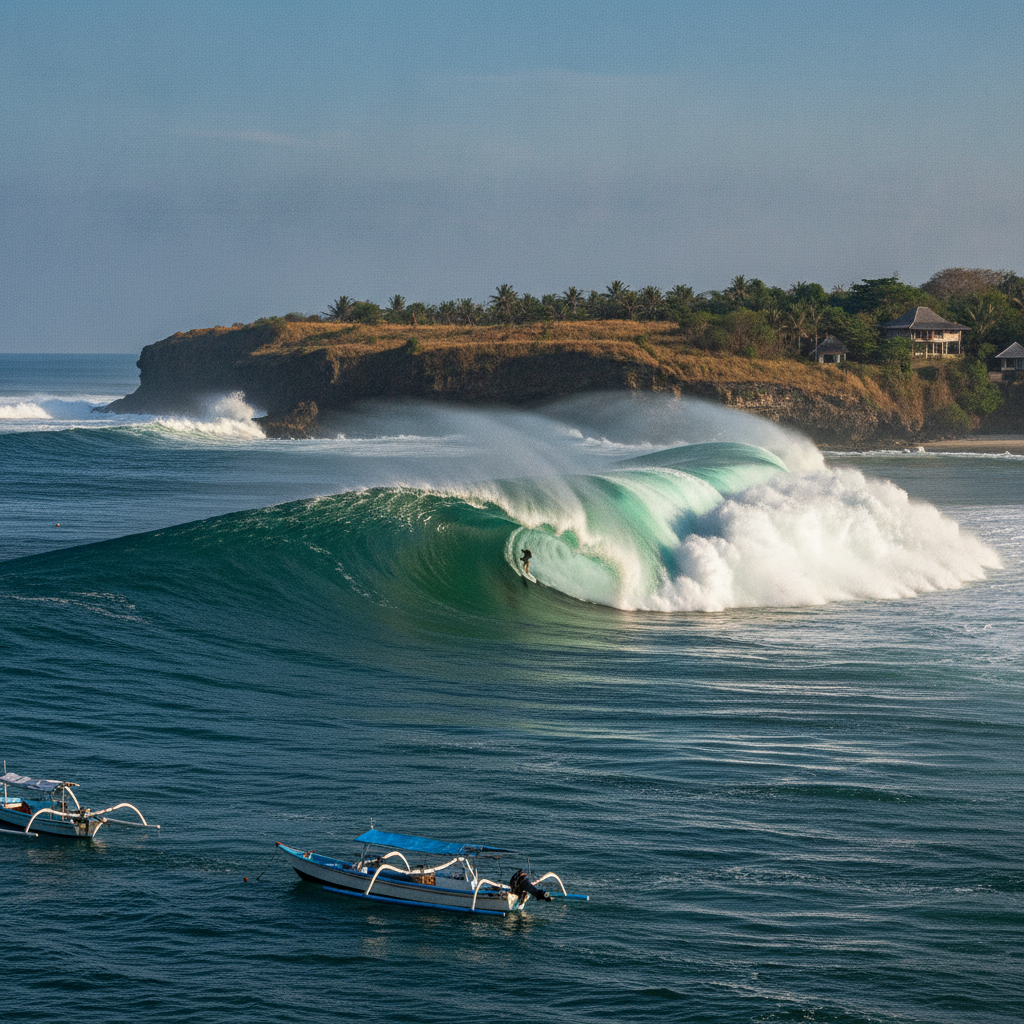
Muslim Sasak pilgrims casting gold into Segara Anak lake for Dewi Anjani and Balinese Hindus performing water purification at the same lake shore—parallel sacred traditions at 2,000 metres in a volcanic caldera; Desert Point's 300-metre left-hand barrel over shallow coral that only fires on south swell with northeast offshore wind and has a 60-metre world-record tube ride; the Rinjani scops owl and Lombok white-eye species found nowhere else on Earth in the national park's 125,000 hectares; Sukarara village's backstrap-loom songket weavers (the dowry tradition of weaving cloth before marriage still maintained in some villages); Ayam Taliwang's half-chicken grilled over coconut charcoal with pelecing kangkung; and the Wallace Line in the Lombok Strait marking the boundary between Asian and Australian faunal regions that Alfred Russel Wallace identified in 1859.
- 1
Rinjani's Spiritual Significance – The Sacred Lake & Offerings
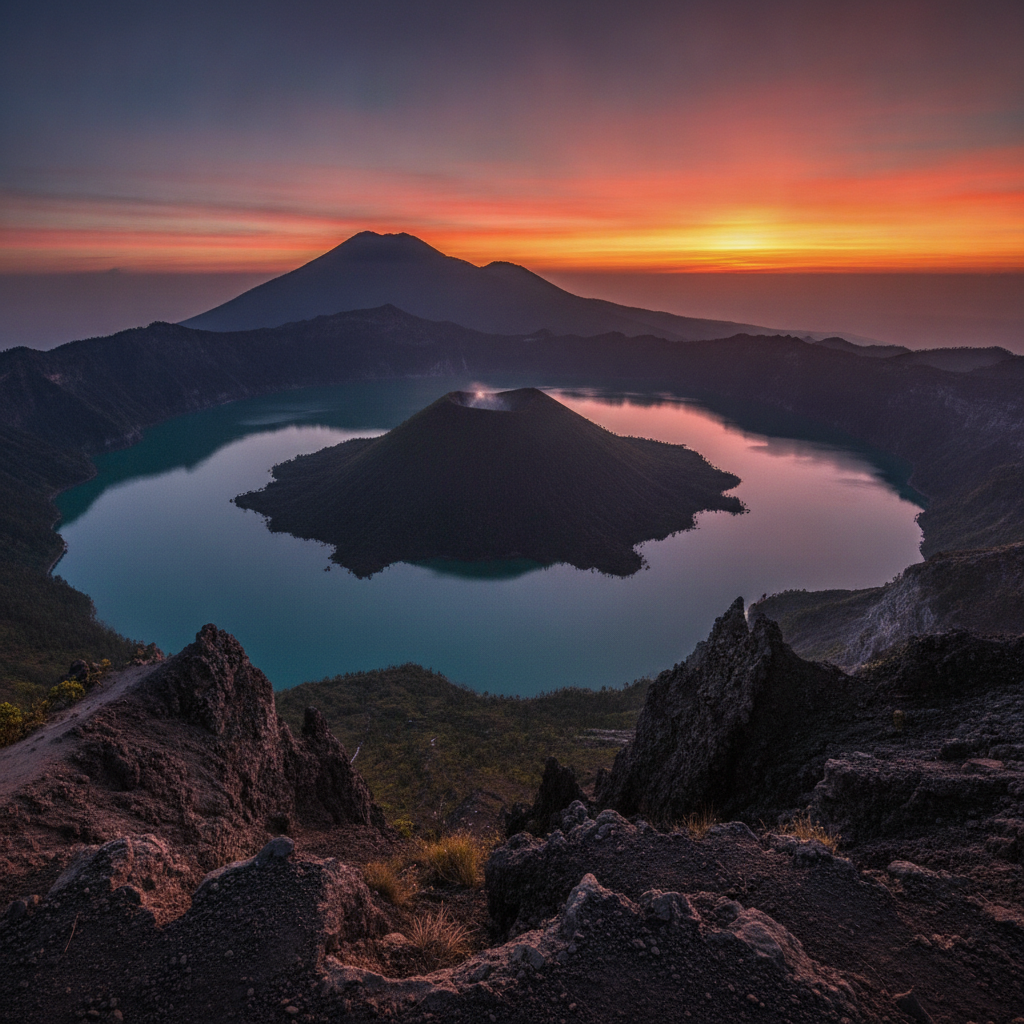
Segara Anak (the crater lake of Mount Rinjani)—regarded as sacred by both the Sasak Muslim majority and the Balinese Hindu minority of Lombok—is the destination of two distinct but parallel pilgrimage traditions. The Sasak pilgrimage: Rinjani is identified with the spirit Dewi Anjani (a female spirit of great power who inhabits the mountain)—the Sasak people make offerings at the lake shore for rain petitions, healing requests, and new year ceremonies; the Mulang Pekelem ritual (casting offerings of gold and precious items into the lake) has been conducted for centuries, and the lake shore is littered with the debris of generations of offerings. The Balinese Hindu pilgrimage: Balinese Hindus from both Lombok and Bali make the Rinjani trek specifically to the lake shore, where a temple (Pura Segara Anak) conducts water purification ceremonies—the lake water is considered equal in spiritual potency to the water from Pura Tirta Empul's holy springs. The convergence: the sight of Sasak Muslim pilgrims and Balinese Hindu pilgrims making offerings at the same lake shore from their respective traditions is one of the most extraordinary examples of Indonesian religious pluralism in the natural landscape. The conservation tension: the increasing volume of trekkers has created significant waste management problems in the caldera; the Rinjani Trek Eco-Tour Programme (established 2000 as one of the first eco-certification programmes in Southeast Asia) has had mixed results.
- 2
Surfing Lombok – Desert Point, Selong & Bangko Bangko
Lombok is the most significant surfing destination in Indonesia after Bali—and for experienced surfers, its left-hand reef breaks are considered superior to anything Bali offers. The canonical Lombok wave: Desert Point (Bangko Bangko—on Lombok's southwest peninsula, accessible only by boat from Lembar or by a 90-minute scooter ride on rough roads through the transmigration settlements of southwest Lombok, then a boat crossing)—widely regarded as the finest left-hand barrel wave in the world: a long, hollow left-hand reef break that peels for up to 300 metres on a good swell, breaking over a shallow coral reef at low tide, occasionally achieving 'surfable' tube rides of 30+ seconds (a world record at the break was set in 2008 with a 60-metre tube). Desert Point is fickle: it only fires on a specific combination of south swell (1.5–3 metres), offshore northeast wind, and tide (low-mid); the season is April–October; the wave is entirely unsuitable for beginners (shallow reef, powerful barrel, no beach for refuge). The other breaks: Gerupuk's boat-access breaks (inside and outside—a more accessible intermediate option, accessible year-round); Selong Belanak's beach break (beginner-friendly); Ekas Bay (a developing surf destination on the southeast coast with consistent hollow beach break).
- 3
North Lombok's Waterfalls & Forest Trails
The northern slopes of Mount Rinjani—within the Gunung Rinjani National Park (125,000 hectares covering the entire volcanic massif)—contain the most biodiverse tropical montane forest in Lombok, accessible to non-trekkers through a series of waterfall trails that begin from the village of Senaru (600 metres altitude, 80 km north of Mataram). The waterfalls: Sindang Gila (an impressive 40-metre cascade, 20 minutes' walk from Senaru on a flat trail through secondary forest—the easiest waterfall walk in Lombok); Tiu Kelep (a larger two-tiered waterfall requiring a river crossing on stepping stones—60 minutes from Senaru, with an optional swim in the pool at the base; the trail passes through primary forest with long-tailed macaques, black-eared flying squirrels, and the occasional Rinjani scops owl—an endemic species found only on Lombok). The Rinjani endemic species: the park protects several species found only on Lombok—the Rinjani scops owl (Otus jolandae), the Lombok white-eye (Zosterops lombok), and the Sasak subak (not a bird but the Sasak adaptation of the Balinese irrigation system applied to Rinjani's slope cultivation). The Pusuk Pass: the forested mountain pass between Mataram and Senaru (900 metres altitude)—a 45-minute drive through dense forest—where Lombok's most accessible wild Javan monkeys (actually long-tailed macaques) beg at the roadside.
- 4
Lombok Weaving Villages – Sukarara & the Handloom Tradition
The handwoven textiles of Lombok—produced in approximately 30 weaving villages across the island, with the most active concentration in the southern central plains (Sukarara, Pringgasela, and Sade)—are the most significant traditional craft produced on the island and the primary artisanal product of the Sasak people. Sukarara village (15 km north of the airport on the Praya road): the most accessible and most visited weaving village in Lombok—virtually every household is a weaving workshop, with women working at backstrap looms (GEDOGAN—the traditional Sasak loom, operated by wrapping one end of the warp around the weaver's waist and the other around a fixed post, allowing the weaver to control the tension by body position) in the house compounds. The products: the Lombok songket (supplementary weft weaving in gold and silver metallic thread on a cotton or silk base—the ceremonial textile worn at Sasak weddings and religious events); the Lombok ikat (resist-dyed cotton or silk, with patterns specific to each village's design tradition); the ketak (palm-leaf woven goods—baskets, hats, and the distinctive Lombok rucksack basket). The weaving as dowry: in traditional Sasak culture, a bride is expected to have woven a certain quantity of cloth before marriage—a tradition that is maintained in some villages as a mark of female accomplishment rather than an economic necessity.
- 5
Lombok Cuisine – Ayam Taliwang, Pelecing & the Sasak Table
Lombok's cuisine—rooted in the Sasak culinary tradition—is the spiciest in Indonesia (a distinction the local people claim with pride), and has its own distinctive dishes that are now exported across Indonesia and beginning to appear in the international food conversation. The canonical Lombok dish: Ayam Taliwang—a grilled half-chicken marinated in a paste of red chilli, shrimp paste, garlic, ginger, palm sugar, and lime juice, then grilled over coconut shell charcoal—served with pelecing (a sauce of boiled water spinach with chilli, tomato, and shrimp paste—the Lombok condiment that appears with virtually every meal). The origin: Taliwang is a village in West Lombok near Mataram, and the dish was developed there; the Rumah Makan Taliwang Irama in Mataram is credited with the original commercial version. The other Sasak classics: beberuk (a raw vegetable salad with raw chilli and shrimp paste—the Lombok crudité); soto Sasak (a coconut milk broth soup with beef offal, hard-boiled egg, rice cake, and the Lombok chilli paste); nasi balap puyung (a Lombok street-food standard—rice with shredded spiced chicken, soybeans, and chilli paste, named after the village of Puyung where it originated). The seafood: Tanjung (a fishing village on the northwest coast) supplies the freshest fish in Lombok—grilled at the roadside restaurants on the Senggigi coastal road.
- 6
Senggigi & the West Coast – Lombok's Original Resort Area
Senggigi—the beach resort strip on Lombok's west coast, 12 km north of Mataram on the Lombok Strait—was Lombok's first and for many years its only international tourism destination: a 6-km coastal road of hotels, restaurants, and dive shops that developed in the late 1980s as the Gili Islands' land-based support hub. The Senggigi decline: since approximately 2010, Senggigi has been losing ground to the Gili Islands (which now accommodate most of the backpacker and dive tourist market), Kuta Lombok (which attracts the surf and beach tourism market), and direct airport connections that allow visitors to bypass the west coast entirely. What remains: a collection of mid-range hotels (Holiday Inn Resort Lombok and Sheraton Senggigi occupy the best beachfront positions), a handful of decent seafood restaurants, and the access point for the fast boat crossing to Bali (from Bangsal, 7 km north of Senggigi). The Pura Batu Bolong: a small Balinese Hindu temple perched on a rock outcrop on the Senggigi coastline—the most picturesque coastal temple in Lombok, built by the Balinese who settled the west coast during the Karangasem dynasty period—with sunset views across the Lombok Strait toward Bali's volcanoes. The Lombok Strait: the oceanographic boundary between the Asian and Australian faunal regions (the Wallace Line—first identified by Alfred Russel Wallace in 1859, who noticed that the birds and animals of Lombok were more similar to Australia than to Asia despite the short distance to Bali).
Walk this route with audio
Stories play automatically as you reach each stop — no tapping needed.
More in Lombok
Lombok's Full Picture: Gili Trawangan's Full Moon Parties, Pura Lingsar's Hindu-Wetu Telu Shared Temple & Sumbawa's Mt. Tambora
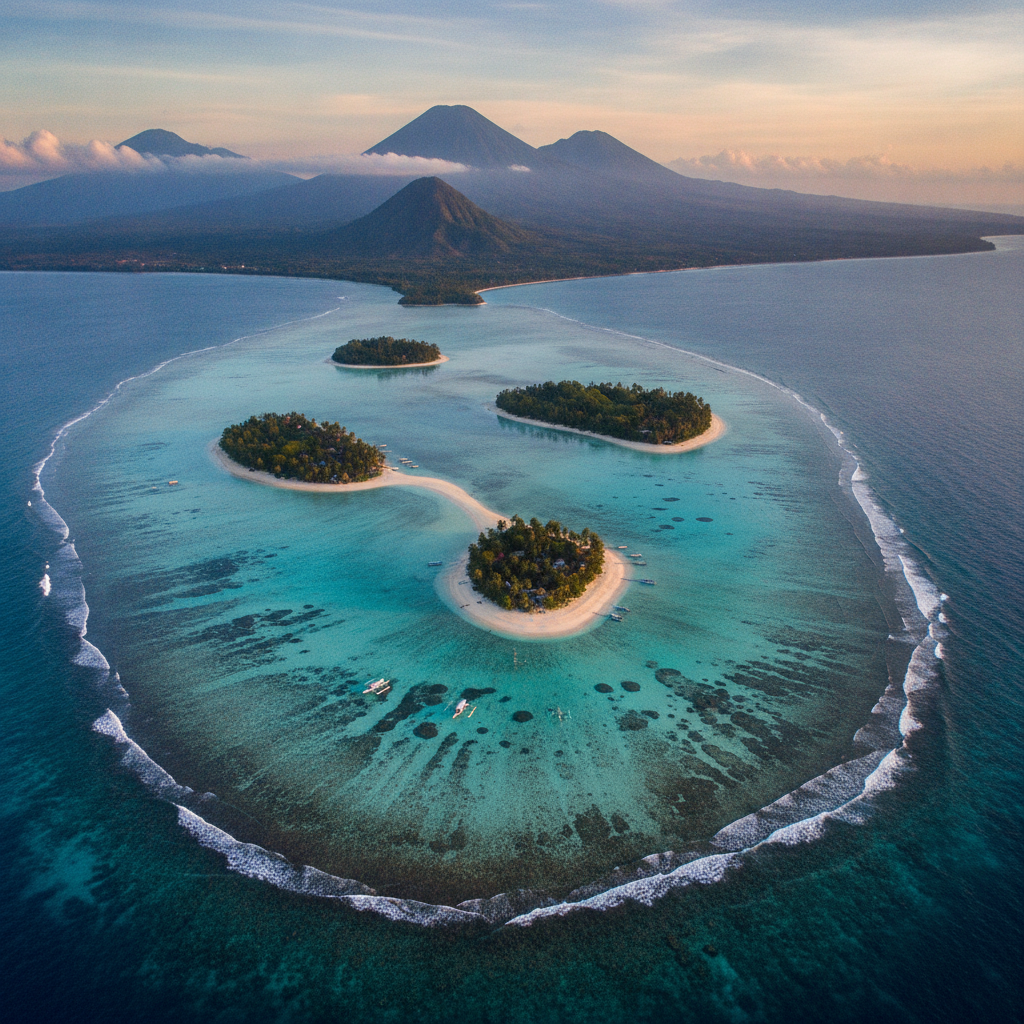
Lombok's Contested Future: The 2018 M7.0 Earthquake, Gili Eco Trust's Turtle Recovery & Mandalika's MotoGP Circuit Displacing Sasak Farmers
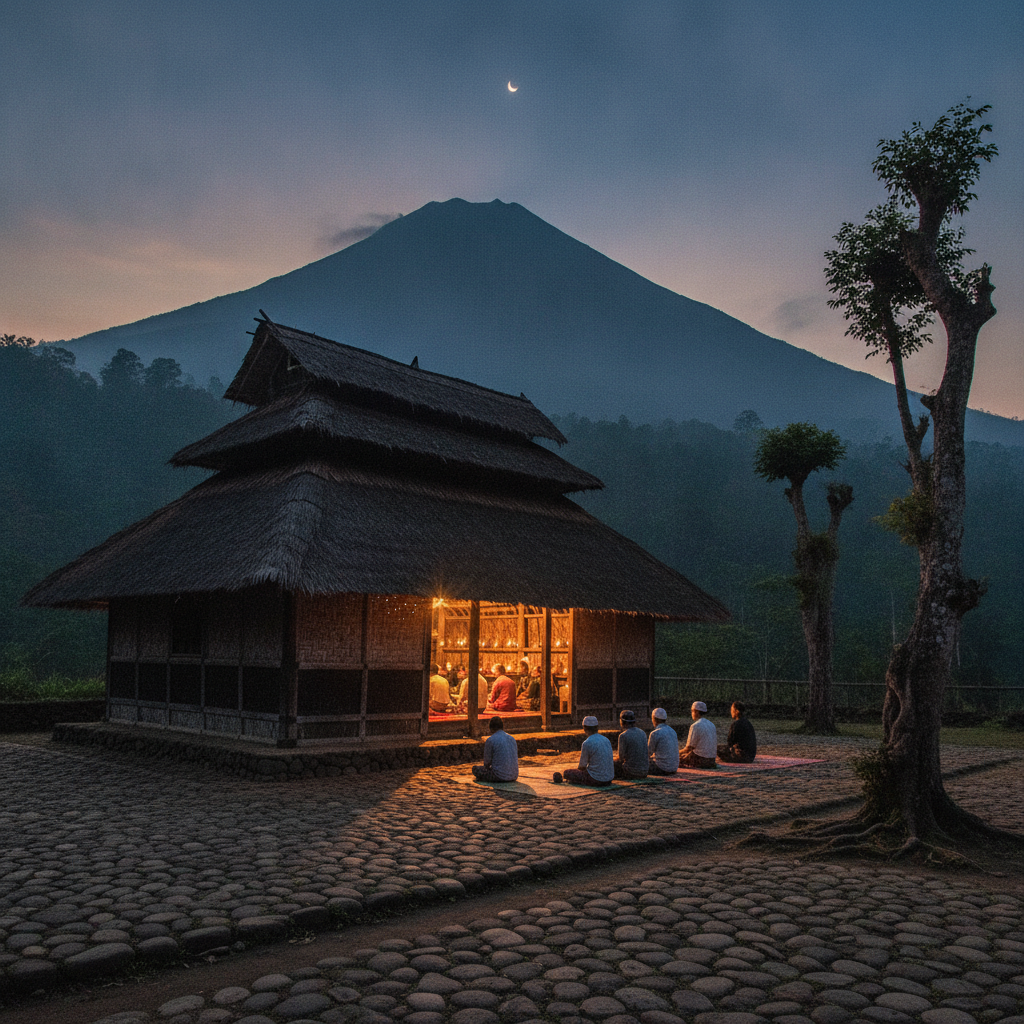
Lombok's Soul: Wetu Telu's Three-Daily-Prayer Islam, the Rinjani Scops Owl (New Species 2013) & the Sumbawa Tambora Connection
Lombok: Rinjani's 3,726m Crater Lake Trek, Gili Trawangan's No-Motor-Vehicle Coral Reefs & the Sasak Wetu Telu Syncretic Islam