Lombok at Depth: The 02:00 Rinjani Summit Push, Bau Nyale's Sea Worm Festival & Penujak's Hand-Formed Black Clay Pottery
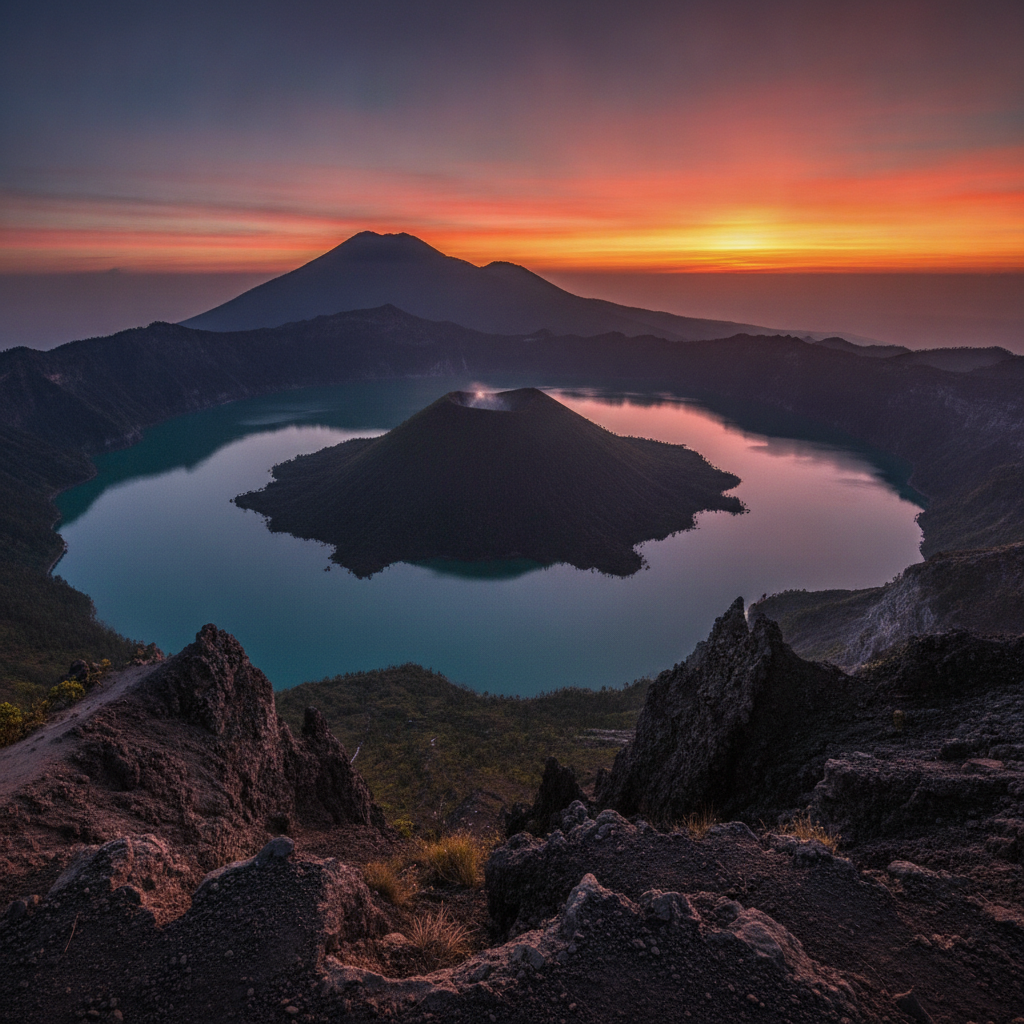
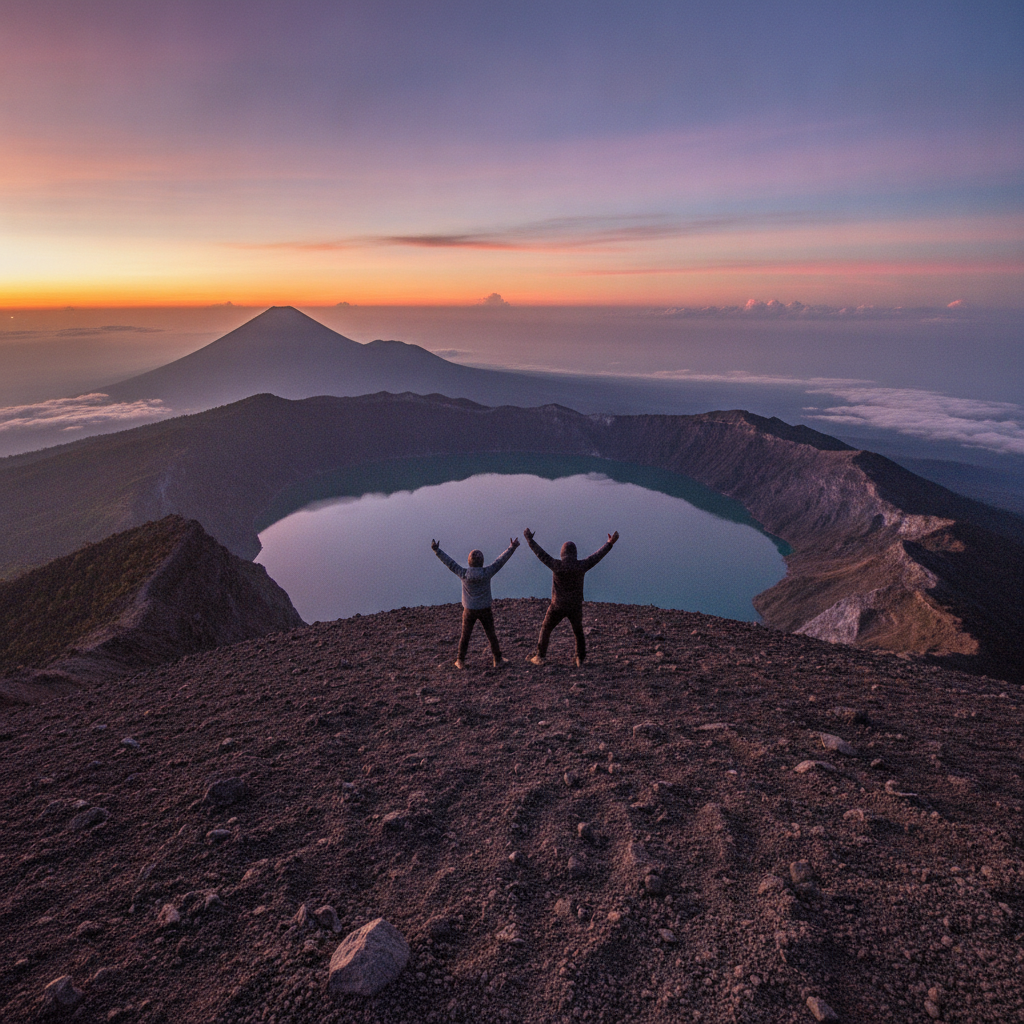
The 02:00 summit departure from 3,100 metres camp, arriving at 3,726 metres with Bali's Agung and Sumbawa's Tambora on the horizon and the Segara Anak lake 1,700 metres below—trekking poles essential for the knee-destroying scree descent; Rinjani Arabica from 800–1,200 metres elevation now served at Mataram specialty cafés positioned against Flores Bajawa in Indonesia's single-origin coffee narrative; the Bau Nyale midnight sea worm festival at Seger Beach in February where princess Mandalika's reincarnation as palolo worms draws thousands of Sasak people; the Gili Eco Trust's 15-year citizen science reef monitoring dataset that proved essential after the 2018 earthquake; and Penujak village's women's cooperative producing hand-formed (no wheel) black clay water vessels in designs unchanged for centuries.
- 1
The Rinjani Summit Push – The 02:00 Climb & Dawn Panorama
The Rinjani summit attempt—the culmination of the standard 3-day Rinjani trek—begins at 02:00 from the high camp (3,100 metres, on the outer crater rim) and involves a 4–5 hour ascent of 626 vertical metres on volcanic scree and rocky trail to the summit (3,726 metres). The physical challenge: the summit section is steep, on loose volcanic sand and gravel, with no technical climbing but requiring sustained effort at altitude (3,000–3,700 metres) in cold conditions (temperatures at the summit at 06:00 average 5–10°C, with wind chill regularly below 0°C in the dry season). The equipment: guides supply headlamps; trekkers need a down jacket (surprisingly cold for an equatorial island—few first-time visitors to Indonesia anticipate temperatures below 10°C), warm hat, and gloves. The summit experience: the 360-degree panorama from Rinjani's peak at sunrise is the finest viewpoint in western Indonesia—Lombok visible below (the agricultural plains of the centre, the Gili Islands, the south coast), the Bali volcanoes (Agung and Batur) on the western horizon 80 km away, the Sumbawa volcanoes (Tambora and others) to the east, and the Segara Anak crater lake 1,700 metres directly below. The descent: returning to the crater rim camp takes 3 hours on the loose scree (knee-destroying on unprepared legs—trekking poles are essential), then the full descent to the trailhead on the third day.
- 2
Lombok's Pepper, Vanilla & Spice Agriculture
Lombok's agricultural diversity extends beyond the tobacco and rice that dominate the lowland plains to include a range of highland and upland spice crops that have connected the island to the global spice trade since the colonial period. The Rinjani highlands: the slopes between approximately 300–1,200 metres altitude on Rinjani's flanks are where the most diverse Lombok agriculture occurs—coffee (both Robusta at lower elevations and Arabica at 800–1,200 metres, producing a mild, chocolatey Lombok single-origin now sold at specialty cafés in Bali and internationally), vanilla (the Batak/Sasak vanilla orchid cultivation in small plots between the coffee trees—Lombok vanilla is considered among the finest in Indonesia), and pepper (both white and black pepper, produced from Piper nigrum vines trained on hardwood supports in the semi-shade of the coffee gardens). The Pusuk Buhit forest road: the 900-metre mountain pass between Mataram and Senaru passes through the agricultural landscape where roadside stalls sell locally grown coffee, vanilla pods, and dried pepper at farm-gate prices. The Lombok coffee scene: Mataram has developed a specialty coffee culture in recent years—several cafés roasting and serving single-origin Rinjani Arabica, positioned against the more established Balinese kopi luwak and Flores Bajawa coffee in the Indonesian specialty coffee narrative.
- 3
Sasak Traditional Ceremonies – Nyongkolan, Bau Nyale & Peresean
The Sasak ceremonial calendar—structured by the Islamic calendar (for religious events) and the Sasak adat (customary law—for agricultural and life-cycle ceremonies)—produces a series of public events that are among the most vivid cultural spectacles in Indonesia. The Nyongkolan (the Sasak wedding procession): a procession of the groom's family and community through the village to the bride's house, accompanied by the gendang beleq ensemble, all participants in formal Sasak dress (the men in dark songket sarongs and head wraps; the women in layers of brightly coloured kebaya and songket); the procession stops at each house along the route for the musicians to perform; the entire village participates or watches from doorways—a community event visible from the road throughout the Lombok interior. The Bau Nyale (the 'Catching of the Nyale'—a sea worm festival held at Seger Beach near Kuta Lombok each February–March on a specific night in the Sasak lunar calendar): thousands of Sasak people gather at the beach at midnight to collect the palolo worms (Eunice viridis—a type of sea worm that swarms to the surface to spawn on this specific night each year) which are considered a delicacy and a symbol of the princess Mandalika (a mythological Sasak princess who sacrificed herself to prevent conflict and was reincarnated as the nyale worms). The Peresean: a traditional martial art of rattan stick combat with leather shields—performed at festivals and cultural shows.
- 4
Lombok's Dive Industry & Marine Education
The dive industry of the Gili Islands—approximately 40 dive centres operating across the three islands, with an estimated 150,000 dives conducted annually—is one of the most active in Southeast Asia and the most significant centre for PADI (Professional Association of Diving Instructors) certification courses in Indonesia. The operator ecosystem: Gili Trawangan alone has approximately 25 dive centres, ranging from the established multi-boat operations (Blue Marlin Dive, Manta Dive, Divine Divers—each with 5–15 instructors) to single-instructor boutique operations; the competition keeps prices relatively stable (PADI Open Water course approximately Rp 4,500,000/€250–300; fun dives Rp 250,000–350,000/€15–20 each). The marine education mission: the Gili Eco Trust runs regular reef monitoring surveys using citizen science methodology (trained recreational divers conduct standardised transect counts of fish and coral health)—one of the most successful citizen science marine monitoring programmes in Indonesia, providing 15 years of reef condition data that was crucial for assessing 2018 earthquake impact. The technical diving community: the Lombok Strait's depth (maximum 1,300 metres between Lombok and Bali—the deepest strait in the world for its width) and current system makes it an excellent technical diving environment; technical dive training to 40–100 metres is available from several specialised Gili operators.
- 5
Kuta Lombok's Evolution – From Backpacker Haven to Boutique Destination
Kuta Lombok—a settlement of approximately 15,000 on the southern coast, 54 km from Mataram airport—has undergone one of the most rapid transformations of any Indonesian coastal town in the past decade: from a sleepy backpacker waypoint (the Gili Islands for surfers, with a few cheap warungs and homestays) to a destination with boutique hotels, international restaurants, and the Mandalika MotoGP circuit 3 km to the east. The before: in 2010, Kuta had one ATM, power cuts of 8–12 hours daily, minimal internet connectivity, and a handful of guesthouses serving budget travellers waiting for surf. The after: the Mandalika development (post-2017) brought reliable electricity, improved roads, several international hotel brands (Novotel, Sheraton), and a diversified visitor base (surf tourists, MotoGP fans, beach holidaymakers, Indonesian domestic tourists). The tension: the displacement of the original backpacker community (who have moved to Selong Belanak and the more remote southern beaches) and the Sasak fishing and farming community (whose land access has been affected by the Mandalika Special Economic Zone boundary). What remains genuine: the surf breaks (unchanged—Gerupuk's boat-access breaks, Mawun's consistency), the southern beach quality (Tanjung Aan's pepper-corn sand, Selong Belanak's calm bay), and the Sasak village life visible 5 minutes from the resort strip.
- 6
Lombok's Creative Economy – Design, Film & the New Generation
Lombok's creative economy—emerging from the intersection of the island's traditional craft heritage (weaving, pottery, bamboo work), the tourism-driven demand for design and hospitality aesthetics, and a generation of young Sasak and Balinese designers who grew up between the island's agricultural villages and Bali's globalised art scene—is producing a distinctive and internationally noticed creative output. The design scene: Lombok's bamboo and rattan furniture industry (centred in the villages around Lombok Tengah—Anyar, Beleke, and Sesela) produces some of the most sophisticated handwoven furniture in Asia, supplying hotels and interior design firms in Bali, Singapore, and Australia; the quality is comparable to Balinese bamboo furniture but at significantly lower price points. The pottery: the Penujak village (near Praya, 15 km north of Kuta) is the centre of traditional Lombok black-clay pottery—hand-formed (no wheel) water vessels, storage jars, and decorative pieces produced by a women's cooperative, with designs that have remained consistent for centuries. The young filmmakers: a small but active Lombok film community (connected to the national Indonesian independent film scene) has produced several internationally circulated short films using Rinjani, the Gili Islands, and the Sasak village landscape as settings. The craft market: the Lombok Craft Centre (in Mataram) aggregates products from across the island's craft villages in a single export-quality retail operation.
Walk this route with audio
Stories play automatically as you reach each stop — no tapping needed.
More in Lombok
Lombok's Full Picture: Gili Trawangan's Full Moon Parties, Pura Lingsar's Hindu-Wetu Telu Shared Temple & Sumbawa's Mt. Tambora
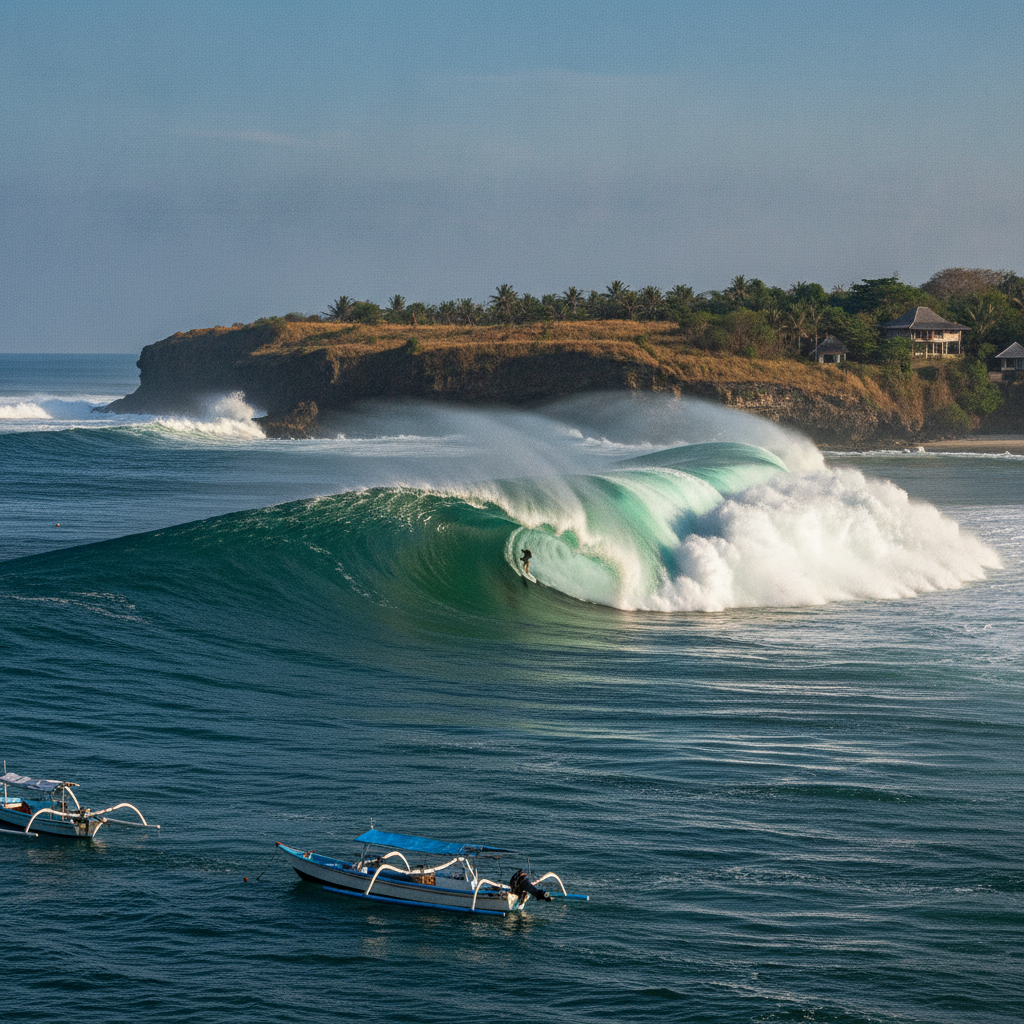
Lombok's Deeper Cuts: Segara Anak's Twin Pilgrimage Traditions, Desert Point's World-Record Barrel & Ayam Taliwang's Sasak Chilli Heat
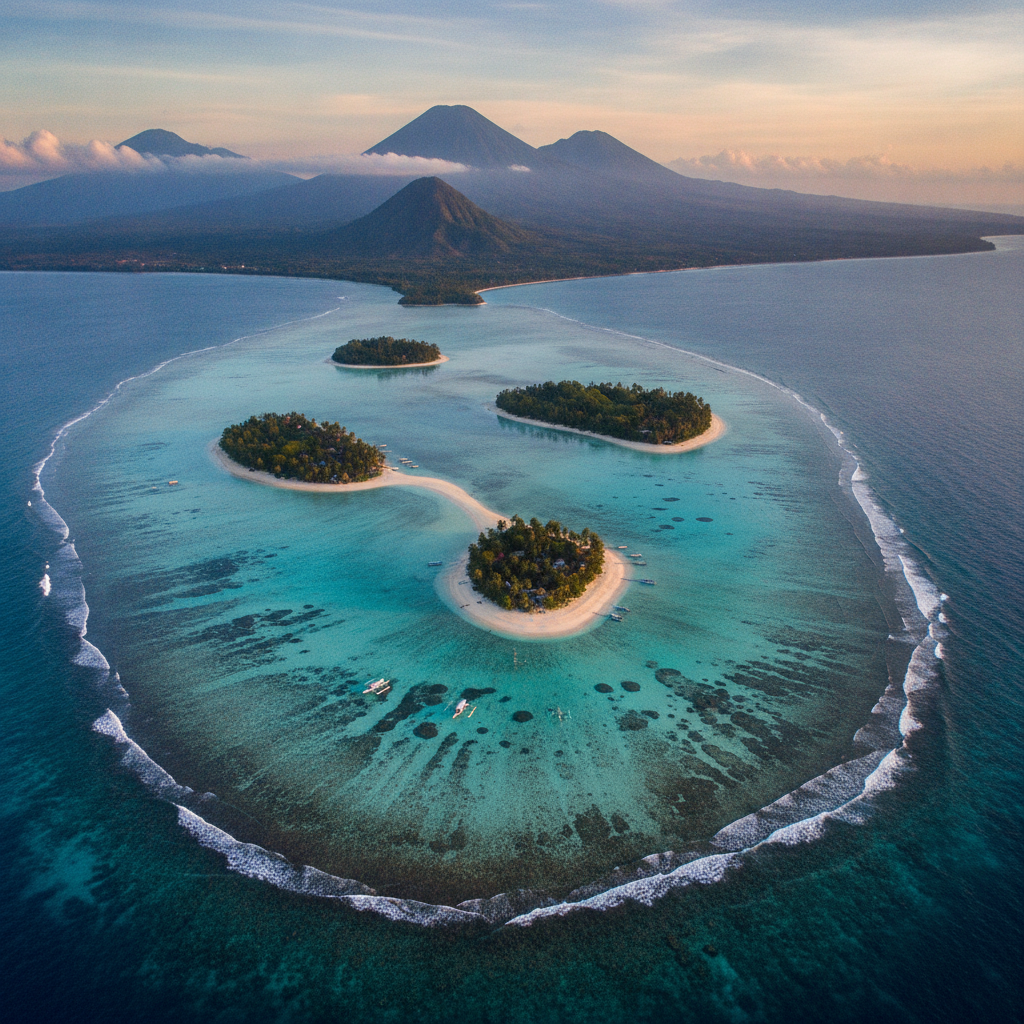
Lombok's Contested Future: The 2018 M7.0 Earthquake, Gili Eco Trust's Turtle Recovery & Mandalika's MotoGP Circuit Displacing Sasak Farmers
Lombok's Soul: Wetu Telu's Three-Daily-Prayer Islam, the Rinjani Scops Owl (New Species 2013) & the Sumbawa Tambora Connection