Lombok's Soul: Wetu Telu's Three-Daily-Prayer Islam, the Rinjani Scops Owl (New Species 2013) & the Sumbawa Tambora Connection
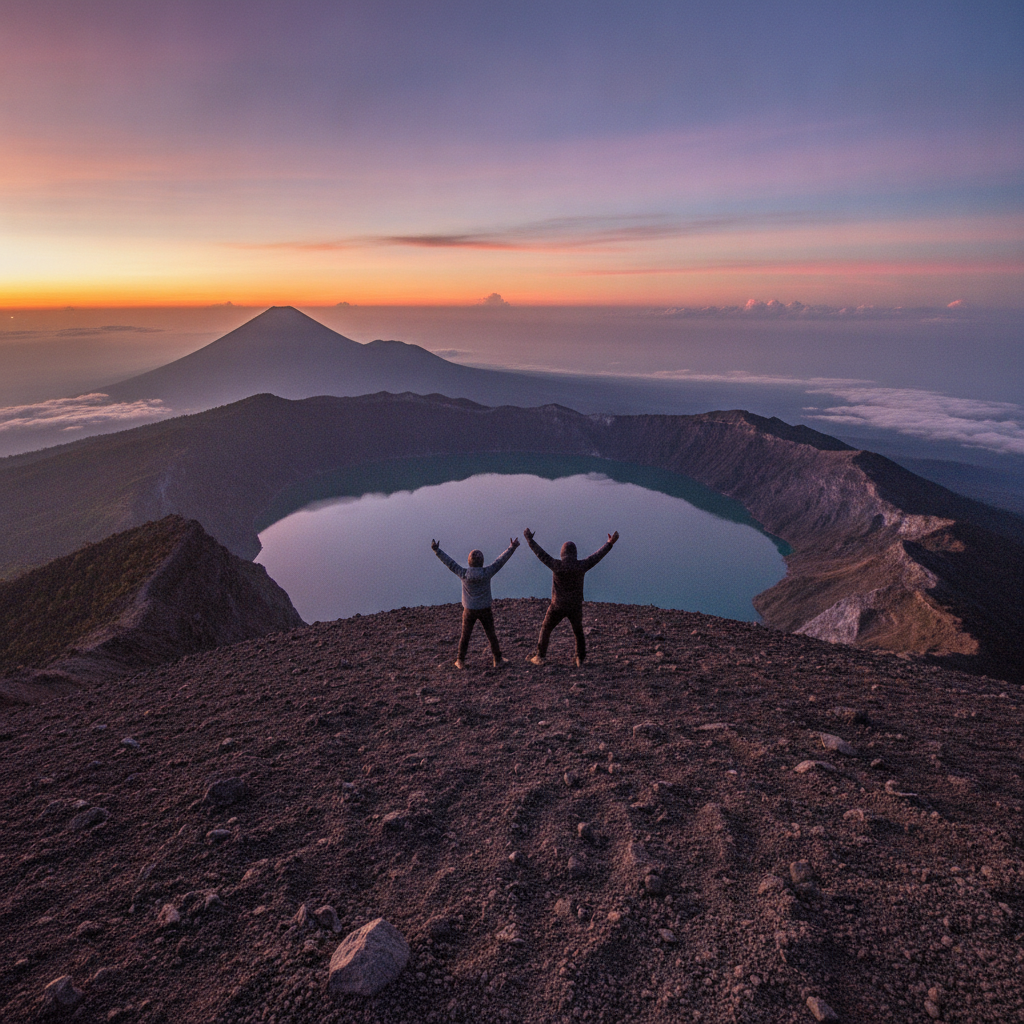
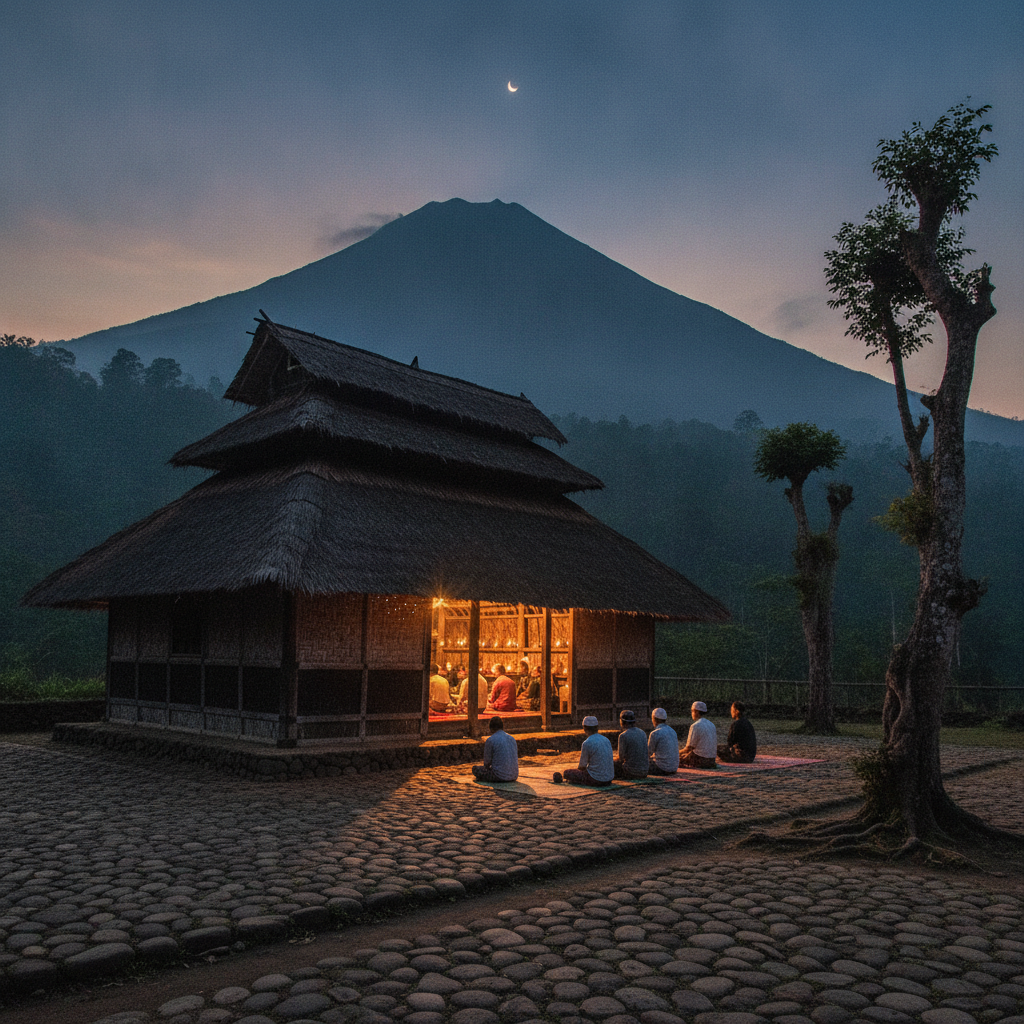
Lombok is not 'Bali without the crowds'—it's a Muslim-majority island where mosques structure the landscape as temples do in Bali, where the Wetu Telu minority prays three times per day and observes Ramadan with animist modifications at Bayan Beleq's 17th-century bamboo-and-thatch mosque; the Rinjani scops owl described as a new species only in 2013 after a 2003 recording was matched to 1890s museum specimens in the Wallace Line transition zone; the Mataram Pasar Malam's 300-metre ayam taliwang night market; the Rinjani crater camp stargazing at 2,641 metres outside the urban light dome; the Rinjani Trek Eco-Tour Programme ensuring porter income reaches Sasak foothills communities; and Sumbawa's Mt. Tambora caldera walk through the destroyed landscape of the 1815 eruption that killed 70,000 globally and created 1816's Year Without a Summer.
- 1
Lombok's Relationship with Bali – Comparison, Competition & Connection
Lombok and Bali—separated by 35 km of the Lombok Strait and the Wallace biogeographic line—are perpetually compared in travel writing and tourist marketing, with Lombok invariably positioned as 'Bali without the crowds' or 'what Bali used to be.' This comparison is both accurate and misleading. The accurate part: Lombok has fewer international visitors (approximately 3 million in 2019 versus Bali's 6.3 million), less developed infrastructure in most areas, and more intact natural landscapes outside the Gili Islands and Kuta. The misleading part: Lombok is not a less-developed version of Bali—it is a fundamentally different cultural landscape; where Bali is Hindu (90%), Lombok is Muslim (85%); where Bali's visual landscape is shaped by temples and offerings, Lombok's is shaped by mosques and woven textiles; the two islands' artistic traditions, food cultures, and daily rhythms are as distinct as Thailand and Malaysia. The competition: the Indonesian government's promotion of Lombok as an alternative to Bali (through the Mandalika development, the '10 New Balis' programme, and direct flight route expansion) has created a tourism rivalry that the Balinese and Sasak communities regard with different emotional registers. The connection: the fast boat from Bali to the Gili Islands (2 hours from Padang Bai to Bangsal) is used by hundreds of thousands of travellers annually—most Bali visitors who visit Lombok add it as a 2–3 day extension of a Bali holiday rather than as a primary destination.
- 2
The Sasak Homeland & Wetu Telu Religion
The Wetu Telu ('Three Times'—referring to the practice of praying three times per day rather than the five times prescribed by orthodox Sunni Islam)—a syncretic religious tradition practised by a minority of the Sasak people, primarily in the Bayan sub-district on Rinjani's northern slopes and in a handful of villages in the interior—represents the most distinctive religious expression in Lombok: a fusion of pre-Islamic animist belief (including reverence for ancestral spirits, sacred forests, and mountain spirits), Hindu cosmological elements (from the Karangasem Balinese period), and Islamic practice (the profession of faith, Quranic recitation, and observance of Ramadan—but with local modifications). The Bayan mosque (Masjid Bayan Beleq—'the old big mosque')—the oldest mosque in Lombok, dated to the 14th century by some accounts (though physical evidence supports a 17th-century construction)—is a thatched-roof bamboo structure of distinctive traditional Sasak architectural character, quite different from the modern concrete mosques that dominate the Lombok landscape; it is one of the most significant historic religious buildings in Indonesia. The adat (customary law): Wetu Telu communities maintain a complex system of ritual obligations, sacred prohibitions, and ceremonial practices managed by traditional leaders (kyai—both Islamic scholars and adat practitioners in the Wetu Telu context). The Indonesian government has periodically attempted to bring Wetu Telu practitioners into orthodox Sunni practice through religious education programmes.
- 3
Lombok's Bird Life – Wallace's Legacy & the Endemics
The Wallace Line—the biogeographic boundary running through the Lombok Strait, separating the Asian and Australian faunal regions—makes Lombok one of the most significant locations for observing the transition between two of the world's major biodiversity regions. The birds east of the Wallace Line: on Lombok's eastern side (and more pronouncedly on Sumbawa and Flores), distinctly Australian-type bird families replace the Asian families dominant on Bali—cockatoos, honeyeaters, and rainbow lorikeets replace woodpeckers and barbets; the change is abrupt and was first documented by Alfred Russel Wallace during his 1856–1858 fieldwork in the region. The Lombok endemic birds: the Rinjani scops owl (Otus jolandae—described as a new species only in 2013, after recordings of its call during a 2003 ornithological expedition were matched to museum specimens from the 1890s), the Lombok white-eye (Zosterops lombok), and the Tanimbar corella (not strictly a Lombok endemic but reaching its western range limit on Lombok). The birding sites: the Rinjani National Park's forest between 600–1,500 metres altitude (accessible via the Senaru trail) provides the best birding in Lombok—the transition zone between the lowland species and the montane specialists. The Suara Alam bird watching community (based in Mataram) runs guided birding trips to the Rinjani foothills for serious ornithologists.
- 4
Lombok at Night – Sunset, Night Markets & Stargazing
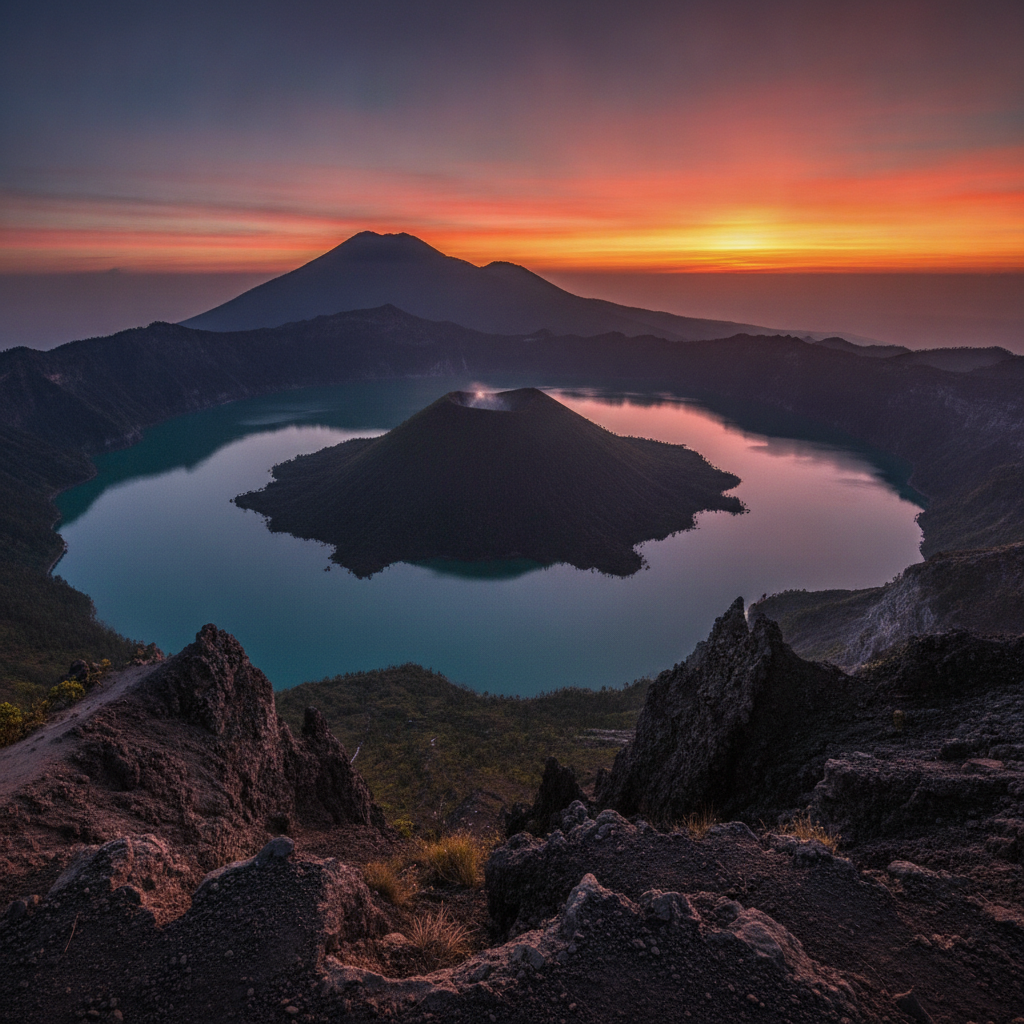
Lombok's after-dark culture varies dramatically by location: the Gili Trawangan parties (the full-moon event, the regular beach bar scene, the sunset cocktail culture on the west beach) occupy one end of the spectrum; the Mataram night market (Pasar Malam Mataram—one of the largest and most varied in Nusa Tenggara, open 17:00–midnight) occupies another; and the Rinjani highland darkness (at 2,000+ metres in the caldera, away from any artificial light) represents one of the finest stargazing locations in Indonesia. The Gili Trawangan sunset: the island's west coast faces the Lombok Strait and the Bali volcanoes—the sunset view (Gunung Agung's cone catching the last orange light, the strait's water changing colour through the spectrum) is one of the most photographed in Indonesia; the sunset strip of beach bars and restaurants begins filling by 17:30. The Mataram night market: the Mataram Pasar Malam on Jl. Pejanggik is the largest concentration of Sasak street food in Lombok—grilled chicken and fish stalls, ayam taliwang specialists, nasi balap puyung vendors, and cold drink stalls extending for 300 metres along the street. The stargazing: the crater camp on Rinjani (at 2,641 metres on the rim, or 2,000 metres in the caldera) is outside Lombok's main urban light pollution zone—the equatorial sky from 22:00 to 02:00 shows the Milky Way as a dense band visible to the naked eye.
- 5
Travelling Responsibly in Lombok – Community Tourism & Conservation
The rapid development of Lombok's tourism infrastructure—concentrated in the Gili Islands, Kuta/Mandalika, and Senggigi—has created significant economic benefit for some Sasak and Balinese communities while marginalising others; responsible travel choices can meaningfully affect the distribution of tourism income. The community tourism options: the Rinjani Trek Eco-Tour Programme (established by the New Zealand Agency for International Development in 2000—a certified guide and porter cooperative ensuring that trekking income reaches the Sasak communities in the Rinjani foothills rather than primarily Mataram-based tourism companies); the Sukarara weaving cooperative (buying directly from the cooperative's fixed-price showroom ensures weavers receive fair wages without the 30–50% markup of Mataram souvenir shops); the Penujak pottery cooperative (buying from the women's collective rather than from retailers). The conservation contributions: the Gili Eco Trust accepts direct donations and volunteer dive time for reef monitoring; the Friends of the National Parks Foundation (FNPF) runs a sea turtle conservation programme at Gili Meno. The Sasak language: learning a few words of Bahasa Sasak (rather than only Bahasa Indonesia—which is the lingua franca but not the home language of the Sasak people) is the most appreciated gesture by rural Sasak communities; 'sugul' (good morning), 'Nggih' (yes, with respect), and 'Ampure' (excuse me/sorry) are well-received basics.
- 6
Leaving Lombok – Onwards to Sumbawa, Flores & the Indonesian East
Lombok's position as the last large island before the transition from Asian to Australian biogeography makes it the natural departure point for the eastern Indonesian island chain—one of the world's least-visited and most extraordinary travel landscapes. The Sumbawa crossing: from Lembar port (30 km from Mataram) or from Labuhan Kayangan (75 km northeast of Mataram—the Lombok Timur ferry port), ferries cross to Sumbawa Besar (3 hours) and Poto Tano (2 hours) respectively—connecting Lombok to the network of buses and ferries that link the eastern islands. The Sumbawa highlights: Mt. Tambora (the 2,850-metre volcano whose 1815 eruption was the largest in recorded history—the crater is a full-day trek from the caldera rim village, offering an eerie walk through the collapsed landscape where an entire civilisation was destroyed); the Hu'u surf breaks (Lakey Peak—an internationally known right-hand point break with consistent quality from June–September); and the Sumbawa horse culture (the Sumbawa horse—a small, hardy breed used for the traditional equestrian festival). The Flores ferry: from Labuhan Bajo on Flores' west coast (accessible by air from Lombok in 50 minutes, or overland/ferry across Sumbawa in 2 days), the Komodo National Park's boats provide access to the dragon islands and to the world's finest manta ray diving at Manta Point. The recommendation: if time allows only one eastern island beyond Lombok, Flores offers the highest density of extraordinary experiences per unit of travel effort.
Walk this route with audio
Stories play automatically as you reach each stop — no tapping needed.
More in Lombok
Lombok's Full Picture: Gili Trawangan's Full Moon Parties, Pura Lingsar's Hindu-Wetu Telu Shared Temple & Sumbawa's Mt. Tambora
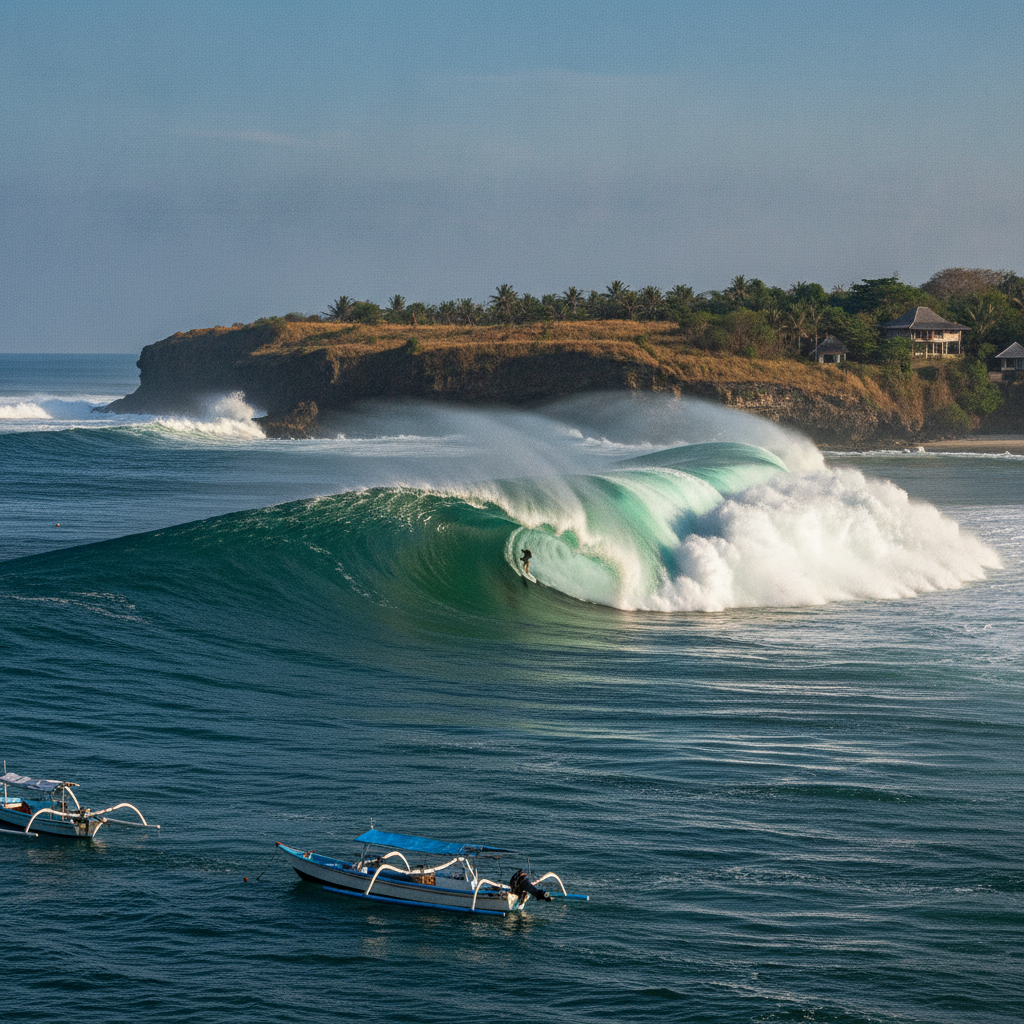
Lombok's Deeper Cuts: Segara Anak's Twin Pilgrimage Traditions, Desert Point's World-Record Barrel & Ayam Taliwang's Sasak Chilli Heat
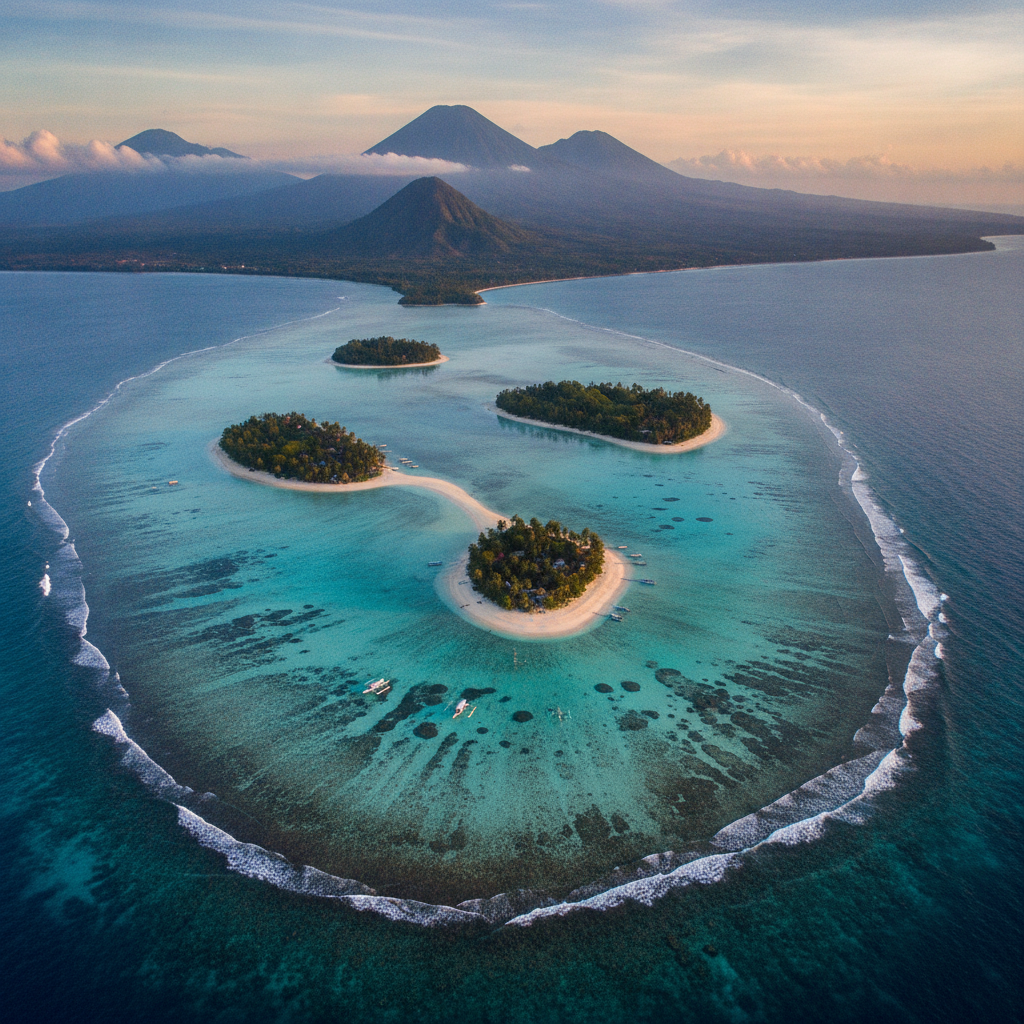
Lombok's Contested Future: The 2018 M7.0 Earthquake, Gili Eco Trust's Turtle Recovery & Mandalika's MotoGP Circuit Displacing Sasak Farmers
Lombok: Rinjani's 3,726m Crater Lake Trek, Gili Trawangan's No-Motor-Vehicle Coral Reefs & the Sasak Wetu Telu Syncretic Islam