Literary Bloomsbury & Covent Garden: Books, Philosophers & Street Theatre
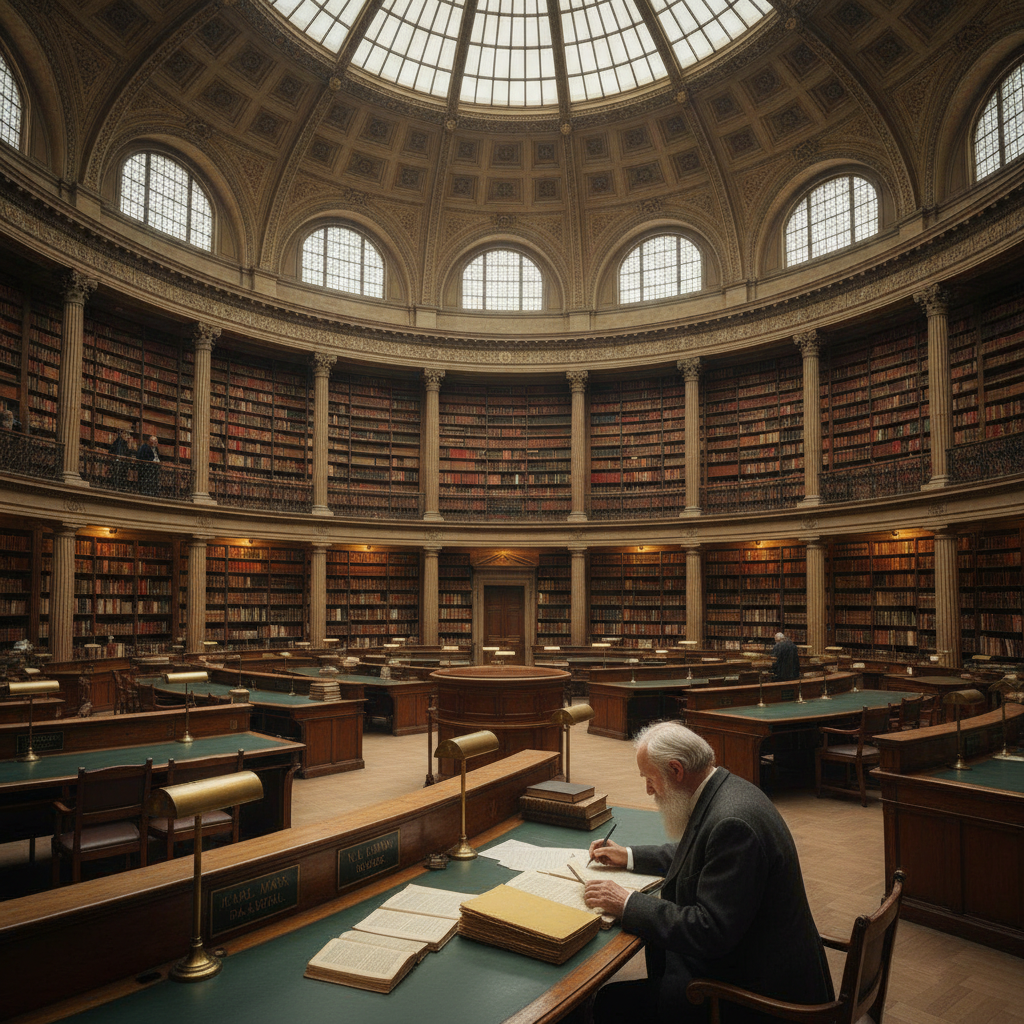
Bloomsbury—the area around the British Museum and Russell Square—has been the intellectual heart of London for 300 years. Virginia Woolf, T.S. Eliot, Bertrand Russell, John Maynard Keynes and the Bloomsbury Group lived and worked in these streets. Charles Dickens had his most productive years in a house on Doughty Street. Karl Marx spent 11 years writing Das Kapital in the British Museum's Reading Room. This route takes in the British Museum (one of the world's greatest), the Dickens Museum, the Bloomsbury squares, Covent Garden's piazza and street performers, and the Inns of Court—the medieval lawyers' quarter that still functions as it did in the 14th century.
- 1
British Museum — The World Under One Roof
The British Museum holds one of the world's great collections of human history and culture: 8 million objects spanning 2 million years, from the earliest stone tools to 20th-century art. The Great Court—an enormous glass-roofed courtyard designed by Norman Foster and opened in 2000—is one of the most spectacular interior spaces in London. Essential highlights: the Rosetta Stone (Room 4, the key that unlocked the reading of Egyptian hieroglyphics), the Elgin Marbles (Room 18, the 5th-century BC sculptures from the Parthenon, their presence here still controversial), the Lewis Chessmen (medieval), the Sutton Hoo Helmet (Anglo-Saxon, Room 41). Free entry. Plan 3–4 hours minimum. The museum café and restaurant are both good.
- 2
Dickens Museum — Where 'Oliver Twist' Was Written
48 Doughty Street in Bloomsbury is the only surviving London home of Charles Dickens, and it is now a museum. Dickens lived here from 1837 to 1839—the most productive two years of his early career, during which he completed The Pickwick Papers, wrote Oliver Twist and Nicholas Nickleby, and began Barnaby Rudge. The house has been restored to look as it did when Dickens lived here, with original furniture, manuscripts and personal objects. The drawing room where Mary Hogarth (Dickens's sister-in-law) died suddenly aged 17 is particularly atmospheric. The museum also has a good programme of temporary exhibitions and events.
- 3
Bloomsbury Squares — Where the Intellectuals Lived
Bloomsbury's character is defined by its Georgian and early-Victorian garden squares—enclosed private gardens surrounded by terraced townhouses. Russell Square is the largest, with a café kiosk and a dancing fountain. Bedford Square (two minutes west) is one of the best-preserved Georgian squares in London, its uniform brick terraces still largely intact. Gordon Square and Tavistock Square are more atmospheric: Virginia Woolf lived at 46 Gordon Square, and the Tavistock Hotel on Tavistock Square was where the Bloomsbury Group met to argue about art, literature and philosophy. The gardens in the squares are generally open to the public during the day.
- 4
Covent Garden Piazza — London's Street Theatre Capital
Covent Garden's central piazza was London's first planned square (designed by Inigo Jones in 1630) and for 300 years it was the city's main fruit and vegetable market. The market moved to Nine Elms in 1974; the restored Victorian market building is now a shopping arcade and the piazza is London's best venue for buskers and street performers. The entertainment is consistently excellent—Covent Garden buskers have to audition and hold a permit, so the standard is high. The Royal Opera House (one of the world's greatest opera houses) adjoins the piazza on the north-east side; even if you're not seeing an opera, the free-access areas of the building (the Amphitheatre Bar, the main hall) are worth exploring.
- 5
St Paul's Church, Covent Garden — The Actors' Church
On the west side of Covent Garden piazza, set slightly back, is St Paul's Church, Covent Garden—known as 'the Actors' Church' because of its long association with the theatre world (the Royal Opera House, Drury Lane Theatre and the London Coliseum are all nearby). The interior contains memorials to hundreds of actors, musicians and entertainers: Boris Karloff, Vivien Leigh, Charlie Chaplin, Noel Coward and hundreds of others. The church was designed by Inigo Jones in 1631 (the portico facing the piazza is the famous 'barn' of his design—the interior is on the other side). The churchyard garden at the back is a good quiet spot.
- 6
Inns of Court — The Medieval Lawyers' Quarter
Walk east from Covent Garden down the Strand to the Inns of Court—the four medieval legal institutions (Gray's Inn, Lincoln's Inn, Inner Temple and Middle Temple) that have trained and housed English barristers since the 14th century. The Inns look like Oxford or Cambridge colleges: quadrangles, ancient halls, chapels and gardens, accessed through gated archways from the street. Middle Temple Hall (1562) is where Shakespeare's Twelfth Night was first performed. The Temple Church (1185, built by the Knights Templar) has the famous marble effigies of medieval knights on the floor. The Inner and Middle Temple gardens along the Embankment are open to the public on weekdays and are exceptional.
Walk this route with audio
Stories play automatically as you reach each stop — no tapping needed.
More in london
The Square Mile: City of London Pub Walk
Greenwich & the Prime Meridian: Time, Ships & the Edge of the World
East End & Brick Lane: Street Art, Bagels & Bangladeshi Curry
South Bank Arts Trail: Waterloo to Borough Market
Museum District & Hyde Park: Science, Art & the Great Outdoors