Luang Prabang's Living Layers: Hmong Morning Market, Ock Pop Tok Weavers & the Mekong's 11 Chinese Dams
The daily and the environmental Luang Prabang—Ock Pop Tok's 650 women from 14 ethnic groups weaving natural-dyed silk on the Nam Khan bank, the 05:30 morning market where Hmong women sell forest mushrooms and weaver ant eggs before the first tourist wakes, three seasons with completely different light (November's clear blue sky versus monsoon September's green rice fields versus April's burning haze), the 4-hour slow boat north to Nong Khiaw's karst cliffs and the village bombing cave above (100 steps lead to where families hid from US B-52s), the LPRP's public gratitude toward Chinese railway investment contrasted with private concern about commercial displacement, and the 11 Chinese upper-Mekong dams disrupting the flood cycle that sustained the giant catfish the morning market can no longer sell.
- 1
Luang Prabang's Artist Community & Crafts Schools
Luang Prabang has developed, alongside its heritage tourism economy, an artist and craft community that is unusually sophisticated for a city of its size—a product of the international NGO investment in Lao crafts as a livelihood development strategy and the concentration of Lao and international artists drawn by the city's beauty and low cost of living. The most significant institutions: Ock Pop Tok Living Crafts Centre (on the Nam Khan south bank—a social enterprise employing 650 Lao women weavers from 14 different ethnic groups, offering workshops in natural dyeing and hand-weaving, with a riverside café and gallery); the Caruso Luang Prabang pottery workshop (Lao ceramic tradition revived using local clay); the numerous small studios in the old town's side streets where local painters produce both traditional Buddhist art and contemporary work. The Big Brother Mouse literacy programme (headquarters in Luang Prabang)—which publishes books in Lao for children in rural areas, the first significant Lao-language children's book publishing programme—is the cultural institution with the broadest geographical impact in the country.
- 2
The Morning Market – Luang Prabang Before Tourism Wakes
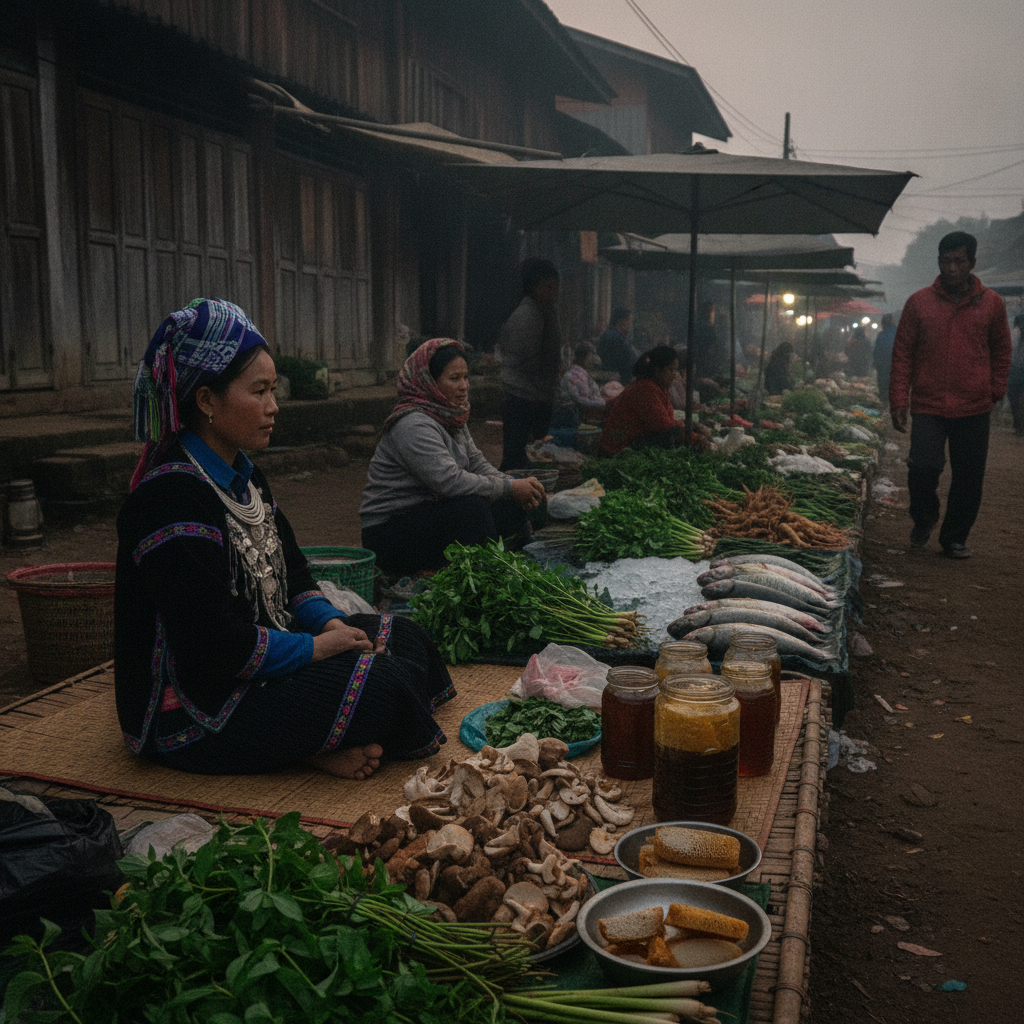
The morning market (Talaat Dala/Talaat Sao—before the tourist-oriented Night Market opens)—operating from 05:30 to 08:00 on Sikkhalit Road and the adjacent streets—is the most authentic daily scene in Luang Prabang: the daily provisioning market where Lao householders and restaurant owners buy the day's food. The products: fresh river fish from the Nam Khan and Mekong (including the Mekong giant catfish—pa beuk, the world's largest freshwater fish, now critically endangered; smaller fish dominate the market), forest vegetables and mushrooms (foraging from the surrounding hills is a significant food source in Laos), fresh herbs (padaek, lemongrass, kaffir lime), wild honey, dried river weed, live frogs, insects (weaver ant eggs, bamboo worms), and the Hmong hill tribe women who come down from the surrounding mountains to sell forest products. The market functions at the scale and pace of the community that uses it—not at the pace of the tourist trade—and visiting it means waking before the hotels serve breakfast and navigating without English signage or menus.
- 3
Luang Prabang's Climate & the Seasons of Light
Luang Prabang's climate—at 300 metres altitude in a river valley surrounded by mountains, with a monsoon-influenced tropical highland climate—divides into three seasons that create substantially different experiences of the same city. The cool dry season (November–February): temperatures 15–28°C, minimal rain, clear blue skies, the rice harvested and the fields golden, the Mekong at its lowest and clearest; the finest conditions for temple visiting, tak bat photographing, and Kuang Si falls swimming; the most expensive hotel prices and the most tourist-crowded streets. The hot dry season (March–May): temperatures rising to 35–38°C, haze from agricultural burning (though less severe than Chiang Mai), the Mekong very low, the waterfalls thin; the least pleasant conditions for most activities but the cheapest prices. The monsoon (June–October): daily afternoon rain, the rivers flooding (Kuang Si best in September–October), the surrounding forest intensely green, the rice fields at their most lush, significantly fewer tourists, and the baci ceremony most commonly seen at the boat landing as families farewell departing sons for city work.
- 4
The Boat Landing to Nong Khiaw – Upstream to Slow Laos
Nong Khiaw—100 km northeast of Luang Prabang on the Nam Ou River, accessible by slow boat (4 hours upstream) or by road (2.5 hours)—is a small town at the foot of dramatic karst limestone cliffs that has developed a low-key backpacker and eco-tourism economy that represents an earlier stage of development than Luang Prabang: guesthouses on stilts above the river, simple but excellent food, hiking through rice terraces and minority villages, and the extraordinary 1,200-step ascent to a cave (Tham Pha Tok) where villagers hid from US bombing in the 1960s–1970s. The onward journey: from Nong Khiaw, the slow boat continues north on the Nam Ou through progressively more remote landscape to Muang Ngoi Neua (an isolated village on a river bend accessible only by boat, no road—consistently described as one of the last genuinely untouched backpacker villages in Southeast Asia) and further to Phongsali province near the Chinese border. The Chinese railway has made Nong Khiaw more accessible from Vientiane but has not yet fundamentally changed the character of the Nam Ou boat journey.
- 5
Luang Prabang's Relationship with China – History & Present
Luang Prabang's proximity to China (the border is 200 km north via the Chinese railway's northern terminus at Boten)—and the Lao People's Democratic Republic's position as a close ally of the PRC—creates a present-day Chinese influence on the city that is historically layered. Historical: Chinese traders (Yunnanese merchants and the KMT soldier communities who settled near the Chinese border) have been part of the Luang Prabang commercial landscape since the 19th century; the Yunnanese community ran the cross-border trade in opium, silk, and forest products. Contemporary: the Belt and Road railway has brought infrastructure investment and Chinese tourist arrivals; Chinese restaurant and business investment in Luang Prabang's old town has accelerated since 2021. The friction points: some Lao residents express concern about the economic dominance of Chinese businesses (Chinese-owned shops and restaurants in the old town pay higher rents than Lao businesses can afford, creating commercial displacement pressure); the debt structure of the railway is viewed by some economists as a long-term sovereignty risk. The Lao government's response: the official position is gratitude for Chinese investment; any critical discussion is constrained by the LPRP's close political relationship with the CPC.
- 6
Luang Prabang's Environmental Challenge – Plastic, Dams & the Mekong
The Mekong River that defines Luang Prabang's beauty and identity is under serious and growing threat from multiple directions. The dams: China has built 11 dams on the upper Mekong (the Nu Jiang and Lancang Jiang upstream sections); Laos itself has built or is building over 80 hydropower dams on the Mekong and its tributaries as part of its strategy to become the 'Battery of Asia' (exporting hydropower to Thailand, Vietnam, and China). The cumulative effect: the Mekong's natural flood-drought cycle (which deposits nutrients on the riverbanks, drives fish breeding, and maintains the river's ecological productivity) has been disrupted; fish catches in the lower Mekong have declined significantly; the sand that formed the riverbanks is not being replenished. The plastic problem in Luang Prabang: the waste management infrastructure is inadequate for the combined tourist and resident waste load—plastic waste enters the rivers and the Mekong despite the natural beauty that the city's tourism depends on. The Don Sahong Dam (on the southern Laos Mekong, at the border with Cambodia) has been specifically linked by fisheries scientists to the near-extinction of the Mekong giant catfish and the Irrawaddy dolphin.
Walk this route with audio
Stories play automatically as you reach each stop — no tapping needed.
More in Luang Prabang
Luang Prabang's Foundation: Lan Xang's Million Elephants, Lao Laap with Sticky Rice & River Boats to Buddha Caves
Luang Prabang Essentials: Monks at Dawn, Wat Xieng Thong's Sweeping Roof & Turquoise Kuang Si Falls
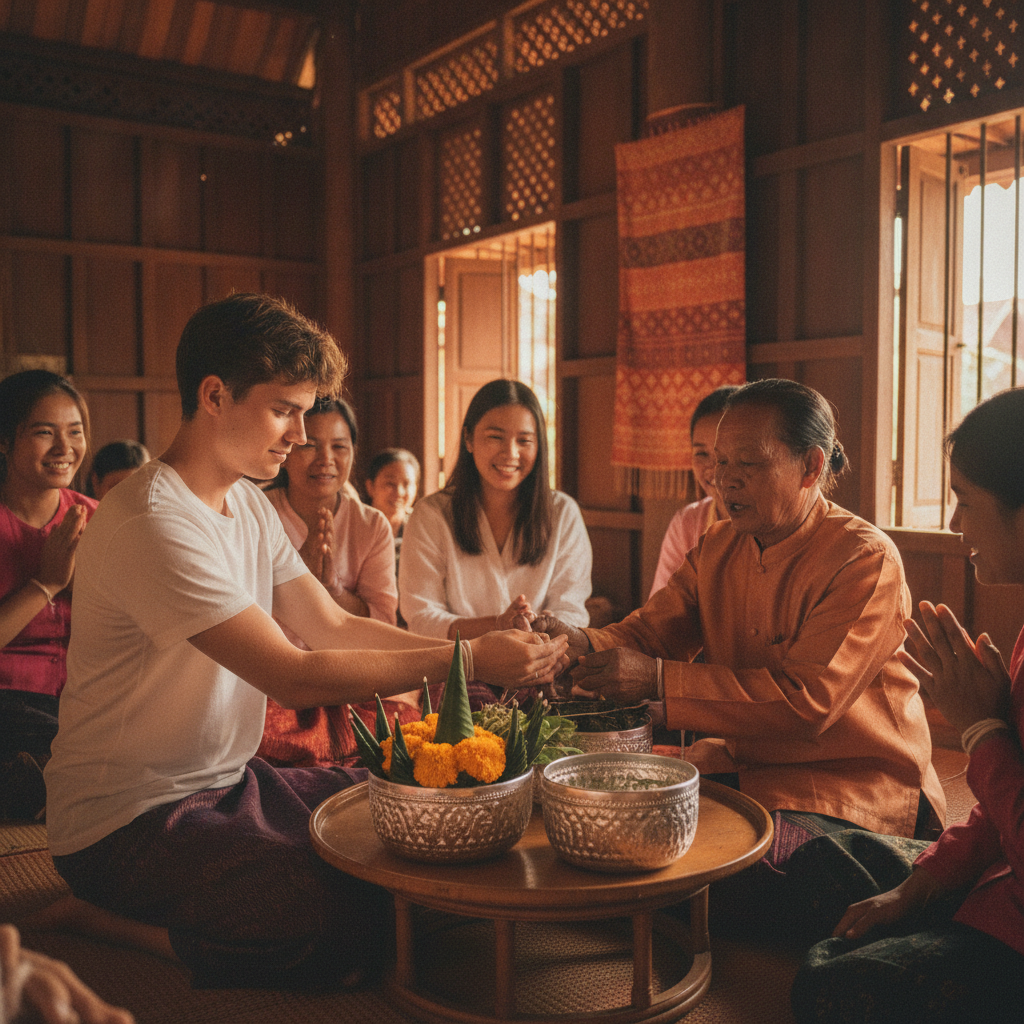
Luang Prabang's Present: China's $6B Railway, the Baci Wrist-Tying Ritual & the UNESCO Heritage Gentrification Trap
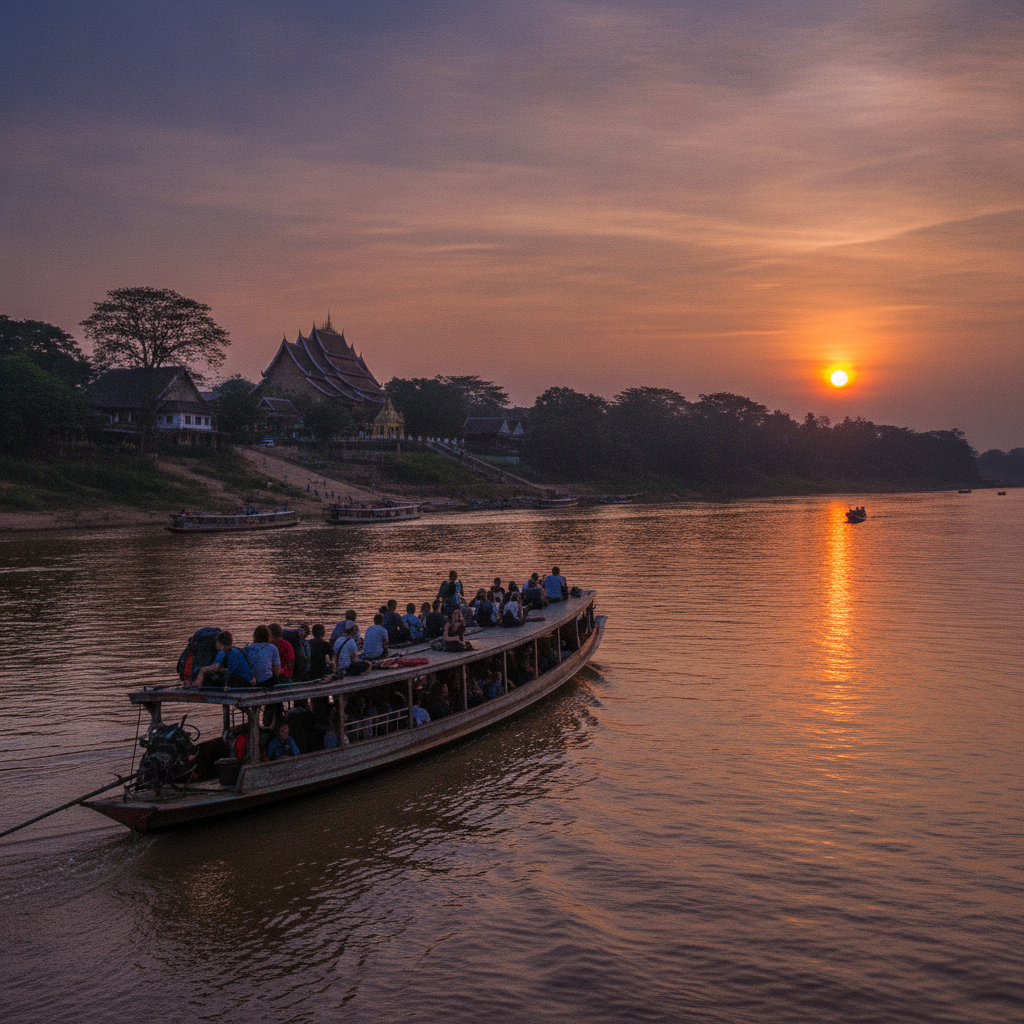
Leaving Luang Prabang: The Slow Boat Arrival That Changes You, Bolaven Plateau Coffee & the City After 21:00