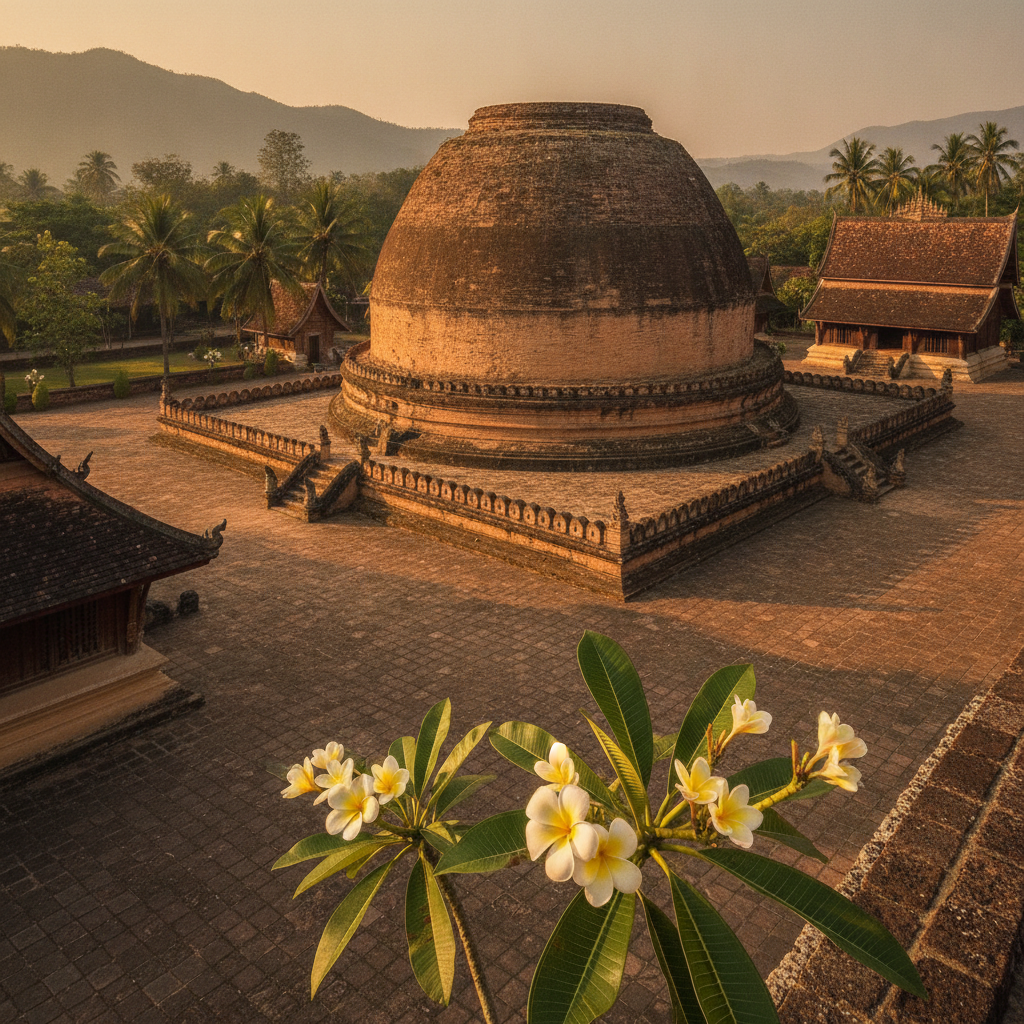
Luang Prabang's Foundation: Lan Xang's Million Elephants, Lao Laap with Sticky Rice & River Boats to Buddha Caves
The kingdom and culture behind the town—Fa Ngum's 1353 Lan Xang founding with a Khmer Buddhist mission and the Pra Bang Buddha image (the sacred statue that named the city), Setthathirath's Wat Xieng Thong and the Emerald Buddha he took to Laos before Bangkok claimed it, French colonial villas and the khao jee baguette-paté sandwich as the most visible colonial legacy in daily Lao life, laap's toasted ground rice and mint chopped meat as the national dish eaten with hand-rolled sticky rice, novice monks waking at 04:00 for prayers before the tak bat (and the Monk Chat English exchange at Wat Sene), the 329 frangipani-lined steps to Phousi's panoramic chedi, and the river boat upstream to thousand-Buddha Pak Ou Caves with a lao lao rice whisky tasting stop.
- 1
The Lan Xang Kingdom – Laos' Golden Age
The Lan Xang Kingdom ('Kingdom of a Million Elephants')—founded in 1353 by Fa Ngum (a Lao prince who returned from exile at the Khmer court of Angkor, accompanied by a Khmer princess and a Khmer Buddhist mission)—was, at its peak, the largest kingdom in mainland Southeast Asia: controlling territory equivalent to modern Laos, parts of Thailand, and portions of Cambodia and Vietnam. Luang Prabang ('the great precious Buddha image'—a name reflecting the Pra Bang Buddha that Fa Ngum received from the Khmer court) served as the kingdom's first capital. The kingdom's golden age: under King Setthathirath (reigned 1548–1571), Lan Xang reached its greatest power—Setthathirath built Wat Xieng Thong, moved the capital to Vientiane (to better defend against Burmese attacks), and carried the Emerald Buddha (Phra Kaew) to Laos before it was later taken to Bangkok. The kingdom fragmented into three competing principalities (Luang Prabang, Vientiane, Champasak) in 1707 and was dominated by the Siamese and Burmese empires throughout the 18th–19th centuries before French colonisation.
- 2
French Indochina's Legacy – The Villas & the Language
Luang Prabang's French colonial architecture—the villas and administrative buildings constructed between 1893 (when Laos became a French protectorate) and 1953 (independence)—represents the most complete surviving French colonial streetscape in Southeast Asia, now protected as part of the UNESCO inscription. The character of French rule in Laos was different from French Cambodia or Vietnam: Laos was the smallest, least economically productive, and most geographically isolated of France's Indochina territories (the Mekong proved unnavigable, the tin and tungsten deposits were modest, and the opium trade was the primary colonial revenue source). The French left Laos with a small educated elite (educated in French-language lycées in Luang Prabang and Vientiane), a legacy of villas and administrative buildings, and the French baguette tradition: the Lao khao jee—a baguette sandwich filled with paté, ham, cucumber, and chilli—is the most everyday French legacy in Lao cuisine and the country's most common breakfast street food. The French language remains an occasional formal presence in Lao administrative and educational contexts.
- 3
Lao Cuisine – Laap, Sticky Rice & Mekong Weeds
Lao cuisine—less internationally known than Thai or Vietnamese food, despite sharing ingredients and techniques with both—has a distinctive identity built around sticky rice (khao niao—unlike all other rice-eating cultures in Southeast Asia, Laos consumes sticky rice rather than jasmine rice as its primary staple; it is hand-rolled into small balls and dipped into sauces or eaten with meat), fresh herbs and raw vegetables, and the freshwater fish of the Mekong and its tributaries. The defining dish: laap (also written as larb or laab)—finely chopped meat (chicken, pork, duck, beef, or freshwater fish) mixed with toasted ground rice, fresh mint, coriander, spring onions, dried chilli, fish sauce, and lime juice; eaten at room temperature with sticky rice; found in every restaurant in Laos and universally acknowledged as the national dish. River weed (khai—a freshwater algae pressed into thin sheets and sun-dried, then deep-fried and seasoned with sesame and tomato): a uniquely Lao ingredient found on the Mekong rapids between Luang Prabang and Vang Vieng, eaten as a snack or side dish with laap. Tam mak hoong (papaya salad—the Lao original of the dish: fermented crab and fish sauce based, far more funky and fermented than the Thai som tam version).
- 4
Luang Prabang's Monks & Novices – Inside the Monastery System
Luang Prabang's 33 temple complexes support a monk and novice population of over 200—a significant religious presence for a town of 56,000 people. The Lao Buddhist monastic system: unlike Thailand (where ordination is often temporary, with many Thai men ordaining for just a few weeks during their lifetime as a merit-making practice), in Laos ordination is frequently semi-permanent, with a significant proportion of novices (young monks, ordained from as young as 8–10 years old) studying at temple schools for years before disrobing in adulthood. The novice education function: in rural Laos, temple schools provide the primary education for boys from families without access to public schooling (a tradition continuous since the Lan Xang period); Luang Prabang's temple schools are the urban equivalent. The Monk Chat programme (at Wat Sene and several other wats): novice monks practice English conversation with tourists in designated hours—a language learning exchange that many travellers find one of the most memorable human connections of their Laos visit. The monks wake at 04:00 for dawn prayers before the tak bat procession.
- 5
Phousi Hill – Luang Prabang from Above
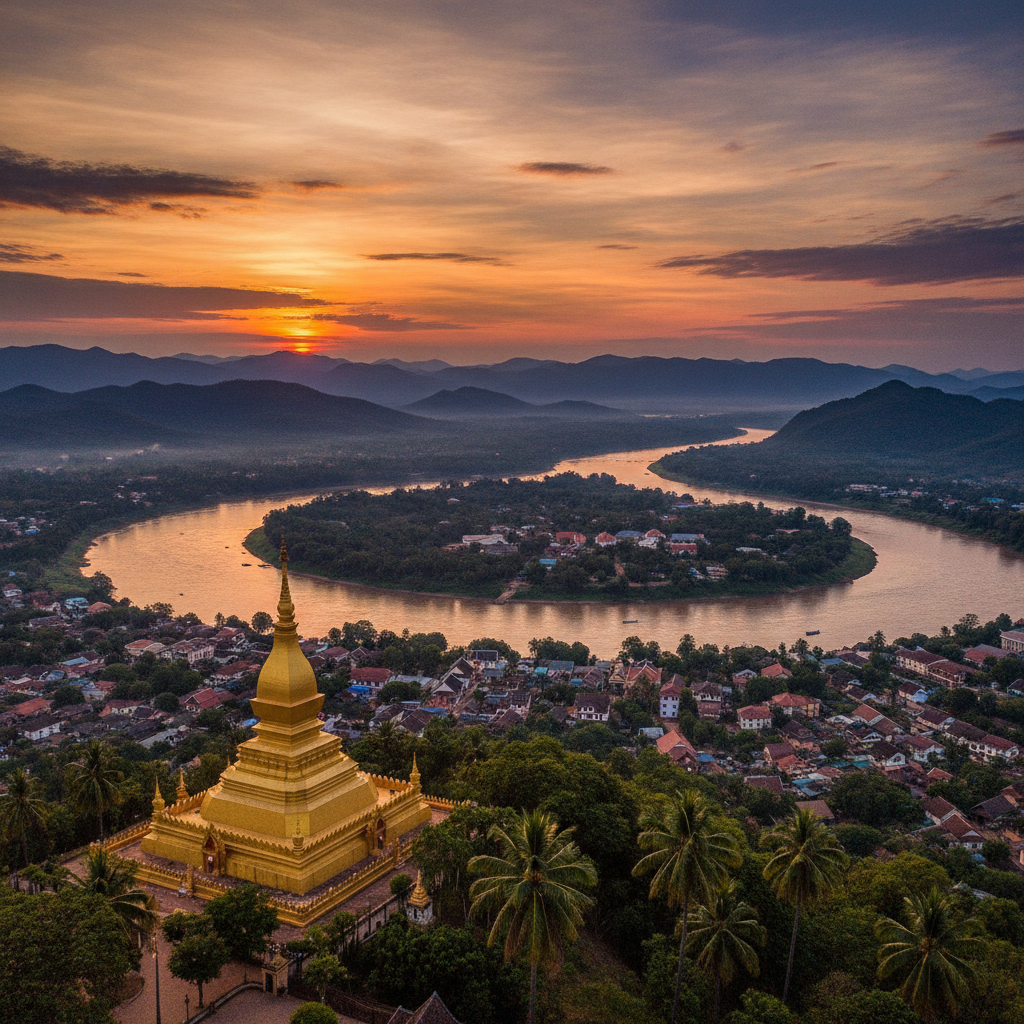
Mount Phousi—the 150-metre isolated hill rising from the centre of the old town peninsula, topped by the That Chomsi chedi (stupa)—offers the most complete panoramic view of Luang Prabang: the Mekong curving around the western and northern shores, the Nam Khan on the south, the French colonial rooftops and temple gables of the old town on the peninsula below, and the mountains of the surrounding provincial landscape extending in every direction. The 329 steps ascending from the Sakkaline Road entrance pass through a small forest of frangipani trees (the most sacred flower in Lao Buddhism—their white petals are offered at temples) and several minor shrines and Buddha images. The summit: That Chomsi's gold-topped stupa (rebuilt 1804, renovated several times since), a resident flock of pigeons, and the most popular sunset viewpoint in the city (arriving by 17:30 is advisable—the summit fills with photographers, particularly during high season December–February). The descent via the other side of the hill passes Wat Pa Houak (an 18th-century temple with particularly fine interior murals).
- 6
The Pak Ou Caves & the River to Whisky Village
The half-day Mekong boat excursion from Luang Prabang—upstream to the Pak Ou Caves with a stop at Ban Xang Hai (the 'Whisky Village') on the way—is the standard river day trip and combines two of Luang Prabang's most iconic experiences. The boat: a traditional wooden river boat chartered from the tourist pier near the old market (approximately 200,000 kip/€9 per person in a shared boat, or 300,000–500,000 kip/€13.50–22.50 per person private charter, 2 hours upstream). Ban Xang Hai ('Jar Village')—a riverside village that produces lao lao (the Lao rice whisky—clear, strong, 40–45% ABV, made from glutinous rice fermented and distilled in clay pots; the village exists primarily as a tourist whisky stop, with jars of varying strengths available for tasting). The Pak Ou Caves (Tham Ting and Tham Phum—a two-level cave complex where the Nam Ou River joins the Mekong; the lower cave lit by natural light, the upper cave requiring torches): both caves contain thousands of Buddha images of varying sizes and ages, left by pilgrims as merit-making gifts over at least 300 years—the most dense accumulation of Buddha images in one place in Laos.
Walk this route with audio
Stories play automatically as you reach each stop — no tapping needed.
More in Luang Prabang
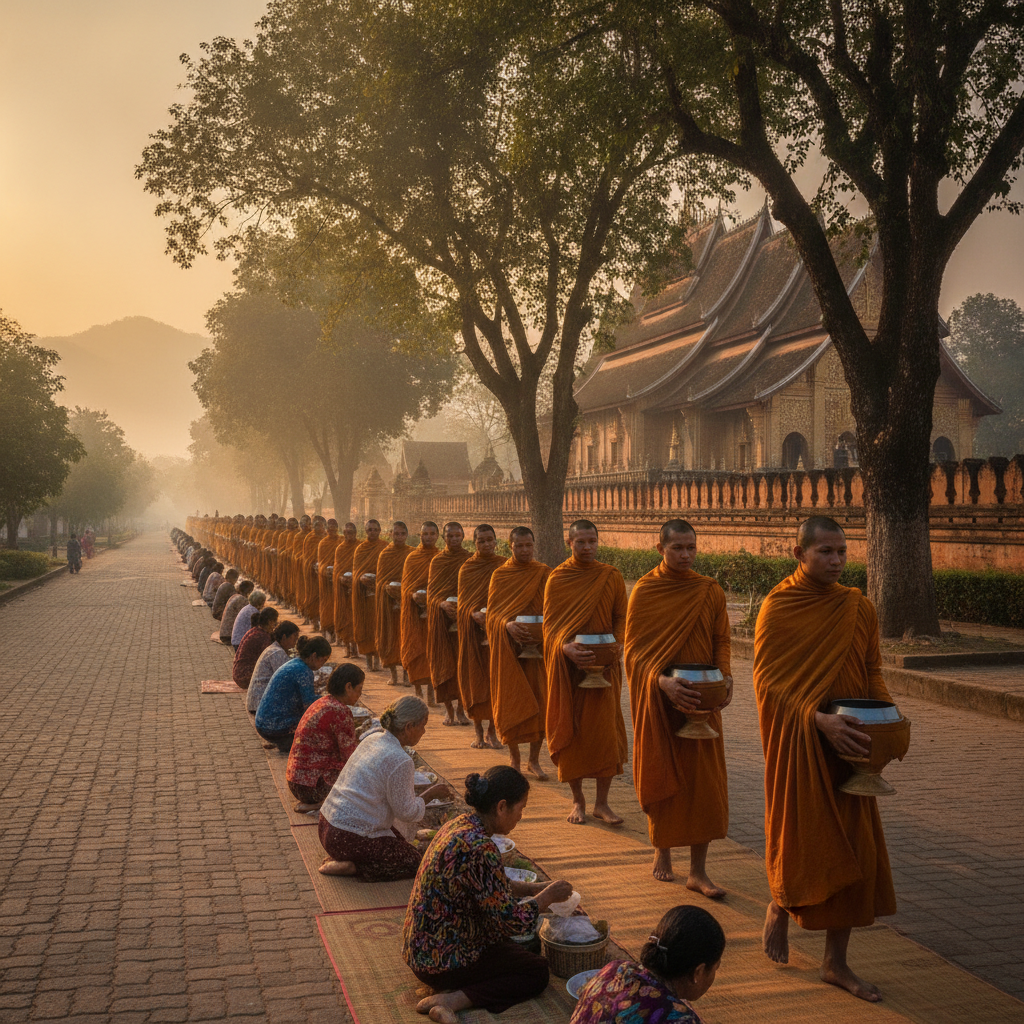
Luang Prabang Essentials: Monks at Dawn, Wat Xieng Thong's Sweeping Roof & Turquoise Kuang Si Falls
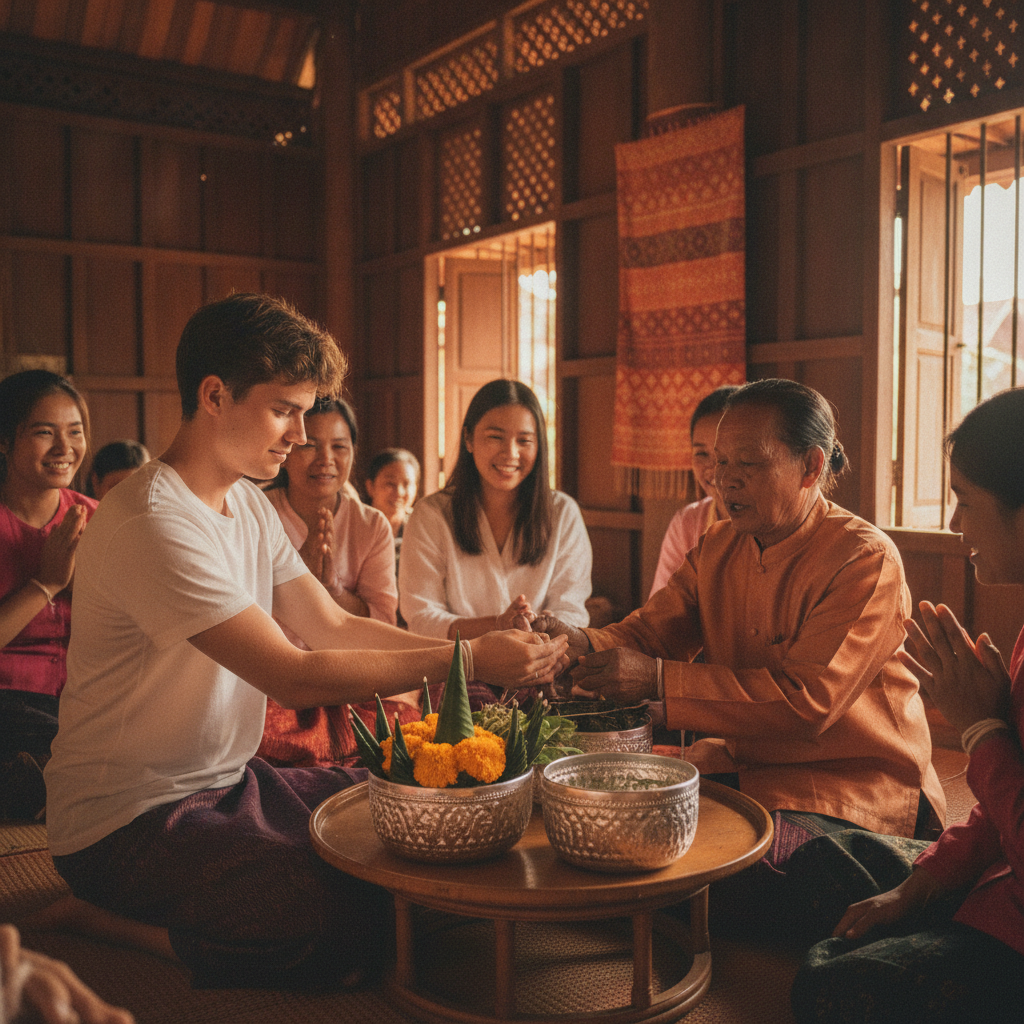
Luang Prabang's Present: China's $6B Railway, the Baci Wrist-Tying Ritual & the UNESCO Heritage Gentrification Trap
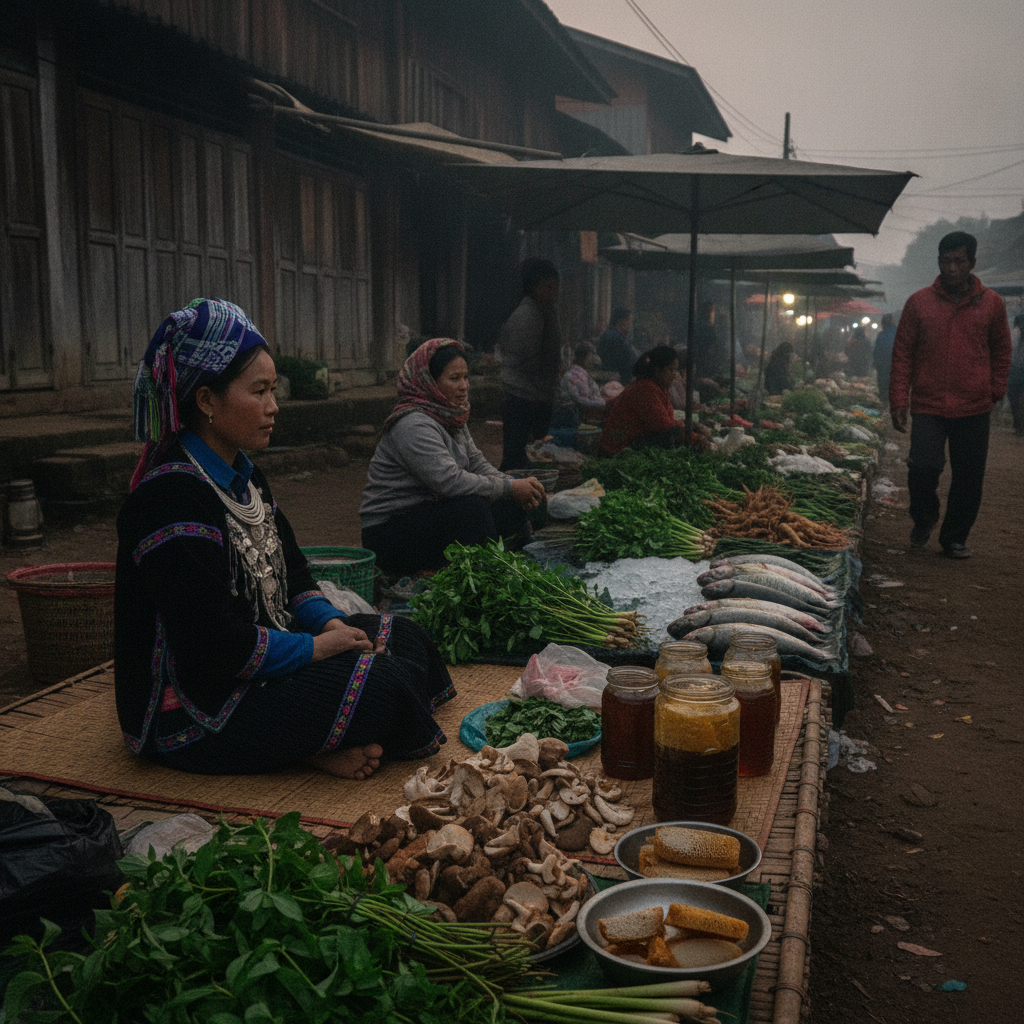
Luang Prabang's Living Layers: Hmong Morning Market, Ock Pop Tok Weavers & the Mekong's 11 Chinese Dams
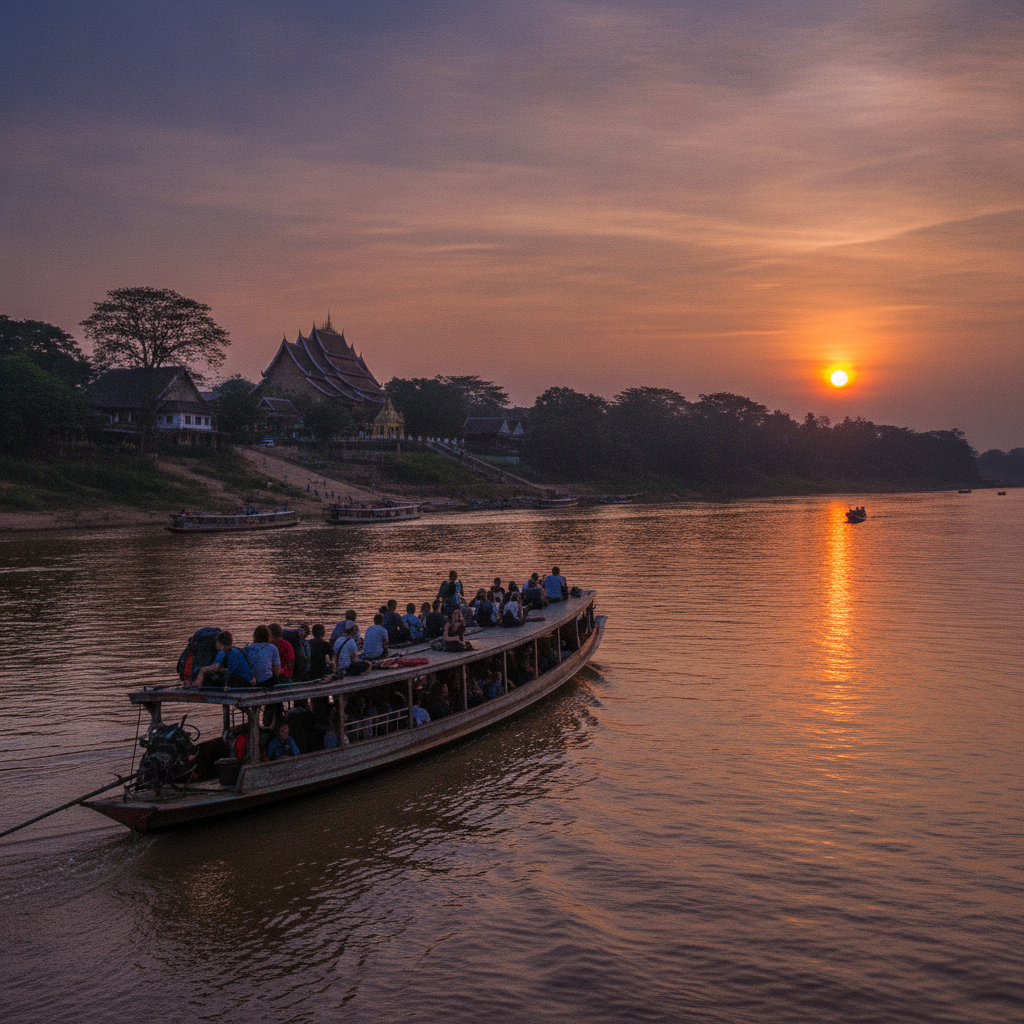
Leaving Luang Prabang: The Slow Boat Arrival That Changes You, Bolaven Plateau Coffee & the City After 21:00