Luang Prabang Essentials: Monks at Dawn, Wat Xieng Thong's Sweeping Roof & Turquoise Kuang Si Falls
Fall for Southeast Asia's most beautifully preserved town—the tak bat almsgiving procession at 05:30 where 200 monks receive sticky rice in silence (and the tourist photography crisis threatening to destroy the ritual), the UNESCO-protected 4 km² peninsula of 33 temple complexes and French colonial villas at the Mekong-Nam Khan confluence, Wat Xieng Thong's 1560 roof sweeping to the ground in an unbroken curve (coronation temple of Lao kings until 1975), the 2-day slow boat from Thailand through Mekong river canyon to arrive at dusk, Kuang Si's calcium carbonate turquoise swimming pools in a 60-metre waterfall park, and the Hmong women's Night Market where 300 stalls of reverse-appliqué textiles are genuine maker-seller craft.
- 1
Tak Bat – The Dawn Alms-Giving Ceremony
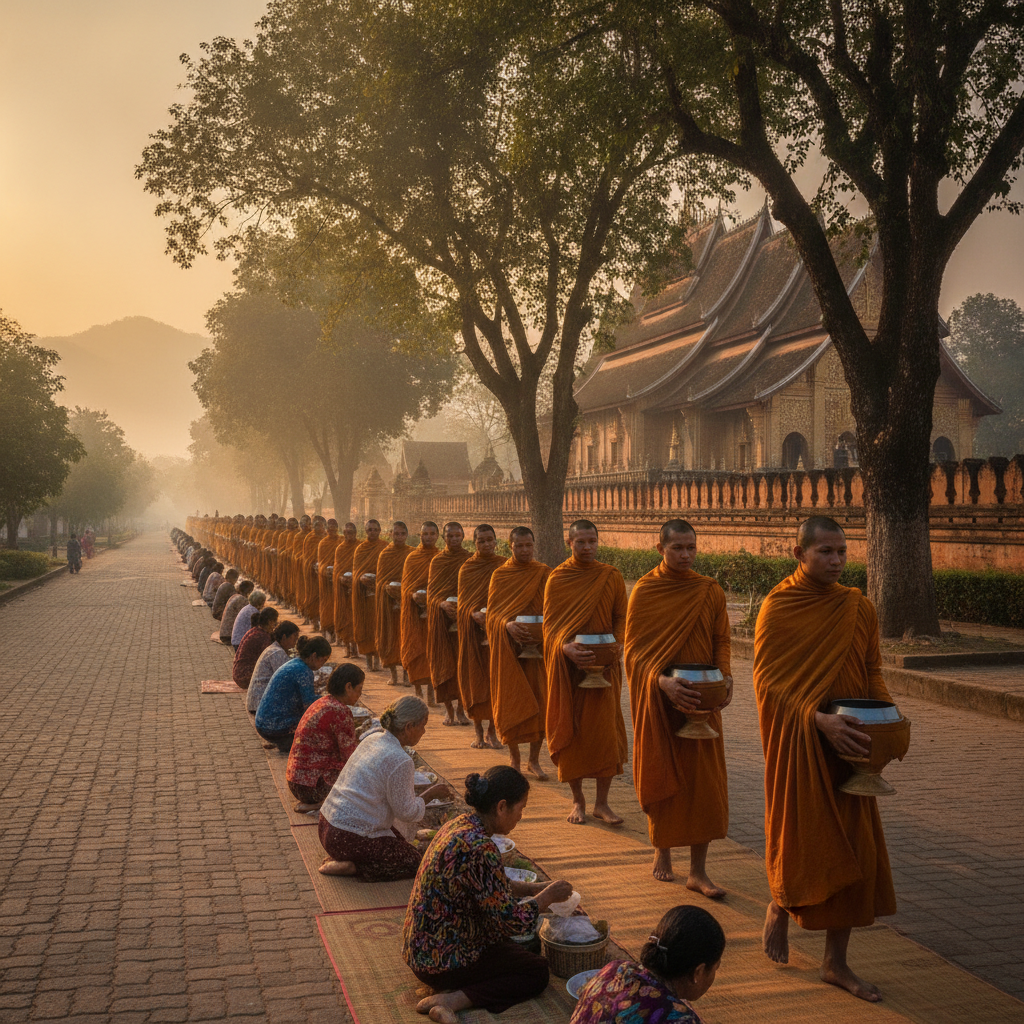
Tak bat (the almsgiving procession—literally 'making merit by offering food to monks')—the daily dawn ritual in which saffron-robed Buddhist monks process silently through the streets in single file to receive sticky rice and food offerings from kneeling householders—is the most iconic daily event in Luang Prabang and one of the most visually extraordinary rituals in Southeast Asia. The ceremony: monks (over 200 in Luang Prabang, from dozens of wats) begin their procession at approximately 05:30, walking barefoot in silence; householders kneel with bamboo containers of sticky rice and place small handfuls into each monk's lacquer bowl; additional offerings (fruit, prepared foods, packaged snacks) are placed in a smaller vessel carried by novice monks following behind. The tourist problem: Tak bat has become, by the 2010s, the most over-touristed daily ritual in Southeast Asia—up to 500 tourists standing, photographing with flash, sometimes physically approaching monks who cannot speak or respond during the ceremony. UNESCO and the Lao government have issued guidelines (observe from a distance, no flash, no standing directly alongside), but enforcement is inconsistent.
- 2
Luang Prabang's UNESCO World Heritage Town
Luang Prabang's designation as a UNESCO World Heritage Site in 1995—covering the entire town centre peninsula at the confluence of the Mekong and Nam Khan rivers—was made on the grounds of the 'outstanding example of the fusion of traditional Lao architecture and urban structures with those built by the European colonial authorities in the 19th and 20th centuries.' The town: a 4 km² peninsula of approximately 1,300 structures (33 temple complexes, French colonial villas, traditional Lao wooden houses, and contemporary buildings in traditional style), connected by tree-lined streets and bounded by the Mekong to the north and west and the Nam Khan to the south and east. The heritage management challenge: the 1995 designation brought international visibility and tourism; the tourism brought economic pressure on the traditional vernacular architecture (which is expensive to maintain compared to concrete construction); and the heritage protection requirements (prohibiting demolition or unsympathetic modification) created tension between the resident community (who wanted modern housing) and the conservation mandate. Luang Prabang's resident population has declined as locals sell or lease their traditional houses to hotel developers.
- 3
Wat Xieng Thong – The Most Beautiful Temple in Laos
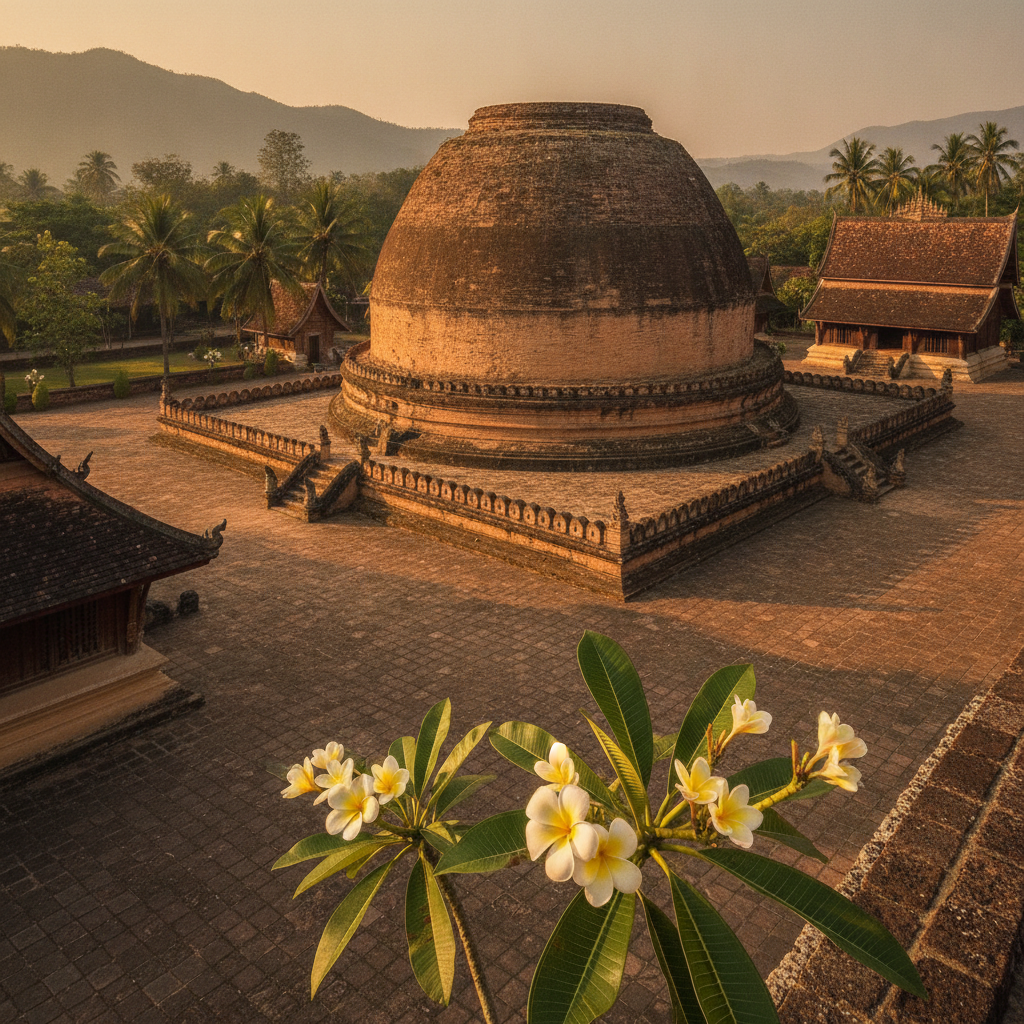
Wat Xieng Thong ('Temple of the Golden City')—at the northern tip of the Luang Prabang peninsula, immediately above the confluence of the Mekong and Nam Khan—is considered the finest example of Lao Buddhist temple architecture and one of the most beautiful Buddhist temples in Southeast Asia. The sim (ordination hall): a sweeping multi-tiered roof that descends almost to the ground in an elegant curve (the 'flame-style' roof characteristic of Luang Prabang temple architecture—narrower, more pointed, and more gracefully proportioned than the Lanna style of northern Thailand), covered in glass mosaic decorations on the exterior walls depicting the Tree of Life (rear wall) and scenes from Lao mythology. Built in 1560 by King Setthathirath and never destroyed or substantially altered since, Wat Xieng Thong is the most historically continuous structure in the city—the coronation temple of Lao kings through the monarchy's end in 1975. The red chapel alongside the main sim houses a rare reclining Buddha of gilded wood. Entry: 20,000 kip/€0.90.
- 4
The Mekong River – Luang Prabang's Lifeblood
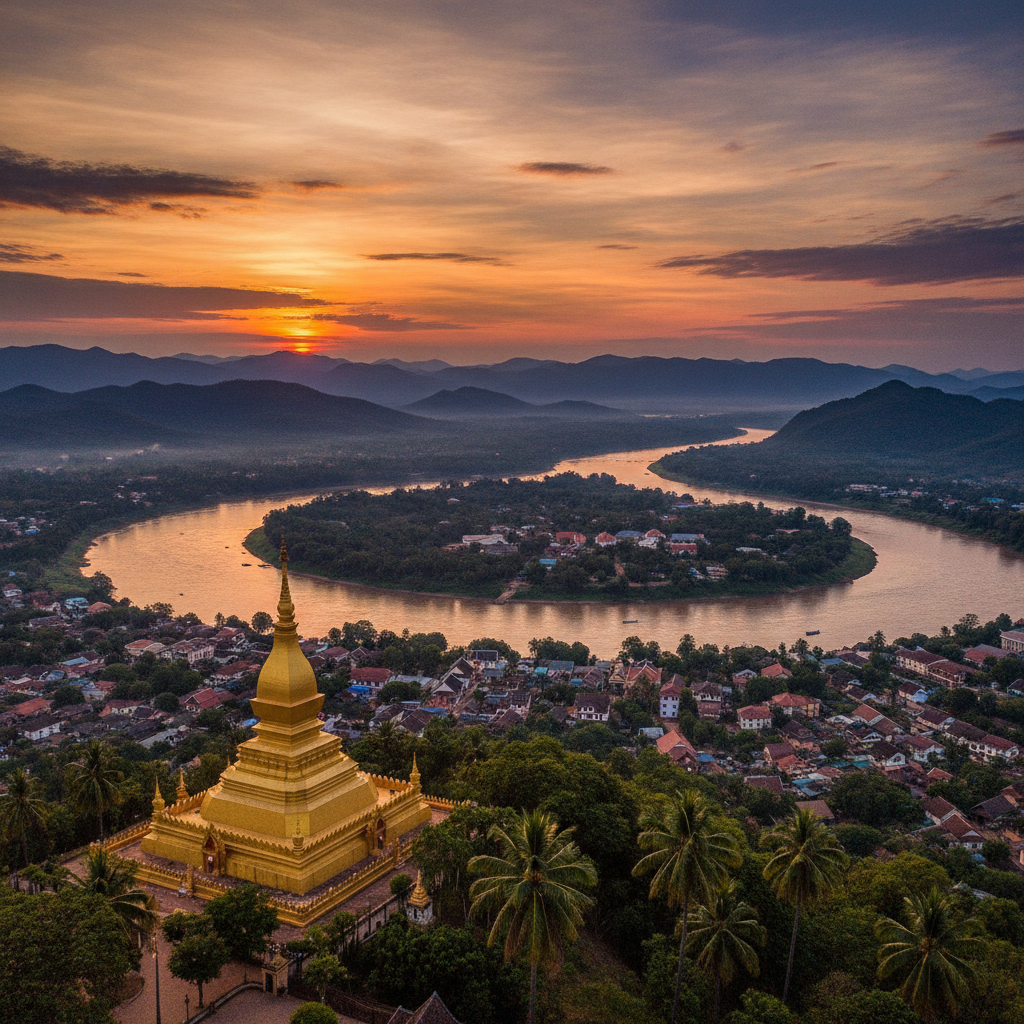
The Mekong River—which flows past Luang Prabang from the north, then turns south along the western edge of the old town before continuing to Cambodia and Vietnam—is the physical and cultural foundation of Luang Prabang's existence: the river that carried Buddhism from China, the trade that enriched the Lan Xang kingdom, the fishermen who supplied the city's protein, and the sunsets that made the city's reputation as a place of transcendent beauty. The upstream boat journey: the 'slow boat' from Huay Xai (on the Thai-Lao border, accessible from Chiang Rai) to Luang Prabang—2 days on a wooden river passenger boat, sleeping in guesthouses at Pakbeng on the way—is considered one of Asia's great river journeys and the classic way to enter Laos. The Pak Ou Caves (25 km upstream from Luang Prabang, accessible by river boat—a cave complex in a limestone cliff above the Mekong, containing thousands of Buddha images left by pilgrims over centuries): the standard half-day Mekong excursion. The Mekong sunset from the river bars above the bank (on the road called the 'sunset strip') is Luang Prabang's most photographed non-religious daily event.
- 5
Kuang Si Waterfall – The Turquoise Terraced Falls
Kuang Si Waterfall—29 km south of Luang Prabang, at the end of a road through rice paddies and forest—is the most visited natural sight in northern Laos and one of the most photographed waterfalls in Southeast Asia. The falls: a series of cascading turquoise limestone pools (the calcium carbonate in the water creates the distinctive turquoise colour—the same process as Plitvice in Croatia or Havasu Falls in Arizona), culminating in the main 60-metre drop. The lower pools are swimmable—some of the most beautiful natural swimming pools in the world, with changing facilities and entry included in the 20,000 kip/€0.90 park fee. The Kuang Si Bear Rescue Centre (at the entrance to the waterfall park)—operated by Free the Bears, an Australian charity—provides sanctuary for Asiatic black bears confiscated from the illegal wildlife trade (bear bile farming and the pet trade). Getting there: tuk-tuk from central Luang Prabang (₹120,000 kip/€5.50 return, 45 minutes each way), or hired bicycle (29 km, partly hilly, usually 2 hours each way—adventurous but feasible for fit cyclists).
- 6
Luang Prabang's Night Market – Hmong Textile Crafts
The Night Market on Sisavangvong Road—the main street of the old town, closed to traffic after 17:00 for the daily market—is the most consistent and aesthetically cohesive tourist market in mainland Southeast Asia: approximately 300 stalls operated primarily by Hmong women selling textiles, bags, clothing, and silverwork, on a street lined with frangipani trees, temple walls, and colonial shopfronts. The products: Hmong embroidered textiles (the distinctive reverse appliqué technique—stitching cut-out patterns in contrasting fabrics onto a background—combined with embroidered geometric designs in the primary colours of the Hmong aesthetic palette), silver jewellery, scarves woven in silk and cotton, decorated bags and purses, and tourist accessories. The night market has the highest proportion of genuinely locally made craft goods of any Southeast Asian tourist market—most Hmong textile sellers are the makers, not resellers of factory goods. Prices are negotiable but the differential between initial price and accepted price is modest compared to Thai or Vietnamese markets; Lao sellers are generally more reserved about aggressive price negotiation.
Walk this route with audio
Stories play automatically as you reach each stop — no tapping needed.
More in Luang Prabang
Luang Prabang's Foundation: Lan Xang's Million Elephants, Lao Laap with Sticky Rice & River Boats to Buddha Caves
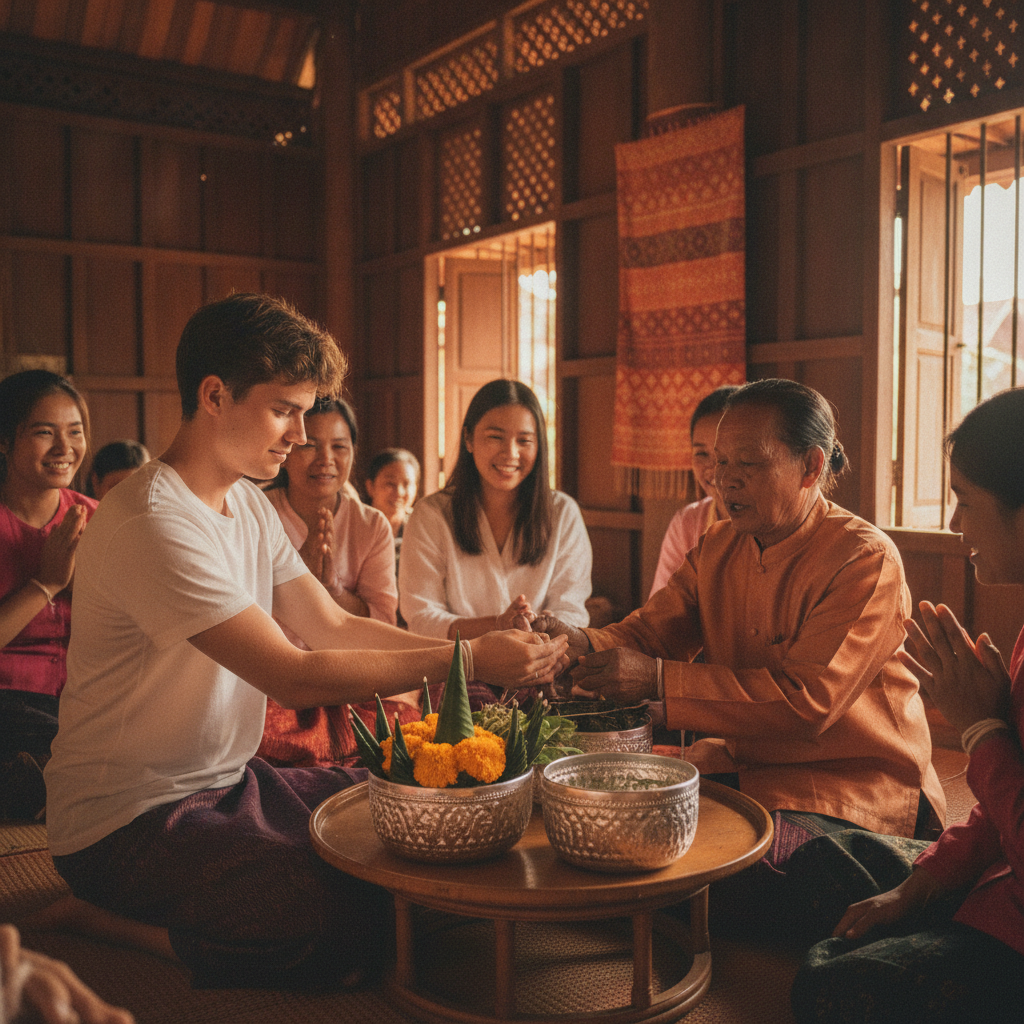
Luang Prabang's Present: China's $6B Railway, the Baci Wrist-Tying Ritual & the UNESCO Heritage Gentrification Trap
Luang Prabang's Living Layers: Hmong Morning Market, Ock Pop Tok Weavers & the Mekong's 11 Chinese Dams
Leaving Luang Prabang: The Slow Boat Arrival That Changes You, Bolaven Plateau Coffee & the City After 21:00