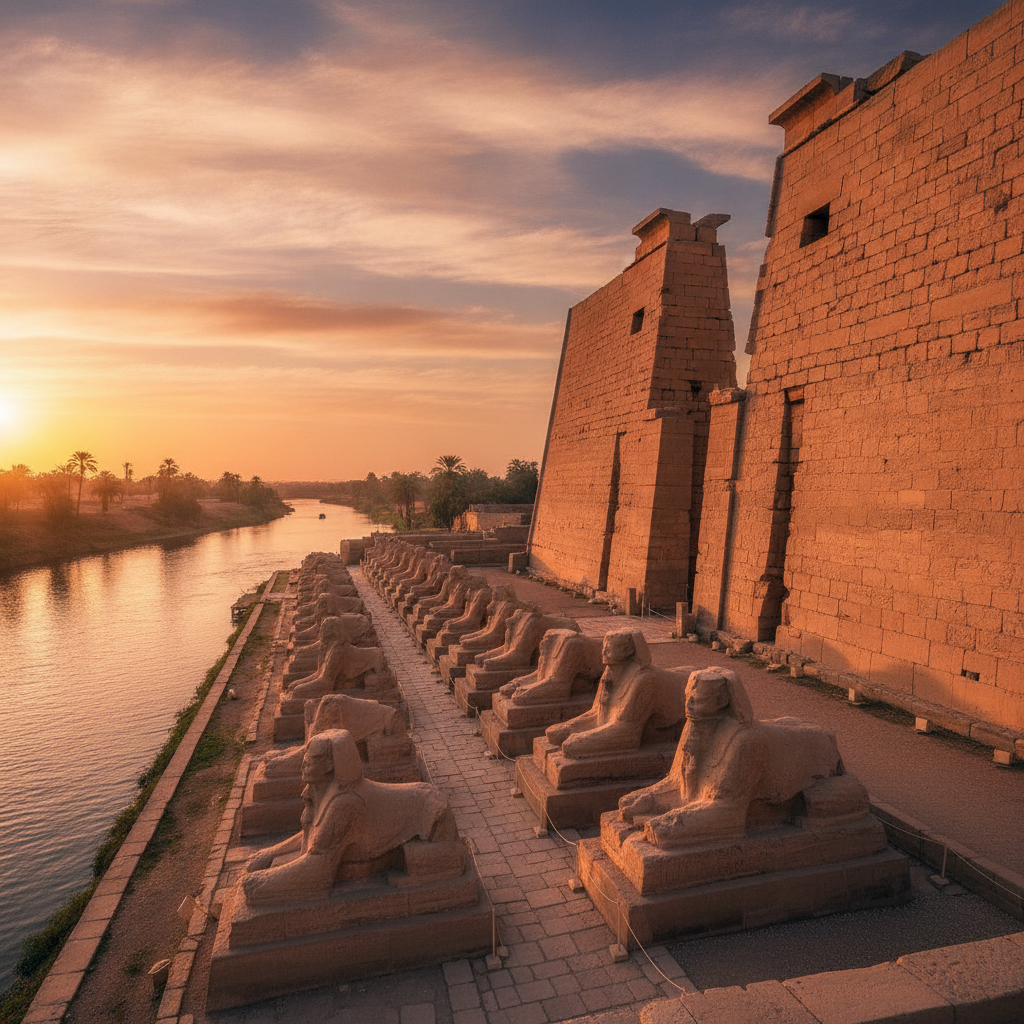
Luxor: Karnak, Luxor Temple, Valley of the Kings, and the World Greatest Open-Air Museum
Luxor (ancient Thebes) as the greatest concentration of ancient Egyptian monuments in the world: Karnak Temple with its 134-column Hypostyle Hall (the largest columned room ever built); Luxor Temple and the Avenue of Sphinxes connecting them; the Valley of the Kings with the intact tomb of Tutankhamun; the West Bank with Hatshepsut temple, Deir el-Medina workers village, and the Colossi of Memnon; the Luxor and Mummification museums; and the practical guide including hot air balloon flights at sunrise.
- 1
Karnak Temple - The Largest Ancient Religious Complex in the World
Karnak (Ipet-isut - the Most Select of Places): the largest ancient religious complex ever constructed and the primary cult center of the god Amun-Ra for approximately 2,000 years of ancient Egyptian history. The complex (Karnak covers approximately 200 acres and was built, modified, and expanded by approximately 30 pharaohs over 2,000 years from the Middle Kingdom (approximately 2055 BCE) through the Ptolemaic period (30 BCE): the Karnak complex contains the Great Temple of Amun-Ra (the primary temple), the Temple of Khonsu, the Temple of Mut, the Festival Hall of Thutmose III, and numerous smaller chapels and shrines). The Great Hypostyle Hall (the Hypostyle Hall of Seti I and Ramesses II: 134 massive sandstone columns arranged in 16 rows: the 12 central columns are 21 meters (69 feet) high with capitals 3.5 meters in diameter: the hall covers approximately 5,000 square meters and is the largest columned room in the world: the columns are covered with carved and painted hieroglyphic inscriptions recording the military campaigns and religious observances of Seti I and Ramesses II: the original painted colors survive in patches on the upper columns). The Sacred Lake (the artificial sacred lake of Karnak: approximately 120m by 77m: used for ritual purification: the annual Opet Festival procession began at Karnak with the sacred barque of Amun transported to Luxor Temple). The Avenue of Sphinxes (the 3km processional avenue connecting Karnak to Luxor Temple lined with human-headed sphinxes).
- 2
Luxor Temple - The Southern Sanctuary and the Avenue of Sphinxes
Luxor Temple (Ipet-resyt - the Southern Sanctuary): the New Kingdom temple built primarily by Amenhotep III (1390-1352 BCE) and completed and extended by Ramesses II (1279-1213 BCE): the center of the annual Opet Festival that celebrated the rejuvenation of royal power and the fertility of the Nile. The entrance (the Luxor Temple entrance pylon of Ramesses II: originally flanked by six colossal statues of Ramesses II (four seated, two standing) and two 25-meter obelisks: one obelisk remains in situ (its twin was given to France in 1833 and now stands in the Place de la Concorde in Paris): the colossal seated statues of Ramesses II at the entrance). The interior (the Colonnade of Amenhotep III: 14 massive papyrus-bundle columns 16 meters high: the Court of Amenhotep III: the Birth Room (where the divine birth of Amenhotep III - his conception by the god Amun in the form of his earthly father - is depicted in relief): the inner sanctuary). The Roman additions (a Roman legion camp was built within the temple precinct in the 3rd century CE: a Roman chapel was incorporated in the inner sanctuary). The Christian church (a Coptic Christian church was built within the temple in the early Christian period: its painted images survive on the temple walls overlapping with the ancient Egyptian reliefs). The Abu el-Haggag Mosque (a mosque built on top of the temple ruins in the medieval period remains in use today: when Lepsius and Mariette excavated the temple they found the mosque floor at the level of the temple rooftops).
- 3
Valley of the Kings - The Royal Necropolis and the Tomb of Tutankhamun
The Valley of the Kings (Wadi el-Muluk): the royal necropolis of the Egyptian New Kingdom (approximately 1550-1070 BCE) where 64 royal tombs have been discovered in the limestone cliffs on the west bank of the Nile at Luxor. The history (the New Kingdom pharaohs abandoned the pyramid tradition (the pyramids of the Old and Middle Kingdom had proven ineffective at preventing tomb robbery) and chose the remote desert valley on the west bank of Thebes as their burial ground: the tombs were cut deep into the limestone: the entrances were sealed and concealed: despite these precautions virtually all the royal tombs were robbed in antiquity). The primary tombs (KV62: the Tomb of Tutankhamun (discovered intact by Howard Carter on November 4, 1922: the only largely intact royal tomb ever found: the golden death mask, the innermost gold coffin, the throne, the shrine, and the funerary equipment now in the Cairo Egyptian Museum): KV2: the Tomb of Ramesses IV (well-preserved wall paintings and a massive red granite sarcophagus): KV11: the Tomb of Ramesses III (the longest decorated tomb in the valley: 125 meters): KV17: the Tomb of Seti I (the most elaborately decorated tomb in the valley: discovered by Belzoni in 1817: the astronomical ceiling and the extraordinary painted reliefs of the highest artistic quality in the entire valley: the alabaster sarcophagus was removed by Belzoni and is now in the Sir John Soane Museum in London)). The Valley of the Queens (Biban el-Harim - the adjacent valley with the tombs of royal wives and children including the Tomb of Nefertari (QV66) - the finest painted tomb in Egypt).
- 4
The West Bank of Luxor - Deir el-Medina, Hatshepsut, and the Colossi of Memnon
The West Bank of Luxor: the entire western bank of the Nile at ancient Thebes was the domain of the dead: the site of the royal tombs, the mortuary temples, and the workers village. Deir el-Medina (the village of the royal tomb workers: the community of artisans, painters, sculptors, and administrators who built and decorated the royal tombs in the Valley of the Kings for approximately 400 years (approximately 1550-1100 BCE): the village is extraordinarily preserved: the house foundations, the wells, the small temples (the Temple of Hathor at Deir el-Medina), and above all the workers own tombs (the workers built and decorated their own tombs with the same skills they used in the royal necropolis: the Tomb of Sennedjem is the finest painted worker tomb): the community is exceptional because the workers were literate and left thousands of ostraca (pottery shards and limestone flakes) with administrative records, literary texts, love poetry, prayers, and even work complaints: the most complete surviving documentation of daily life in ancient Egypt). The Temple of Hatshepsut (the Deir el-Bahari mortuary temple of Queen Hatshepsut (1473-1458 BCE): the first female pharaoh to rule in her own right: the three-tiered colonnaded temple built against the limestone cliff: the painted reliefs documenting the Trading Expedition to Punt (Somalia-Djibouti area)). The Colossi of Memnon (the two massive sandstone seated statues of Amenhotep III: 18 meters high: the only surviving elements of the largest mortuary temple ever built in Egypt).
- 5
Luxor Museum and the Mummification Museum - The Art and Science of Ancient Egypt
The Luxor Museum (opened 1975): the finest collection of New Kingdom Egyptian art outside of Cairo and one of the best-presented museums in Egypt. The collection (the Luxor Museum collection focuses on the New Kingdom period (1550-1070 BCE) with exceptional Theban finds: the cache of New Kingdom royal mummies (the 2004 discovery of a cache of royal mummies in the Luxor Museum storage): the Kamose stele (the stele of Pharaoh Kamose recording the Theban offensive against the Hyksos rulers of Lower Egypt approximately 1555 BCE): the Thutmose III alabaster sphinx: the Amenhotep III head: the extraordinary painted wooden model army from a Middle Kingdom tomb (the Nubian archers and Egyptian spearmen): the Akhenaten statues cache (the cache of sandstone statues of the heretic pharaoh Akhenaten discovered at Karnak in the 1960s - massive standing figures in the distinctive Amarna style). The Mummification Museum (the Mummification Museum in Luxor: a small but excellent museum explaining the ancient Egyptian mummification process in detail: the natron desiccation process: the removal and preservation of the internal organs in canopic jars: the wrapping techniques: the amulets placed between the bandages: the Cartonnage mummy cases: the museum includes actual mummified animals (cats, crocodiles, fish, baboons) as well as human mummies: the medical and ritual understanding behind the mummification practice).
- 6
Practical Luxor - Getting There, Felucca Rides, Hot Air Balloons, and Best Hotels
The Luxor practical guide: transportation, accommodation, activities, and insider tips for visiting the world greatest open-air museum. The getting there (the Luxor International Airport (LXR): direct flights from Cairo (approximately 1 hour), some European charters in winter season: the Luxor train station: the overnight sleeper train from Cairo (approximately 9-10 hours: the Watania and Abela sleeper services): the Nile cruise (a Nile cruise from Aswan to Luxor or Luxor to Aswan: 3-7 days: the primary luxury mode of experiencing the Nile monuments). The hot air balloon (hot air balloon flights over the West Bank at sunrise: Luxor is one of the world primary hot air balloon destinations: approximately 40-50 balloon operators: the flight lasts approximately 45 minutes to 1 hour: the view over the Valley of the Kings, the Nile, and the temples at dawn is extraordinary: safety record has been mixed (a crash in 2013 killed 19 tourists): choosing a reputable operator with a proper safety record is essential). The felucca (a felucca is the traditional Egyptian Nile sailing boat: felucca rides on the Nile at Luxor are available from the Corniche: sunset felucca rides are a classic Luxor experience). The hotels (the Winter Palace Hotel Luxor (built 1886-1907 by Thomas Cook): the grande dame hotel of Upper Egypt: Agatha Christie wrote Death on the Nile while staying there: the Sofitel Karnak Luxor: the Steigenberger Nile Palace). The tickets (a combined Luxor Pass covers all the West Bank monuments and the temples).
Walk this route with audio
Stories play automatically as you reach each stop — no tapping needed.
More in Luxor
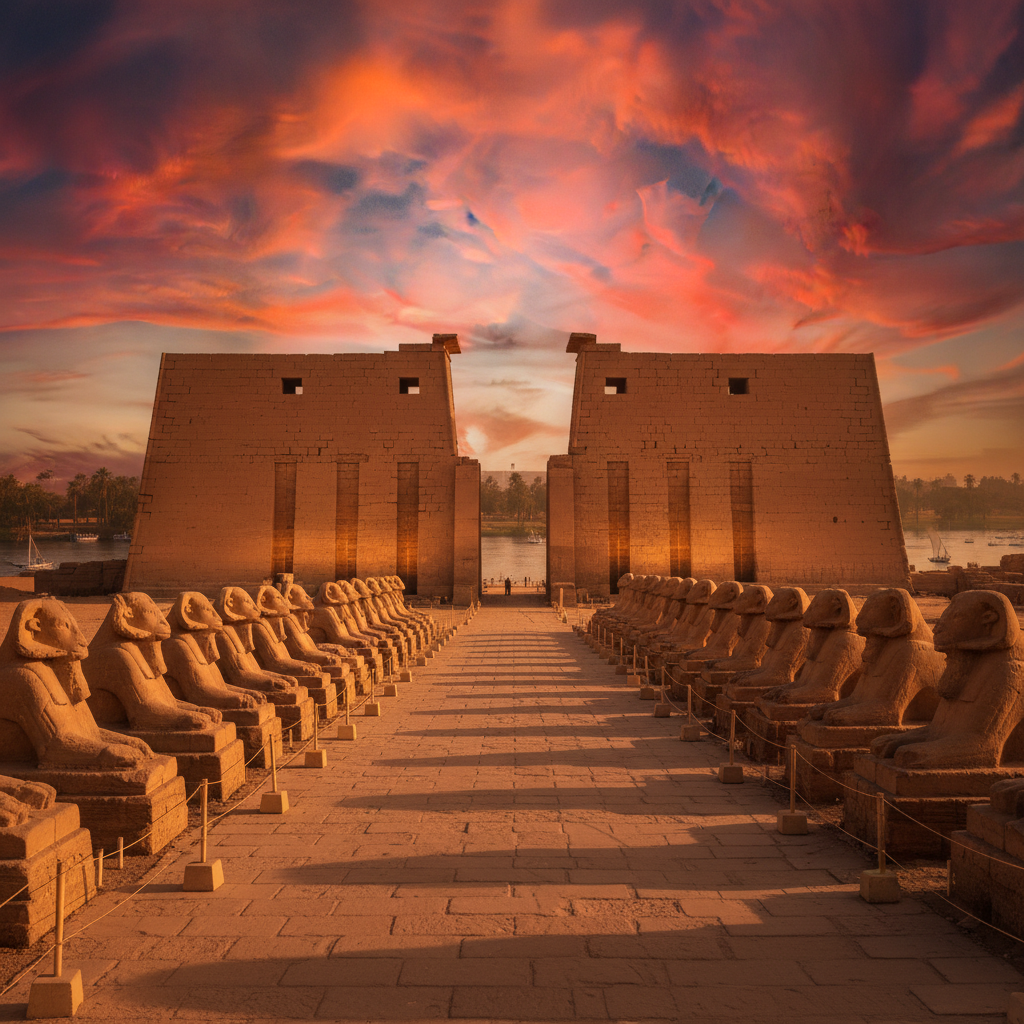
Luxor: Akhenaten, Nefertiti, Tutankhamun, and the Amarna Revolution

Luxor by River: The Nile Cruise to Aswan, the Dahabiyya Sailing Experience, the Temple of Edfu, and the Kom Ombo Temple
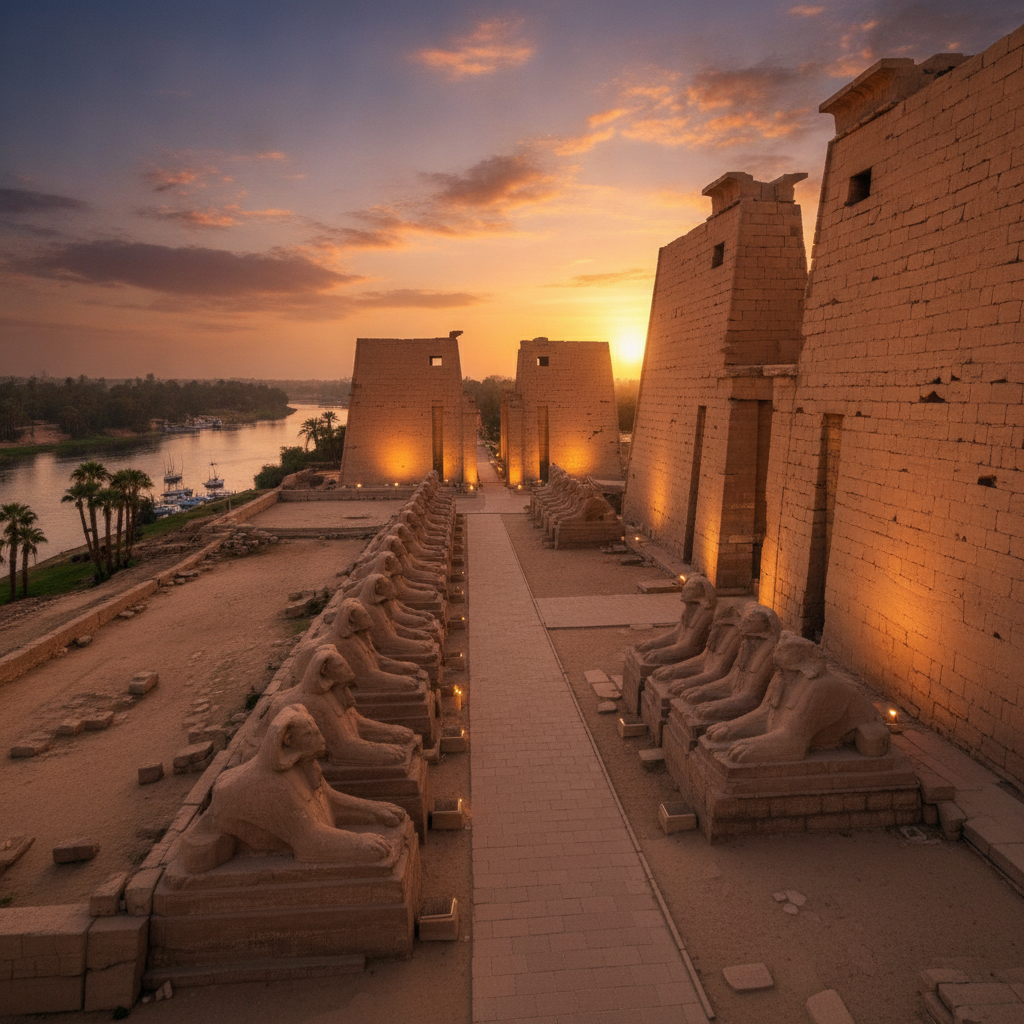
Luxor: The Nile Flood, Egyptian Afterlife, Coptic Christianity, and the Nile Cruise Guide

Luxor Local Life: The East Bank Souq, the Alabaster Workshops, the Papyrus Art, and the Most Practically Lived-In Ancient City

Luxor Excursions: The Abydos Temple of Osiris, the Dendera Hathor Temple, and the Most Dramatically Colored Single Ancient Egyptian Sites
