The 50 Remaining Speakers of the Macanese Creole Language, the World's Highest Commercial Bungee Jump & Why Macau Has Set the Same Diversification Target Every Government Since 1999 Without Achieving It
Patuá Macanese creole with 50 fluent speakers on UNESCO's Critically Endangered list; the Macau Tower's 233m bungee jump as the world's highest commercial bungee certified by Guinness; Typhoon Hato's controversy over casinos operating during a fatal storm; the George Chinnery original oil paintings selling for HKD 2-8 million at Macau auction as the rarest lots; the Hengqin Co-operation Zone as the plan for Macau's non-gambling economic development; and gambling's 80% GDP share being the target to reduce but not yet reduced.
- 1
Macau's Cantonese Heritage – The Chinese Side of the City
The Cantonese dimension of Macau (the Chinese cultural heritage that coexists with the Portuguese colonial layer and that is the primary cultural identity of 95% of Macau's residents): the Cantonese Macau guide. The Cantonese community (the Macau Chinese population has been Cantonese-speaking since the first Chinese settlement adjacent to the Portuguese trading post in the 16th century—the Cantonese dialect (广东话) remains the dominant spoken language of Macau alongside Mandarin and Portuguese): the traditional crafts (the Macau hand-painted lantern craft (灯笼—the round red paper lanterns with Chinese character inscriptions, traditionally made in the San Kio (新桥) neighborhood): the Nam Van Lake pottery (the traditional ceramic ware produced at the kilns along the Nam Van Lake (南湾湖) foreshore—the kilns producing the blue-and-white glazed ware that was the primary ceramic export from the Pearl River Delta to Europe via Macau from the 16th century). The Macau Cantonese opera (粤剧—the traditional theatrical form with elaborate painted face makeup and falsetto singing): the Macau Cantonese Opera Heritage Centre (澳门粤剧曲艺会—the performance center in the Edificio do Consulado General (the former Portuguese consulate building) hosting monthly Cantonese opera performances): the dim sum culture (the traditional Cantonese dim sum breakfast (饮茶—yum cha) at the historical teahouses on the Rua de Cinco de Outubro: the most intact traditional dim sum eating environment in Macau, open from 07:00 daily).
- 2
Macau's Typhoon Season – Living With the Pearl River Storms
The Macau typhoon culture (the subtropical Pearl River Delta city that is directly in the path of the most active tropical cyclone track in the Pacific): the weather and typhoon guide. The typhoon statistics (the Pearl River Delta receives 4–7 named typhoons per year (May–November peak)—Macau's typhoon signal system (the 3 Nos. (号) signal system: No. 1 (standby—tropical cyclone within 800 km), No. 3 (strong winds imminent), No. 8 (gale or storm-force winds—the signal at which most businesses and all schools close): Typhoon Mangkhut (山竹, 2018): the most severe typhoon to impact Macau since Typhoon Patsy (1999): the Mangkhut storm surge flooded the Praia Grande (南湾—the historic waterfront facing the Pearl River estuary) to a depth of 3m in the most severe flooding of the historic quarter in 60 years. The casino response (the Venetian Macao and the other Cotai Strip casinos are engineered to remain open during No. 8 signals—the decision that generated significant controversy during Typhoon Hato (天鸽, 2017) when 10 residents died in floodwaters while casinos continued operating): the typhoon tourism (the No. 3 signal period before a major typhoon is the most unusual time to be in Macau—the empty streets, the lowering clouds, and the specific quality of the light before a Pacific typhoon are unique atmospheric experiences). The A-Ma Temple typhoon shelter (the original function of the A-Ma Temple: a shelter for Pearl River fishermen and sailors caught in typhoons).
- 3
Portuguese Language & Lusophone Heritage
The Portuguese language in Macau (the colonial language that has shaped the legal, administrative, and cultural architecture of the city for 460 years): the Lusophone heritage guide. The Portuguese language status (Portuguese is an official language of Macau alongside Chinese (Cantonese and Mandarin)—the number of Portuguese-fluent Macau residents: approximately 3% of the population (about 20,000 people)—the Portuguese-speaking Macanese community (土生葡人—the mixed-heritage descendants of the original Portuguese settlers and their Asian wives): the Macanese language (Patuá—the Macanese creole language mixing Portuguese with Cantonese, Malay, and Konkani): Patuá has approximately 50 fluent speakers as of 2024 and is on the UNESCO Critically Endangered languages list). The Lusophone connection (Macau is the most easterly member of the Community of Portuguese Language Countries (CPLP)—the 9-nation Portuguese-speaking community: Macau's position within the CPLP makes it the natural gateway for Portuguese and Brazilian business entering mainland China). The Macau Portuguese Food Festival (澳门葡国美食节—the annual Portuguese food and culture festival in November at the Rua do Cunha in Taipa Village—the largest Portuguese food event in Asia).
- 4
The Macau Tower & Extreme Activities
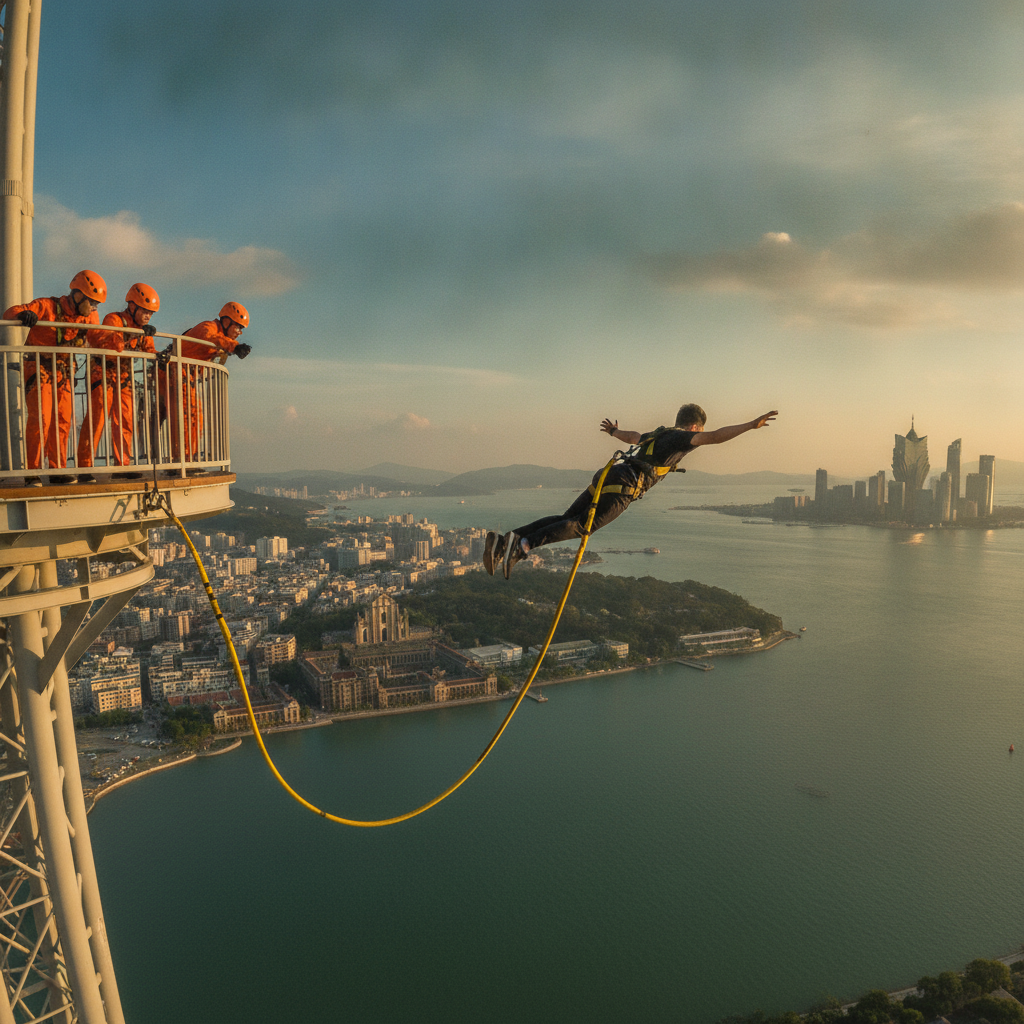
The Macau Tower (澳门观光塔—the 338m telecommunications and observation tower on the Nam Van Lake waterfront—the 10th tallest tower in the world at its completion in 2001): the extreme activities offered from the 233m open-air observation deck platform. The AJ Hackett Macau Tower experience (the tower has been operated by AJ Hackett (the New Zealand bungee jump pioneer who first commercialized bungee jumping in 1987 at Kawarau Bridge, New Zealand) since 2004): the Macau Tower Bungee Jump (the 233m bungee jump from the open-air deck—the world's highest commercial bungee jump, certified by the Guinness Book of Records: the fall of 233m takes approximately 7 seconds of free fall before the bungee cord engages): the price (HKD 2,988 per person for the bungee): the Skywalk (the 338m external catwalk circuit around the perimeter of the tower at 338m elevation—the circumference walk on the open catwalk outside the observation deck glass: wind speed at 338m averages 20–40 km/h on calm days): the Tower Top Walk (the highest point—the lightning rod platform at 338m): the Mast Climb (the ascent of the mast above the 338m deck to the highest accessible point (355m)).
- 5
Art Macau – The Emerging Collector's Scene
The Macau art and auction market (the emerging art market that operates in the shadow of the casino economy but has developed significant international art dealing infrastructure since 2000): the art collector's guide. The auction houses (the Macau Sotheby's auction presence (Sotheby's operates regular auction sales in Macau in partnership with the Wynn Macau—the most significant international auction activity in the Macau SAR): the primary sale categories (20th-century Chinese ink-wash painting; Macanese-specific lots including George Chinnery originals (the rarest sale lots in any Macau auction—Chinnery originals sell for HKD 2–8 million at Macau auction when they appear)). The casino art (the largest private art collections in Macau are within the casino-hotels—the Wynn Macau's permanent collection (the most significant within the casino sector): the Steve Wynn-assembled collection including Andy Warhol's 'Flowers' series, Roy Lichtenstein lithographs, and the Fernando Botero bronze sculpture 'Botero's Tiger' in the casino entrance lobby): the Macau Art Biennial (澳门艺术双年展—the biennial contemporary art exhibition held at the Macau Museum of Art in even years—the primary curatorial event of the Macau art calendar, presenting artists from Portugal, mainland China, and the Macanese diaspora).
- 6
Macau's Future – Diversification Beyond Gambling
The future of Macau (the strategic challenge facing the world's most gambling-dependent economy as it attempts to diversify into a broader tourism and cultural destination): the economic forecast. The diversification mandate (the Macau SAR government's stated policy goal is to reduce gambling's share of GDP from 80% (2019) to 60% or below (2030 target)—the same target set by every Macau government since 1999 and not yet achieved): the diversification strategy (the Macau Government Tourism Office (MGTO) strategy focuses on: (1) Cultural and creative tourism (the Macau UNESCO World Heritage circuit as the primary non-gambling attraction); (2) Health and wellness (the Hác-Sá Resort and the spa circuit); (3) MICE (Meetings, Incentives, Conferences, Exhibitions—the convention centers at the Venetian Macao and the MGM Cotai are the largest in the Pearl River Delta); (4) Sports tourism (the Formula E race held on the Guia Circuit alongside the Macau Grand Prix)). The Hengqin connection (the Hengqin Island (横琴岛—the 106 km² island adjacent to Macau connected by bridge, developed as the Guangdong–Macau In-Depth Co-operation Zone since 2021): the Chinese government's plan for Hengqin (the zone is intended to house Macau's non-gambling economic development on the adjacent mainland territory, providing the land area that Macau's 30 km² limits cannot accommodate): the prognosis (the Macau gambling economy is likely to remain the city's primary revenue source through 2049 despite the diversification rhetoric—the gaming industry's tax contribution of 70% of government revenue is too large to easily replace).
Walk this route with audio
Stories play automatically as you reach each stop — no tapping needed.
More in Macau
The Only I.M. Pei Building in Macau, the Wynn Bar With 310 Japanese Single Malt Labels & the 2021 Junket Collapse That Shifted Macau From VIP to Mass Market
The Man Who Held the Gambling Monopoly for 40 Years and Married 4 Women Simultaneously, the World's Most Densely Populated Territory & How Macau's Gaming Revenue Is 3× Las Vegas Despite Half Its Size
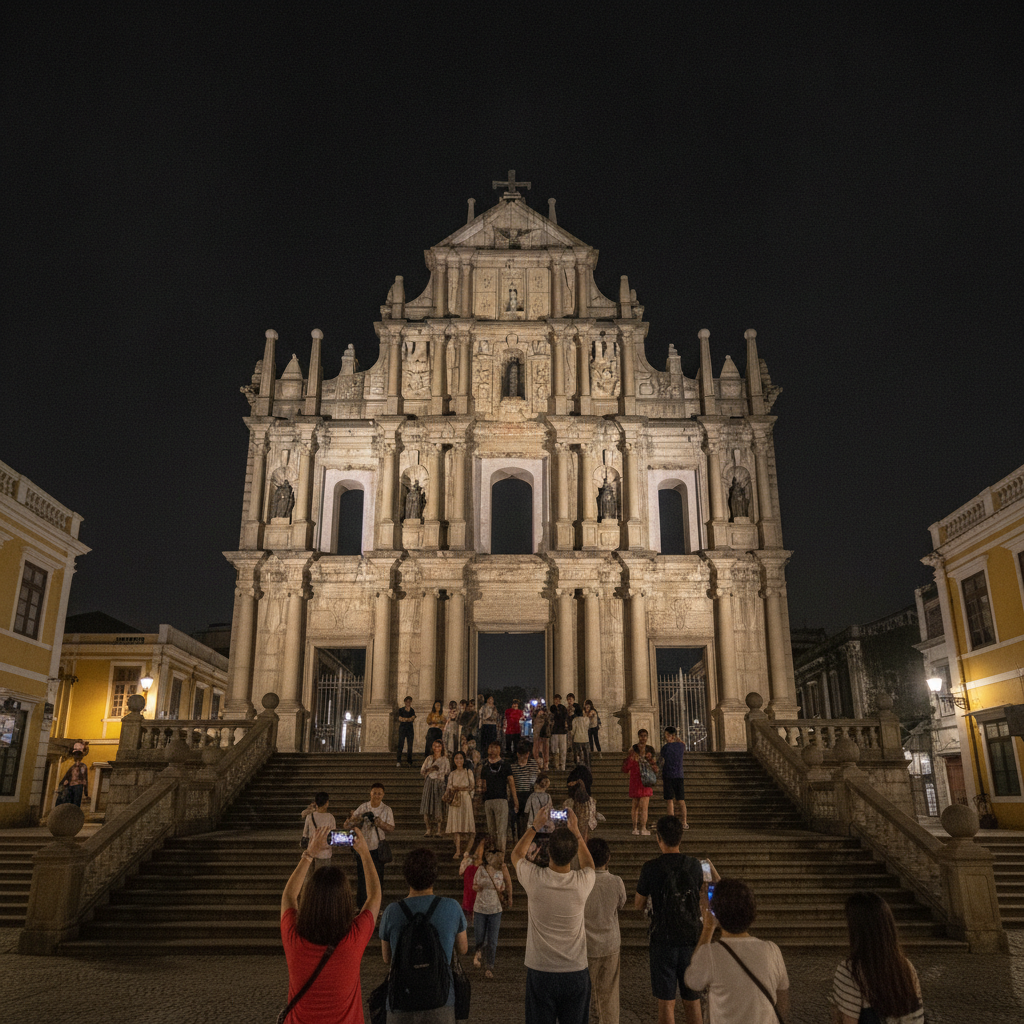
The Façade That Survived the 1835 Fire With Chinese Peonies in a Christian Composition, the 40-Year Casino Monopoly & the 1989 Egg Tart That Launched the Global Egg Tart Industry
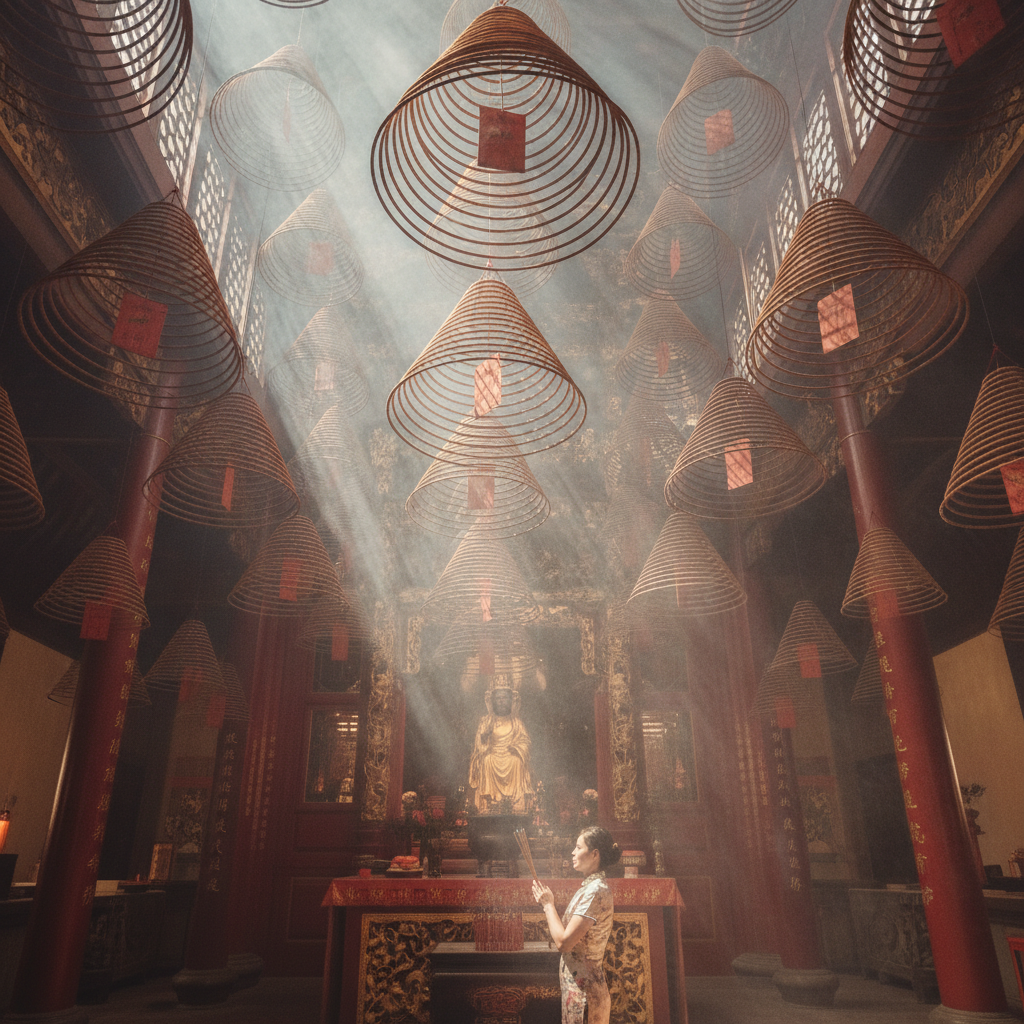
The Man Who Brought Chili Peppers to All of Asia From a Macau Trading Post, the Senate That Called Itself Loyal for Refusing Spanish Rule & the Festival Where You Carry a Dragon and Drink Baijiu