The Man Who Brought Chili Peppers to All of Asia From a Macau Trading Post, the Senate That Called Itself Loyal for Refusing Spanish Rule & the Festival Where You Carry a Dragon and Drink Baijiu
The Portuguese traders introducing chili peppers from Brazil to Asia via Macau—the origin of all Chinese chili-based cooking; the Leal Senado's loyalty title earned by refusing Spanish occupation of Portugal in 1580-1640; the Feast of the Drunken Dragon as a festival unique to Macau's fishing community not practiced in mainland China or Hong Kong; George Chinnery's 27 Macau years as the flight from his wife in India; the Macau International Fireworks Competition barges in the Pearl River as the most-attended annual event; and the UNESCO intangible heritage bid for Macanese cuisine pending since 2018.
- 1
The George Chinnery Trail – Art in Colonial Macau
George Chinnery (1774–1852): the English portrait and landscape painter who spent his last 27 years in Macau and became the most important Western visual artist in Asia in the 19th century. The Macau period (Chinnery arrived in Macau in 1825 fleeing his wife in India—he had previously painted in Calcutta and Madras for 20 years—the decision to base in Macau was driven by proximity to the Canton trade but distance from his creditors in British India): the subjects (Chinnery painted the Pearl River waterfront, the Portuguese colonial architecture, the Macau fishing junks, the Cantonese merchant families, the Portuguese colonial officials, and the foreign merchants who came to Macau from the Canton factory): the style (Chinnery's mature Macau style combines the atmospheric English Romantic landscape tradition (influenced by Constable and Turner) with precise documentary rendering of Chinese and Portuguese subjects—the most technically accomplished combination of European painting technique and Asian subject matter in the 19th century): the locations (the Chinnery Studio (钱纳利画室—the house on the Rua da Palha where Chinnery lived and worked from 1830 to 1852—the building is still standing): the Praia Grande (南湾—the curved waterfront that appears in more Chinnery Macau paintings than any other single location): the Old Protestant Cemetery (the site of Chinnery's burial and the most Chinnery-associated single location in Macau).
- 2
Macau's Connections to China's Modern History
The role of Macau in shaping Chinese modern history (the colonial enclave that served as a refuge for Chinese reformers, revolutionaries, and intellectuals during the Qing Dynasty's final decades): the history guide. The Sun Yat-sen connection (Sun Yat-sen (孫中山, 1866–1925)—the founder of the Republic of China who overthrew the Qing Dynasty in 1911—practiced medicine in Macau (1892–1893) after graduating from the Hong Kong College of Medicine: the Sun Yat-sen Memorial House (孙中山纪念馆—the museum in the house where Sun practiced): the Lin Zexu connection (Lin Zexu (林则徐, 1785–1850)—the Qing commissioner who destroyed 20,000 chests of British opium in Canton in 1839, triggering the First Opium War: stayed in Macau in 1839 to consult with the Portuguese governor about the British drug trade—the Lin Feng Temple (莲峰庙) contains the stone carving of Lin Zexu executed during his visit). The Macau as sanctuary (during the Japanese occupation of Hong Kong and the mainland (1937–1945), the neutral Portuguese territory of Macau became a refuge for approximately 200,000 Chinese refugees from Hong Kong and Guangdong Province—the wartime refugee population doubled the city's size and created the demographic foundation for the post-war Macau population). The opera connection (the Cantonese opera star Yam Kim-fai (任剑辉) was born in Macau in 1913—the most influential Cantonese opera performer of the 20th century and the person most credited with preserving the art form through the Cultural Revolution period).
- 3
The Macau Senado – 460 Years of Portuguese Governance
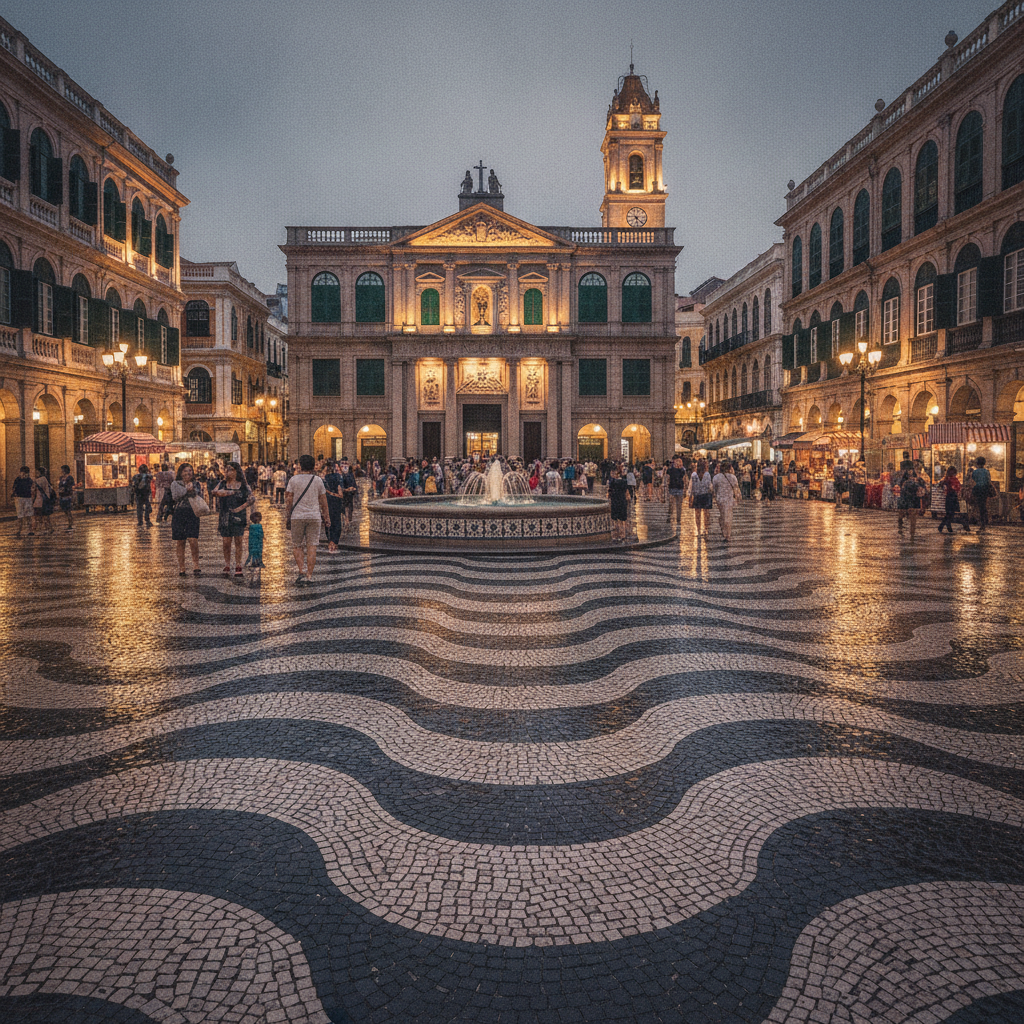
The Leal Senado (忠诚议事会—'Loyal Senate'): the Portuguese colonial municipal government that governed Macau from 1583 to 1999 and gave the historic center square its original name: the most continuously operating colonial municipal government in Asia. The history (the Leal Senado was established in 1583 as the governing body of the Portuguese colony—the colonial senate operated with relative autonomy from the Portuguese crown, managing the city's administration, courts, and public finances independently for 400+ years—the Leal Senado building (建于1784年—the current neoclassical building on the Senado Square dates from 1784 with the current facade added in 1876): the title (the designation 'Leal'—'Loyal'—was granted by the Portuguese King Pedro II in 1654 in recognition of Macau's loyalty during the Spanish occupation of Portugal (1580–1640)—the only Portuguese colony to refuse to submit to Spanish authority when Portugal temporarily lost its independence). The Senate today (the Leal Senado building houses the Macau Municipal Affairs Bureau (民政总署) under the MSAR government—the senate chamber (the Council Chamber—the wood-paneled meeting room with the 18th-century tile mural of the Portuguese rural scenes above the panel wainscoting) is the most beautifully preserved colonial-era interior in Macau).
- 4
Photography in Macau – Light, Layer & Heritage
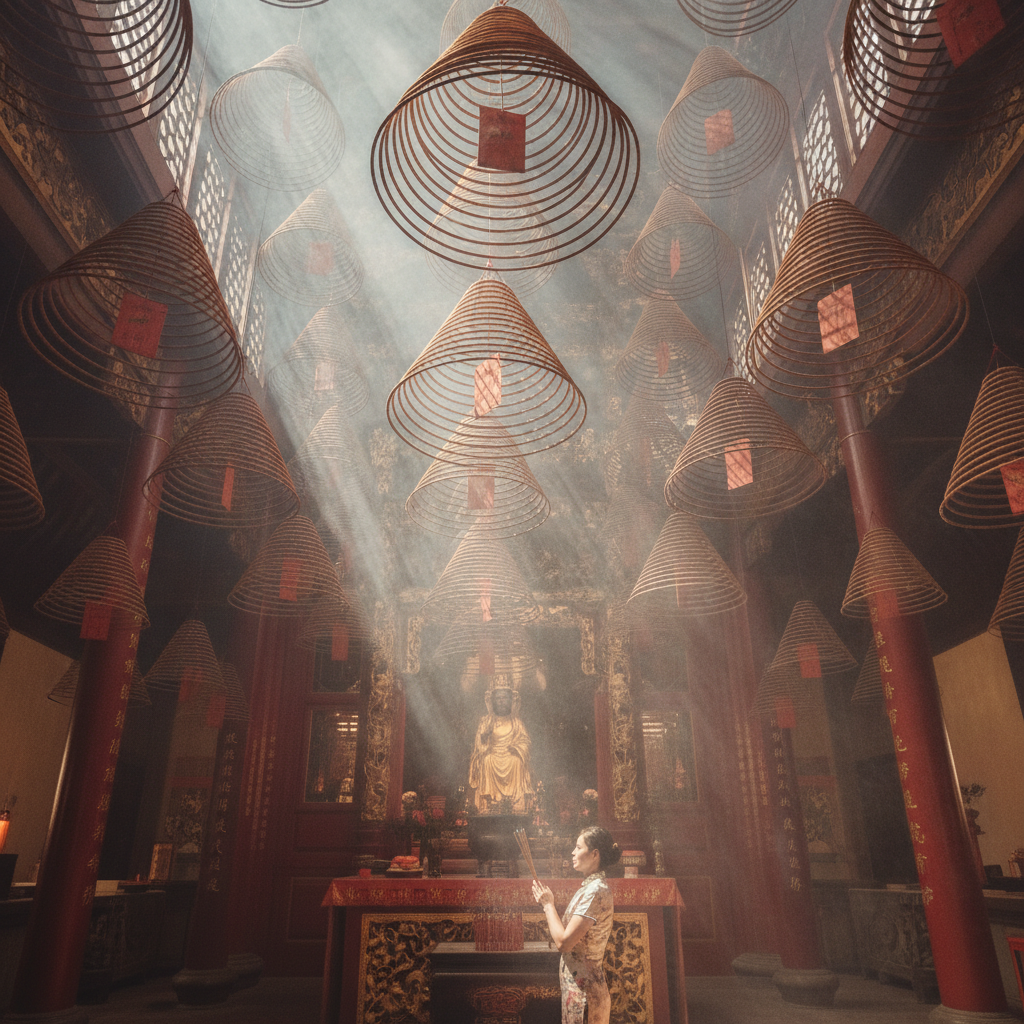
The Macau photography guide (the guide to the most photogenic locations and conditions in one of Asia's most visually varied cities): the technical and practical guide. The pre-dawn Ruins of St. Paul (the 90-minute window from 05:30–07:00 before the tourist crowds arrive at the Ruins—the stone façade in the cool blue pre-dawn light against a clear sky, with the illumination lights still on from the night before and no crowds on the steps): the Senado Square cobblestone at 07:00–08:00 (the morning light at a low angle across the wave-pattern pavement creates the strongest shadow pattern in the Portuguese cobblestone—the same early light illuminates the painted facades on the north side of the square in warm yellow before the square fills with tourists). The A-Ma Temple incense coils (the incense spirals (盘香) hanging from the A-Ma Temple ceiling—the most atmospheric interior photography in Macau at any time of day but the best light at 10:00–11:00 when the temple side windows admit the morning sun, backlighting the incense smoke for the most atmospheric smoke-and-light photograph in Macau). The Taipa Village sunset (the view from the Taipa Houses Museum waterfront at 18:30–19:00: the Cotai Strip casino towers turning gold in the setting sun above the Portuguese colonial villa rooflines—the juxtaposition of old and new Macau in a single frame). The Guia Lighthouse dawn (the lighthouse beam before dawn against the dark sky at 05:00—the only working historic Portuguese lighthouse photograph accessible in Asia).
- 5
Macau Chinese Festivals – The Year's Calendar
The Macau Chinese festival calendar (the traditional Chinese festivals as observed in Macau—the city where Chinese and Portuguese festival traditions are celebrated alongside each other within the same streets): the festival guide. Chinese New Year (农历新年—January or February): the largest festival in Macau, with the Lotus Bridge (莲花大桥) illuminated in red and gold, the Senado Square lion dance performances (the lion dance (舞狮) troupes from Hong Kong and Guangdong performing in the Senado Square on the eve and the first 3 days of the New Year): the Fireworks display (the CNY fireworks over the Nam Van Lake—the most spectacular annual fireworks event in Macau). The Macau International Fireworks Competition (澳门国际烟火比赛—August–October): the annual competition where teams from 10+ countries launch fireworks displays from barges in the Pearl River estuary (viewable from the Praia Grande waterfront)—the most attended annual event in Macau by visitor count. The Feast of the Drunken Dragon (醉龙节—the 8th day of the 4th lunar month—May): the Taoist/folk festival unique to Macau where participants carry a large wooden dragon and drink baijiu between ritual dance moves—a festival not observed in mainland China or Hong Kong that is specific to the Macau fishing community tradition. The Procession of Our Lord Jesus (耶稣圣像巡游—the Sunday before Ash Wednesday—February): the Catholic procession through the historic center that has occurred annually for 300+ years.
- 6
Macau's 400-Year Food History – A Culinary Timeline
The 400-year culinary history of Macau (the timeline of how the Macanese cuisine evolved from the first Portuguese trading post in 1557 to the present): the food history guide. The 1557–1600s (Portuguese arrival): the Portuguese traders brought the first chili peppers to Asia from Brazil via Lisbon—the Macau Portuguese kitchen introduced chilies to Cantonese cooking for the first time, the spice that now defines Sichuan, Hunan, and Guangdong regional Chinese cooking (the chili pepper now found in every Chinese regional cuisine was unknown in China before the Portuguese): the 1600s–1800s (the colonial golden age): the Macanese cooks integrated African piri-piri (from Mozambique), Goan masala (from India), and Malay coconut milk (from Malacca) with Cantonese cooking techniques—the period when the core Macanese dishes (African Chicken, Minchi, Tacho (the Macanese stew)) were developed: the 1800s–1900s (consolidation): the Macanese community codified its cuisine in the household recipe books passed between women—the 'Livro de Culinaria de Macau' (the Macau Cookbook, first published 1961) is the primary documentary source for traditional Macanese cooking: the 1989–present (global recognition): Andrew Stow's egg tart at Lord Stow's Bakery (1989) launched the Macanese egg tart format worldwide; the UNESCO intangible cultural heritage bid for Macanese cuisine (submitted 2018, pending listing). The contemporary (the new generation Macanese chefs—including Florita Alves (the most celebrated contemporary Macanese chef, cooking the traditional dishes with modern plating at her Lisboa restaurant)—are the primary force keeping the Macanese food tradition alive in the 21st century).
Walk this route with audio
Stories play automatically as you reach each stop — no tapping needed.
More in Macau
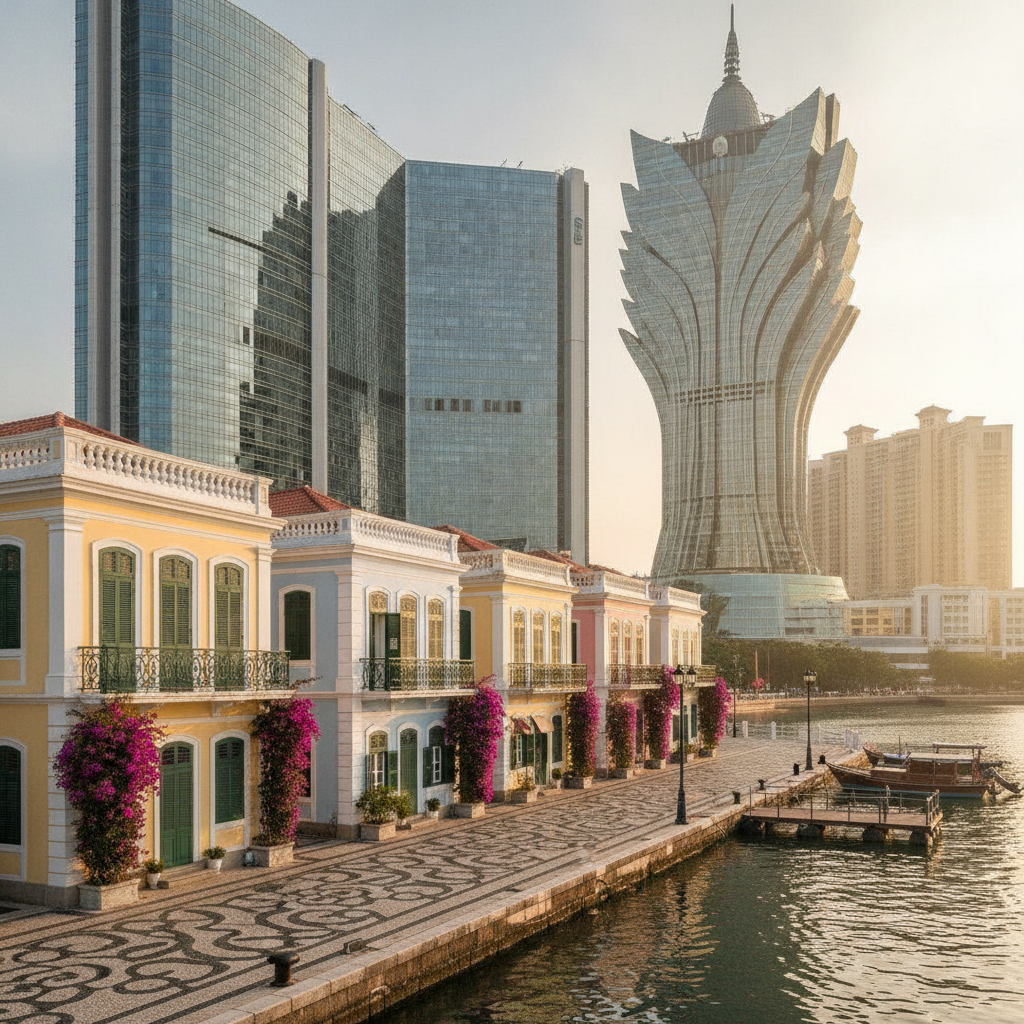
The Only I.M. Pei Building in Macau, the Wynn Bar With 310 Japanese Single Malt Labels & the 2021 Junket Collapse That Shifted Macau From VIP to Mass Market
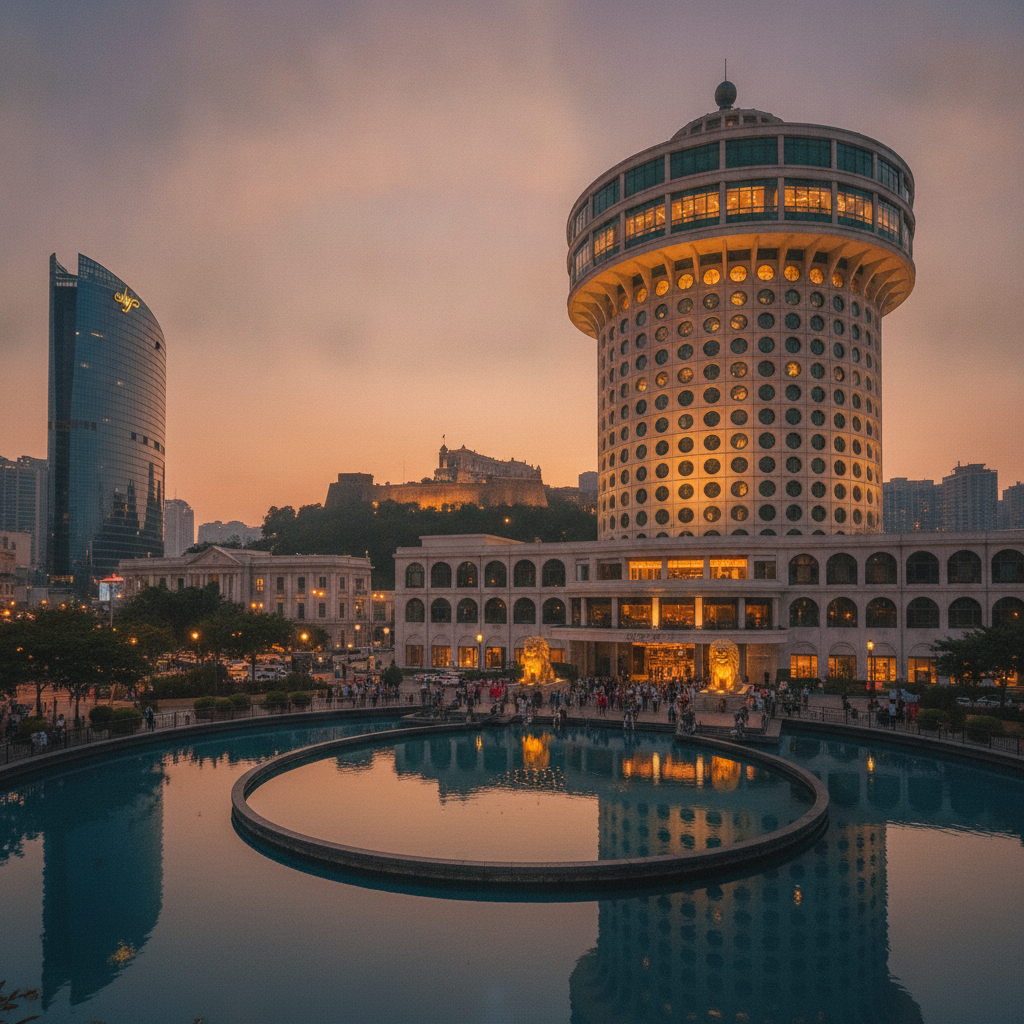
The Man Who Held the Gambling Monopoly for 40 Years and Married 4 Women Simultaneously, the World's Most Densely Populated Territory & How Macau's Gaming Revenue Is 3× Las Vegas Despite Half Its Size
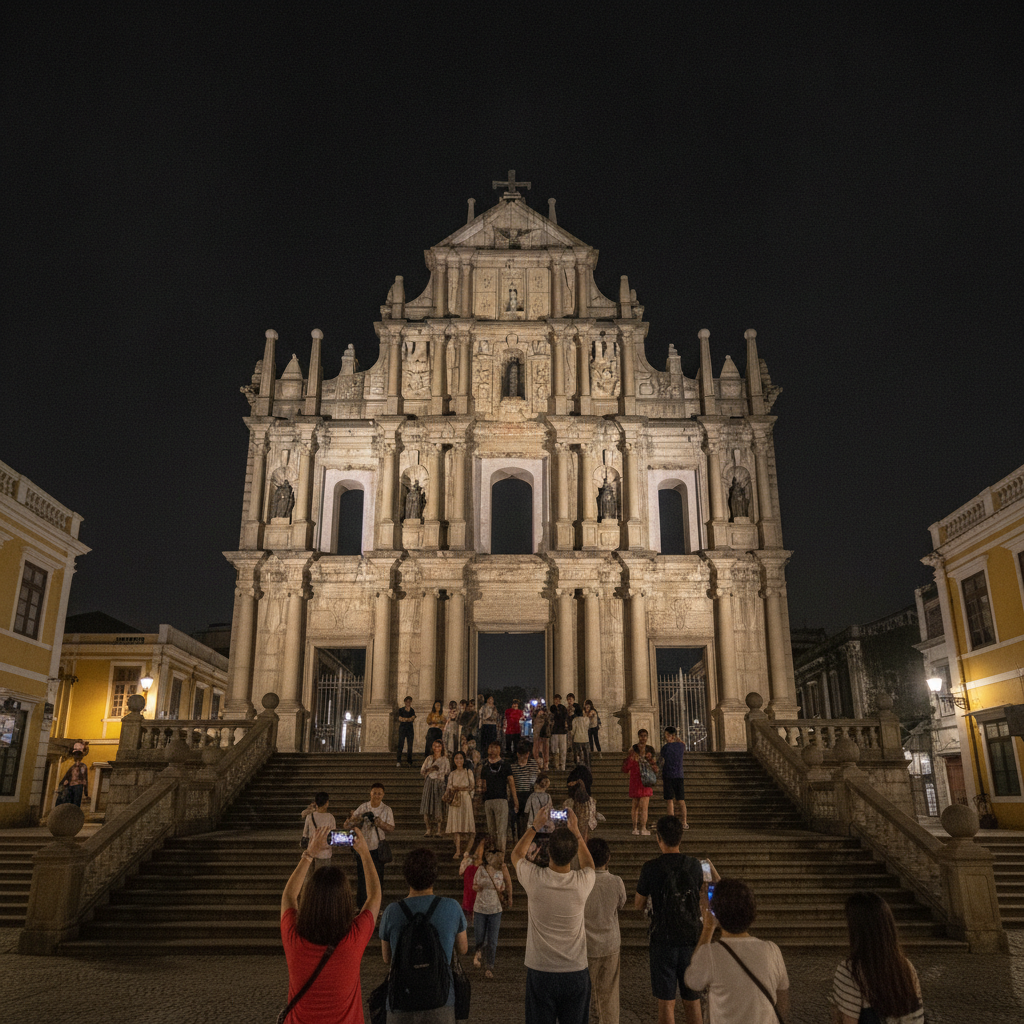
The Façade That Survived the 1835 Fire With Chinese Peonies in a Christian Composition, the 40-Year Casino Monopoly & the 1989 Egg Tart That Launched the Global Egg Tart Industry
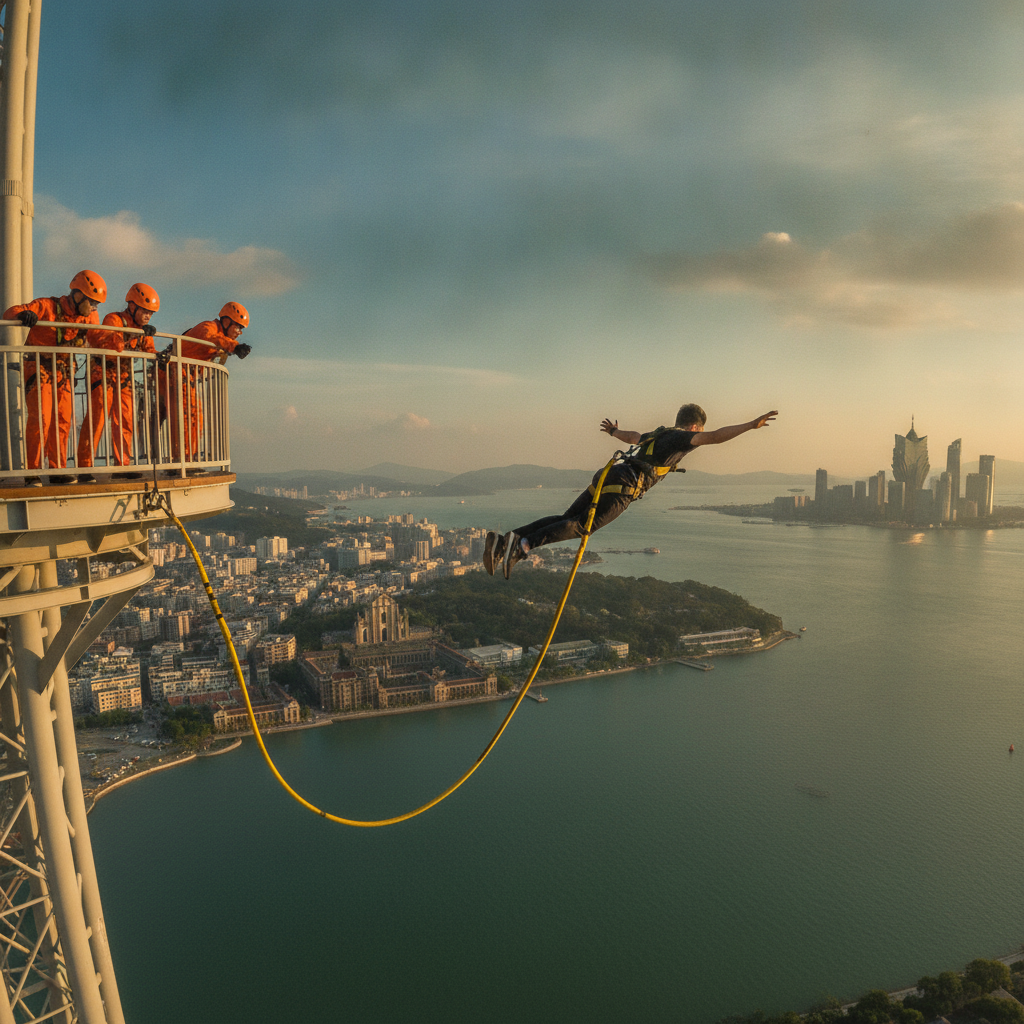
The 50 Remaining Speakers of the Macanese Creole Language, the World's Highest Commercial Bungee Jump & Why Macau Has Set the Same Diversification Target Every Government Since 1999 Without Achieving It